Brunch food options
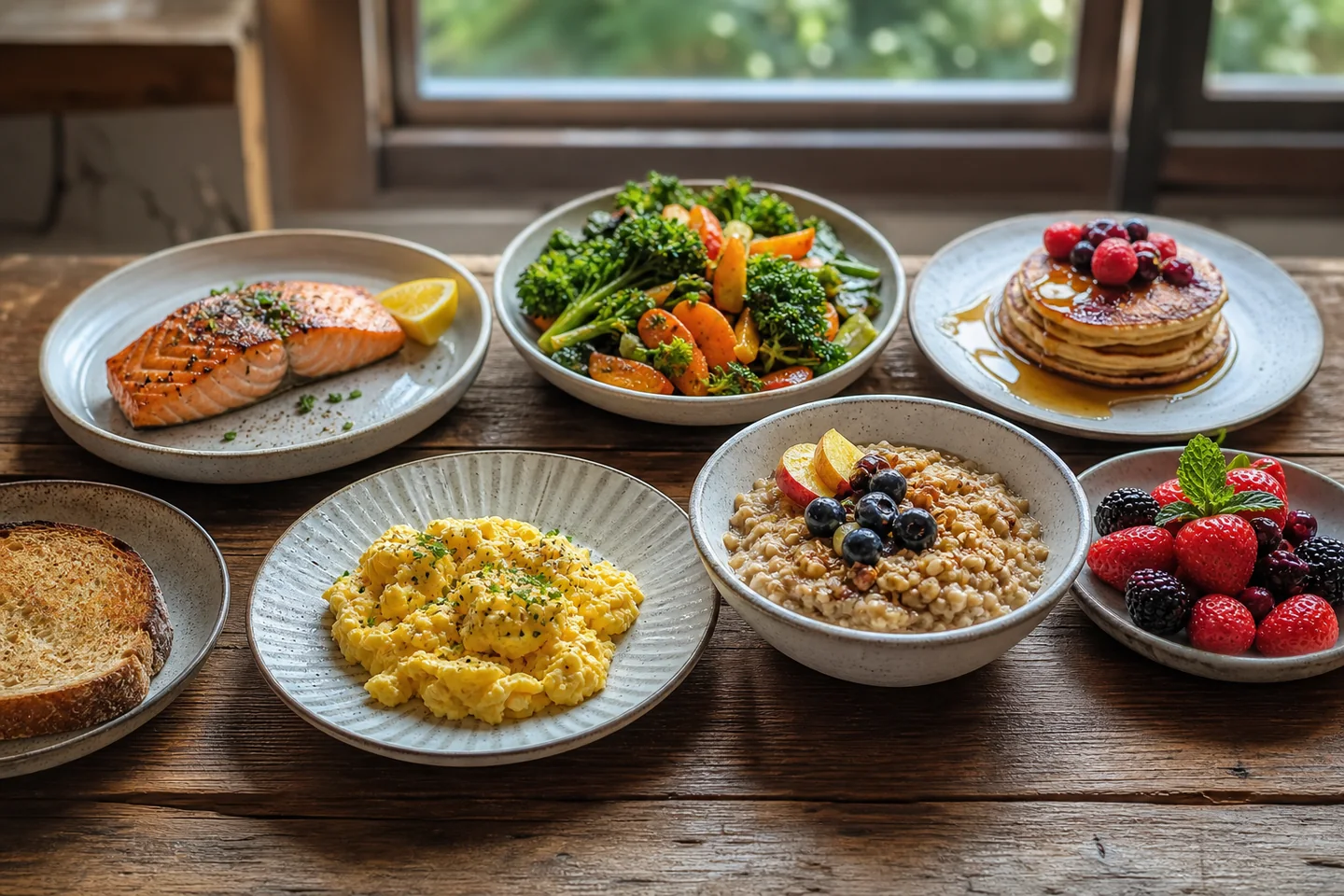
For brunch food options, start with the way guests will be served: choose plated food for a small group arriving together, a buffet for broader choice, grazing food for a rolling arrival, or family-style platters for a shared table. Pancake World recommends the format that removes the hardest service constraint rather than the format with the longest dish list. Use the brunch hub to develop the chosen menu.
The direct verdict
There is no universal best brunch format. A small, synchronized group benefits from plated or family-style food; a larger group with room to circulate benefits from a buffet; and a mixed arrival window benefits from a grazing-first set-up with a limited hot component. The practical choice keeps food within its intended holding conditions while leaving the host with only a few tasks at the serving moment.
What is actually being compared
The four formats solve different jobs. Plated brunch is individual assembly at a defined moment. A buffet is a self-service line with replenishment. Grazing food is designed for picking and returning, often with cold or room-temperature components. Family style puts shared dishes on the table and relies on seating, passing space and serving utensils. Comparing them by appearance alone hides the work each one creates.
Decision criteria: remove the hard constraint first
Use five criteria before selecting dishes: arrival pattern, active cooking capacity, table or queue space, dietary variation and holding plan. A format fails if it needs more burner, oven, counter or serving capacity than is available. It also fails if the team cannot label options and keep separate serving utensils where that is needed. After removing failures, choose the remaining format with the fewest simultaneous actions.
Comparison matrix
| Format | Strongest fit | Main pressure point | Holding pattern | Guest choice |
|---|---|---|---|---|
| Plated | Small group, shared arrival | Last-minute assembly | Cook in small batches | Low but clear |
| Buffet | Larger group, defined space | Replenishment and queue flow | Hot tray plus protected cold items | High |
| Grazing | Staggered arrival | Coverage and labelling | Cold or stable items, limited hot food | Flexible sampling |
| Family style | Seated group | Table space and passing | Shared dishes arrive in waves | Medium |
These are planning ranges, not laws. A buffet may suit a small group when there is staff to replenish it, while a plated menu may suit a bigger table if much of the plate is prepared before guests sit down.
Hot versus cold: choose the anchor deliberately
The hot anchor should use the most limited appliance at a manageable moment. For one-oven cooking, an egg bake or roasted vegetable tray is easier to schedule than several made-to-order egg dishes. Cold sides such as fruit, yogurt and spreads broaden the table without competing for the same moment of heat. Food-safety guidance supports planning clean separation, temperature control and timely service rather than treating a crowded table as indefinite storage.
For a buffet, keep a short hot lane and make the cold lane useful enough that guests do not wait for one tray. For family style, send one hot shared dish with bread, fruit or a chilled side, then add the next dish only when the table has room. For grazing, make cold elements complete enough to eat while reserving any hot item for a clear second wave.
Dietary-flexible picks without unsupported promises
Flexibility comes from menu design, not from a blanket claim that every guest can eat everything. Build a base that does not force a topping choice, then offer distinct additions with clear names and separate utensils. A fruit bowl, plain yogurt or a bean-and-vegetable side can sit beside bread or pancakes without being represented as an allergen-safe substitute. Read product labels where an ingredient matters; FoodData Central can help identify standard food descriptions but does not replace the label of the product being served.
Effort bands: when the work happens matters
Low live effort: cold fruit, prepared spreads, bread and a make-ahead baked dish; this favors grazing or family style. Moderate live effort: one hot tray to replenish with cold sides; this favors a compact buffet. High live effort: separate pancakes, eggs or toast assembled per person; this favors plated service only when the group is small and synchronized.
Effort is not a rating of quality. It is a schedule. A dish can be simple to cook and still be demanding if it must be made repeatedly in the last ten minutes.
Menu combinations that match the format
For six people at one table, family style can pair an oven-baked savoury dish with fruit, bread and two spreads. Put drinks away from the hot serving area so guests can help themselves without crossing the cooking path. This is a service pattern, not a quantity formula.
For twelve people arriving over an hour, a short buffet can combine one replenished hot tray, a cold fruit or yogurt component, bread baskets and named condiments. Replace an empty platter with a fresh prepared portion rather than continuously adding to an old one. The breakfast guide offers adjacent breakfast ideas when the anchor needs to change.
For a relaxed open-house schedule, use a grazing base first: fruit, sturdy bread, dips and individually portioned elements practical for the setting. Add one hot dish later in a small batch. The sweet brunch foods guide can supply a distinct sweet role, while brunch style food helps distinguish menu identity from the way it is served.
Scenario analysis
Everyone arrives together and there are eight seats. Choose family style if the table has room for shared dishes; choose plated if the menu can be assembled without a queue. Avoid a large buffet that turns a small room into a serving line.
Guests arrive gradually and the kitchen has one active cook. Start grazing or a cold-first buffet, then add a single hot tray. This reduces the chance that late arrivals receive only leftovers from a made-to-order station.
Several needs are known in advance. Choose a modular buffet or family-style menu with clearly distinct components. Do not rely on an unlabeled mixed platter to communicate ingredients.
A decision tree for the host
- Do most guests arrive together? If not, start with grazing or a cold-first buffet.
- Can everyone sit and pass shared dishes? If yes, family style is a candidate.
- Can one cook assemble every plate without delay? If yes, plated service is a candidate.
- Is there safe room for a self-service line and replenishment? If yes, buffet service is a candidate.
- Select the candidate with the fewest hot tasks at the same moment.
Recommendation by user type
The solo host with a small kitchen should prioritize a family-style or grazing-led menu with one baked hot anchor. A host with helpers and a separate serving surface can use a buffet to offer more visible choice. A cook planning a seated, time-specific brunch can use plated food, but should limit custom hot elements. A group with staggered arrivals should not make individual plating its core promise; a grazing-first plan is more resilient.
Limits of this comparison
This guide compares service formats, not restaurants or recipes. It does not claim exact portions, nutrition outcomes, allergy safety or a universal number of dishes. Local requirements and instructions for particular products still apply. Use an event-specific plan when the group, setting or equipment introduces a constraint not covered here.
Final verdict
Related reading
Sources and editorial references
- U.S. Food and Drug Administration, Food Safety at Home — food handling and temperature-control context.
- USDA FoodData Central — standard food-description and composition reference.
- USDA MyPlate — general food-group context, not a prescription for this menu.
- USDA FSIS — food-handling context for replenishment planning.