
Quick answer
Oatmeal pancakes pair especially well with toppings that either echo their toasted cereal flavor or lighten their sturdy texture. Warm apple with cinnamon, plain yogurt, and pumpkin seeds is a balanced starting point. Berries with yogurt, pear with walnuts, banana with a little maple syrup, or a savory combination of roasted tomatoes and soft cheese can also work. The best choice depends on how sweet, thick, and oat-forward the actual pancake is.
Build the plate in three restrained layers: one moist element, one contrasting element, and an optional finish. For example, use warm apple as the moist anchor, yogurt as a cool creamy contrast, and seeds for crunch. Avoid pouring compote, yogurt, and syrup between every pancake; oatmeal pancakes absorb liquid, and a tall wet stack can turn heavy before it reaches the table.
Taste the oatmeal pancake before choosing
“Oatmeal pancake” does not describe one formula. Some recipes use rolled oats that remain visible. Others blend oats into flour. Some combine oats with wheat flour, eggs, dairy, banana, sugar, spices, or protein ingredients. Texture may range from tender and fluffy to coarse, moist, dense, or crisp-edged. Those differences change what the topping needs to do.
Taste a fully cooked plain piece. If the pancake is mildly sweet and clearly oat-flavored, fruit and yogurt can brighten it. If banana, cinnamon, or sugar is already prominent, reduce syrup and choose a simpler topping. If the pancake is dense, a small amount of juicy fruit may help, but a large creamy-and-syrupy load can make it feel heavier. If the surface is crisp, keep wet toppings on the upper pancake or beside the stack so the contrast lasts.
Do not taste raw batter. Flour and oats used in batter are raw ingredients until cooked through an appropriate recipe. This guide assumes finished pancakes and does not replace the cooking instructions for the base.
Start with apple, yogurt, and seeds
This combination demonstrates the pairing system clearly:
- Cook diced apple through a reliable method until the pieces are tender and the liquid is spoonable rather than watery.
- Place one modest spoonful on the top pancake.
- Add plain thick yogurt beside or partly under the apple.
- Finish with a small scatter of toasted pumpkin or sunflower seeds.
The apple echoes familiar oatmeal accompaniments. Yogurt brings cool tang and softness. Seeds add crunch without adding another wet layer. Cinnamon can be included in the apple, but taste first if the batter is already spiced.
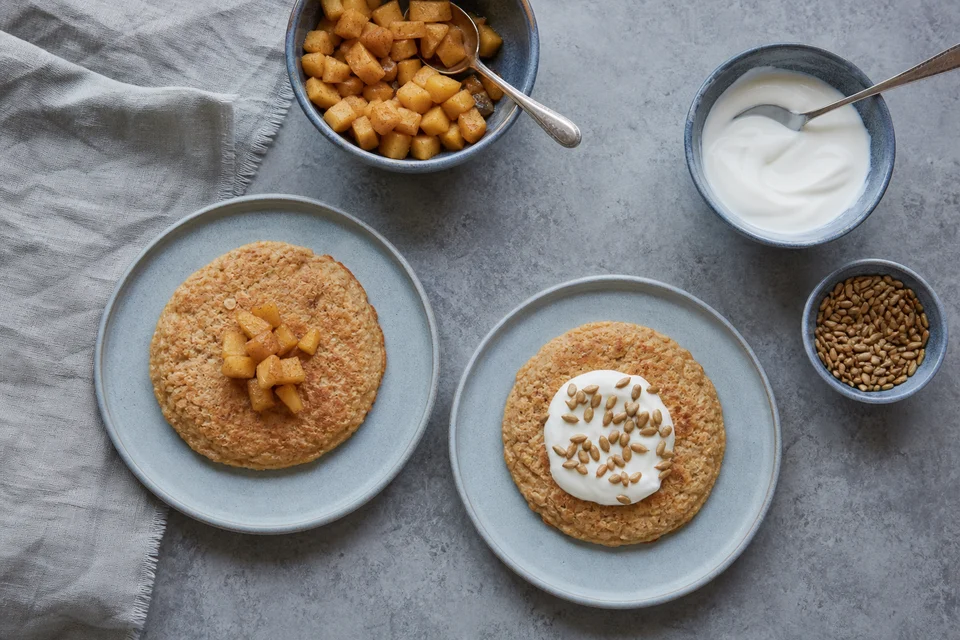
Test the apple and yogurt separately on two small pancakes when developing a batch. That comparison is more informative than mixing five toppings together and guessing which element worked.
Ten topping directions that suit oatmeal pancakes
1. Warm apple, yogurt, and pumpkin seeds
Use this when the pancake is plain or only lightly sweetened. Keep the apple pieces small enough to cut with the pancake. Plain yogurt prevents the combination from becoming dessert-like, while seeds add a dry contrast.
2. Berry compote and plain yogurt
A spoonable berry compote brings acidity and color. Use it on top, not between every layer. If the compote is already sweet, skip additional syrup. Follow the fruit compote guide for the prepared component rather than improvising shelf-stable storage.
3. Fresh berries, ricotta, and lemon zest
Fresh berries keep the plate light. Ricotta is mild and thicker than many yogurts. Lemon zest adds aroma without the extra liquid of a large juice pour. Dry washed berries before plating.
4. Pear, walnuts, and ginger
Ripe sliced pear can be served fresh; firmer pear can be cooked through a suitable recipe. Chop walnuts so the stack remains easy to cut. Ginger should be a measured accent, especially if the batter already contains warm spices.
5. Banana, maple syrup, and pecans
Banana and oats create a soft, familiar pairing, but both can be sweet. Begin with only a light pour of syrup. Toasted pecans supply contrast. If the batter itself contains banana, use fewer slices and let nuts or yogurt do more of the work. The maple syrup and pancakes guide owns the focused syrup pairing.
6. Peach, yogurt, and toasted almonds
Fresh ripe peach works in season; cooked peach works when prepared as a controlled topping. Almonds make the texture more varied. Use a nut-free seed alternative where appropriate, while still checking labels and cross-contact for the person eating.
7. Chocolate, strawberries, and yogurt
Spread or drizzle chocolate lightly. Strawberries add freshness, and yogurt keeps the plate from becoming only sweet and rich. This is a dessert direction; it should not be marketed as nutritionally equivalent to plain oatmeal because oats are present underneath.
8. Cottage cheese, berries, and seeds
Cottage cheese gives a curd texture and may be noticeably salty depending on the product. Taste it with the pancake before adding sweetener. Use the exact product label for nutrition and allergen decisions rather than applying a generic health claim.
9. Roasted tomatoes, herbed soft cheese, and pepper
A neutral, unsweetened oatmeal pancake can become savory. Use fully cooked tomatoes and a modest amount of cheese. Drain excess tomato liquid. This direction is unsuitable when the base is strongly sweet or flavored with vanilla.
10. Sautéed mushrooms, yogurt, and thyme
Cook mushrooms through a recipe that accounts for their moisture. Spoon them over one pancake, add a little plain yogurt, and finish with thyme. Avoid using raw mushrooms as a decorative pile or letting pan liquid soak the stack.
Choose by texture, not by trend
An oatmeal pancake already has body. The topping should usually introduce contrast rather than more density. Use fresh fruit or a loose compote when the pancake seems dry. Use yogurt or ricotta when it needs cool creaminess. Use seeds or chopped nuts when the surface is soft. Use a light syrup only when the plate needs additional sweetness.
| Pancake result | Helpful topping direction | What to limit |
|---|---|---|
| Thick and tender | Fresh fruit plus yogurt | Several heavy sauces |
| Coarse or visibly oat-rich | Cooked fruit plus seeds | Large hard nut pieces |
| Sweet banana-oat | Yogurt, berries, or nuts | Extra syrup and sweet spreads together |
| Crisp-edged | Topping on the upper pancake or side | Early assembly with wet compote |
| Neutral and savory-ready | Cooked vegetables plus soft cheese | Sweet syrup unless deliberately contrasting |
| Dense or heavy | Bright fruit in a modest amount | Thick cream plus nut butter plus syrup |
These are service adjustments, not diagnoses of the batter. Toppings can make a finished plate more enjoyable, but they cannot repair an undercooked center, an unbalanced formula, or a pancake that did not suit the intended recipe.
Control moisture before assembly
Oatmeal pancakes can soften quickly because their surface and crumb hold liquid. Let cooked fruit reach a spoonable consistency. Drain cut fruit that has released a puddle. Stir separated yogurt. Serve thin syrups in a small pitcher or bowl rather than saturating the stack in advance.
For a brunch table, put toppings out in small batches and refresh them from safe storage instead of leaving a large perishable quantity out for the entire meal. The USDA general leftovers guidance provides time and refrigeration boundaries, but the exact handling plan must respect every ingredient used. A dairy topping, cut fruit, cooked egg, or savory vegetable mixture may have a different practical life from dry seeds.
If toppings have been left out with an uncertain time-temperature history, appearance and smell do not establish safety. Discard uncertain perishable food rather than returning it to the refrigerator for another meal.
Portion the topping to the serving
One medium pancake needs much less topping than a three-pancake stack. Begin with a spoonful of fruit or yogurt and a pinch of crunch. Keep extra components beside the plate. This lets the diner add more without forcing the lower pancakes to absorb everything.
Thin out a very thick nut or seed butter only through a suitable recipe or with a compatible ingredient in a small serving portion. Do not pour water casually into a whole storage jar; changing the product can affect its keeping quality. Keep the serving utensil clean and return the original product to storage according to its label.
Allergens and dietary labels
Oatmeal pancakes are not automatically gluten-free. Oats, flour blends, baking powder, toppings, and the preparation environment all matter. A topping cannot convert a wheat-containing pancake into a gluten-free dish. If someone needs a gluten-free meal, verify the complete recipe, each package, and the kitchen’s cross-contact controls.
Likewise, plant-based yogurt does not make a pancake vegan if the batter contains eggs, milk, butter, or another animal-derived ingredient. Nuts, dairy, eggs, sesame, soy, and packaged chocolate or spreads may all be relevant allergens. Name the exact components instead of relying on the appearance of the plate.
Common mistakes
Treating oats as a permission for unlimited sweet toppings: The presence of oats does not define the nutrition of the complete plate. Consider actual products and portions.
Using fruit, compote, yogurt, and syrup together by default: Choose one wet anchor and one contrast first.
Hiding a cooking problem: Toppings cannot make a raw or unset center ready to eat. Use the base recipe and the Pancake Troubleshooting hub.
Building the stack too early: Wet toppings migrate into the crumb. Assemble near service.
Forgetting the batter flavor: Cinnamon, banana, vanilla, sugar, and salt in the pancake change the pairing. Taste before topping.
Fix this plate and plan the next one
If the stack is too wet, move the top pancake to a clean plate and serve the excess topping beside it. If it is too sweet, remove extra sauce and add a plain component such as unsweetened yogurt or fresh fruit, provided those ingredients suit the diner. If it feels monotonously soft, add a small amount of chopped nuts or seeds rather than another sauce.
For the next batch, cook one small test pancake and taste it plain. Trial two topping pairs on separate portions. Record which combination matched the batter and how much was enough. That simple comparison produces a repeatable house serving rather than an accidental pile.
FAQ
What is the best topping for oatmeal pancakes?
Warm apple, plain yogurt, and toasted seeds are a versatile starting point because they add fruit, creaminess, and crunch. Berries with yogurt or pear with walnuts also work. The best option depends on the pancake’s sweetness and texture.
Can I put syrup on oatmeal pancakes?
Yes. Start with a light amount, especially if the batter contains banana, sugar, or spices. Add fruit or nuts for contrast rather than combining several syrups.
Are oatmeal pancakes automatically healthy or gluten-free?
No. The complete recipe, products, portion, toppings, and preparation environment determine those questions. Oats alone do not establish a health claim or gluten-free status.
What savory toppings work with oatmeal pancakes?
Use only a neutral, unsweetened base. Roasted tomatoes with herbed soft cheese or cooked mushrooms with yogurt and thyme can work. Prepare every component through its own safe method.
How do I stop fruit topping from making the pancakes soggy?
Drain excess liquid, use a spoonable consistency, top only the upper pancake, and assemble close to serving. Keep extra topping in a side bowl.
Related Pancake World guides
Use the broader delicious pancake toppings guide for more categories, then apply the systematic pancake topping flavor combinations approach to create your own pairings. For prepared fruit, open fruit compote; for a sauce, use homemade pancake syrups.
Sources and editorial references
- U.S. Food and Drug Administration: Handling Flour Safely —
https://www.fda.gov/consumers/consumer-updates/handling-flour-safely-what-you-need-know - USDA Food Safety and Inspection Service: Leftovers and Food Safety —
https://www.fsis.usda.gov/food-safety/safe-food-handling-and-preparation/food-safety-basics/leftovers-and-food-safety
For more practical food and breakfast guides, visit Pancakes World.
For the wider topic, start with Guides/pancake Toppings.
For a closely related guide, see Sweet Pancake Toppings: Fruit, Creamy, Crunchy, and Sauce Ideas.
A useful next comparison is Ham and Cheese Pancakes: A Savory Filled Recipe.
You can also continue with Savory Pancake Toppings: 24 Ideas and a Practical Pairing Guide.
