Delicious Pancake Toppings to Try Right Now
Choose pancake toppings by the contrast your pancake needs and the preparation time you actually have. These nine combinations range from a simple maple finish to a separate savoury cooking job. Explore the wider collection on the The Pancake World Home Page.

Choose the missing contrast before adding toppings
Choose the missing contrast before adding toppings
A delicious topping should have a job: brighten a rich pancake, add a creamy contrast, provide a dry crunch or turn a neutral pancake into a savoury plate. These nine options are deliberately different in preparation burden as well as taste. Start with one combination, not one ingredient from every bowl. If the pancake is already sweet, more sweetness may be less interesting than fruit or a restrained savoury finish.
Check the pancake before dressing it. A topping cannot correct a raw centre or remove a burnt flavour, and covering the surface makes those faults harder to notice. Once the pancake is properly cooked, choose how it will be eaten: folded, cut as a small stack or served flat. That decision affects how much moisture and filling the plate can hold.
For a complementary option, see deliberately thin pancakes for folding.
Nine topping combinations with different uses
Maple syrup and a small butter finish
Use this when you want the pancake itself to remain the main flavour. Put a small amount of butter on the hot pancake and offer maple syrup alongside, so the diner controls how much the stack absorbs. It is the simplest option for a busy pan because there is no chopping or extra saucepan. It is less useful if the pancake is already very rich and sweet: another sweet coating may hide rather than contrast its flavour. Taste the plain edge first, then decide whether more syrup adds anything.
Fresh berries with plain yogurt
Choose this for cool contrast on a freshly cooked pancake. Wash and drain suitable berries, keep the yogurt chilled until serving, and add both at the table. Putting everything on a large stack in advance softens the top pancakes and leaves the lower ones plain. A spoonful beside each portion keeps the contrast clearer. Use the actual yogurt label to judge ingredients; plain does not mean dairy-free, and fruit-flavoured products are not interchangeable with an unsweetened yogurt when sweetness is the reason for choosing this topping.
Banana slices with peanut butter
This is a no-pan option when you need a substantial, creamy topping quickly. Slice banana close to serving and loosen the peanut butter only in a way appropriate to the product; a small amount is easier to distribute than a heavy lump. The pancake’s warmth can help it spread. Keep the portion modest if the pancake is delicate, because a thick sticky layer can pull it apart during cutting. Peanut butter introduces an obvious ingredient to disclose, and substituting a seed spread does not make the entire meal automatically allergy-safe.
Apple compote with toasted oats
Use a prepared apple compote when you want a soft fruit topping without juggling a second hot pan during pancake service. Add toasted oats at the last moment so their texture remains distinct. Serve extra compote on the side rather than saturating the stack. This combination fits a make-ahead plan better than a last-minute one: use a suitable compote recipe and store it correctly, then decide whether it will be served cold or reheated. Do not rely on cinnamon or the fruit’s sweetness as a preservation method.
Lemon and a light sugar finish
A thin pancake benefits from a restrained finish that does not make folding difficult. Offer lemon separately and add sugar to taste rather than mixing a puddle of juice across the plate. Try a small section first: the right contrast depends on how sweet the pancake already is and how much lemon you add. This is a flavour option, not a nutritional upgrade. If the pancake is already fragile or wet, reducing the juice is more useful than adding another dry ingredient to cover the problem.
Pear and ricotta
This pairing suits a loosely folded thin pancake or a modest spoonful beside a thicker one. Cut the pear into manageable pieces and spread the ricotta thinly; a tall filling demands a tight fold that can tear the pancake. Keep juicy fruit separate until assembly. It provides a milder alternative to a syrup-covered stack, but the exact sweetness depends on the pear and the dairy product. Check the chosen product’s storage instructions and ingredients. The fact that a topping tastes mild does not tell you its nutritional composition.
Cocoa spread with sliced strawberries
Choose this when dessert-like richness is the intention, not when you want a neutral breakfast plate. Spread a thin layer, then use a few drained strawberry slices to break up the richness. Offer more fruit beside the pancake instead of building an unstable tower. A small amount lets the pancake retain its own texture. Check the spread’s label: cocoa spreads can include milk, nuts or other ingredients that are not obvious from the front of the jar. Do not describe the topping simply as chocolate when the ingredients matter to a guest.
Cooked mushrooms with a separately cooked egg
This belongs with a less sweet pancake and a deliberately savoury meal. Cook the mushrooms and egg appropriately before assembly; the pancake should not be expected to finish cooking raw toppings. It is the highest-workload choice in this collection if you have only one pan, so prepare the components through a safe planned sequence or choose another option. Keep sauces optional because the pancake and mushrooms may already be seasoned. The useful contrast is between the cooked topping and the pancake, not between an undercooked centre and a well-browned exterior.
Tomato and cottage cheese with herbs
Use drained tomato pieces and a modest amount of cottage cheese when you want a cool savoury alternative without an extra cooking task. Add herbs that fit the rest of the meal and check seasoning before adding salt. Assemble close to eating; tomato juice can soften a stack that sits waiting. Serve this alongside a pancake if you prefer a crisp surface. The dairy product’s ingredients and salt content vary, so the name alone does not establish a particular nutrition claim. Keep it chilled until the serving portion is needed.
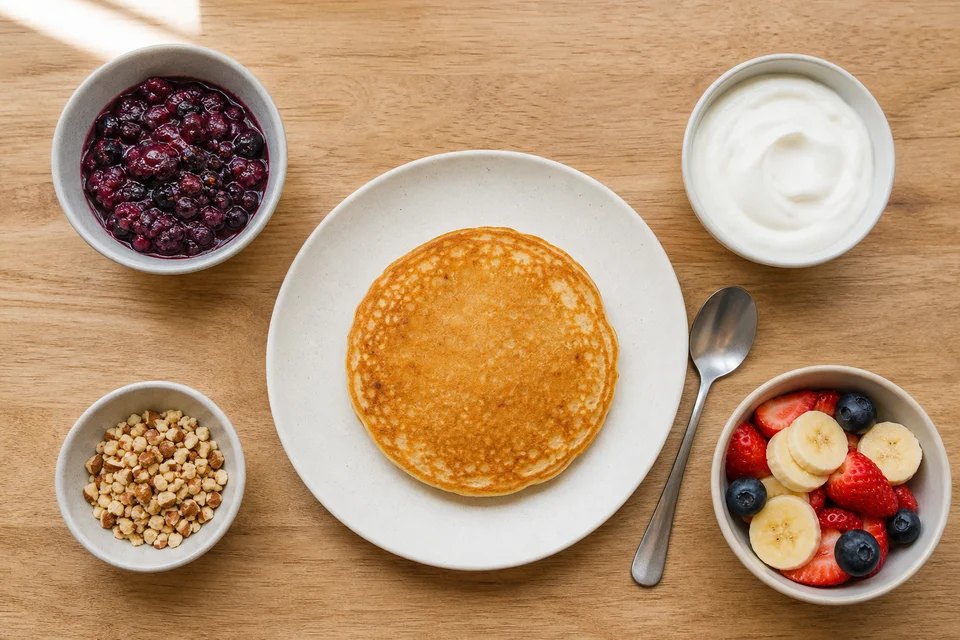
Sort by workload, not a universal ranking
Fast and assembled at the table
Maple and butter, lemon and sugar, banana with peanut butter, or tomato with cottage cheese need little or no extra hot-pan work. They still need suitable ingredients, clean serving tools and sensible chilled storage.
Prepared ahead, finished at service
Compote with oats and pear with ricotta are easier when their components are ready before cooking. Keep wet and dry elements apart until the plate is served, then use a modest first portion.
A separate cooking commitment
Mushrooms and egg require their own cooking sequence. Choose that option because you want a savoury meal and can accommodate the work, not as an afterthought while every pancake needs turning.

Remove options that conflict with the meal
For a guest avoiding an ingredient, inspect every component of the chosen combination, not just the ingredient named in its heading. Use separate utensils where appropriate and discuss shared equipment honestly. A changed spread or a dairy-free-looking sauce is not enough to promise that cross-contact cannot occur. Let guests see what is in the bowls rather than hiding mixtures behind broad labels such as breakfast topping.
For perishable toppings, follow suitable storage and serving guidance. The FDA’s consumer buffet advice distinguishes chilled and hot holding and warns against leaving perishable food at room temperature too long. Put out serving quantities and replenish safely rather than leaving a large dairy bowl beside the cooker. Texture has a separate limit: oats can lose crunch and pancake surfaces can soften before a safety deadline is reached. Assemble close to eating for both a clearer flavour and a more deliberate texture.
For a complementary option, see a one-pan brunch serving plan.
Build one sweet plate and one savoury plate
For a thin sweet pancake, try pear and ricotta inside a loose fold, with extra pear beside it. The fold remains manageable because the filling is shallow. For a thicker savoury pancake, place drained tomato and cottage cheese on only part of the surface, leaving an edge available to taste plain. These are serving examples, not tested nutrition plans. In both cases the useful stopping point is when the topping improves the pancake without obscuring its flavour or making it awkward to eat.
For a complementary option, see ten more pairings organised by fruit, protein, crunch and savoury flavour.
Sources and editorial references
Regional facts are attributed to the listed sources; selection and planning guidance is original editorial explanation. Examples are illustrative, not a claim of independently tested cooking or service.
- FDA — Serving Up Safe Buffets: https://www.fda.gov/food/buy-store-serve-safe-food/serving-safe-buffets