
Quick answer
Good sweet pancake toppings create contrast without hiding the pancake. Start with one of five directions: fresh fruit, cooked fruit, creamy, sauce, or crunch. Combine no more than two main directions and one small aromatic finish. Fresh berries with yogurt and lemon zest stay bright; warm banana with pecans feels rich; apple compote with seeds suits oatmeal pancakes; chocolate with strawberries balances richness with fruit; lemon, sugar, and yogurt suit a thin crêpe.
The word “sweet” does not require several syrups at once. Taste the cooked pancake first. A plain base can carry a sweeter sauce, while banana, chocolate-chip, or vanilla-heavy batter usually needs less. Keep wet elements on top or beside the stack so lower layers do not become soggy before service.
Choose by role
| Role | Examples | What it contributes | Main caution |
|---|---|---|---|
| Fresh fruit | berries, banana, peach, pear, citrus | freshness, acidity, pieces | wash, dry, cut near service |
| Cooked fruit | compote, warm apple, poached pear | concentrated flavor, moisture | avoid excessive liquid; follow storage guidance |
| Creamy | yogurt, ricotta, whipped cream, mascarpone | coolness, tang, richness | product sweetness and refrigeration vary |
| Sauce | maple syrup, berry syrup, chocolate, caramel | pourable sweetness | portion; do not combine every sauce |
| Crunch | nuts, seeds, toasted coconut | texture and toastiness | allergens, hard pieces, moisture loss |
| Aroma | zest, cinnamon, cardamom, cocoa | fragrance and focus | use lightly so it does not dominate |
Build the plate by choosing one moist element and one contrast. If the anchor is fruit compote, add yogurt or nuts. If the anchor is chocolate, add strawberries or orange zest. If the anchor is whipped cream, use fresh fruit rather than caramel plus syrup.
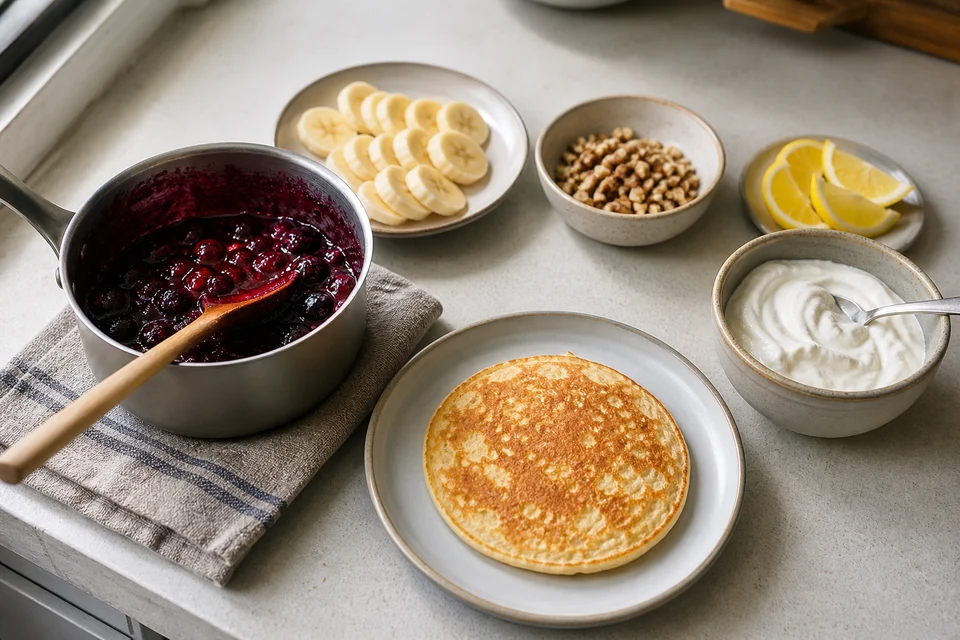
Separate components until the pancakes are ready. This keeps crunchy items dry, perishable items chilled, and portions adjustable.
Fresh fruit toppings
Mixed berries with plain yogurt
Use strawberries, blueberries, raspberries, or blackberries that suit the diner. Wash and dry them. Slice large berries just before serving, then add a modest spoonful of plain yogurt. Lemon zest can sharpen the aroma. If the berries are very ripe and the pancake is sweet, syrup may be unnecessary.
Banana with pecans
Slice banana at service and add chopped pecans. A small maple drizzle works on a plain base, but taste before pouring. Banana pancakes often need only nuts or yogurt because the fruit flavor is already in the batter.
Peach with ricotta
Ripe peach and mild ricotta create a soft combination. Add finely chopped almonds or a little lemon zest for contrast. Keep pieces small enough that a fork cuts fruit and pancake together.
Pear with walnut and ginger
Thin pear slices work fresh when ripe. Firmer pear can be cooked through a suitable recipe. Use ginger lightly and chop walnuts. On an oat-rich pancake, this pairing echoes cereal and toast notes without relying on a heavy sauce.
Citrus segments with yogurt
Orange or mandarin segments bring brightness. Remove seeds and tough membrane as appropriate, and drain excess juice. A little yogurt softens the acidity. Do not pour a large volume of citrus juice over a stack; it rapidly changes the crumb.
Cooked fruit toppings
Quick berry compote
A compote is spoonable fruit, not automatically a shelf-stable preserve. Prepare it through a reliable recipe, use it warm or cooled as directed, and refrigerate leftovers. The National Center for Home Food Preservation publishes validated syrup and canning methods, but an improvised breakfast sauce should never inherit those storage claims.
Spoon compote over the upper pancake and offer extra beside it. Seeds and skins change the texture; strain only when the recipe and desired result call for it. Use the full fruit compote guide for preparation detail.
Warm apple and cinnamon
Cut apple evenly so pieces finish together. Cook until tender through a recipe that specifies liquid and sweetener. Let the mixture become spoonable rather than soupy. Add pumpkin seeds or yogurt, but not both caramel and syrup by default.
Caramelized banana
A warm banana topping can be more intense than fresh slices. Use a tested method, moderate the sweetener, and watch the pan. Serve promptly while pieces still hold their shape. Pair with pecans, yogurt, or lime zest.
Roasted stone fruit
Peach, plum, or apricot can be roasted through a suitable recipe until tender. The juices may be concentrated, so start with a small serving. Plain yogurt or ricotta provides contrast.
Poached pear
Poached pear can be elegant on a thin pancake. Slice it after preparation and drain excess poaching liquid. Reduce or reuse liquid only through the recipe’s directions; an arbitrary reduction can become overwhelmingly sweet.
Creamy toppings
Plain thick yogurt is the most flexible. It can balance sweet fruit, chocolate, or syrup and stays visible on a stack. Thin yogurt runs between layers, so serve it beside the pancakes when texture matters. Flavored yogurt may already contain enough sugar to function as both creamy component and sweetener.
Ricotta is mild and softly textured. Whisking may make it smoother, but do not assume every ricotta has the same moisture or salt. Cottage cheese has visible curds and a stronger product-specific identity. Mascarpone and whipped cream are richer, so portions can be smaller.
Plant-based alternatives vary in sweetness, acidity, thickness, stabilizers, and allergens. A dairy-free topping does not make an egg- or milk-based pancake dairy-free or vegan. Verify the entire recipe and service environment.
Syrups and pourable sauces
Maple syrup
Maple syrup has its own flavor and needs no automatic combination with caramel or chocolate. Pair it with butter on a plain stack, with banana and nuts, or with apple and cinnamon. For the classic pairing, see maple syrup with pancakes.
Berry syrup
Berry syrup is smoother and more pourable than compote. Use a validated recipe for the intended storage method. A small breakfast syrup kept under refrigeration is not interchangeable with a tested canned product.
Chocolate sauce
Drizzle chocolate over part of the pancake rather than coating every layer. Add strawberries, raspberries, orange zest, or toasted hazelnuts. If the pancake contains chocolate chips, fruit may be the only extra component needed.
Caramel sauce
Caramel brings concentrated sweetness and sometimes dairy. Use it as an accent with apple, pear, banana, or nuts. Follow the exact recipe for handling and storage; a dairy sauce has different needs from plain syrup.
Homemade flavored syrup
Brown-sugar, citrus, fruit, and spice syrups can work when prepared from a dependable formula. The homemade pancake syrup guide distinguishes sauce styles and rejects casual shelf-stability claims.
Crunchy sweet finishes
Chop nuts so they distribute and remain easy to cut. Toast them only through a suitable method and monitor closely. Pecans suit banana and maple; walnuts suit pear and apple; hazelnuts suit chocolate; almonds suit berries and stone fruit.
Pumpkin, sunflower, sesame, chia, and other seeds create different textures. Large toasted seeds work as a scatter; very small seeds may be better integrated into yogurt or a prepared component. Seeds are not universally allergen-free, and sesame is a major allergen in many labeling systems.
Toasted coconut adds aroma and crispness, but it can dominate delicate fruit. Granola brings several ingredients at once—oats, sweetener, oil, nuts, seeds, and possible dried fruit—so check the label and use it as the crunch, not as a reason to add another full nut layer.
Fifteen combinations to use immediately
- Blueberries + plain yogurt + lemon zest.
- Strawberries + thin chocolate drizzle + chopped hazelnuts.
- Warm apple + cinnamon + pumpkin seeds.
- Banana + pecans + a little maple syrup.
- Pear + ricotta + walnuts.
- Peach + raspberries + yogurt.
- Berry compote + mascarpone + almonds.
- Orange segments + chocolate + yogurt.
- Pineapple prepared through a suitable recipe + coconut + lime zest.
- Plum compote + cardamom + seeds.
- Lemon + restrained sugar + yogurt on thin pancakes.
- Cherry compote + dark chocolate + ricotta.
- Fig + plain yogurt + pistachio, where suitable.
- Apple butter + cottage cheese + cinnamon.
- Maple syrup + butter + toasted pecans on a plain stack.
Treat each line as a structure, not a mandated portion. Start with the first two components, then decide whether the finish improves the bite.
Match the topping to the pancake
American-style pancakes: A sturdy stack accepts fruit, creamy toppings, syrup, and crunch. Keep sauce mostly on top to protect lower layers. Start from the American pancakes guide if the base is not yet chosen.
Thin crêpes: Use spreads, soft fruit, or finely chopped fillings. Large nuts and bulky fruit can tear the sheet. Fold or roll only after testing the amount.
Oatmeal pancakes: Apple, pear, berries, yogurt, cinnamon, nuts, and seeds complement the cereal flavor. The focused oatmeal topping guide explains moisture and weight.
Japanese soufflé pancakes: Keep toppings light and serve immediately. Heavy fruit mixtures and sauce between layers can compress the airy structure.
Already flavored pancakes: Reduce duplication. A chocolate pancake may need berries, not more chocolate, caramel, and syrup. A banana pancake may need yogurt and nuts, not a second banana sauce.
Build a sweet topping bar
For a small brunch, offer one fresh fruit, one cooked fruit or sauce, one creamy option, and two crunches. Put maple syrup or chocolate in a small pitcher rather than an open basin. Use separate utensils and make allergen information clear in the actual service setting.
Keep perishable toppings refrigerated until needed and replenish small bowls. USDA general leftovers guidance establishes prompt refrigeration boundaries, but the complete topping bar follows the shortest limit for any component. Cut fruit, dairy, cooked sauces, and dry nuts are not one storage category.
Do not return perishable topping to storage when its time-temperature history is unknown. Appearance and smell cannot reconstruct how it was handled.
Common mistakes
More sweetness instead of contrast: Add yogurt, fresh fruit, zest, or crunch before another syrup.
Wet topping between every layer: Top the upper pancake and serve the rest beside it.
Oversized nuts or fruit: Cut components so the stack remains easy to eat.
Dietary assumptions: Fruit does not make the entire plate vegan, gluten-free, or nutritionally defined.
Unverified pantry storage: Breakfast compote and dairy caramel are not automatically shelf-stable.
Hiding a bad base: Toppings cannot repair raw, burnt, gummy, or flavorless batter. Use the Pancake Troubleshooting hub.
Rescue this plate and improve the next one
If the plate is too sweet, move extra sauce aside and add unsweetened yogurt or fresh fruit when suitable. If it is soggy, transfer the top pancake to a clean plate and keep remaining toppings separate. If it is too rich, reduce cream, nut butter, or chocolate rather than adding another strong acid without tasting.
Next time, taste the plain cooked pancake and test two topping pairs on separate portions. Record the main topping, contrast, and approximate amount. Repeat the best pair before adding a third component. That produces a house combination instead of a different overloaded stack every time.
Limitations
This page does not rank global popularity, assign universal nutrition values, or certify any combination as suitable for a medical diet. Products, recipes, portions, cultures, and preferences differ. The goal is to make the sweet direction understandable and usable while keeping factual and safety claims bounded.
For savory options and a wider mix, use delicious pancake toppings to try now. To design a new trio from first principles, use pancake topping flavor combinations.
FAQ
What are the best sweet pancake toppings?
Fresh berries with yogurt, banana with pecans, apple compote with seeds, chocolate with strawberries, and maple syrup with butter are versatile. The best choice depends on the pancake’s existing sweetness and texture.
What can I put on pancakes instead of syrup?
Use fresh or cooked fruit, plain yogurt, ricotta, cottage cheese, whipped cream, nuts, seeds, lemon and sugar, or a thin chocolate spread.
How do I keep sweet toppings from making pancakes soggy?
Drain watery fruit, use a spoonable sauce, assemble near service, and place wet toppings on the upper pancake or in a side bowl.
Can I prepare pancake toppings the night before?
Some can be prepared ahead through their own recipe and storage directions. Keep nuts and seeds dry, refrigerate perishable fruit and dairy components, and cut delicate fresh fruit near serving.
Are sweet toppings suitable for a pancake bar?
Yes. Offer a small set with different roles, separate utensils, explicit allergen information, and suitable temperature control. More bowls do not automatically create a better bar.
Related Pancake World guides
Explore delicious pancake toppings, flavor combinations, oatmeal pancake toppings, fruit compote, and homemade syrups.
Sources and editorial references
- National Center for Home Food Preservation: Berry Syrup —
https://nchfp.uga.edu/how/can/canning-fruits-and-fruit-products/berry-syrup/ - USDA Food Safety and Inspection Service: Leftovers and Food Safety —
https://www.fsis.usda.gov/food-safety/safe-food-handling-and-preparation/food-safety-basics/leftovers-and-food-safety - U.S. Food and Drug Administration: Food Allergies —
https://www.fda.gov/food/food-labeling-nutrition/food-allergies
For more practical food and breakfast guides, visit Pancakes World.
For the wider topic, start with Guides/pancake Toppings.
A useful next comparison is Fruit toppings for pancakes: fresh, macerated, cooked and compote ideas.
You can also continue with Top 10 Pancake Toppings for Flavor and Texture.
