
Quick answer
Homemade pancake syrup can be as simple as a warm fruit sauce, a brown-sugar syrup, a citrus-infused syrup, or a nutty caramel-style topping. Choose the style by the pancake and the time available: fruit syrups taste vivid and can retain pieces; clear sugar syrups deliver a clean pour; dairy-based caramel sauces are richer but need stricter refrigeration; maple syrup is a distinct one-ingredient product and should not be confused with flavored pancake syrup.
This guide gives small-batch, refrigerator-oriented formulas. It does not authorize shelf-stable canning. Canning requires a tested recipe, exact ingredients, jar size, headspace, altitude adjustment, and processing method. The National Center for Home Food Preservation publishes a tested berry-syrup canning process for specified fruits; do not extend it to other fruits or the informal formulas below.
Choose your syrup by pancake
| Pancake style | Syrup direction | Why it works | Watch point |
|---|---|---|---|
| plain buttermilk or milk pancake | berry or maple | acidity or maple depth gives contrast | keep the pour modest so the crumb stays visible |
| oat pancake | apple-cinnamon or brown sugar | echoes toasted cereal notes | sweetened oat batter may need less syrup |
| almond flour pancake | berry, citrus, or maple | fruit acidity and maple complement nuts | name tree-nut allergens in the full dish |
| chocolate pancake | raspberry, orange, or coffee caramel | strong flavors remain distinct | scorched sugar and bitter cocoa can compound |
| banana pancake | caramel, coconut, or lime | rich or bright flavors frame banana | ripe fruit already adds sweetness |
| savory pancake | herb yogurt or chili-honey-style drizzle | a thin savory sauce can fit better than sugar syrup | this becomes a sauce, not classic syrup |
The best pairing is not the one with the longest ingredient list. Taste the pancake plain, identify its strongest note, then decide whether the syrup should echo or contrast it.
Formula 1: quick berry pancake syrup
For a small refrigerator batch, combine 300 g fresh or frozen berries, 75 g sugar, 30 g water, and 1 tablespoon lemon juice in a saucepan. Heat gently until the fruit releases juice, then simmer while stirring and crushing until the liquid coats a spoon lightly. Cool before judging final thickness; fruit syrup thickens as it cools.
Strain for a smoother pour or leave the softened fruit in for a spoonable topping. Seeds, skins, fruit variety, and ripeness change the result. The National Center for Home Food Preservation uses specified berries, juice extraction, a much larger sugar quantity, and a validated boiling-water process for its canning recipe. This small-batch version is not that process and must not be stored at room temperature.
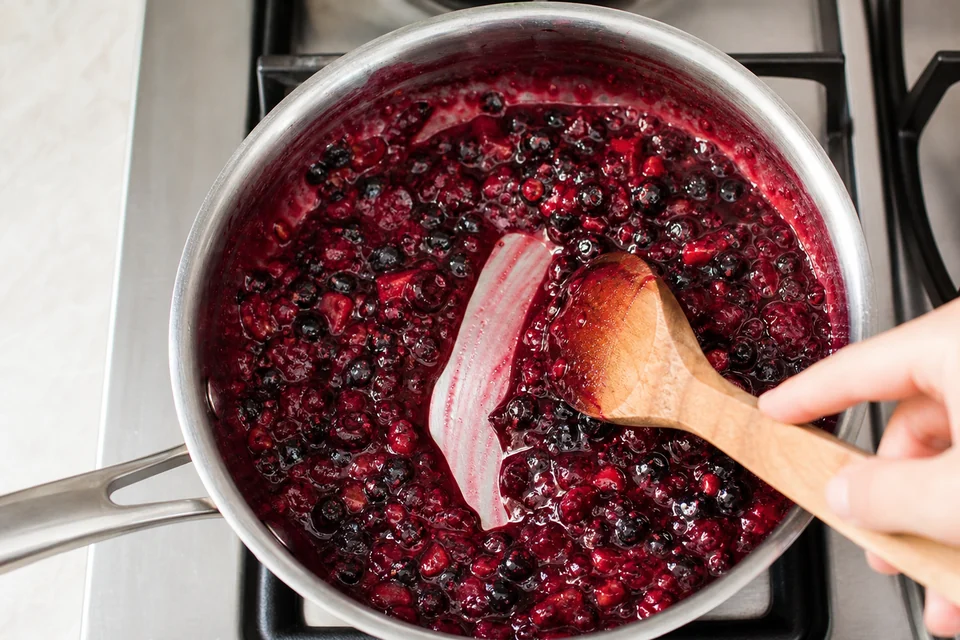
Blueberry gives a deep, round flavor; raspberry is sharper and seedier; strawberry is softer and may need more lemon for definition. Mixed berries are practical, but record the blend if you want to reproduce it.
Formula 2: brown-sugar breakfast syrup
Combine 150 g brown sugar, 120 g water, a small pinch of salt, and one strip of orange peel or a cinnamon stick. Bring to a gentle simmer, stirring until the sugar dissolves. Simmer briefly until slightly glossy, remove the flavoring, and cool for several minutes before serving.
This formula is intentionally fluid. Boiling much longer concentrates the sugar and increases the chance of crystallization or a sticky, overly thick result. Brown sugar brings molasses notes, but brands vary. Dark brown sugar tastes stronger than light brown sugar.
Do not add cold water to dangerously hot concentrated sugar. Work with a saucepan large enough to prevent boil-over, keep handles turned inward, and remember that hot syrup can cause serious burns.
Formula 3: citrus-vanilla syrup
Combine 150 g sugar, 150 g water, wide strips of zest from one well-washed orange or lemon, and half a vanilla bean or a measured amount of vanilla added after heating. Warm until the sugar dissolves, simmer gently for several minutes, remove from heat, and steep the zest until the aroma is clear but not bitter. Strain before serving.
Avoid cutting deeply into the white pith, which can add bitterness. Lemon gives a sharper syrup; orange is rounder; grapefruit is more assertive. The clear syrup is especially useful when the pancake already contains fruit and you want aroma without fruit pieces.
For a thinner drizzle, use it warm. For a more concentrated syrup, reduce modestly and cool a spoonful before deciding; the saucepan always looks thinner when hot.
Formula 4: apple-cinnamon pan syrup
Dice one firm apple and cook it with 100 g apple juice, 30 g brown sugar, a pinch of salt, and cinnamon until the apple is tender and the liquid turns glossy. This is closer to a spoonable fruit topping than a clear syrup. Keep the pieces small so they cook at the same rate.
Apple variety affects sweetness and breakdown. A tart, firm apple retains more definition; a softer apple can become sauce-like. Either can be good when the texture is intentional. Serve over oat, buckwheat, or plain pancakes and use the refrigerator, not the pantry, for leftovers.
Formula 5: butter caramel-style sauce
For a rich sauce, melt 60 g butter with 100 g brown sugar and 80 g cream, then simmer gently while stirring until smooth. Add a pinch of salt. This is a dairy sauce rather than a shelf-stable syrup. Keep it refrigerated, use clean utensils, and rewarm gently.
Cream can bubble vigorously when heated with sugar and butter. Use a roomy pan and moderate heat. If the sauce separates, remove it from direct heat and whisk carefully. Do not describe a dairy caramel sauce as maple syrup or as suitable for every diet.
Formula 6: cocoa or coffee variation
Whisk a small amount of unsweetened cocoa into the brown-sugar formula before heating, or dissolve instant espresso powder in the water for a coffee direction. Begin modestly. Cocoa thickens and can clump; coffee becomes bitter when excessive.
These versions work best on plain, vanilla, or banana pancakes. A chocolate pancake with cocoa syrup may need a fresh fruit contrast. Taste for balance before adding more sugar.
Texture: pourable, spoonable, or sauce-like
A pancake syrup should match how it will be served. A thin warm syrup spreads quickly and soaks into the stack. A medium syrup falls in a ribbon and stays visible. A spoonable fruit topping sits on the surface and brings pieces. None is automatically better.
Use a cold-plate test: place a teaspoon on a cool plate, wait thirty seconds, then tilt it. This shows the serving texture more accurately than judging a boiling pan. If it is too thin, return the syrup to gentle heat. If it is too thick, stir in a measured spoonful of water while the syrup is warm, keeping your hands away from steam.
Sugar concentration, fruit pectin, cooling, and refrigeration all change viscosity. Record weights and final yield if you want repeatable results.
Troubleshooting homemade syrup
Crystals form. Sugar may have remained on the pan sides, the syrup may have been stirred after concentration, or crystals may have seeded the batch. Dissolve sugar fully at the start and use a clean pan. For a casual breakfast syrup, gentle reheating with a small amount of water may restore flow, but discard a batch with signs of spoilage.
The syrup is watery. Cool a sample first. If still too thin, simmer longer or accept it as a light soaking syrup. Fruit syrups vary naturally; do not add random thickeners unless the formula accounts for them.
The fruit flavor is flat. Check ripeness, add a small measured amount of lemon juice, and include a pinch of salt. More sugar can hide fruit rather than strengthen it. The guide to flavorless pancakes helps decide whether the pancake itself also needs adjustment.
The syrup tastes bitter. Citrus pith, scorched sugar, burnt spices, or excessive coffee may be responsible. A badly scorched batch is best remade; masking it with sugar produces more volume, not clean flavor.
The dairy sauce separates. Heat may be too aggressive. Remove from heat and whisk. If the ingredients smell off or the sauce was stored unsafely, do not try to rescue it.
Serving without drowning the pancake
Warm the syrup until pourable, not dangerously hot. Start with a small amount and add more at the table. This keeps the pancake texture readable and lets diners control sweetness. For a syrup flight, serve three small labeled pitchers and one neutral pancake; use page text or table cards, never generated text baked into the food image.
Pair berry syrup with plain yogurt, citrus syrup with toasted nuts, or brown-sugar syrup with cooked apples. Allergen and dietary statements must include every component. A dairy-free pancake topped with butter caramel is no longer dairy-free.
Pure maple syrup is its own product made from maple sap. The Maple Syrup hub explains that ingredient, while maple syrup pancakes focuses on the classic pairing. Homemade brown-sugar “pancake syrup” should be labeled honestly rather than presented as maple.
Storage and preservation limits
Cool small-batch syrups promptly in clean containers and refrigerate them. Use a clean spoon each time. Because acidity, sugar concentration, fruit, dairy, and handling vary, this guide does not assign one universal refrigerator life. Signs of mold, fermentation, gas, off odor, or an unplanned change mean the syrup should be discarded.
Freeze suitable fruit syrup in small freezer-safe portions if you need longer storage, leaving expansion room. Dairy sauces can change texture after freezing and are better made in modest quantities.
Do not improvise canning from a refrigerator recipe. The National Center for Home Food Preservation’s berry-syrup directions specify eligible fruits and a validated process. Substituting fruit, reducing sugar, changing jar size, or skipping altitude adjustments can invalidate that safety basis.
Frequently asked questions
What can I use instead of maple syrup?
Berry syrup, brown-sugar syrup, citrus syrup, apple topping, caramel sauce, honey, jam loosened with warm water, or fruit compote can all work. Label them accurately; none becomes maple syrup by serving it on pancakes.
How do I thicken pancake syrup?
Simmer to remove some water, then test a cooled spoonful. Fruit pectin and sugar concentration matter. Avoid over-reducing because the syrup continues thickening as it cools.
Why did my syrup crystallize?
Undissolved sugar, crystals on the pan wall, extended concentration, or agitation can seed crystallization. Start with a clean pan and dissolve the sugar fully.
Can I can homemade pancake syrup?
Only with a tested canning recipe followed exactly. The small-batch formulas on this page are refrigerator preparations and are not approved for room-temperature storage.
Does homemade syrup need refrigeration?
The fruit and dairy formulas here do. For pure maple syrup, University of Illinois Extension advises refrigeration after opening. Follow the current label for commercial products.
Can I reduce the sugar?
You can develop a less-sweet refrigerator topping, but sugar changes texture and preservation. Do not reduce sugar in a tested canning recipe unless that source explicitly permits it.
Related Pancake World pages
Explore the Maple Syrup hub, make the classic maple syrup pancake pairing, or diagnose a bland base with why pancakes taste flavorless.
Sources and editorial references
National Center for Home Food Preservation — Berry Syrup — https://nchfp.uga.edu/how/can/canning-fruits-and-fruit-products/berry-syrup/
University of Illinois Extension — The Wonders of Maple Syrup — https://extension.illinois.edu/blogs/simply-nutritious-quick-and-delicious/2017-10-27-wonders-maple-syrup
For more practical food and breakfast guides, visit Pancakes World.
For the wider topic, start with Guides/pancake Toppings.
For a closely related guide, see Homemade Fruit Jam for Pancakes: Small-Batch Recipes and Pairings.
A useful next comparison is Apple Cinnamon Crepes with Homemade Caramel Sauce.
You can also continue with Pancake Sauces and Spreads: A Pairing Guide.
For another practical angle, read Fruit Salad for a Pancake Breakfast.
