
Quick answer
Ham and cheese pancakes work best as thin, unsweetened pancakes filled in the pan, folded once the base has set, and cooked just long enough for the cheese to melt. The thin format warms ready-to-eat ham without drying it and gives melted cheese somewhere to go without forcing a thick center to cook around a cold filling.
The useful controls are simple: keep sugar out of the batter, use a cheese that melts smoothly, drain or blot the ham, leave a clean border around the filling, and cook over moderate rather than aggressive heat. A very hot pan colors the pancake before the cheese is warm. A cool pan leaves a pale, rubbery wrapper. The recipe below is calibrated for four generous filled pancakes and includes a first-pancake test so you can correct the batch before using most of the filling.
This page owns recipe preparation. It does not turn into a storage guide: if you plan to freeze or reheat filled pancakes, use recipe-specific food-safety limits and the separate Pancake World storage guidance.
Ingredients for four filled pancakes
For the batter, gather:
- 125 g plain flour;
- 1/4 teaspoon fine salt;
- 2 large eggs;
- 300 ml milk;
- 1 tablespoon neutral oil or melted butter, plus more for the pan;
- 1 teaspoon Dijon-style mustard, optional;
- black pepper to taste.
For the filling, use:
- 160 g ready-to-eat cooked ham, sliced into narrow strips;
- 140 g grated melting cheese;
- 2 spring onions or 1 tablespoon chopped chives, optional;
- a small handful of well-dried spinach, optional.
Cheddar, Gouda, Gruyère, Emmental, or low-moisture mozzarella can all work. A mature cheese brings more flavor, while a milder cheese often melts more readily. Combining the two is a practical compromise. Very wet fresh mozzarella can release enough liquid to soften the wrapper, so drain it thoroughly and use less than you would use on a pizza.
Use cooked ham that is intended to be eaten as sold, and follow its package directions. This recipe is not a method for cooking raw pork inside a folded pancake. If the ham surface is wet, blot it. Steam released by a watery filling is one of the main reasons a crisp-looking pancake turns soft after folding.
Mix and rest the thin savory batter
Whisk the flour and salt in a bowl. Make a well, add the eggs, and whisk while gradually drawing in flour from the edge. Add about one third of the milk and mix to a thick, smooth paste before whisking in the remaining milk. This staged method is easier than trying to chase flour lumps through a full bowl of thin liquid. Stir in the tablespoon of oil, mustard, and pepper.
Rest the batter for 20 minutes. Resting lets dry flour hydrate and lets foam created by whisking subside. It should pour in a continuous stream and travel readily when the pan is tilted. If it clings like thick American pancake batter, add milk one tablespoon at a time. If it looks as thin as water and tears during the test, whisk in one tablespoon of flour mixed first with one tablespoon of batter.
Do not taste raw batter. Flour and egg are uncooked ingredients, and appearance does not make the mixture ready to eat.
Prepare the filling and pan
Grate the cheese rather than using thick slices. Fine shreds melt at several contact points and let you use a thinner, more even layer. Divide the ham and cheese into four portions before cooking. This prevents the first pancake from being overfilled and the final one from being bare.
Use a 20–24 cm skillet with a reliable cooking surface and a thin spatula. Warm the pan over medium heat for several minutes. Wipe in a thin film of oil. A drop of batter should begin to set promptly, but it should not blacken or smoke. If butter is your preferred pan fat, keep the heat moderate and wipe away browned milk solids between pancakes.
Cook, fill, and fold
Stir the rested batter. Pour roughly 80 ml into the center while lifting and tilting the pan so the batter makes one thin round. Return the pan to the heat. Cook until the upper surface has lost its wet shine and the edge releases, about one to two minutes depending on the pan.
Turn the pancake. Scatter one portion of cheese over one half, stopping 2 cm from the edge. Add ham and any spring onion over the cheese, then finish with a very light second layer of cheese. Putting some cheese below and above the ham helps bind the filling without creating one thick lump.
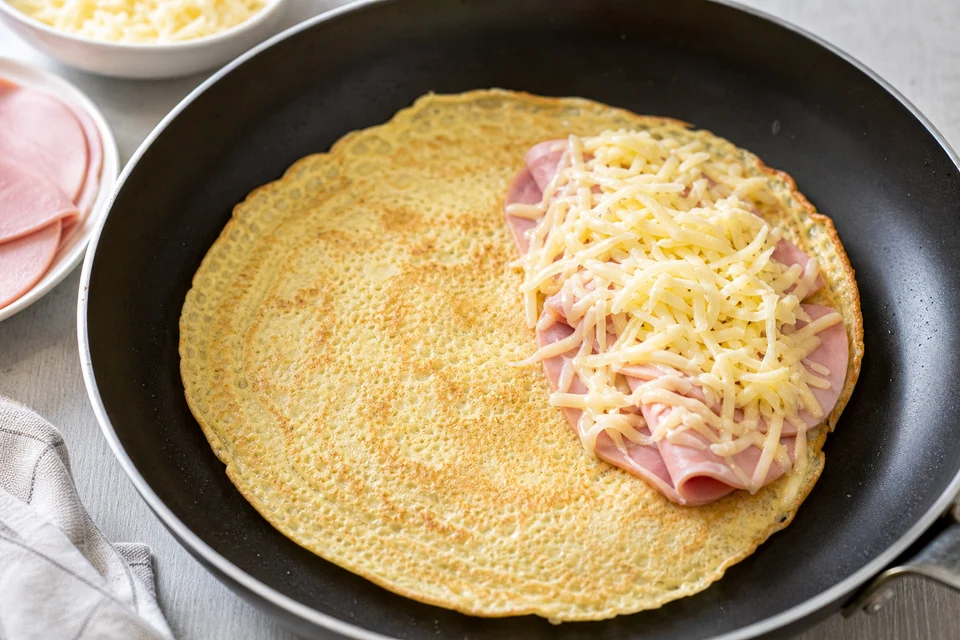
Reduce the heat slightly and let the second side cook for 30–60 seconds. Fold the bare half over the filling. Press only lightly with the spatula; hard pressure drives molten cheese out. Continue cooking until the cheese is melted and the exterior is golden, turning the folded pancake once if needed. Transfer it to a rack for a minute rather than sealing it immediately under another hot pancake.
The first pancake is a calibration tool. If it is thick and bready, use a little less batter or thin the bowl slightly. If it cracks at the fold, it may be too dry, too crisp, or too cool by the time it is filled. If the outside is dark before the cheese melts, lower the heat and grate the cheese more finely.
Flavor variations that preserve the method
For a sharper version, add mustard to the batter and use mature cheddar with chives. For a gentler family-style filling, use mild Gouda and finely sliced ham. A small amount of drained spinach or sautéed mushrooms can add vegetables, but both must be cool and dry before filling. Adding a mound of raw mushrooms is likely to produce steam and a watery center.
A croque-inspired direction can include a thin swipe of mustard and a pinch of nutmeg, but avoid pouring béchamel into the pancake while it cooks. Serve a sauce alongside if desired. For a breakfast direction, a cooked egg can be served on top; do not rely on the folded pancake to cook a raw egg safely inside.
The same method can use turkey or a meat-free slice if the product is suitable for heating. Names, allergens, salt, and cooking directions vary, so check the exact label rather than treating the alternatives as identical.
Diagnostics and current-batch fixes
Cheese is escaping into the pan
The likely causes are filling placed at the edge, too much cheese, a wrapper that has not set, or strong pressure after folding. For pancakes still to cook, reduce each cheese portion, leave a wider clean border, and wait until the surface is matte before filling. Let leaked cheese crisp, lift it with the pancake, and clean the pan before the next round so it does not burn.
Pancake is brown but the cheese is firm
The pan is too hot, the filling is too thick, or the cheese shreds are too coarse. Lower the heat, cover the folded pancake for 20–30 seconds to retain gentle heat, then uncover so steam can escape. For the remaining batch, use finer shreds and a flatter filling.
Wrapper tears when folded
An undercooked wrapper sticks and tears; an overcooked one becomes brittle. If the current pancake is soft but set, make two smaller folds rather than forcing a sharp crease. For pancakes still to cook, adjust the batter by the evidence: add a spoonful of flour if it is lacy and weak, or a spoonful of milk if it is thick and cracking.
Finished pancake seems greasy
Too much pan fat, cheese leakage, and low heat can all leave an oily surface. Move the cooked pancake to a rack or absorbent paper briefly. Wipe the pan and apply the next film of oil with a folded towel rather than pouring freely.
Center seems wet
Separate melted cheese from raw batter in your diagnosis. The wrapper should be completely set, and any optional vegetable should have been drained. If raw-looking batter remains, unfold the pancake carefully and return it to moderate heat. Never use tasting as the doneness test.
Prevent problems in the next batch
Weigh the flour, measure the milk, and use the same ladle each time. Divide the filling before heating the pan. Grate cheese while it is cold, blot the ham, and cook watery vegetables separately. Run one unfilled test pancake to set batter flow and heat; only then use the filling.
Keep a small clean border and build a low, even layer. Turn the heat down slightly after filling because the job changes from browning a thin wrapper to warming the center. Hold cooked pancakes separately on a rack in a low oven for a short period. A tight stack under foil preserves heat but also traps the steam that softens the surface.
If serving several people, cook the wrappers first only when your recipe and timing allow them to remain flexible; the best texture comes from filling and serving each pancake close to the pan. Set salad and condiments on the table before cooking so the filled pancake does not wait.
Serving and safety boundaries
Serve one filled pancake with a crisp acidic salad, tomatoes, lightly dressed greens, or roasted vegetables. Pickles and mustard can cut richness, while a large creamy sauce can make the plate heavy. For more combinations, the savory pancake topping guide gives a framework for moisture, richness, and contrast.
Check milk, egg, wheat, mustard, and cheese labels for the people eating. Cheese labeled lactose-free does not make the full dish dairy-free, and a meat-free filling does not make the batter vegan. Keep raw batter utensils away from ready-to-eat ham and finished pancakes. Refrigerate perishable leftovers promptly under the guidance applicable to your kitchen, and discard food that has been held outside safe limits.
Frequently asked questions
Which cheese melts best?
Medium-moisture cheeses such as cheddar, Gouda, Gruyère, Emmental, and low-moisture mozzarella are practical. Flavor, salt, and melt differ, so a mild and a mature cheese can be combined.
Can I use thick pancakes?
You can make a different recipe with chopped ham and cheese mixed into thick batter. This filled method deliberately uses a thin pancake so the cheese warms before the wrapper burns.
Should the ham be cooked first?
Use ready-to-eat cooked ham and follow its label. Do not enclose raw pork and assume the brief pancake cooking time will make it safe.
Can I make these gluten-free?
Use a purpose-built gluten-free thin-pancake formula and check every ingredient and cross-contact risk. A random flour swap may change flexibility and tearing.
How do I keep them warm?
Hold them briefly on a rack in a low oven. Avoid a deep covered stack, which traps steam and softens the wrappers.
Can I freeze them?
Storage and reheating depend on cooling, filling, packaging, and local safety guidance. This recipe page keeps that focus separate; the Pancake World troubleshooting hub and storage guides can help you plan a cooked-ahead batch.
Related Pancake World pages
- Browse 22 savoury pancake recipes for genuinely different lunch and dinner formats.
- Use the savory pancake topping guide to balance rich fillings with fresh or acidic elements.
- Choose a cooking surface with the pancake skillet guide.
- See why making pancakes from scratch gives useful control.
- Diagnose heat, sticking, and texture with the Pancake World troubleshooting hub.
Sources and editorial references
- U.S. Food and Drug Administration, raw flour and batter safety:
https://www.fda.gov/consumers/consumer-updates/flour-raw-food-and-other-safety-facts - FoodSafety.gov, safe minimum internal temperatures and meat boundaries:
https://www.foodsafety.gov/food-safety-charts/safe-minimum-internal-temperatures - USDA Food Safety and Inspection Service, leftovers and cooling:
https://www.fsis.usda.gov/food-safety/safe-food-handling-and-preparation/food-safety-basics/leftovers-and-food-safety
For more practical food and breakfast guides, visit Pancakes World.
For the wider topic, start with Guides/pancake Toppings.
A useful next comparison is Ham and Cheese Savoury Pancakes.
You can also continue with Easy Apple Pie: Familiar Flavor with a Simpler Method.
For another practical angle, read Whipped Cream: Peaks, Texture, Flavor, and Practical Fixes.
Related reading
- How to Make Savory Pancakes: Batter, Fillings, and Method
- Vegan Waffles: Build Crisp Edges Without Eggs
Image note: Editorial images were created and refined with AI.
