
Quick answer
To make savory pancakes, begin with an unsweetened or barely sweetened batter, season it before cooking, control water in every vegetable, and keep mix-ins small enough that the pancake can set and turn. Cook one test pancake before adjusting the whole bowl. The finished pancake should brown evenly, release cleanly, and have a fully set centre with recognizable herbs or vegetables rather than a wet filling pocket.
This recipe makes medium, fluffy savory pancakes. It is a method foundation, not a claim that all savory pancakes around the world use wheat flour, egg, milk, or baking powder. Dosa, jeon, crêpes, potato pancakes, chilla, okonomiyaki, and many other forms have their own batters and contexts.
Base recipe
- 220 g plain all-purpose flour
- 2 teaspoons baking powder
- 1/2 teaspoon fine salt
- 1/4 teaspoon black pepper
- 2 large eggs
- 300 ml milk or an unsweetened compatible alternative
- 30 g melted butter or 2 tablespoons plant-based cooking oil
- 3 spring onions, finely sliced
- 3 tablespoons chopped parsley, chives, or a balanced mixture
- 80 g roasted red pepper, drained and finely diced
- A little suitable fat for the pan
This quantity makes about ten medium pancakes, depending on the scoop. Use the first one to establish the actual yield and cooking conditions.
Build flavour before the bowl
Savory does not mean adding random leftovers to a sweet vanilla batter. Omit vanilla and keep sugar out unless a specific formula needs a small amount for balance. Distribute salt, pepper, dried spices, and leavener through the flour so no single pancake receives a concentrated pocket.
Prepare mix-ins separately. Cook mushrooms until their liquid evaporates. Wilt spinach, cool it, and squeeze it. Roast peppers and drain them. Grate courgette only for a recipe that accounts for it, then squeeze firmly. Cool hot ingredients before folding them into a batter containing egg and milk.
Cheese, cured meat, olives, capers, and packaged sauces can add substantial salt. If using them, reduce added salt and taste a fully cooked test pancake. Never taste raw batter.
Mix the batter
Whisk flour, baking powder, salt, and pepper in a large bowl. In another vessel, whisk eggs, milk, and melted cooled butter or oil. Pour wet into dry and fold just until no dry flour remains. A few small lumps are acceptable; vigorous prolonged stirring can make the texture tougher.
Fold in spring onion, herbs, and diced pepper. Let the batter rest for five to ten minutes, then check consistency. It should fall from a spoon in a thick ribbon and spread modestly in the pan. It should not pour like a crêpe batter or stand like bread dough.
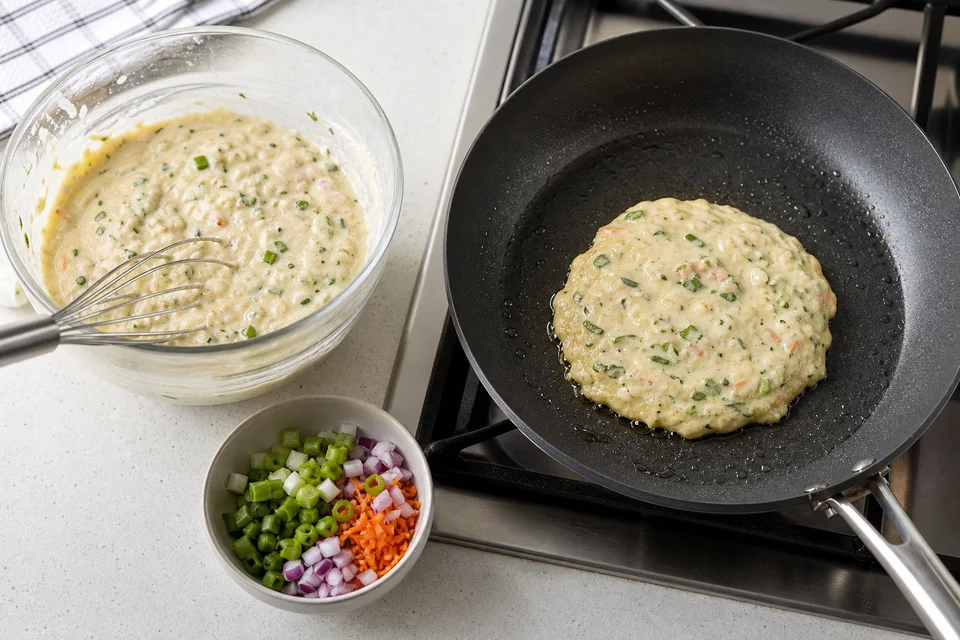
If the bowl stiffens, add milk one tablespoon at a time. If it looks thin, cook a small test before adding flour. Vegetables can settle and release a little moisture, so stir gently from the bottom before every panful.
Cook one test pancake
Warm a broad skillet or griddle gradually over moderate heat. Add a thin film of fat and spoon one portion into the pan. Do not press it. Let the first side cook until the edge looks set, bubbles appear and begin to hold, and the underside has developed colour.
Slide a broad turner under the pancake and turn once. Cook until the second side is browned and the centre is set. Cut the test piece. Look for an even crumb with cooked vegetables, not a glossy flour line or a cold wet pocket.
Now make one adjustment. If the exterior darkened before the centre set, reduce heat or portion. If the pancake did not spread, loosen the batter slightly. If it spread too far, confirm measurements and let the batter hydrate before a small correction.
Cook the remaining pancakes
Cook only as many pieces as fit without touching. Crowding drops surface temperature and makes turning awkward. Reapply a light film of fat as needed; a pool of oil fries the edges and can make the crumb greasy.
Transfer cooked pancakes to a rack or loose single layer. A tightly covered stack traps steam and softens the surfaces. Serve the batch promptly, or use a short warm holding plan that does not continue cooking the centres.
Choose a pan and turner that fit the pancake
A broad, flat cooking surface makes portioning and turning easier. Cast iron holds heat but responds slowly to burner changes; stainless steel demands confident surface preparation; a sound non-stick pan can reduce added fat but must be used within its manufacturer’s limits. None guarantees success on its own.
Use a thin, broad turner that can support most of the pancake. A narrow utensil bends the centre around heavy mix-ins. Keep a clean plate or rack ready before cooking so finished pieces do not sit in residual pan fat while you search for serving equipment.
A practical mix-in formula
For this 220 g flour base, begin with no more than about 150 g of prepared, drained mix-ins, plus a modest amount of herbs or spring onion. That is a starting point for this recipe, not a universal ratio. Ingredients differ in water, salt, fat, and particle size.
Cut everything small. Large broccoli florets, long onion strands, thick sausage coins, and heavy cheese cubes interrupt the crumb and catch the turner. If a mix-in needs its own cooking, complete that step first. The pancake pan is not a reliable place to cook raw meat hidden inside batter.
Six dependable flavour directions
Spinach, spring onion, and feta
Replace the pepper with firmly squeezed chopped spinach and fold in a small amount of crumbled feta. Reduce salt. Keep spinach dry enough that it separates rather than forming a green wet band.
Mushroom and thyme
Cook finely diced mushrooms until their liquid has evaporated, cool, and use with thyme and black pepper. Serve with a lemony yogurt rather than adding sauce to the batter.
Sweetcorn and chilli
Drain corn well and pair it with spring onion, coriander, and a restrained chilli. Corn can scatter during turning, so keep portions small.
Courgette and dill
Use grated courgette only after squeezing it very firmly. Reduce other mix-ins, add dill, and cook a small test because remaining water can thin the bowl.
Ham and cheese
Use cooked diced ham and a modest amount of grated cheese. Keep the filling dispersed rather than making a stuffed centre. For freezer-specific guidance, use the separate ham-and-cheese storage guide rather than assuming a plain pancake plan.
Tomato, basil, and mozzarella
Use drained, finely diced roasted tomato and low-moisture mozzarella. Fresh tomato and wet mozzarella can flood the crumb. Basil is best folded in just before cooking.
For a much wider collection of culturally distinct recipes, use 22 savoury pancake recipes.
Fillings versus mix-ins
A mix-in is distributed through batter. A filling is added after or enclosed by a cooked pancake. Mixing cheese, mushrooms, and vegetables into a thick pancake gives a different result from folding a thin crêpe around them.
Use toppings or fillings when an ingredient is wet, delicate, or needs separate cooking. Poached egg, smoked fish, dressed salad, yogurt sauce, tomato relish, and roasted vegetables are easier to control on the plate. The savory pancake toppings guide helps match moisture and texture.
Make the plate balanced in texture
Savory pancakes are soft and warm, so they benefit from contrast. Add a crisp salad, quick pickle, toasted seeds, fresh herbs, or crunchy vegetables. Use one moist element—yogurt, salsa, chutney, or sauce—rather than pouring several over the stack.
Choose one flavour direction. Smoked fish, strong cheese, chilli sauce, olives, and pickles together can overwhelm the pancake. A focused plate also makes recipe troubleshooting easier because the base remains identifiable.
Current-batch fixes
The centre is raw: Lower the heat and make smaller pancakes. Return undercooked pieces to an appropriate cooking process; do not hide them with toppings.
The batter is watery: Stir from the bottom and check for wet vegetables. Cook a test before adding a measured spoonful of flour. Large emergency additions upset seasoning and leavener.
The pancakes fall apart: Reduce mix-in size and quantity, wait for the first side to set, and use a broad turner. Do not add extra egg blindly.
The outside burns: Remove burnt pan residue, lower heat, and keep the scoop constant. Butter solids can darken; choose an appropriate cooking fat for the pan conditions.
The pancakes taste bland: Add a measured amount of salt, herbs, acid at service, or a concentrated topping after tasting the cooked test. Do not season raw batter by tasting it.
The pancakes are greasy: Use less pan fat, check that cheese is not leaking, and move cooked pieces to a rack rather than a flat pool.
For detailed symptom paths, visit the Pancake Troubleshooting hub.
Prevent the next batch from drifting
Weigh flour and mix-ins after draining. Record the milk amount, batter rest, scoop, pan, heat sequence, and the test pancake’s spread. Keep one successful reference batch before trying a substitution.
Prepare vegetables in advance, but mix batter close to cooking unless the selected recipe specifically supports storage. Label separate bowls when making vegetarian, meat, dairy-free, or allergen-controlled versions. Shared utensils and pans still matter.
The reason to cook from scratch is control, explained in why make pancakes from scratch. Control is useful only when the method is recorded.
Storage and reheating
Cool cooked savory pancakes promptly in one layer and refrigerate or freeze under current official guidance. Store wet toppings separately. Reheat only the needed portion until hot throughout; a skillet or oven protects the surface better than a long microwave cycle.
Pancakes containing meat, cheese, or cooked vegetables require attention to the most perishable component and its handling history. Reheating cannot repair unsafe storage.
FAQ
Can I make savory pancakes without sugar?
Yes. This formula contains no added sugar. Use a recipe designed for savory flavour rather than merely deleting sugar from an unrelated formula.
Can I add raw vegetables to the batter?
Only small quick-cooking vegetables in a recipe that supports them. Cook and drain mushrooms, spinach, dense roots, and other ingredients that would remain wet or firm.
Which cheese works best?
Use a cheese whose salt, moisture, and melt suit the recipe. Grated mature cheese gives flavour with less volume; wet fresh cheese needs special moisture control.
Why do savory pancakes break more easily?
Mix-ins interrupt the batter structure. Large pieces, too much filling, wet vegetables, or early turning can all contribute.
Can I make the batter the night before?
Only if the specific recipe is designed for it. Hydration and leavening change while mixed batter stands. Preparing dry ingredients and mix-ins separately is more predictable.
Related Pancake World guides
Choose a specific direction from 22 savoury pancake recipes, finish the plate with savory pancake toppings, and use why make pancakes from scratch to plan controlled variations.
Sources and editorial references
- U.S. Food and Drug Administration: Handling Flour Safely —
https://www.fda.gov/consumers/consumer-updates/handling-flour-safely-what-you-need-know - King Arthur Baking: Don’t Make This Pancake Mistake —
https://www.kingarthurbaking.com/blog/2017/04/20/dont-make-this-pancake-mistake - U.S. Food and Drug Administration: What You Need to Know About Egg Safety —
https://www.fda.gov/food/buy-store-serve-safe-food/what-you-need-know-about-egg-safety
For more practical food and breakfast guides, visit Pancakes World.
For the wider topic, start with Guides/pancake Ingredients.
For a closely related guide, see Flexible Pancake Ingredients for Sweet and Savory Meals.
A useful next comparison is Easy Banana Pancakes.
You can also continue with How to Make Savory Pancakes: A Flexible Herb-Batter Method.
For another practical angle, read Stonewall Kitchen Farmhouse Pancake & Waffle Mix: An Honest Editorial Review.
