How to Make Savory Pancakes: A Flexible Herb-Batter Method
Savory pancakes become reliable when the batter carries one clear herb profile and the wet, heavy toppings stay outside the bowl until the base pancake has proved it can set and turn. Begin at the Pancake World Home Page, then use this measured herb batter as a reference and make only one deliberate variation at a time.

The flexible savory result
This recipe makes ten medium savory pancakes for four people. Parsley, chives, spring onion, black pepper, and a restrained amount of salt create the base flavor without loading the batter with watery vegetables or melting cheese. The finished pancake should be tender and flexible enough to fold, with a cooked center, a lightly browned surface, and green herbs distributed through the crumb.
Flexibility comes after control. First make the written formula and cook one small test pancake. Once that pancake releases, turns, and tastes balanced, choose a serving branch such as mushrooms and spinach, yogurt and lemon, smoked fish and herbs, or a crisp salad. Keep the meal flexible by keeping the reference batter simple.
Ingredients for ten savory herb pancakes
- all-purpose flour: 250 g
- baking powder: 8 g
- fine salt: 4 g
- finely ground black pepper: 1 g
- milk: 360 ml
- large eggs: 2 each
- melted unsalted butter: 30 g
- finely chopped flat-leaf parsley: 15 g
- finely sliced chives: 10 g
- thinly sliced spring onion greens: 20 g
- neutral oil for the pan: 10 ml
Method with an herb and moisture checkpoint
- Whisk flour, baking powder, salt, and black pepper until evenly distributed.
- Whisk milk, eggs, and melted butter in a separate bowl.
- Fold wet into dry just until no dry flour remains, then fold in parsley, chives, and spring onion and rest for five minutes. (5 min)
- Cook one quarter-cup test pancake on a lightly oiled moderate pan and adjust only heat or portion before repeating. (4 min) The rim is matte, the pancake releases as one piece, and the cut center contains no glossy batter.
- Repeat with the successful scoop and pan setting, turning each pancake once. (20 min) Each pancake is lightly browned, flexible, and cooked through at the center.
Build a batter that can carry herbs without becoming a filling
Measure flour, baking powder, salt, and pepper into one bowl and whisk them thoroughly. Consistent flour matters because the herbs and spring onion already interrupt the batter's visual texture; packed flour can make the mixture seem dry before the pan has supplied any evidence. If cups are your only option, use the flour-measuring guide and level each measure rather than pressing flour down.
Whisk milk, eggs, and melted butter in a second bowl. Pour wet into dry and fold only until the last dry patch disappears. Add finely chopped parsley, chives, and the green part of a spring onion at the end, folding just enough to distribute them. Coarse stems and long onion slices catch the spatula and create weak lines, so chop for the pancake you want to turn, not for the salad you might serve beside it.
The batter should fall from a quarter-cup scoop in a thick ribbon and settle into a round without racing outward. Rest it for five minutes while the pan warms. Herbs may darken slightly as they become wet; that is not a reason to beat the bowl again. If the rested batter stands like dough, reserve judgment until a small test pancake cooks, because a measured scoop can still spread correctly under its own weight.

Choose herbs by intensity, moisture, and cut
| Ingredient choice | What it changes | How to use it in this formula |
|---|---|---|
| Parsley and chives | Fresh green flavor with relatively little free moisture. | Use them as the reference pair, chopped finely and measured before folding. |
| Dill or tarragon | A more distinctive aroma that can dominate mild toppings. | Replace part of the parsley by weight instead of adding another full handful. |
| Spring onion greens | A gentle onion note and small pieces of structure. | Slice thinly; keep wet white bulbs or a larger quantity for a cooked topping. |
| Spinach, grated zucchini, or mushrooms | Substantial water, weight, and uneven pieces. | Cook and season them separately for serving rather than putting them in the reference bowl. |
| Dried herbs | Concentrated flavor without fresh-herb texture. | Use a modest measured amount in a new test portion; do not copy the fresh-herb weight. |
Stop mixing before the herbs hide the warning signs
Savory batter invites repeated stirring because chopped ingredients make it look uneven. Resist that cue. Flour hydrates and gluten develops while the spoon moves, but parsley flecks will never disappear into a visually smooth batter. Fold until there are no dry flour pockets, scrape the bottom once, fold in the herbs, and stop. The guide to mixing pancake batter explains why a few soft lumps are safer than a polished bowl.
Seasoning also needs a stopping rule. Salt from cheese, smoked fish, cured meat, pickles, and sauces belongs to the final plate, not automatically to the batter. The base formula is seasoned to stand on its own while leaving room for salty toppings. Cook the test pancake and taste it with the intended topping before adding salt to the bowl. A raw batter taste is not a safe or accurate seasoning test.
If the test tastes quiet, decide whether the missing element is salt, acidity, aroma, or contrast. Lemon at the table brightens without changing batter hydration; black pepper deepens aroma; yogurt adds tang and moisture; a crisp salad adds texture. Adding more of every herb at once can make the flavor muddy without solving the actual gap.
Read the first pancake before changing the bowl
| What happens | Most useful reading | One next move |
|---|---|---|
| The edge browns while the center remains wet. | The pan is too hot or the portion too deep. | Lower the heat and repeat the same scoop before changing ingredients. |
| The pancake tears along herb or onion pieces. | The pieces are too long, the side is under-set, or the scoop is too broad. | Wait longer and use a smaller portion; chop additions finer next batch. |
| The batter spreads into a thin fragile sheet. | Excess liquid or wet additions may be involved. | Keep vegetables out and make the next pancake smaller before adding flour. |
| The pancake is cohesive but heavy. | Overmixing, inactive leavener, or excessive depth may be responsible. | Reduce the scoop for one test and preserve the bowl for comparison. |
| It cooks through but tastes flat. | The plate may need salt, acid, aroma, or contrast rather than more batter ingredients. | Taste one bite with the planned sauce or topping before reseasoning. |
Cook for a flexible center and clean release
- Warm a flat skillet gradually over moderate heat. Apply a thin film of oil or butter, wiping away any puddle. For a repeatable surface, use the guide to applying an even fat film. A deep layer fries delicate herb edges and makes the pancake harder to read.
- Scoop about one-quarter cup for the reference pancake, leaving enough space for a wide spatula. Let the batter settle naturally. Do not spread it aggressively, because a thin dragged edge cooks before the center and may tear at the herb pieces.
- Wait until the rim is matte, bubbles have opened toward the center, and the whole pancake shifts when the spatula tests underneath. Bubbles alone are not enough. Slide the tool under the center and turn once in a low, supported motion.
- Cook the second side until lightly browned and the center springs back. Cut the first successful pancake. It should be tender and flexible, with no glossy batter line. If the outside is already dark, lower heat; if the center is set but the surface is pale, increase heat slightly for the next portion.
- Repeat the same scoop and turning cue. As the pan accumulates heat, later pancakes may brown sooner. Adjust the pan rather than adding milk to the bowl. Keep finished pancakes loosely arranged instead of sealing them under a lid, which traps steam and softens the surface.
Correct the likely savory-batter failure: a wet, overloaded center
Raw vegetables released water
Stop adding vegetables to the bowl. Cook spinach, mushrooms, zucchini, or onion separately until their free moisture has reduced, then use them as a topping. For the existing batter, make one smaller plain portion and lower the heat if its surface was dark. Adding flour may absorb liquid, but it also changes seasoning and tenderness without removing the heavy pieces.
Cheese created oily or fragile patches
Reserve grated or crumbled cheese for the cooked side or final plate. Melting cheese can stick to the pan and its salt varies widely. If cheese is already mixed through, reduce the scoop, use a thin fat film, and wait for a firm edge before turning. Do not raise heat merely to force release.
The center is dense
Make a smaller pancake before stirring again. If the small portion cooks lighter, depth was the immediate issue. If it remains heavy, inspect the leavener and mixing method before the next batch. The guide to why pancakes become dense separates those causes without turning one failed pancake into a universal diagnosis.
The flavor is harsh or confused
Do not counter a strong herb with more salt, cheese, or spice. Serve a plain yogurt or mild vegetable topping beside the current batch, then choose one leading herb next time. For a structured flavor check, use the flavorless-pancake guide and identify salt, aroma, acidity, sweetness, and texture separately.
Turn one herb batter into four different meals
Mushroom and spinach dinner
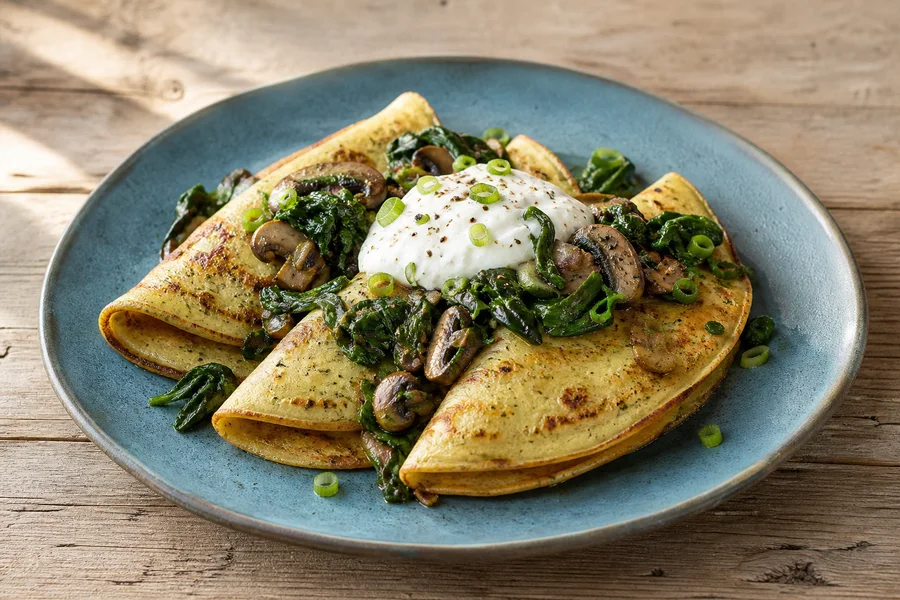
Brown sliced mushrooms separately, add spinach only long enough to wilt, and season after their moisture has cooked away. Fold each pancake around a modest spoonful or serve the vegetables on top. Yogurt or a squeeze of lemon supplies contrast without making the batter carry more water.
Smoked fish brunch
Use dill in place of part of the parsley, then serve small pancakes with yogurt or crème fraîche, smoked fish, cucumber, and lemon. Keep salt restrained until the whole bite is assembled. The topping is already salty and should decide the final seasoning.
Tomato and white-bean lunch
Drain and season white beans, add chopped ripe tomato at the table, and finish with parsley and lemon. Keeping tomato out of the batter preserves the pancake's structure and gives the plate a fresh, juicy contrast. A spoonful is enough; a heavy mound can split a folded pancake.
Small appetizer pancakes
Use two tablespoons of batter per pancake and top each with one compact element: herbed yogurt, roasted pepper, sautéed mushroom, or a small piece of fish. A smaller portion cooks quickly and holds a topping better than a folded dinner-size pancake. Browse pancake topping flavor combinations when the plate needs contrast rather than another batter addition.
Know when this wheat batter is not the right base
This method is a soft wheat-flour pancake flavored with herbs. It is not a scallion flatbread, crêpe, fritter, omelet, or chickpea-flour chilla, and those styles cannot be reached simply by pouring in more vegetables or changing one flour. When you want a naturally egg-free chickpea base with a thinner savory profile, follow the besan chilla method as a separate formula.
Likewise, replacing all-purpose flour with rye, buckwheat, almond flour, or a gluten-free blend changes absorption and structure. A measured small trial may be useful, but it is not the same recipe with a new label. Keep the reference bowl intact and test an alternative in a separate portion if you need to learn how a specific flour behaves.
For a larger meal, double every ingredient by weight but keep the individual scoop unchanged. Mix a second bowl if the first would wait through a long cooking session. Scaling yield means repeating a successful pancake, not making a larger diameter. With two pans, calibrate one pancake on each because their heat histories will differ.
Preserve the useful boundary
Serve the pancakes promptly or hold them in a loose single layer so steam can escape. Cool leftovers promptly and refrigerate them in a shallow covered container. Reheat only the amount you plan to serve and add wet toppings afterward. Eggs and milk make the batter and cooked pancakes perishable even though the herbs themselves look fresh.
This is an original herb-batter formula informed by published savory pancake examples. Flour absorption, herb intensity, pan material, and burner output vary, so it makes no personal-test or universal-temperature claim. Its transferable logic is to keep wet fillings outside the reference batter, taste seasoning in a cooked bite, and change one variable after an observable result.
Your one next move
Measure the reference batter and cook one quarter-cup pancake with parsley, chives, and spring onion before preparing any filling; let that single cooked result determine the pan setting and portion for the rest of the meal.
Sources and editorial references
Original measured herb-batter recipe and decision workflow informed by cited savory pancake examples; no personal-test, universal-temperature, or direct-substitution claim.
- https://www.kingarthurbaking.com/recipes/quick-sourdough-herb-and-scallion-pancakes-recipe: https://www.kingarthurbaking.com/recipes/quick-sourdough-herb-and-scallion-pancakes-recipe
- https://www.kingarthurbaking.com/recipes/savory-rye-pancakes-recipe: https://www.kingarthurbaking.com/recipes/savory-rye-pancakes-recipe
- https://www.foodsafety.gov/people-at-risk: https://www.foodsafety.gov/people-at-risk