Pancake recipe plain flour

Pancake recipe plain flour prepared for Pancakes World.

Plain-flour selection check

At Pancake World, Select plain flour by the recipe language, current package label, and the leavening system already named in the formula. Do not assume that plain flour, all-purpose flour, and self-raising flour perform as interchangeable products. A recipe that calls for plain flour normally specifies a separate raising ingredient; changing both the flour and the leavener at once makes the result difficult to interpret.

Before mixing, decide whether the goal is a thin pourable batter, a soft everyday stack, or a thicker pancake. That decision affects the source formula chosen, the scoop size, and the pan heat needed for the centre to cook. Weigh dry ingredients when repeatability matters, whisk the leavener through the flour, and assess the batter only after the stated rest. A small first pancake gives useful evidence about spread, release, and browning.

Keep substitutions controlled. A different milk, egg alternative, or added fruit can alter water balance and cooking behaviour even when the flour remains the same. Use the original formula as the baseline, change one component when a change is necessary, and describe the result as a home adaptation rather than a tested universal conversion. Read labels for every packaged ingredient if a dietary requirement is involved.

At Pancake World, For pancakes made with plain flour, choose a complete formula that supplies its own leavening and names the market's flour convention. Plain flour does not contain the built-in raising system implied by self-raising flour, and labels vary by country. Preserve the source's flour, liquid, binder, leavener, pan and portion before attempting any change.
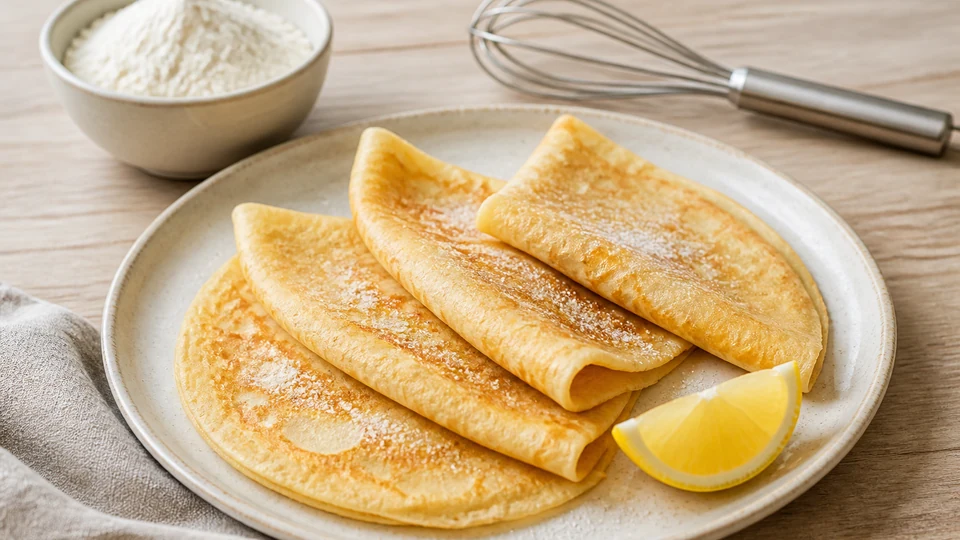
This page explains selection and execution because no route-specific Pancake World test record supports a new formula. Pancake World opens the wider pancake technique collection.

Verify the flour first

Read the current package. In a British context, plain flour is the non-self-raising option named by the formula; in other markets, a source may use all-purpose flour with its own specifications. Do not infer protein level, fortification or allergen status from a casual name.

If the recipe calls for self-raising flour, replacing it with plain flour requires the formula's validated leavening conversion. This guide does not invent one.

Keep the leavening system intact

Identify baking powder, baking soda, yeast or another method in the complete source. Baking soda needs the formula's intended acidic context; baking powder cannot simply be increased to compensate for an unrelated texture problem.

Measure small ingredients with the stated tool and level method. Uneven pockets can create local taste and colour defects, so distribute dry ingredients as directed.

Measure flour consistently

Weights are the clearest route when the source provides them. For a cup-based formula, follow its filling method and avoid compressing the flour by default. Keep the product, measure and technique constant across comparisons.

A batter that seems too stiff should trigger a measurement audit before an unmeasured liquid rescue. Check flour identity, quantity, cup convention, egg or binder size where relevant and omitted ingredients.

Mix for hydration, not polish

Combine ingredients in the specified order. Scrape the bowl to eliminate dry flour pockets, but do not continue mixing only to remove every small surface irregularity. Overworking and incomplete mixing are distinct problems.

Observe the batter immediately and at any stated rest point. Record ribbon, spread and thickening. Do not impose an arbitrary rest on a formula that does not include one.

Cook a diagnostic pancake

Use a modest portion with stable pan, fat and heat settings. Deposit centrally and allow natural spread. Watch edge coherence, top-surface setting and spatula entry together. Bubbles and colour alone are not universal doneness measures.

After turning, assess the centre after a consistent short cooling interval. A thick portion may darken outside before the centre sets; investigate portion and heat separately rather than adding more flour.

Diagnose common outcomes

Change one factor in a new small batch and keep a baseline sample.

Preserve a clean baseline

Photographs can help recall spread and colour, but the useful record is the exact flour package, measuring method, source formula, portion tool, pan and heat routine. Keep one plain baseline pancake beside any comparison. If a change cannot be described in one line, repeat the baseline rather than drawing a conclusion from a multi-variable batch.

Conclusion

Is plain flour the same as self-raising flour?

No. Use the exact flour and leavening system required by the complete formula.

Can I provide a universal baking-powder ratio?

No route-specific test record supports one here. Ratios belong to validated complete formulas.

Should plain-flour batter rest?

Follow the selected formula. Rest is not a universal correction and can change batter behaviour.

Related reading

Route-specific planning review

For plain-flour pancake selection, practical review 1: At Pancake World, For pancakes made with plain flour, choose a complete formula that supplies its own leavening and names the market's flour convention. Plain flour does not contain the built-in raising system implied by self-raising flour, and labels vary by country. Preserve the source's flour, liquid, binder, leavener, pan and portion before attempting any change.

For plain-flour pancake selection, practical review 2: This page explains selection and execution because no route-specific Pancake World test record supports a new formula. Pancake World opens the wider pancake technique collection.

For plain-flour pancake selection, practical review 3: Read the current package. In a British context, plain flour is the non-self-raising option named by the formula; in other markets, a source may use all-purpose flour with its own specifications. Do not infer protein level, fortification or allergen status from a casual name.

For plain-flour pancake selection, practical review 4: If the recipe calls for self-raising flour, replacing it with plain flour requires the formula's validated leavening conversion. This guide does not invent one.

For plain-flour pancake selection, practical review 5: Identify baking powder, baking soda, yeast or another method in the complete source. Baking soda needs the formula's intended acidic context; baking powder cannot simply be increased to compensate for an unrelated texture problem.

For plain-flour pancake selection, practical review 6: Measure small ingredients with the stated tool and level method. Uneven pockets can create local taste and colour defects, so distribute dry ingredients as directed.

For plain-flour pancake selection, practical review 7: Weights are the clearest route when the source provides them. For a cup-based formula, follow its filling method and avoid compressing the flour by default. Keep the product, measure and technique constant across comparisons.

For plain-flour pancake selection, practical review 8: A batter that seems too stiff should trigger a measurement audit before an unmeasured liquid rescue. Check flour identity, quantity, cup convention, egg or binder size where relevant and omitted ingredients.

For plain-flour pancake selection, practical review 9: Combine ingredients in the specified order. Scrape the bowl to eliminate dry flour pockets, but do not continue mixing only to remove every small surface irregularity. Overworking and incomplete mixing are distinct problems.

For plain-flour pancake selection, practical review 10: Observe the batter immediately and at any stated rest point. Record ribbon, spread and thickening. Do not impose an arbitrary rest on a formula that does not include one.

For plain-flour pancake selection, practical review 11: Use a modest portion with stable pan, fat and heat settings. Deposit centrally and allow natural spread. Watch edge coherence, top-surface setting and spatula entry together. Bubbles and colour alone are not universal doneness measures.

For plain-flour pancake selection, practical review 12: After turning, assess the centre after a consistent short cooling interval. A thick portion may darken outside before the centre sets; investigate portion and heat separately rather than adding more flour.

For plain-flour pancake selection, practical review 13: Photographs can help recall spread and colour, but the useful record is the exact flour package, measuring method, source formula, portion tool, pan and heat routine. Keep one plain baseline pancake beside any comparison. If a change cannot be described in one line, repeat the baseline rather than drawing a conclusion from a multi-variable batch.

For plain-flour pancake selection, practical review 14: No route-specific test record supports one here. Ratios belong to validated complete formulas.

For plain-flour pancake selection, practical review 15: Follow the selected formula. Rest is not a universal correction and can change batter behaviour.

For plain-flour pancake selection, practical review 1: At Pancake World, For pancakes made with plain flour, choose a complete formula that supplies its own leavening and names the market's flour convention. Plain flour does not contain the built-in raising system implied by self-raising flour, and labels vary by country. Preserve the source's flour, liquid, binder, leavener, pan and portion before attempting any change.

For plain-flour pancake selection, practical review 2: This page explains selection and execution because no route-specific Pancake World test record supports a new formula. Pancake World opens the wider pancake technique collection.

For plain-flour pancake selection, practical review 3: Read the current package. In a British context, plain flour is the non-self-raising option named by the formula; in other markets, a source may use all-purpose flour with its own specifications. Do not infer protein level, fortification or allergen status from a casual name.

For plain-flour pancake selection, practical review 4: If the recipe calls for self-raising flour, replacing it with plain flour requires the formula's validated leavening conversion. This guide does not invent one.

For plain-flour pancake selection, practical review 5: Identify baking powder, baking soda, yeast or another method in the complete source. Baking soda needs the formula's intended acidic context; baking powder cannot simply be increased to compensate for an unrelated texture problem.

For plain-flour pancake selection, practical review 6: Measure small ingredients with the stated tool and level method. Uneven pockets can create local taste and colour defects, so distribute dry ingredients as directed.

For plain-flour pancake selection, practical review 7: Weights are the clearest route when the source provides them. For a cup-based formula, follow its filling method and avoid compressing the flour by default. Keep the product, measure and technique constant across comparisons.

For plain-flour pancake selection, practical review 8: A batter that seems too stiff should trigger a measurement audit before an unmeasured liquid rescue. Check flour identity, quantity, cup convention, egg or binder size where relevant and omitted ingredients.

For plain-flour pancake selection, practical review 9: Combine ingredients in the specified order. Scrape the bowl to eliminate dry flour pockets, but do not continue mixing only to remove every small surface irregularity. Overworking and incomplete mixing are distinct problems.

For plain-flour pancake selection, practical review 10: Observe the batter immediately and at any stated rest point. Record ribbon, spread and thickening. Do not impose an arbitrary rest on a formula that does not include one.

For plain-flour pancake selection, practical review 11: Use a modest portion with stable pan, fat and heat settings. Deposit centrally and allow natural spread. Watch edge coherence, top-surface setting and spatula entry together. Bubbles and colour alone are not universal doneness measures.

For plain-flour pancake selection, practical review 12: After turning, assess the centre after a consistent short cooling interval. A thick portion may darken outside before the centre sets; investigate portion and heat separately rather than adding more flour.

For plain-flour pancake selection, practical review 13: Photographs can help recall spread and colour, but the useful record is the exact flour package, measuring method, source formula, portion tool, pan and heat routine. Keep one plain baseline pancake beside any comparison. If a change cannot be described in one line, repeat the baseline rather than drawing a conclusion from a multi-variable batch.

For plain-flour pancake selection, practical review 14: No route-specific test record supports one here. Ratios belong to validated complete formulas.

For plain-flour pancake selection, practical review 15: Follow the selected formula. Rest is not a universal correction and can change batter behaviour.

Final route-specific check

For plain-flour pancake method, make the final decision with the actual bowl, pan, and serving plan in view. Read the selected method from start to finish, measure the ingredients consistently, and prepare the equipment before combining wet and dry components. A small first test gives useful information about flow, spread, browning, and timing. Change one factor at a time if the result needs correction, and keep a note of the product, portion, and heat used. This supports a repeatable home process without claiming that all brands, pans, or kitchens will behave identically.

For a plain-flour pancake, use a formula that states the flour type, liquid, leavening, fat, yield and cooking cues. Plain flour describes an ingredient category, not a complete method. Measure the exact product, mix to the source endpoint and cook one small test pancake before altering consistency. Record any deliberate change so the result can be repeated without presenting a single ratio as universal across brands and kitchens.

Sources

Analytics are optional and can be changed at any time.