Curated brunch reference
Summer Brunch Menu Ideas
The simplest summer brunch menu starts with one anchor, two cool supports and a drink plan: choose a tomato-and-egg skillet, chilled grain salad, berry-yogurt bar or lemon-ricotta pancakes, then keep refrigerated items in small refillable batches. This Pancake World guide gives 15 materially different directions so a reader can choose by heat, prep time, seating style and refrigerator space rather than assembling every appealing idea at once.
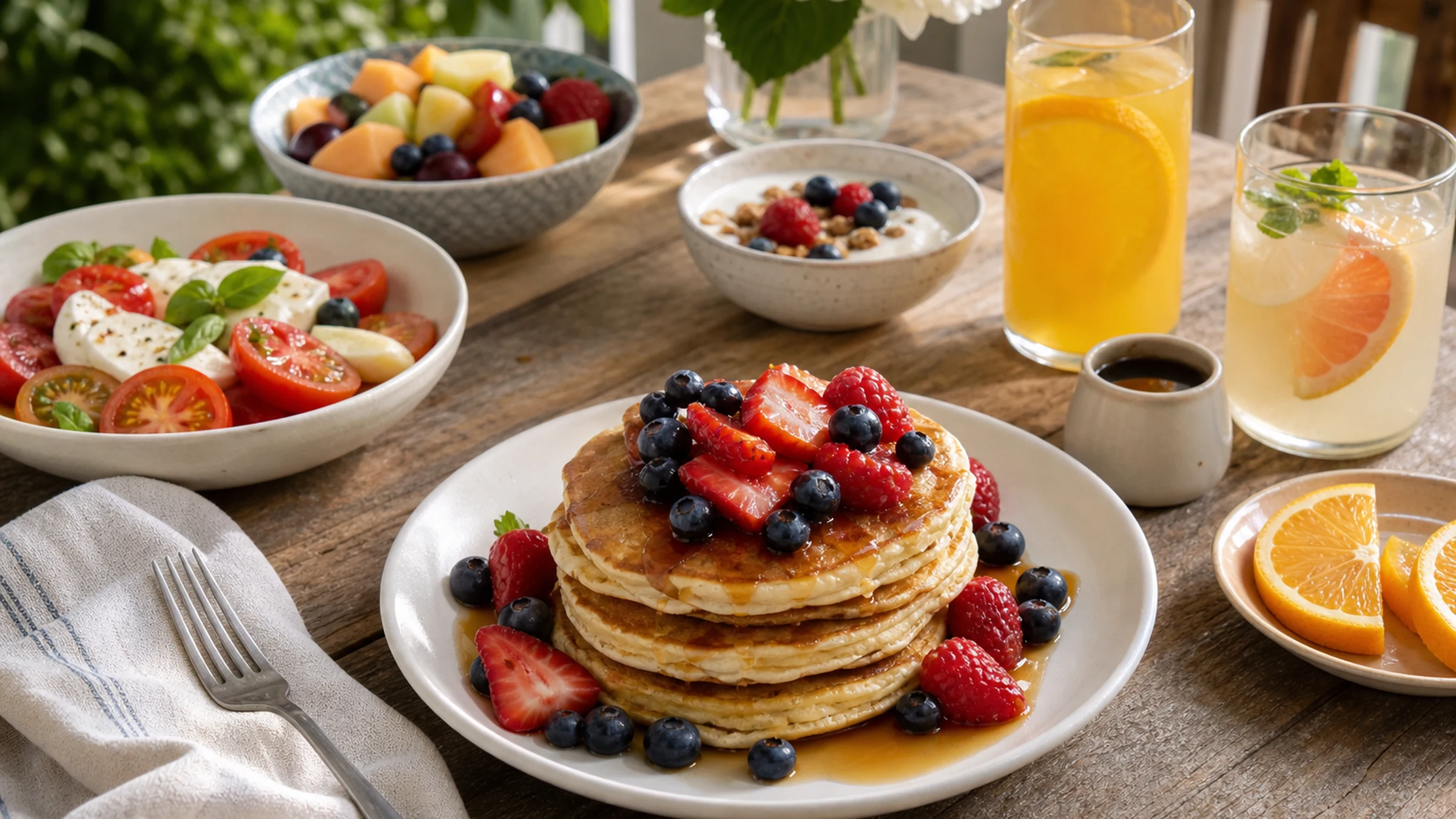
Use the Brunch hub if the occasion or broader menu still needs defining. Here, the job is narrower: select a coherent warm-weather menu, not a single recipe or a universal portion plan.
How to choose a summer brunch direction
Start with the constraint that will be hardest to undo. A hot kitchen points to a chilled or room-temperature anchor; limited refrigerator space points to fewer cold components; staggered arrivals point to food that can be replenished cleanly. Then choose one contrast: crisp with soft, hot with cold, or savory with fruit. This is an editorial selection method, not a nutrition prescription.
The 15 distinct summer brunch menu ideas
Each idea changes the main eating format, service method or cooking lane. They are options to compare, not a second menu to combine.
- Tomato and egg skilletWarm eggs with tomatoes, herbs and bread; choose it for a small table that can serve immediately.
- Chilled grain saladA grain, bean and crisp-vegetable bowl; choose it when most work needs to happen ahead.
- Berry yogurt barSeparate bowls of yogurt, fruit, seeds and toast; choose it for a cold, assemble-your-own start.
- Lemon ricotta pancakesA griddle anchor with berries served cold alongside; choose it when one person can stay at the stove.
- Smoked fish bagel boardBagels, spreads, fish, cucumbers and herbs in small cold batches; choose it for a no-cook centre.
- Corn and avocado tostadasWarm crisp bases with a fresh topping assembled close to serving; choose it for hand-held savory food.
- Peach and mozzarella plateRipe fruit, cheese, herbs and bread; choose it for a light, seated shared plate.
- Herb frittata squaresA baked egg dish cut for a platter; choose it when the oven can be used before guests arrive.
- Cold noodle saladNoodles with crunchy vegetables and a separate dressing; choose it for a fork-and-bowl format.
- Breakfast sandwich stationPrepared fillings with bread assembled to order; choose it when preferences vary and a hot lane is available.
- Watermelon feta platterCold melon, feta, mint and bread as a fresh side-led table; choose it when the main is elsewhere.
- Overnight oats barChilled oats with fruit and crunchy toppings; choose it for early service without active cooking.
- Grilled flatbread brunchFlatbread with summer vegetables and a cool dip; choose it for an outdoor grill or a very small hot lane.
- Mini waffle boardSmall waffles with fruit and savory toppings; choose it for a compact indoor group with a dedicated appliance.
- Chilled soup and toastA cold soup in small bowls with toast and a topping; choose it for a make-ahead, seated first course.
Categories that prevent menu sprawl
Group the list before choosing. The skillet, pancakes, frittata, tostadas, sandwiches, flatbread and waffles are hot anchors. Grain salad, noodle salad, yogurt, oats, bagels, fruit plate and chilled soup are cold or mostly cold formats. A large gathering can use one from each category only when there is a clear service reason; otherwise, pick one anchor and one support. For a meat-free starting point, vegetarian brunch menu ideas supplies a separate route with a different filter.
Effort and audience matrix
| Direction | Best fit | Effort lane | Key limit |
|---|---|---|---|
| Tomato and egg skillet | Small seated group | Cook near service | Does not hold well |
| Chilled grain salad | Make-ahead host | Prep ahead | Needs cold storage |
| Berry yogurt bar | Mixed preferences | Set out in batches | Needs dairy alternative if relevant |
| Lemon ricotta pancakes | Indoor group | Active griddle | Adds kitchen heat |
| Smoked fish bagel board | No-cook centre | Cold assembly | Needs timely refrigeration |
| Herb frittata squares | Advance planner | Oven before arrival | Uses an oven lane |
The matrix intentionally does not name one winner. Recipe yield, equipment, labels and the actual diners determine whether a specific option fits.
Service limits for a warm day
Cold food needs a real cold plan, not merely shade. The FDA advises keeping perishable food chilled and protecting prepared produce from cross-contact with raw animal products; use the current official guidance when deciding how to hold and replenish. If a menu includes foods requiring a verified internal temperature, use a thermometer and the applicable USDA endpoint. Those sources support food-safety boundaries, not a claim that this article has tested a particular dish.
For a smaller, portable format, mini brunch ideas can help you reduce the number of utensils and serving dishes without turning this list into a picnic plan.
Exclusion test: what not to add
Reject an extra item when it duplicates the anchor's cooking lane, needs the same limited refrigerator shelf, or adds a serving utensil without feeding a different guest need. Do not pair pancakes, waffles and French-toast-style work merely because all are brunch-like; select one griddle or appliance format. Do not add a second cold salad simply to make the table look fuller. A clear, smaller menu is a deliberate choice.
Three route-specific menu combinations
Cool make-ahead table
Use chilled grain salad as the anchor, watermelon feta platter as the produce side, bread, and a citrus drink. This suits a host who needs most work completed before the table is set.
One warm centre
Use tomato and egg skillet, peach and mozzarella plate, bread, and iced tea. Serve the skillet first and keep the cheese-and-fruit plate chilled until seating.
Small indoor pancake brunch
Use lemon ricotta pancakes, berry yogurt bowls, toast, and a cold drink. Keep the topping bowls small enough to refill from the refrigerator. The nearby berry brunch guide is a related ingredient-focused route, not a duplicate menu plan.
Practical curator checklist
- Name the one anchor before buying supports.
- Choose a hot or cold lane based on the actual kitchen and weather.
- Keep produce-led items distinct from the anchor rather than cosmetic repeats.
- Give cold food a refrigerator or ice-based holding plan and replenish in small batches.
- Check labels and ingredient needs for the people actually attending.
- Remove any dish that creates a duplicate appliance, storage or serving bottleneck.
- Set drinks and reserve food away from the main serving surface when space is tight.
Related reading
Sources and editorial references
- U.S. Food and Drug Administration, “Selecting and Serving Produce Safely” —
https://www.fda.gov/consumers/consumer-updates/selecting-and-serving-produce-safely - U.S. Department of Agriculture Food Safety and Inspection Service, “Safe Minimum Internal Temperature Chart” —
https://www.fsis.usda.gov/food-safety/safe-food-handling-and-preparation/food-safety-basics/safe-temperature-chart - U.S. Food and Drug Administration, “Food Safety for Buffets and Parties” —
https://www.fda.gov/food/buy-store-serve-safe-food/safe-food-handling - USDA MyPlate, “What Is MyPlate?” —
https://www.myplate.gov/eat-healthy/what-is-myplate