Mini Brunch Ideas
A mini brunch works best when it has one warm anchor, one fresh or chilled counterpoint, and one easy handheld extra—not a full-size menu cut into smaller pieces.
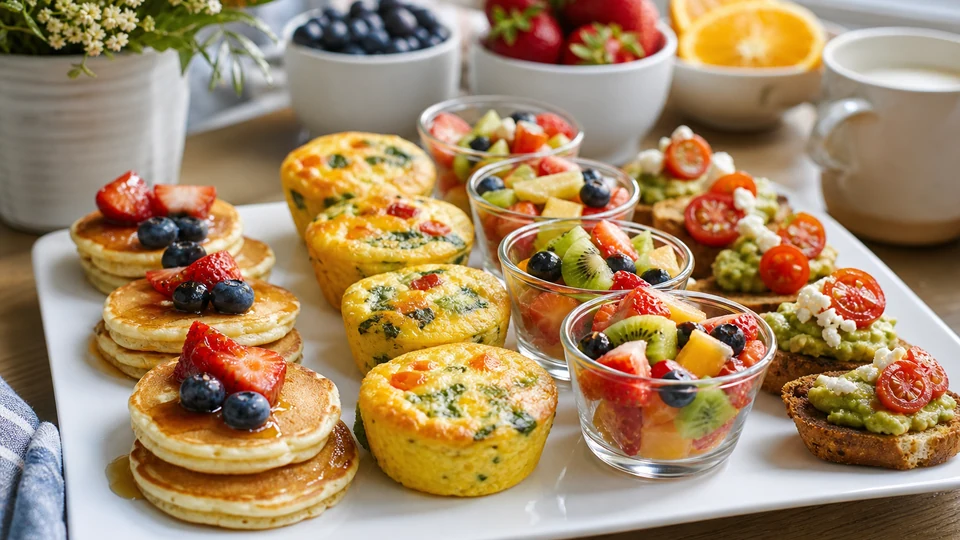
A mini brunch works best when it has one warm anchor, one fresh or chilled counterpoint, and one easy handheld extra—not a full-size menu cut into smaller pieces. Choose formats that can be finished in batches and served without a last-minute bottleneck. Pancake World uses that practical lens here: these mini brunch ideas are distinct food formats, not tested ratings or a promise that one menu suits every guest.
The wider Brunch guide is the parent hub. This page helps a host filter miniature formats by equipment, holding time, and the people at the table.
Selection criteria
Use four editorial filters: one active heat source, one cold-storage check, a clear eating format, and a visible savoury-or-sweet role. A good mini item stays coherent when made small; it is not merely a regular dish with a smaller garnish. Check the recipe or product instructions for exact yields, allergens, and cooking directions.
Catalogue: warm savoury ideas
- Egg muffin cups. A batch-baked, single-portion egg format; use the recipe’s safe-endpoint guidance rather than judging only by appearance.
- Mini potato rösti rounds. Crisp-edged pan or oven rounds with a sturdier texture than a soft filling.
- Folded breakfast quesadilla wedges. Cut a filled tortilla into small triangles after heating; keep the filling contained.
- Savoury pancake skewers. Small cooked pancakes paired with a separate savoury topping rather than overloaded at the pan.
- Baked mushroom-toast squares. A tray format whose topping is added close to service to limit sogginess.
Catalogue: chilled and fresh ideas
- Yogurt-and-fruit cups. A spoonable chilled contrast; hold dairy products cold until serving.
- Melon, berry, and citrus cups. A knife-and-cup format with no cooking lane; wash produce under running water before preparation as applicable.
- Overnight-oat jars. A make-ahead spoonable portion, labelled clearly if it contains nuts or dairy.
- Cucumber and herbed-cheese rounds. A cool assembled bite that benefits from being made shortly before service.
- Smoked-salmon cucumber boats. A chilled savoury option; follow package storage instructions and avoid leaving it out for a long service.
Catalogue: bread and pancake formats
- Silver-dollar pancakes. Small griddled rounds for a sweet topping bar; cook in manageable batches.
- French-toast fingers. Strips rather than whole slices, with syrup served separately to preserve the surface.
- Mini bagel halves. A ready-to-assemble base for separate sweet or savoury toppings.
- Banana-bread cubes. A cut baked good with no griddle queue at service.
- Cornbread squares. A tray-baked, sturdy side that changes the base ingredient and texture from toast.
- Stuffed crêpe pinwheels. A rolled, sliced format; choose a filling that will not leak when cut.
Categories by eating style
The catalogue has three working categories. Fork-and-cup options suit a seated table and include yogurt cups or oats. One-hand bites suit standing or circulating guests and include toast squares, rösti, and quesadilla wedges. Fresh-from-heat options—such as silver-dollar pancakes or French-toast fingers—make sense only when the service window is short. For a larger idea pool, the live weekend brunch ideas collection offers a broader menu-planning path.
Effort and user type matrix
| Format | Best user type | Effort lane | Practical limitation |
|---|---|---|---|
| Egg muffin cups | Host with oven access | Batch bake | Needs a checked recipe endpoint |
| Yogurt-and-fruit cups | Seated group | Cold assembly | Needs refrigerator space |
| Silver-dollar pancakes | Small, short service | Active griddle | Requires batch timing |
| Toast squares | Mixed preference group | Assembly | Can soften when made early |
| Quesadilla wedges | One-hand eaters | Heat then cut | Filling can escape if overfilled |
Combination rules
Build a three-part mini brunch, not a second catalogue. Pair one warm savoury item with one chilled or fruit-led item and one bread or pancake format. For example, egg muffin cups, fruit cups, and cornbread squares use separate preparation rhythms. If pancakes are the anchor, pair them with one make-ahead savoury bite and one cold cup. The site’s breakfast recipe guide is a useful next stop when the question shifts from format selection to a broader morning menu.
Practical limitations and safety boundaries
This is an editorial curation framework, not a recipe, nutrition plan, allergy assessment, or food-safety certification. Follow the exact recipe, package, and local food-safety instructions for the ingredients you use. USDA FSIS publishes minimum-temperature guidance for foods including egg dishes; FDA consumer guidance recommends washing produce under running water before preparing it. Keep raw-food preparation separate from ready-to-eat components, and keep perishable food within the time and temperature guidance that applies to it.
Exclusion test
Reject an idea when it fails one of these tests: it requires a second continuous cooking station; it becomes messy before guests arrive; it duplicates another item’s base and eating action; it cannot be labelled clearly for the actual group; or its safe storage cannot be maintained. A mini brunch becomes less useful, not more generous, when every option has the same bottleneck. Readers seeking a pancake-led branch can compare bases and techniques in pancake flavour ideas.
Service sequence
Set out stable baked or bread items first. Add chilled cups in a small first batch. Cook or warm the only active-heat item last, then replenish rather than trying to hold every portion at peak quality. This sequence is an operational suggestion, not a claim that the food remains safe beyond the applicable instructions.
Curator checklist
- I chose at least three materially different formats, not topping variations.
- Only one choice needs continuous pan or griddle attention.
- A chilled component has a cold-holding plan.
- The menu names likely allergens and follows the underlying recipe or label.
- I removed any item that duplicates the same workload or eating action.
Related reading
- Savoury pancake formats for a more substantial griddled direction.
- Breakfast pancake styles for a category-level pancake comparison.
Sources and editorial references
- U.S. Department of Agriculture Food Safety and Inspection Service — Safe Minimum Internal Temperature Chart —
https://www.fsis.usda.gov/food-safety/safe-food-handling-and-preparation/food-safety-basics/safe-temperature-chart - U.S. Food and Drug Administration — Selecting and Serving Produce Safely —
https://www.fda.gov/consumers/consumer-updates/selecting-and-serving-produce-safely - FoodSafety.gov — Food Safety Charts —
https://www.foodsafety.gov/food-safety-charts - USDA MyPlate — MyPlate Food Groups —
https://www.myplate.gov/eat-healthy/what-is-myplate