Vegetarian brunch planning checklist
Brunch Menu Ideas Vegetarian
A vegetarian brunch is easiest to plan as one substantial anchor, one starchy support, two produce elements, bread, and clearly separated condiments. For six diners, choose either a baked egg dish or a bean-and-potato hash as the anchor, then let the available oven, hob and refrigerator determine the rest. Pancake World uses this plan to turn “brunch menu ideas vegetarian” into a workable hosting checklist rather than an unbounded list of dishes.
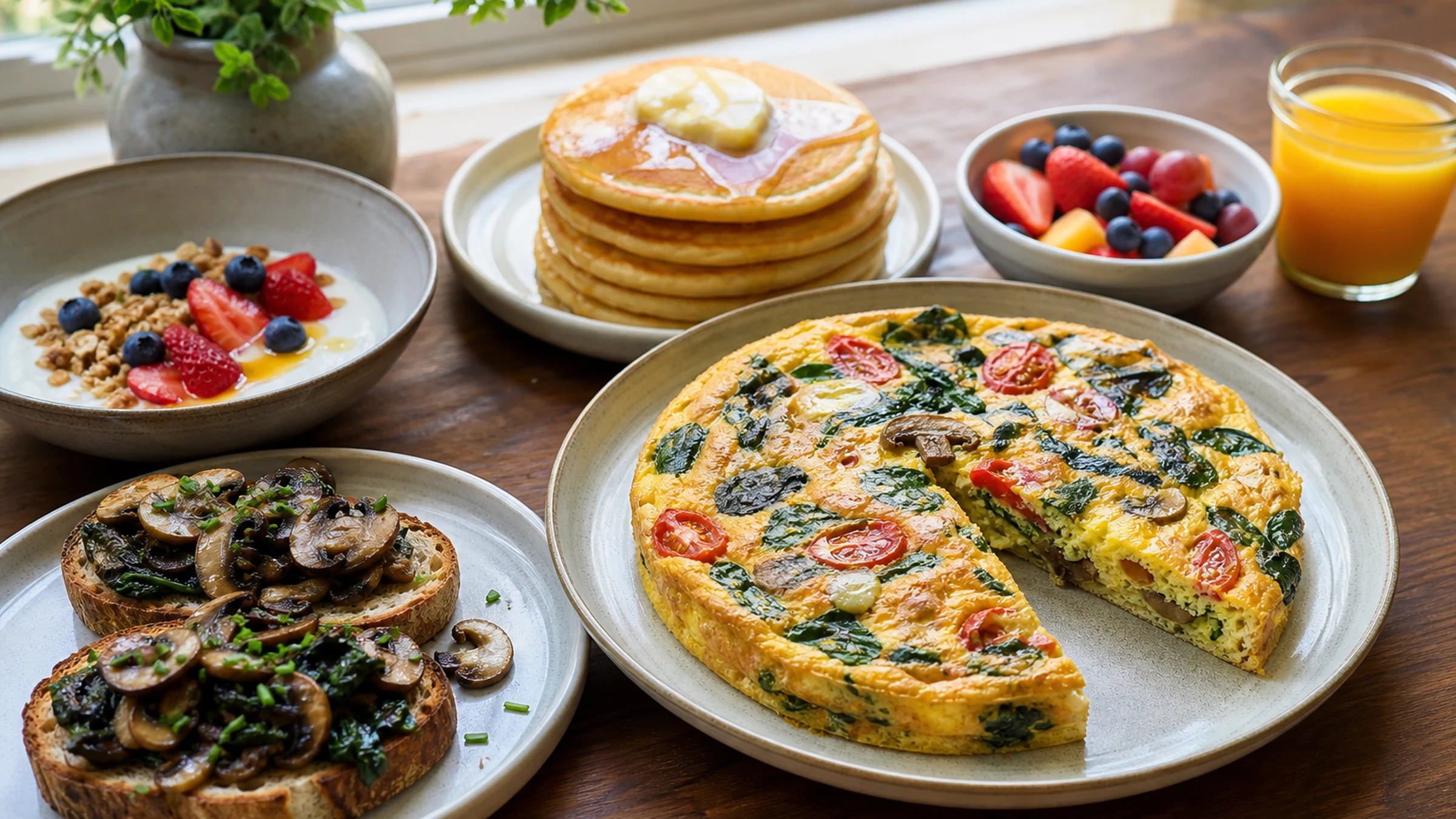
Use the Brunch hub when the occasion still needs defining. This route assumes a six-person, mixed-preference table and treats eggs and dairy as explicit choices, not assumptions.
The six-person menu in one view
Choose a bean-and-potato hash, roasted tomatoes, a fruit bowl, bread, yogurt and two labelled condiments. That gives one hot plant-based anchor, one hot vegetable support, one cold produce element, one bread lane and a dairy option served separately. If the group is ovo-vegetarian instead, replace the hash with a vegetable egg bake; do not serve both unless the guest count and equipment justify a second anchor.
Confirm the vegetarian boundary first
Ask each diner whether eggs, dairy, gelatin, stock, and particular cheeses are acceptable before shopping. A plant-based item is not automatically suitable for every allergy or medical requirement, and a shared griddle does not justify a cross-contact-free claim. Put the answer next to the dish name on the menu card so the serving team is not asked to infer ingredients.
Quantities that guide shopping
For six people, plan from the tested yield of the chosen anchor recipe. As a planning starting point—not a universal portion guarantee—buy enough potatoes and beans for the recipe’s six servings; provide a loaf or equivalent bread portion; prepare two produce components; and keep yogurt, herbs, sauces and toppings in separate bowls. The useful count is component-based: one anchor, one starch, two produce components, bread and up to two condiments.
Shopping by preparation lane
Make one list for the hot lane (anchor ingredients, tomatoes, oil and seasonings), one for cold preparation (fruit, yogurt and herbs), and one for table service (bread, condiments, labels and serving spoons). Check the actual product label for allergens and vegetarian suitability. The Brunch Plate Ideas guide is useful when the question is individual presentation rather than a shared-menu plan.
Equipment capacity decides the menu
Name the limiting appliance before finalising dishes. One large oven dish needs an oven lane and a heat-safe serving vessel. A hash needs a pan large enough to brown rather than steam its ingredients, or it needs cooking in batches. Cold food needs refrigerator space until it is placed out in small replenishable bowls. Do not assign two dishes to the same last-minute appliance unless one can finish before the other starts.
| Menu part | Capacity question | Decision if constrained |
|---|---|---|
| Egg bake | Is the oven free near service? | Choose the hash instead. |
| Bean and potato hash | Can the pan brown food in one batch? | Cook batches or reduce the menu. |
| Fruit and yogurt | Is there chilled reserve space? | Serve small refillable bowls. |
| Bread | Does warming compete with the anchor? | Serve at room temperature. |
Timeline from the day before to service
The day before: confirm attendance, ingredient boundaries and recipe yields; buy shelf-stable items; clear refrigerator space. Two to three hours before: wash produce, prepare cold components, set labels and serving utensils, and cook make-ahead elements according to their recipe instructions. Forty-five minutes before: begin the hot anchor, warm bread only if the oven lane permits, and hold cold elements in the refrigerator. At service: put out the anchor, one produce dish and bread first; replenish cold bowls in smaller batches.
Service sequence for mixed preferences
Place the complete vegetarian anchor at the beginning of the table, then vegetables, bread, and condiments. Keep dairy toppings separate from the plant-based anchor and provide a dedicated spoon for every bowl. This order makes the substantial option visible before diners encounter sides. For a smaller, portable format, Mini Brunch Ideas offers a different service constraint without changing this menu’s ingredient checks.
Contingencies worth planning
If the oven is unavailable, switch from the egg bake to the hash only when the pan capacity supports it. If refrigerator space is tight, reduce the number of cold dishes and refill fruit or yogurt from chilled reserve containers. If a diner avoids eggs or dairy, preserve a complete bean, tofu or grain anchor rather than asking that person to assemble a meal from sides. When raw animal products are present elsewhere in the kitchen, use separate preparation tools and follow current official food-safety guidance rather than relying on appearance or taste.
A useful variation without menu sprawl
Choose one of two anchors, not both: vegetable egg bake for an ovo-vegetarian group with an open oven, or bean-and-potato hash for a plant-based centre with sufficient hob capacity. The supports remain stable: roasted tomatoes, fruit, bread and labelled condiments. That keeps the shopping list, service timing and cleanup understandable. Office Brunch Ideas is a separate route for workplace constraints such as transport and serving setup.
Related reading
Final operational checklist
- Confirm six diners and their egg, dairy and allergen boundaries.
- Choose exactly one substantial anchor and scale only from its tested recipe yield.
- Assign the oven, hob and refrigerator before buying a second hot or cold item.
- Shop by hot, cold and table-service lanes; label every condiment and use separate utensils.
- Prepare cold items in refillable batches and serve the anchor first.
- Resolve a capacity failure by removing a competing dish, not by adding another one.
Sources and editorial references
- U.S. Food and Drug Administration, “Selecting and Serving Produce Safely” —
https://www.fda.gov/consumers/consumer-updates/selecting-and-serving-produce-safely - U.S. Food and Drug Administration, “Safe Food Handling” —
https://www.fda.gov/food/buy-store-serve-safe-food/safe-food-handling - U.S. Department of Agriculture Food Safety and Inspection Service, “Safe Minimum Internal Temperature Chart” —
https://www.fsis.usda.gov/food-safety/safe-food-handling-and-preparation/food-safety-basics/safe-temperature-chart - USDA MyPlate, “What Is MyPlate?” —
https://www.myplate.gov/eat-healthy/what-is-myplate