
Quick answer
Vegan masala dosa begins with a crisp dosa made from a suitable fermented rice-and-urad batter, cooked with plant-based oil, then filled with a dry, spoonable vegetable masala. The classic home starting point is potato, onion, mustard seed, curry leaf, turmeric, and chilli. The fifteen variations below keep the dosa structure recognizable while changing the filling through peas, spinach, beetroot, cauliflower, mushroom, sweet potato, chickpeas, coconut, and other vegetables.
“Vegan” must describe the complete plate. Batter can be plant-based yet cooked with ghee; chutney can contain yogurt; sambar and spice mixes can vary; restaurant griddles can share cooking fat. Check every product and preparation context rather than assuming all dosa service is vegan.
These are practical Pancake World variations, not a claim that fifteen fixed regional recipes define Indian dosa culture.
Choose the batter guide first
Use about 800 g of a proven fermented dosa batter, either homemade through a tested recipe or a commercial product used exactly as directed. A conventional base commonly uses rice and urad dal, with soaking, grinding, fermentation, and final consistency all affecting spread and crispness. Ratios, water absorption, climate, equipment, and fermentation conditions vary too much to replace a validated batter method with one casual paragraph.
For this collection, the working batter should pour from a ladle and spread into a thin film without running like water. Stir gently, then add only a measured small amount of water if the tested recipe or product permits. Salt and ferment according to that source; do not improvise a warm holding environment or taste uncooked batter to judge seasoning.
Purchased batter is a legitimate guide when it preserves the page’s real task: making and filling vegan masala dosas. Check its label, storage directions, use-by information, and vegan suitability.
Core potato masala
This filling makes enough for about eight medium dosas.
- 700 g waxy or all-purpose potatoes
- 1 tablespoon plant-based cooking oil
- 1 teaspoon black mustard seeds
- 8 to 10 curry leaves, fresh or properly stored frozen
- 1 medium onion, thinly sliced
- 1 green chilli, finely sliced, optional
- 1 teaspoon finely grated ginger
- 1/2 teaspoon ground turmeric
- 120 ml water, added only as needed
- 3/4 teaspoon fine salt, then adjusted after tasting
- 2 tablespoons chopped coriander leaves
- 1 teaspoon lemon juice, optional
Cook the potatoes until tender, drain thoroughly, and let surface steam escape. Peel if desired, then break them into rough pieces rather than mashing them smooth. Heat the oil, add mustard seeds with an appropriate splatter guard, then curry leaves. Add onion and cook until soft. Stir in chilli, ginger, and turmeric briefly without scorching.
Fold in the potatoes and enough water to help the seasoning coat them. The filling should be moist but not wet. Finish with salt, coriander, and lemon only after tasting. Cool slightly before filling the dosa; a steaming mound softens the crisp sheet immediately.
Cook a crisp dosa
Warm a seasoned tawa or suitable broad skillet gradually. The surface should be hot enough for batter to set as it spreads but not so hot that the ladle cannot move it. If a drop of batter grips instantly in a thick lump, reduce the heat and let the surface recover.
Stir the batter, ladle a modest portion into the centre, and spread outward in a thin spiral with light pressure. Drizzle a small amount of plant-based oil around the edge and across any dry patches. Cook until the surface looks dry, the edge lifts, and the underside is browned. Many thin dosas are cooked mainly on one side; follow the chosen batter method rather than turning by habit.
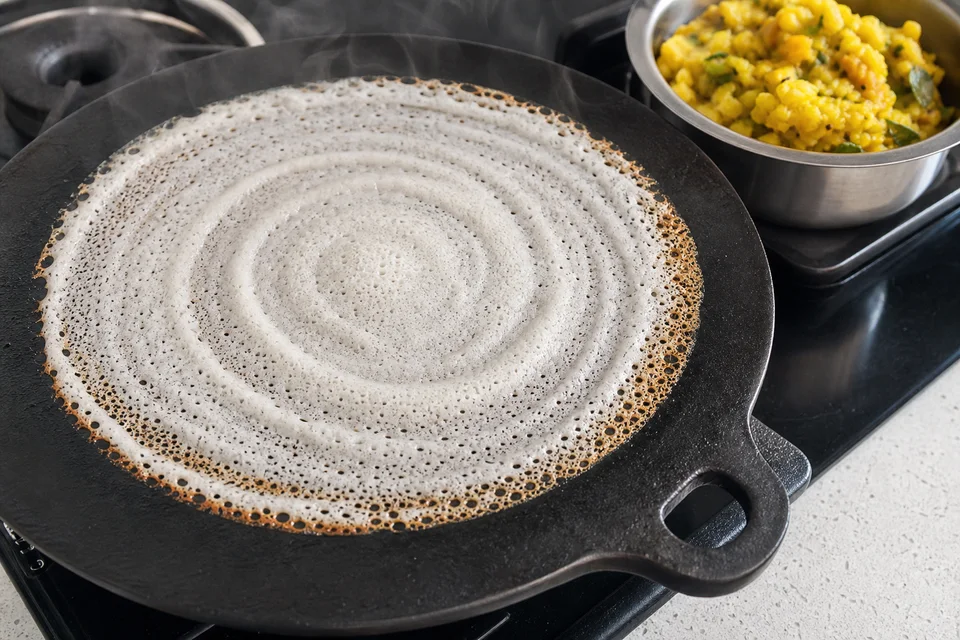
Spoon filling along the centre only after the dosa has crisped. Fold or roll and serve immediately. Overfilling turns a delicate crisp sheet into a heavy parcel.
1. Classic potato and onion masala
Use the core filling exactly as written. Keep the potato pieces irregular so some remain distinct while others bind the onions and spices. This is the reference batch for judging all other variations.
2. Potato and green pea masala
Fold 100 g cooked green peas into the core filling near the end. Reduce the potato by the same weight so the total filling does not increase. Peas add sweetness and separate texture without changing the dosa batter.
3. Spinach potato masala
Cook 150 g spinach until wilted, cool it, squeeze firmly, and chop. Fold it into a slightly drier potato masala. Uncontrolled spinach water is the main risk; adding raw leaves directly creates steam inside the roll.
4. Beetroot potato masala
Add 120 g cooked grated beetroot to the core mixture and reduce potato accordingly. Drain it well and expect the filling to turn magenta. Keep beetroot subordinate so the masala remains spoonable rather than sweet and wet.
5. Cauliflower and potato masala
Use 180 g finely chopped, fully cooked cauliflower with 520 g potato. Let the cauliflower release steam before combining. Large florets puncture the dosa and make rolling awkward.
6. Mushroom pepper masala
Cook 250 g finely chopped mushrooms separately until their released liquid has evaporated. Replace 200 g potato with the cooked mushrooms and add black pepper to taste. Do not put raw mushrooms into the filling pan and hope the dosa will cook them.
7. Cabbage and carrot masala
Finely shred 100 g cabbage and 80 g carrot. Cook them until tender but not watery, then fold into 520 g potato. This creates a lighter-textured filling; keep the shreds short enough to stay inside the roll.
8. Sweet potato mustard masala
Replace half the potato with cooked sweet potato. Sweet potato breaks down more readily, so fold gently and use lemon to balance sweetness. Keep mustard seed and curry leaf prominent enough that the filling remains savory.
9. Pumpkin and chickpea masala
Use 200 g roasted pumpkin cubes, 120 g cooked drained chickpeas, and 380 g potato. Roast rather than boil the pumpkin to control water. Lightly crush some chickpeas so the filling holds together.
10. Green bean coconut masala
Cook 160 g finely cut green beans until tender, drain, and fold into 540 g potato with 25 g unsweetened grated coconut. Verify the coconut product and keep the amount restrained; excess loose coconut makes the filling fall out.
11. Tomato-free red pepper masala
Roast and drain 150 g red pepper, dice it small, and combine with 550 g potato. This gives colour and sweetness without tomato liquid. Do not add jar brine to the pan.
12. Ginger-coriander potato masala
Increase fresh ginger modestly and add a generous handful of chopped coriander at the end. Keep the same potato structure. This is an aromatic variation, not permission to make the filling wet with herb puree.
13. Chilli-lime potato masala
Use a little extra fresh chilli or a pinch of dried chilli and finish with lime juice. Add acid a spoonful at a time after the potatoes are coated. Too much juice makes the centre damp and can overpower fermentation flavours.
14. Sesame-and-peanut-free coconut chutney plate
Keep the core dosa and filling, then serve with a verified coconut chutney made without sesame or peanut when that is the diner’s requirement. This is a serving variation, not an allergen-free guarantee: ingredient labels, equipment, and cross-contact still determine suitability.
15. Leftover-vegetable masala with a known history
Use a small amount of separately cooked, drained vegetables only when their storage history is known and they remain suitable under current leftovers guidance. Chop them evenly, reheat within the masala, and reduce potato by the same amount. Do not turn an assortment of questionable refrigerator remnants into a dosa filling.
Match chutney and sambar to the filling
Coconut chutney cools chilli and works with the classic, pea, spinach, or green-bean versions. Tomato chutney adds acidity and suits sweet potato, pumpkin, beetroot, or red pepper. Sambar gives a warm lentil-and-vegetable accompaniment and can make a dosa plate a fuller meal.
Serve wet accompaniments beside the dosa. Pouring sambar over a crisp roll before service softens it. For other Indian pancake pairings, compare the separate besan chilla pairing guide; besan chilla uses a chickpea-flour batter and is not dosa.
Vegan and allergen checks
Traditional-looking service is not enough to prove vegan status. Confirm the batter, pan fat, filling, chutneys, sambar, toppings, and shared equipment. Ghee, butter, yogurt, paneer, and milk can appear in adjacent cooking. Commercial batter or spice blends may carry allergen statements.
Rice-and-urad batter does not automatically guarantee a gluten-free plate either. Product standards and cross-contact matter. Coconut, mustard, peanut, sesame, and other allergens can appear in accompaniments. Use the full label and preparation environment for every claim.
Current-batch fixes
The batter will not spread: The tawa may be too hot, the batter too thick, or the surface poorly prepared. Cool the pan briefly, stir the bowl, and make one recipe-supported water adjustment.
The dosa sticks: Wait for the surface to set, review seasoning or non-stick condition, and avoid forcing a turner beneath wet batter. Excess oil does not repair every sticking problem.
The dosa is pale and soft: The surface may be too cool, the layer too thick, or the pan crowded with filling too early. Cook the sheet fully before adding masala.
The centre becomes soggy: The filling is too wet or too hot, or the finished dosa waited too long. Spread the next filling on a tray to release steam and use a smaller portion.
The filling falls out: Break large pieces smaller, keep the filling dry enough to mound, and leave an empty border for rolling.
The batter smells or behaves unexpectedly: Do not diagnose fermentation safety from smell alone. Follow the tested recipe or product instructions and discard when the handling history is uncertain.
For pan symptoms shared with other batters, use the Pancake Troubleshooting hub.
Prevent the next batch from drifting
Record the batter source, fermentation or package state, final water adjustment, ladle size, tawa material, and heat sequence. Weigh the cooked filling and divide it by the planned dosa count. Prepare only two variations at first: one reference and one controlled change.
Cook vegetables separately until their free water is controlled. Keep chutneys chilled or hot as their recipes require, and bring only small portions to the table. If serving several diets, use separate labelled utensils and a verified pan plan rather than relying on memory.
Storage and reheating
Dosa is best eaten immediately. Store cooked filling and batter separately under their tested instructions rather than filling every dosa in advance. A filled dosa loses crispness in refrigeration and becomes fragile when reheated.
Cool leftover filling promptly, refrigerate it in a shallow covered container, and follow current official leftovers guidance. Reheat only the amount needed until hot throughout. Cook fresh dosas around reheated filling when possible. If plain cooked dosa sheets must be held briefly, separate them and accept that their texture will soften.
FAQ
Is masala dosa always vegan?
No. Batter may be plant-based, but ghee, butter, dairy accompaniments, packaged ingredients, and shared cooking surfaces can change the complete plate.
Can I make dosa without fermenting the batter?
Use a recipe designed as an instant dosa rather than skipping fermentation in a fermented formula. The texture, spread, and flavour system are different.
Why does my dosa tear while spreading?
Possible causes include batter consistency, excessive pan heat, surface condition, or pressing too hard. Cool and clean the surface as directed, then test a smaller portion.
Can I freeze potato masala?
Some cooked potato fillings can be frozen under an appropriate recipe and storage plan, but texture may become softer. Cool promptly, package in portions, and follow official guidance.
Which variation should a beginner try first?
Start with classic potato and onion, then add peas. Those batches make it easier to learn batter spread before managing wetter vegetables.
Related Pancake World guides
Compare dosa with Indian semolina and yogurt pancakes, build a different pulse-batter plate through besan chilla pairings, and explore context in savory pancakes around the world.
Sources and editorial references
- Swasthi’s Recipes: Masala Dosa Recipe —
https://www.indianhealthyrecipes.com/masala-dosa-recipe/ - U.S. Food and Drug Administration: Food Allergies —
https://www.fda.gov/food/food-labeling-nutrition/food-allergies - USDA Food Safety and Inspection Service: Leftovers and Food Safety —
https://www.fsis.usda.gov/food-safety/safe-food-handling-and-preparation/food-safety-basics/leftovers-and-food-safety
For more practical food and breakfast guides, visit Pancakes World.
For the wider topic, start with World Pancakes.
For a closely related guide, see Mushroom and Cashew-Cream Crepes: 16 Practical Variations.
A useful next comparison is Loaded Stuffed Potato Pancakes with a Crisp Golden Shell.
You can also continue with Sweet Potato Pancakes: A Tender, Reliable Recipe.
For another practical angle, read Tiganites: Greek Pancakes with Honey and Cinnamon.
Related reading
- Okonomiyaki in Japan: Styles, Ingredients, and Variations
- Hiroshimayaki: Hiroshima-Style Okonomiyaki
Image note: Editorial images were created and refined with AI.
