Regional culture local guide
Morning Breakfast Indian
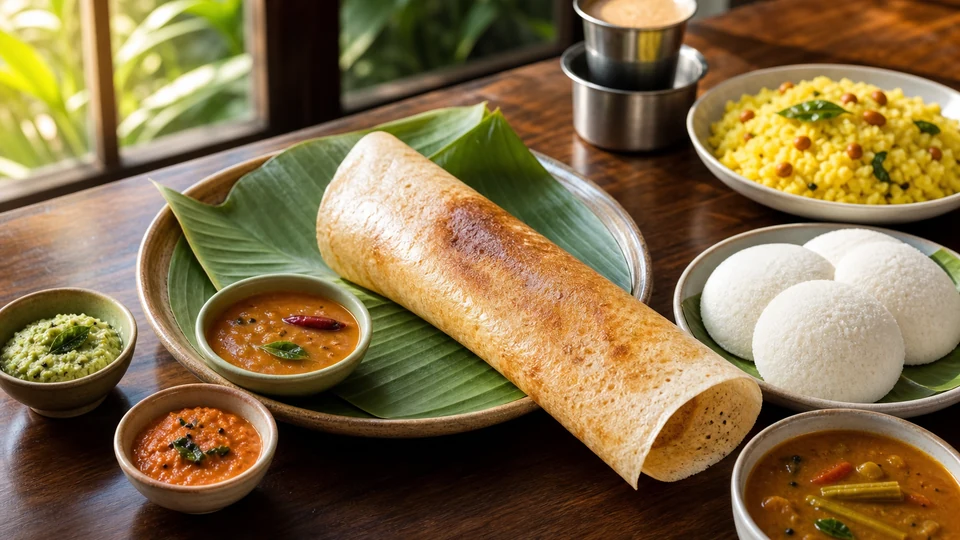
Pancake World treats a morning breakfast Indian search as a regional guide, not a single national menu: choose one named dish, keep its documented context separate from your own kitchen adaptation, and plan the equipment and advance work it needs. Idli, poha, dosa, paratha, appam and many other dishes can belong in a morning, but none stands for every Indian home or region.
Direct answer: start with a named dish and a real constraint
The Ministry of Culture’s Taste of India material describes Indian food as a wide range of regional cuisines shaped by local ingredients and cultural choices. That is the boundary for this page: it compares named contexts without converting them into a universal breakfast rule.
Terminology: dish name, context and adaptation
A dish name is more useful than a vague “Indian-style” label. It lets a reader find a source-faithful method and avoid treating a spice mix as proof of identity. “Context” here means a named regional, language, household or recipe tradition that a source identifies; it does not mean that every cook in that place eats the same thing in the morning.
An adaptation is the transparent part: using available vegetables, changing a side dish, or scheduling preparation overnight. It may be practical, but it should not be presented as the documented version. The UNESCO foodways project is useful as a framing source because it treats foodways as living knowledge connected to skills, ingredients and cultural life rather than as a fixed checklist.
Named contexts: three useful reading frames
Maharashtra and poha
Use “poha” as the specific dish label. A quick pan method can suit a morning when the cook has measured ingredients and a short finishing window. Do not infer that every Maharashtrian breakfast follows the same sequence.
Tamil Nadu and idli or dosa
Use the individual name, then check a source-faithful batter and steaming or griddle method. Fermentation, equipment and storage history are operational questions, not evidence for a broad cultural claim.
Punjab and paratha
Use “paratha” for the named flatbread route and allow time for dough, rolling and pan work. A weekday shortcut can be an adaptation if it is named as one rather than called the only traditional form.
Named-context comparison
| Named route | Morning constraint to check | What this guide will not claim |
|---|---|---|
| Poha | One-pan finish, ingredient preparation and a clear serving point | That it represents all breakfasts in Maharashtra or elsewhere |
| Idli or dosa | Batter condition, steamer or griddle, and a tested method | That fermentation time is identical in every kitchen |
| Paratha | Dough readiness, rolling space and pan time | That one filling or accompaniment is compulsory |
The comparison is intentionally about work patterns. It gives a reader a way to choose without ranking regional dishes or inventing a single authentic order.
Evidence and adaptation: keep the line visible
For example, serving poha with a fruit side may be a useful personal plan; it is not evidence that a fruit side is required. Reheating a component may be an efficient home choice; it does not turn a dish into a documented regional standard. This distinction prevents a convenience recommendation from borrowing cultural authority it has not earned.
Route ownership and the live breakfast hub
This page owns the question of how to read and plan a morning breakfast Indian search through named contexts. For the closest currently live Pancake World hub, use the American pancakes collection as a separate breakfast collection, not as a substitute for Indian dishes. Its job is comparison of site routes; it is not cultural evidence for this article.
For an exact dish-oriented route inside the same release corpus, see Poha Breakfast. The link is intentionally specific: it is the better next step when a reader has already chosen flattened rice rather than a broad breakfast category.
Build one coherent morning, not a catalogue
Start with the core method. Next, decide what must be cut, soaked, ground, mixed or refrigerated in advance. Last, choose the accompaniment. This order protects the main dish from becoming an unplanned pile of unrelated breakfast foods.
Preparation order for a weekday
- Choose the named dish and confirm the equipment it needs.
- Read one tested method before shopping or pre-prep.
- Measure dry ingredients and prepare only the components the method permits ahead.
- Keep perishable ingredients under appropriate refrigeration; do not guess from appearance alone.
- Cook the main, then finish the accompaniment close to serving.
This sequence is deliberately modest. It helps a reader manage time without asserting that there is one culturally correct morning timetable.
Safety and limitation boundaries
Wash produce under running water and keep it separate from raw animal foods, as the FDA advises. If a preparation includes foods that require a safe cooking endpoint, use the current official guidance and a thermometer where applicable. This article does not make medical, nutrition or suitability claims for a dish or eater.
When to change the plan
For a distinct dietary editorial route, Low Sugar Breakfast is a separate reading path, not an endorsement that any Indian breakfast is a treatment or a fixed nutrition solution. For a vegetarian recipe-collection route, Indian vegetarian breakfast recipes is a separate choice path. Keep allergen information tied to the actual ingredients and labels.
Wording check before you serve or share
- Name the dish you made.
- State whether your side dish or shortcut is an adaptation.
- Avoid “everyone,” “always,” “the authentic Indian breakfast,” and other universal claims.
- Keep a recipe-method claim separate from a cultural-context claim.
- Use a source for each material claim, or remove the claim.
This small wording check is the architecture-specific asset: it makes the evidence/adaptation boundary actionable rather than decorative.
Cultural and menu summary
The useful way to plan a morning breakfast Indian is to name the dish, respect the limits of the evidence, and make adaptations visible. A reliable breakfast can be practical without pretending that one household pattern, ingredient list or serving order speaks for a whole country.
Sources and editorial references
- Ministry of Culture, Government of India — Taste of India. https://www.indiaculture.gov.in/sites/default/files/festival_laopdr/pre_events/Festival%20of%20India%20Brochure-FINAL.pdf
- UNESCO Intangible Cultural Heritage — International Food Atlas and Digital Platform. https://ich.unesco.org/en/projects/international-food-atlas-and-digital-platform-for-safeguarding-promoting-and-transmitting-foodways-to-future-generations-00505
- Food Safety and Standards Authority of India — Eat Right India. https://eatrightindia.gov.in/
- USDA Food Safety and Inspection Service — Safe Minimum Internal Temperature Chart. https://www.fsis.usda.gov/food-safety/safe-food-handling-and-preparation/food-safety-basics/safe-temperature-chart
- U.S. Food and Drug Administration — Selecting and Serving Produce Safely. https://www.fda.gov/consumers/consumer-updates/selecting-and-serving-produce-safely