Healthy Breakfast Sandwich: diagnose the weak link
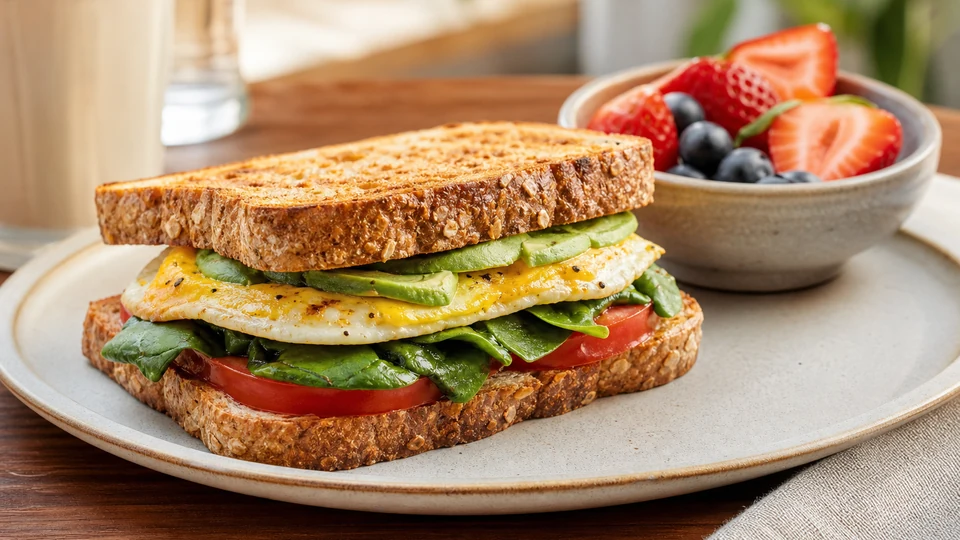
A healthy breakfast sandwich is easier to build when you diagnose the failure first: a soggy sandwich needs moisture control, an unsatisfying one needs a more substantial filling, and an unsafe packed sandwich needs a different storage plan. Pancake World uses that sequence instead of treating one bread, egg count, or portion as universally right.
Route owner statement
This guide is for choosing and correcting a breakfast sandwich at home or for a short commute. It does not calculate nutrition, promise a health outcome, or replace individual medical or allergy advice.
Symptom intake
Name the main problem before changing ingredients: soggy bread, a dry bite, a filling that slips out, a sandwich that feels incomplete, or a packed sandwich that cannot stay cold. One observed symptom is enough to begin.
Direct diagnostic answer
Start with the smallest fix. Drain or separate wet ingredients for sogginess; add a cooked egg, beans, tofu, or another substantial filling for an incomplete sandwich; change the packing plan when refrigeration is uncertain.
The closest live parent guide is American pancakes, a useful sit-down alternative when a handheld assembly is not the right format.
Root-cause matrix
| Observed state | Likely cause | Small correction | Prevention |
|---|---|---|---|
| Bread is wet | Tomato, greens, or sauce touched bread too early | Toast bread; dry vegetables; keep sauce thin | Assemble just before eating |
| Filling slides | Smooth spread plus thick slices | Use a flatter layer and cut vegetables thinner | Press gently before wrapping |
| Sandwich is dry | Too little spread or overcooked filling | Add a measured moist element | Cook filling only to a safe endpoint |
| It feels incomplete | Bread dominates filling | Increase the substantial filling or vegetable layer | Choose bread sized for filling |
Ordered diagnostic sequence
- Check dietary restrictions and allergens.
- Decide whether the sandwich is eaten hot, immediately, or packed.
- Choose the substantial filling.
- Separate wet and dry components.
- Cook eggs or meat to the current official safe endpoint where applicable.
- Test after five minutes, then wrap only if the bread remains intact.
Immediate corrections
For a wet sandwich, blot sliced tomato and place leafy greens between it and bread. For a dry sandwich, use a small amount of mustard, yogurt-style spread, or another suitable moist component instead of a large amount of sauce. For an uneven sandwich, use one flat filling layer rather than stacking several round or slippery items.
Recipe 1 — crisp egg and spinach reset
Yield: 1 sandwich. Ingredients: 2 slices bread, 1 cooked egg, dry spinach, tomato, mustard. Method: Toast bread, dry spinach and tomato, add egg and a thin mustard layer, then assemble immediately.
Recipe 2 — packed tomato separation
Yield: 1 sandwich. Ingredients: firm roll, cooked egg or tofu, dry greens, tomato packed separately. Method: Cool the filling promptly, pack tomato apart, and assemble at eating time if possible.
Recipe 3 — bean spread moisture control
Yield: 1 sandwich. Ingredients: toast, bean spread, roasted pepper, cucumber. Method: Spread a thin layer, drain roasted pepper, add cucumber last, and cut only after bread is stable.
Recipe 4 — soft cheese balance
Yield: 1 sandwich. Ingredients: whole-grain toast, soft cheese, cooked egg, cucumber. Method: Use a modest cheese layer, add dry cucumber slices, and eat promptly rather than holding at room temperature.
Recipe 5 — reheating without collapse
Yield: 1 sandwich. Ingredients: bread, cooked filling, spinach, sauce. Method: Reheat filling separately, toast bread, then add spinach and sauce after heating so bread does not steam.
Recipe 6 — plant-based commute version
Yield: 1 sandwich. Ingredients: firm bread, tofu or beans, roasted vegetables, dry greens. Method: Cool cooked ingredients safely, drain vegetables, pack chilled, and avoid relying on appearance to judge safety.
Prevention rules
Wash produce under running water, keep it separate from raw egg or meat preparation, and use clean utensils after cooking. Read the food label for the product actually bought when sodium, added sugar, or allergens matter. For a broader ingredient-label lens, see Low Sugar Breakfast.
Edge cases
If the eater needs a dairy-free or gluten-free choice, confirm each bread, spread, and prepared filling rather than assuming the sandwich name answers it. If a commute has no cold storage, choose an alternative that fits the actual holding conditions. For regional alternatives, compare Healthy Breakfast Options Indian, Morning Breakfast Indian, and Poha Breakfast.
Troubleshooting close
The best healthy breakfast sandwich is the one whose observed problem has been solved with the smallest suitable change: match bread to moisture, match filling to the morning, and match packing to temperature control.
Related reading
- Pancake recipes for a cooked-at-home breakfast alternative.
- Healthy pancake guide for a different breakfast format.
Sources and editorial references
- U.S. Department of Agriculture Food Safety and Inspection Service — Safe Minimum Internal Temperature Chart.
- U.S. Food and Drug Administration — Selecting and Serving Produce Safely.
- USDA MyPlate — MyPlate Food Groups.
- U.S. Food and Drug Administration — Food Product Dating.