Poha Breakfast: a controlled recipe for tender, separate flakes
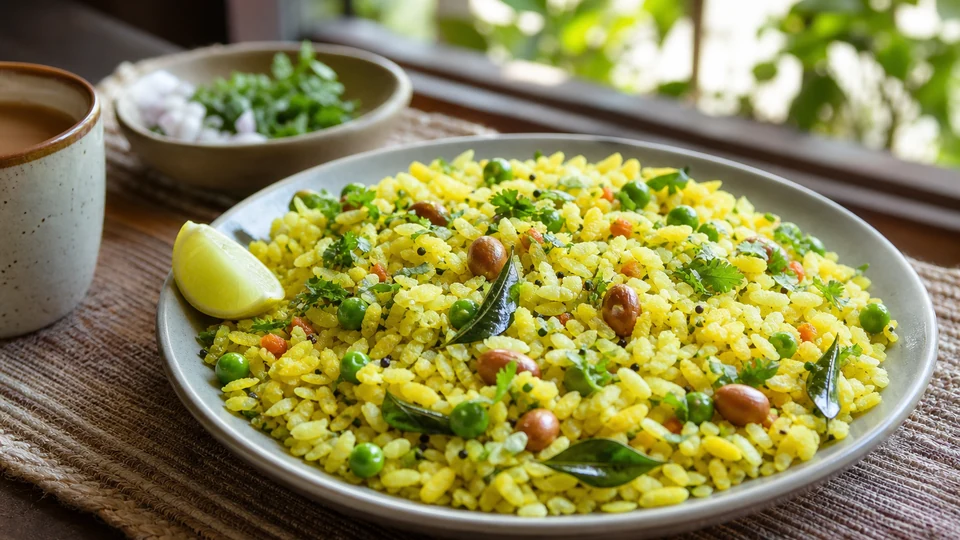
Pancake World makes poha breakfast by using thick poha, wetting it briefly, draining it completely, and folding it through a cooked tempering only at the end. This one-pan formula yields four breakfast portions with tender, separate flakes; the controlling technique is short water contact and a gentle fold, not a long simmer.
The complete poha formula
Exact ingredients and preparation
Dice the potato to 1 cm pieces. Reserve lemon and coriander for the finish. Use the breakfast hub as the parent route, or the American pancakes guide for a different breakfast format.
Primary method: set the vegetables before the flakes
- Rinse poha in a sieve for 10–15 seconds, shake dry, and rest 8 minutes.
- Fry peanuts in oil for 3–4 minutes; remove. Crackle mustard seeds and curry leaves.
- Cook onion for 4 minutes. Add potato, turmeric, salt, sugar, and water; cover 8–10 minutes until knife-tender.
- Add peas for 2 minutes; the pan should be moist, not soupy.
- Fold in poha for 90 seconds; cover on low for 2 minutes without pressing.
- Turn off heat; finish with peanuts, lemon, and coriander.
Doneness indicators
Wash fresh garnish under running water and follow the FDA produce-handling guidance in the source list.
Moisture map
| Signal | Cause | Correction |
|---|---|---|
| Hard centre | Uneven hydration | Cover two minutes; do not flood. |
| Broken flakes | Long rinse or thin poha | Shorten the rinse next time. |
| Wet pan | Vegetable liquid | Cook uncovered before poha. |
Scaling for 6 and 12
Three meaningful variations
Potato-free pea: omit potato and water. Carrot and bean: use 120 g carrot and 100 g beans, cooking both tender first. Coconut finish: add 30 g unsweetened coconut with the coriander. These are controlled variations, not second primary formulas.
Storage and reheating boundary
Failure matrix
| Failure | Check | Adjustment |
|---|---|---|
| Mushy | Long rinse | Use thick poha; drain longer. |
| Raw potato | Added poha too early | Test a cube first. |
| Flat flavour | Finish heated too long | Add lemon and herbs off heat. |
Transport test
For a packed breakfast, cool in a shallow container and carry lemon, coriander, and peanuts separately. The roasted breakfast potatoes route is a related R83-corpus target pending the gated corpus release.
Final technique checklist
Related reading
- Low sugar breakfast — pending in the same frozen R83 corpus.
- Hosting brunch menu ideas — pending in the same frozen R83 corpus.
Sources and editorial references
- Food Safety and Standards Authority of India, Eat Right India — https://eatrightindia.gov.in/
- U.S. Food and Drug Administration, Selecting and Serving Produce Safely — https://www.fda.gov/consumers/consumer-updates/selecting-and-serving-produce-safely
- USDA FSIS, Leftovers and Food Safety — https://www.fsis.usda.gov/food-safety/safe-food-handling-and-preparation/food-safety-basics/leftovers-and-food-safety
- USDA FSIS, Kitchen Companion — https://www.fsis.usda.gov/sites/default/files/media_file/2021-04/Kitchen_Companion.pdf