
Quick answer
You can turn one neutral pancake mix into sweet and savory pancakes by preparing the base exactly as its package directs, weighing the finished batter, dividing it evenly, and adding small, relatively dry flavorings to each half. The key is not a clever ingredient; it is control. Extra fruit, cheese, vegetables, sugar, or liquid all change hydration, weight, browning, and the amount of structure the mix must support.
Start with a mix that is not strongly sweetened or flavored. Make the minimum practical batch, cook one plain calibration pancake, then divide. Keep one half sweet with cinnamon and a restrained amount of small berries; make the other savory with chopped herbs and finely grated cheese. Large wet additions belong on top or in a separately cooked filling rather than inside the batter.
Read the package before “hacking” it
Pancake mixes are not interchangeable. One may require water only; another expects milk, egg, or oil. Some contain dairy, egg, sugar, salt, leavening, flavor, or gluten-free starches. The package directions define the starting system and the label defines allergens and dietary suitability.
Check the use-by information, required liquid, batch yield, resting instruction, and whether the manufacturer warns against eating raw batter. Do not assume “complete mix” means safe to taste or suitable for every diner. Flour-containing dry mix remains uncooked until the pancake center is done.
If the mix is very sweet, vanilla-flavored, or designed only for waffles, a savory branch may taste unbalanced. Choose a neutral product or make a scratch base instead. The guide to why make pancakes from scratch explains the control tradeoff without suggesting that mixes are inherently inferior.
The controlled split method
1. Prepare one neutral base
Measure the dry mix and required wet ingredients by the package directions. Use the mixing endpoint it specifies. Do not “improve” the entire bowl with extra sugar, melted butter, vanilla, or salt before the split; that removes the neutral base you need.
Let the batter rest only if directed. Stir or fold as instructed after the rest. Before dividing, cook one small plain pancake to check pan heat, batter flow, and center set. A plain test separates a base or heat problem from an add-in problem.
2. Divide by weight
Place two clean bowls on a scale, tare each one, and divide the batter as evenly as practical. Weighing is more reliable than judging bowl depth. If no scale is available, use the same measured ladle and alternate scoops between bowls.
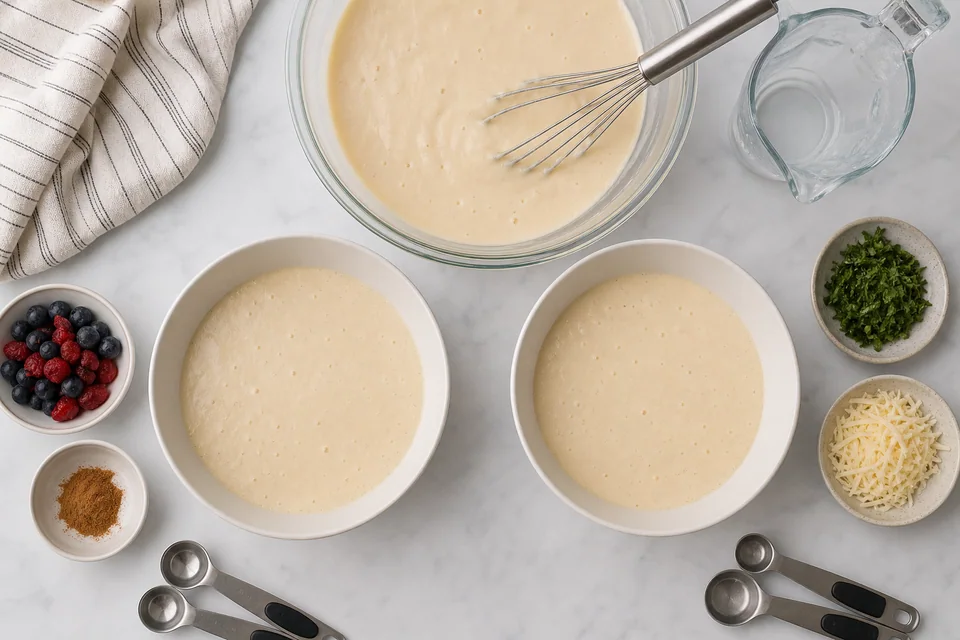
Keep utensils separate once add-ins enter. This prevents sweet berries from staining the savory bowl and reduces allergen cross-contact when the two versions differ.
3. Add flavor, not a second recipe
For each approximately 300 g half-batch, a conservative sweet direction is 1/4 teaspoon cinnamon and up to 50 g small dry berries. Fold gently. Frozen berries add ice and juice; use them only if the package or a reliable complete method accounts for that behavior.
For the same batter amount, a conservative savory direction is 1 tablespoon finely chopped soft herbs and up to 40 g finely grated firm cheese. Cheese adds salt and fat, so taste the cooked test rather than salting the raw batter. Verify that cheese and mix suit the diner’s needs.
These amounts are starting boundaries, not universal guarantees. Mix thickness and yield vary. If the bowl becomes crowded, stop adding and move the rest to toppings.
What belongs inside and what belongs on top
Good small mix-ins: chopped soft herbs, fine citrus zest, ground spices, small dry berries, finely grated firm cheese, or a few miniature chocolate pieces in the sweet half.
Better as toppings or fillings: juicy chopped fruit, compote, tomato, sautéed mushrooms, wilted spinach, cooked onions, beans, large cheese pieces, cooked meat, and sauces. Cook vegetables and proteins separately, control their moisture, and add them to the finished plate.
The 31 pancake flavor ideas guide helps distinguish flavoring from overloading. For savory plates, use the savory topping guide to add moisture and texture after cooking.
Cook one test from each bowl
Use the same pan, measured portion, and preheated surface. Cook a small sweet test first if berry staining is a concern, clean residue, then cook a savory test. Alternatively, use separate clean zones on a large griddle and separate turners.
Watch how each branch changes. Sugar and fruit can accelerate browning. Cheese can create crisp dark flecks or stick where it contacts the pan. Herbs may cling to the bowl, so stir gently before each portion. Follow the base mix’s doneness guidance while also checking the thickest center for raw paste.
If one test is too thick, do not immediately thin both bowls. The add-in may be responsible. If the plain calibration was already thick, the base preparation needs review. Make only the small liquid correction permitted by the package, and test again.
Sweet branch: berries and cinnamon
Fold cinnamon through the batter before berries so it distributes without crushing fruit. Add berries last and use a wide spatula. Portion immediately; a long wait can draw juice into the batter.
Cook at controlled heat until edges set and the center is fully done. Serve with fresh fruit or yogurt rather than burying the stack in syrup. More ideas are available in pancake toppings to try.
Savory branch: herbs and cheese
Finely chop chives, parsley, or another soft herb that suits the cheese. Grate cheese so a small amount disperses. Fold both in and cook a modest round. Clean melted cheese from the pan before it burns onto the next pancake.
Serve with a dry cooked mushroom filling, sliced tomatoes placed on the plate, or a crisp salad. Do not add raw meat to a quick pancake batter; cook it separately to its applicable safe endpoint.
Current-batch problems and fixes
Both bowls are too thick: Recheck the package ratio and whether the batter stood longer than directed. Make its permitted liquid adjustment in measured teaspoons, testing before adding more.
Only the sweet bowl is runny: Fruit released liquid or too much wet flavoring was added. Stop adding. Cook smaller tests at gentler heat; move remaining fruit to the topping.
The savory pancakes tear: Cheese or vegetables may be too heavy. Make smaller portions and reduce internal add-ins. A cooked filling on top is a better destination for the excess.
The sweet side burns early: Lower the heat and clean caramelized berry residue between rounds. Do not use dark color as proof the center is ready.
The savory side sticks: Let the first side set, use a broad turner, and remove melted cheese residue. More oil can fry the edge without solving debris on the surface.
The flavors are weak: Strengthen toppings or aroma after cooking before adding more solids to the batter. A little zest, herbs, or a compatible sauce can clarify a plate without destabilizing the base.
Use Pancake Troubleshooting if raw centers, sticking, burning, or dense texture also affect the plain calibration pancake.
Prevent the next split from drifting
Record the mix, package ratio, total prepared batter weight, weight per bowl, add-in weight, portion, and pan behavior. Keep a spoonful of plain batter long enough to compare all three results. That control reveals whether a failure came from the product, preparation, heat, or adaptation.
Change one variable next time. Reduce berry weight for wet sweet batter, grate cheese finer for savory tearing, or adjust pan heat for fast color. Do not switch mix, liquid, add-ins, portion, and pan simultaneously.
Safety, storage, and product-neutral limits
Do not taste dry mix or raw batter. Follow the package’s ingredient, allergen, handling, and cooking directions. Cook egg-containing preparations and added proteins under applicable safety guidance. Keep separate utensils where dietary needs differ.
Cool leftovers promptly and store the two flavors separately so labels remain meaningful. Reheat until properly hot. This guide does not endorse or rank a brand, promise identical results across products, or claim that a mix can accept unlimited additions.
FAQ
Can I make savory pancakes from a sweetened mix?
You can try, but a strongly sweet or vanilla-flavored product may clash with savory fillings. A neutral mix or scratch base gives better control.
Should I add extra baking powder?
Not automatically. The mix already has a designed leavening system. Extra leavener can alter flavor, browning, and structure without fixing wet add-ins.
Can I divide the dry mix instead?
Yes, but divide by weight before adding wet ingredients and prepare each half according to the same scaled package ratio. Dividing prepared batter is usually simpler for one shared base.
Which savory add-ins are safest for the batter?
Small amounts of chopped soft herbs and finely grated firm cheese are manageable. Wet vegetables, sauces, and proteins are better cooked separately and served on top.
Why did my berry pancakes turn gummy?
Too much fruit, released juice, large portions, or heat that browned the outside too soon can contribute. Use fewer dry berries, smaller rounds, and controlled heat.
Related Pancake World guides
Explore 31 pancake flavors, 22 savoury pancake recipes, and pancake toppings to try when a desired idea belongs outside the batter.
Sources and editorial references
- University of Arkansas System Division of Agriculture: Creating Perfect Pancakes —
https://www.uaex.uada.edu/counties/miller/news/fcs/grains-breads/Creating%20Perfect%20Pancakes%20for%20Your%20Family%20Breakfast.aspx - U.S. Food and Drug Administration: Flour Is a Raw Food —
https://www.fda.gov/consumers/consumer-updates/flour-raw-food-and-other-safety-facts - USDA Food Safety and Inspection Service: Shell Eggs from Farm to Table —
https://www.fsis.usda.gov/food-safety/safe-food-handling-and-preparation/eggs/shell-eggs-farm-table
For more practical food and breakfast guides, visit Pancakes World.
For the wider topic, start with Guides/pancake Ingredients.
For a closely related guide, see Ingredients for the Perfect Pancake Texture.
A useful next comparison is The Best Buttermilk Pancake Recipe for Your Pan.
You can also continue with Savory Keto Almond-Flour Pancakes: Batter, Texture, and Cooking.
For another practical angle, read Are Pancakes Gluten-Free? Ingredients and Safer Swaps.
