
Fluffy pancakes do not need a complicated ritual. A measured formula, brief mixing, a short rest, consistent portions, and one cut test pancake create a dependable path from batter to a light cooked crumb.
The fluffy pancakes method gives measurable starting points, observable checks, a current-batch repair path, and a next-batch record. Start with the stated formula, then use the cooked result to decide whether liquid, portion size, heat, or handling needs one bounded adjustment.
Quick answer
Weigh the ingredients, keep the leavener evenly dispersed, mix wet and dry only until combined, rest briefly, and cook one measured test pancake over steady moderate heat. Fluffiness comes from the complete formula and careful handling, not from one secret trick.
Use the first cooked fluffy pancakes portion as evidence. Note how far this specific mixture spreads, whether it releases, how quickly it colors, and what its cut center looks like. Do not taste raw batter or assume a dark surface proves the interior is ready.
What you need
- 240 g plain flour
- 2 1/2 teaspoons baking powder
- 25 g sugar
- 1/2 teaspoon fine salt
- 2 large eggs
- 300 ml milk
- 45 g melted butter, cooled slightly
- 1 teaspoon vanilla, optional
- neutral oil for the pan
Equipment
Use a scale, two bowls, whisk, flexible spatula, 60 ml measure, heavy skillet or griddle, and a broad turner. An instant-read thermometer can help diagnose pan behavior, but no single pan number is universal across cookware and stoves.
These quantities and tools belong to this fluffy pancakes method, not to every pancake style. Ingredient brands, flour milling, egg size, cookware, and stove response vary, so the measured test is part of the recipe rather than an optional sacrifice.
Step-by-step method
1. Measure and preheat
Weigh dry ingredients and begin warming the pan before the batter is mixed. A stable pan prevents the first portion from facing a completely different environment from the last.
2. Whisk dry and wet separately
Distribute flour, baking powder, sugar, and salt thoroughly. Whisk eggs, milk, butter, and vanilla in another bowl so the mixed batter needs less agitation.
3. Fold just until combined
Pour wet into dry and fold until no dry flour remains. Small lumps are acceptable; extended beating can make a conventional wheat quick batter tougher.
4. Rest and read the consistency
Let the batter stand for 5 to 8 minutes. It should fall in a thick ribbon and spread slowly after portioning rather than run like cream or sit like dough.
5. Cook a measured test
Wipe on a thin fat film, add 60 ml batter, wait until the edge is set and bubbles remain open, then turn once. Cut the first pancake to check the center before cooking the full batch.
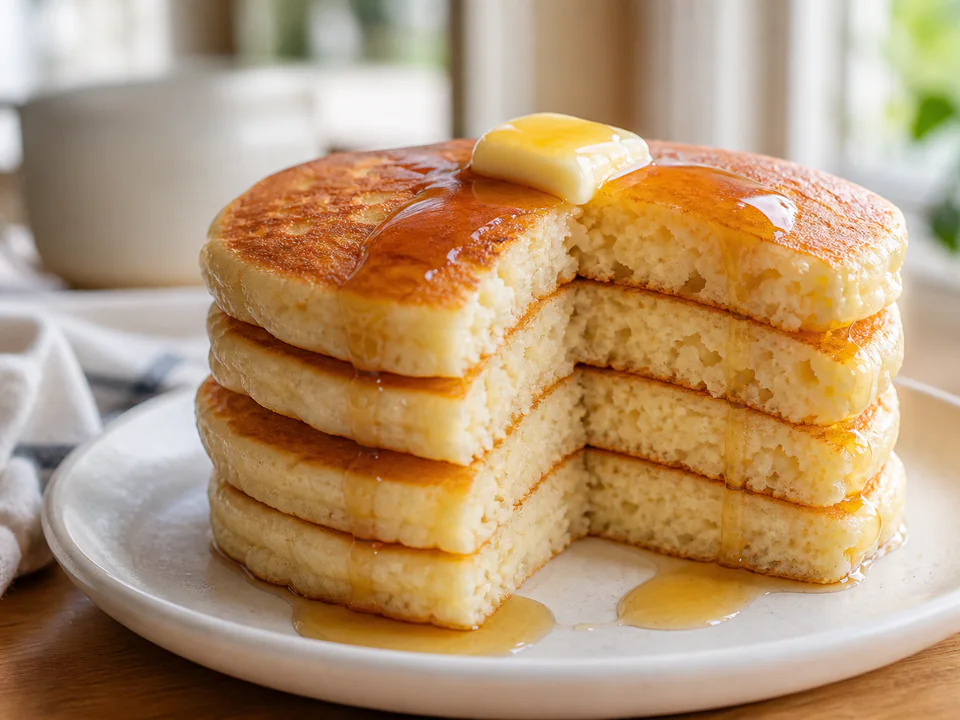
The close image shows the finished fluffy pancakes clearly enough to inspect surface, filling distribution, or crumb. Use those visible features as comparison points while allowing for normal differences in ingredients, cookware, and portioning.
Why the method works
Even leavener distribution matters
Whisking the dry ingredients prevents concentrated pockets and gives each portion the same starting formula. More leavener is not an automatic fix and can create off flavor.
Gentle mixing protects tenderness
The goal is to hydrate flour without turning the bowl into a long mixing exercise. Stop at combined and let the short rest finish hydration.
Batter thickness and portion size work together
A thick batter can remain raw if the pancake is oversized, while a very thin batter spreads before it can build height. Calibrate both variables with the same test.
Pan heat is read through results
Rapid darkening with a wet center means the heat/size combination is wrong. Pale greasy surfaces suggest a different problem. Adjust after observing the cooked test.
Diagnose and fix the current batch
Do not discard the whole fluffy pancakes batch at the first imperfect result. Hold the formula constant where possible, choose the symptom that actually matches the cooked test, and make one bounded correction.
The pancakes are flat. Confirm the baking powder was measured and is within its useful date, then check whether the batter was thin or heavily mixed. Make one controlled correction instead of adding a random extra spoonful. After the correction, compare the next piece with the same portion and describe the center, surface, and release before changing another variable.
The crumb is dense. Use a smaller portion, fold less on the next batch, and verify the batter ribbon. Dense is different from raw; cut the pancake and describe what you actually see. After the correction, compare the next piece with the same portion and describe the center, surface, and release before changing another variable.
The outside browns too fast. Lower the heat, allow the pan to settle, and reduce the next portion. A dark surface is not a safe substitute for checking the center. After the correction, compare the next piece with the same portion and describe the center, surface, and release before changing another variable.
The pancakes spread into each other. Use less batter and leave more pan space. If the bowl has thinned, stir from the bottom and wait briefly before deciding whether the formula is off. After the correction, compare the next piece with the same portion and describe the center, surface, and release before changing another variable.
They deflate after turning. Turn only when the first side has built structure, use one confident motion, and avoid pressing. A slight settling is normal; a wet collapsing center needs more cooking control. After the correction, compare the next piece with the same portion and describe the center, surface, and release before changing another variable.
If the fluffy pancakes smell spoiled, contain visibly raw animal ingredients, or have been mishandled, a texture adjustment is not the answer. Culinary rescue does not override food-safety judgment.
Serving directions that fit this article
- Butter and a restrained syrup drizzle
- Fresh berries with plain yogurt
- Warm fruit compote kept mostly on top
- A savory plate with eggs and herbs
Choose one fluffy pancakes serving direction and build a coherent plate. Keep one plain piece available for comparison; toppings and sauces can improve the meal, but they can also hide which part of the base needs adjustment.
Food safety and storage
Flour and egg batter is raw food, so do not taste it or use surface browning as a safety test. Keep raw batter and its utensils away from ready-to-eat toppings, cook until the center has no wet batter, and clean preparation surfaces. Cool cooked fluffy pancakes promptly and follow current official leftovers guidance rather than inventing a universal hold time. Quality cues and food-safety boundaries are separate decisions.
For leftover fluffy pancakes, label the container and keep wet sauces, fruit, vegetables, or garnishes separate when that protects texture and handling. Reheat only the portion needed until hot throughout, and check more than the surface when pieces are thick or filled.
Prevent the same problem next time
Keep a short log of flour weight, milk amount, rest duration, scoop size, first-side cue, and pan setting. That record distinguishes a formula problem from a pan-control problem.
A useful fluffy pancakes batch note includes the exact ingredient or process change, not merely “better” or “worse.” Measured quantities and a short description of spread, browning, release, and center texture are enough to guide the next test.
Check the finished result before serving
Set one finished fluffy pancakes portion aside before adding sauce or garnish. Look first at the surface and edges, then cut through the thickest or most heavily filled area. The goal is not to match a photograph exactly; it is to confirm that the visible result agrees with the method’s cues and that no wet batter remains.
Compare Cook a measured test with Even leavener distribution matters. If the surface, release, and center point to different problems, give the center priority and adjust heat or portion size before cooking more. Taste only the fully cooked test, then decide whether salt, acid, sweetness, or toppings belong on the plate. This short check keeps a presentation choice from hiding a cooking problem.
Related Pancake World guides
- Use the why pancakes turn out flat for its separate, more specific focus.
- Use the American Pancakes for its separate, more specific focus.
- Use the Pancake Troubleshooting for its separate, more specific focus.
Frequently asked questions
Do I need buttermilk for fluffy pancakes?
No. This formula uses milk and baking powder. Buttermilk requires recipe-specific acid and leavener balance rather than an automatic swap.
Should I beat out every lump?
No. Fold until no dry flour remains. Small soft lumps usually hydrate during the rest, while extended beating adds unnecessary mixing.
Why is the first pancake different?
The pan surface and fat film may still be stabilizing. Treat the first pancake as a calibration piece and adjust before cooking the whole bowl.
Can I press pancakes after flipping?
Pressing is unnecessary for this method and can compress the developing crumb. If the center needs more time, use heat and portion control instead.
Sources and editorial references
- Utah State University Extension, What Is Quick Bread? —
https://extension.usu.edu/createbetterhealth/blog/whatisquickbread - King Arthur Baking, Don’t Make This Pancake Mistake —
https://www.kingarthurbaking.com/blog/2017/04/20/dont-make-this-pancake-mistake - U.S. Food and Drug Administration, Flour Is a Raw Food and Other Safety Facts —
https://www.fda.gov/consumers/consumer-updates/flour-raw-food-and-other-safety-facts
For more practical food and breakfast guides, visit Pancakes World.
For a closely related guide, see 7 Fluffy Vegan Pancake Variations.
A useful next comparison is Essential Tips for Making Better Pancakes.
You can also continue with Krusteaz Buttermilk Pancake Mix: Light-and-Fluffy Method Guide.
