European brunch ideas
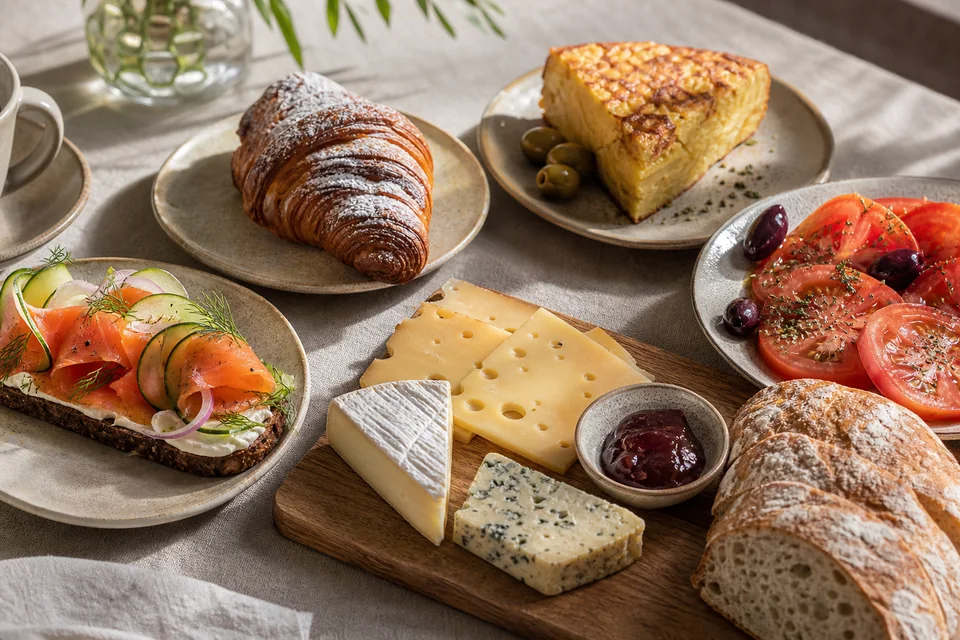
European brunch ideas work best as a clearly labelled, selective menu rather than an “authentic European breakfast.” Pick one named context, use a documented dish or service pattern from that context, and label the rest as your own adaptation. Pancake World places this guide within its brunch guide: the goal is a hospitable table with honest cultural boundaries, not a claim that Europe has one breakfast tradition.
Scope before style
Europe is a geographic label, not a single brunch menu. A country name is still broad; a city, household, dish, café practice, or source is more useful. Start a menu note with the context you can actually name: “Danish open-sandwich-inspired lunch table,” “Irish soda bread alongside eggs,” or “Czech bakery-inspired coffee break.” That wording leaves room for guests’ own experience and avoids turning a visual mood into a historical assertion.
Do not use “traditional,” “classic,” or “European” as an upgrade for a dish you have not researched. A precise, modest description is more useful to readers and guests.
Terminology
“Brunch” is an event format used here for a late-morning shared meal. It is not evidence that the examples below are traditionally eaten together, at the same time, or by everyone in a named place. A cultural reference is narrower: a dish, ingredient, serving format, or archive description that a named organisation identifies. A menu adaptation is the host’s practical combination of those references.
Named-context comparison
| Named context | Reference to research | Host adaptation | Boundary |
|---|---|---|---|
| Ireland | National Museum of Ireland collections and foodways research. | Pair a sourced bread with fruit and eggs. | Do not call the whole plate a traditional Irish set menu. |
| Denmark | Royal Danish Library cultural collections. | Use a simple open-sandwich service order. | Describe fillings and timing as your menu unless a source establishes them. |
| Czechia | CzechTourism culinary research. | Place one researched baked item beside coffee. | Do not call a multi-country spread Czech brunch. |
Irish reference: make one item do the cultural work
For an Irish direction, begin with one identifiable item rather than an overloaded green-themed table. Read National Museum of Ireland material or a complete, attributable recipe before choosing bread, dairy, or preserves. Then add straightforward components that make service easier: fruit, a cooked egg, and tea or coffee. Those additions can be good hosting choices without being represented as a fixed national menu.
If the specific bread or flour is unavailable, choose another sourced dish or label your version “inspired by” the original reference. Do not use an unfamiliar regional name as a decorative label for a different preparation.
Danish reference: separate format from authenticity
An open-sandwich format can solve a practical brunch problem: guests can assemble small portions and the host can stage components. The Royal Danish Library is a research starting point, not a licence to attach Danish identity to any topping combination. Name the bread, spread, fish, vegetable, or garnish only when you have verified the particular reference; otherwise write the menu in plain descriptive language.
For a lower-pressure version, set out bread, two savoury components, one fresh component and a small sweet separately. That is a useful service pattern, not a claim about how all Danish households eat.
Czech reference: keep the source and the coffee break distinct
CzechTourism can help a reader identify a Czech culinary reference worth researching further. A host may then build a coffee-centred pause around one verified pastry or baked good. The rest of the table—fruit, yogurt, eggs, or a second country’s bread—needs its own label. “Czech-inspired coffee break with a separate savoury brunch course” is more accurate than a sweeping national claim.
Evidence and adaptation
Make the distinction visible before shopping. A short card can carry three lines: the dish name and named context; the source consulted; and “host adaptation” where you changed ingredients, order, or occasion. This is especially helpful when family memory and published documentation sit together. A relative’s account may be meaningful to the table, but it is not evidence for what a whole country does.
If you cannot verify a claim, remove the claim rather than strengthening the adjective. “A warm bread basket with fruit and butter” is sufficient copy.
A respectful four-part menu builder
- Anchor: one researched regional item or a plain cooked dish.
- Support: bread, potato, grain, or pastry described exactly as served.
- Fresh element: fruit or vegetables chosen for season and guest preference.
- Drink: coffee, tea, or a non-alcoholic option; do not imply a national rule.
A Danish-reference table might use researched bread, cucumber and herbs, and coffee. A separate plate of Italian brunch dishes should stay separately labelled. If time is short, fast brunch ideas can help with pacing without changing the cultural description.
Service order and current handling limits
Do the research and menu labelling first, then make the service plan. Assemble cold components close to serving, reserve one warm task for last, and keep perishable food within the food-safety guidance relevant to where you are cooking. The Food Standards Agency is a suitable current safety reference; this page does not give time-temperature rules or dietary advice.
Allergen information is factual menu information, not a cultural embellishment. Check labels on the actual bread, dairy, sauces and packaged products you buy; do not promise an item is safe for a particular person.
Route ownership and limitations
This page owns the question “how can I plan European brunch ideas without flattening regional food culture?” It does not replace a full recipe, a national food history, a nutrition guide, or travel advice. Use an attributable complete recipe for an unfamiliar technique. For a France-focused starting point, typical French breakfast is a more focused internal route; for shared-meal mechanics, continental brunch ideas is a different planning route.
Cultural and menu summary
The strongest European brunch idea is a modest, named reference: research one Irish, Danish, Czech, or other specific context; retain the dish name where warranted; and state plainly where your hosting choices begin. That produces a coherent table while leaving cultural authority with the sources and people who hold it.
Related reading
- Elegant brunch ideas for presentation choices that do not depend on cultural claims.
- Brunch entertaining ideas for guest-flow planning.
Sources and editorial references
- National Museum of Ireland, Collections and foodways research —
https://www.museum.ie/en-IE/Collections-Research - Royal Danish Library, cultural collections —
https://www.kb.dk/en/find-materials/collections - CzechTourism, Czech gastronomy research —
https://www.visitczechia.com/en-US/food-drink - Food Standards Agency, keeping food safe —
https://www.food.gov.uk/safety-hygiene/keeping-food-safe - Europeana, food and drink collections —
https://www.europeana.eu/en/collections/topic/food-and-drink