
Explore more pancake traditions and breakfast culture on Pancake World.
Okonomiyaki builds flavor in layers: cabbage and a savory griddled base, concentrated sauce, creamy mayonnaise, seaweed aroma, and optional bonito. Regional styles arrange those elements differently, so choosing the style comes before choosing the pan method.
The okonomiyaki method gives measurable starting points, observable checks, a current-batch repair path, and a next-batch record. Start with the stated formula, then use the cooked result to decide whether liquid, portion size, heat, or handling needs one bounded adjustment.
Quick answer
Okonomiyaki combines a savory base with cabbage and a browned griddle surface, then adds concentrated sauce, creamy mayonnaise, seaweed aroma, and often bonito flakes. Osaka-style versions commonly mix cabbage and batter, while Hiroshima-style versions are layered and often include noodles.
Use the first cooked okonomiyaki portion as evidence. Note how far this specific mixture spreads, whether it releases, how quickly it colors, and what its cut center looks like. Do not taste raw batter or assume a dark surface proves the interior is ready.
What you need
- finely shredded cabbage
- a modest flour-and-liquid batter
- egg where the selected style uses it
- spring onion and optional tenkasu
- protein or seafood chosen for the recipe
- okonomiyaki sauce
- Japanese mayonnaise
- aonori and bonito flakes where desired
- noodles for a Hiroshima-style direction
Equipment
A broad flat griddle or skillet, two sturdy spatulas, mixing bowl for Osaka-style batter, lidded pot for noodles, squeeze bottles or spoons for finishing sauces, and a knife for checking the center support controlled home tasting.
These quantities and tools belong to this okonomiyaki method, not to every pancake style. Ingredient brands, flour milling, egg size, cookware, and stove response vary, so the measured test is part of the recipe rather than an optional sacrifice.
Step-by-step method
1. Choose a style before shopping
For an Osaka-style home version, plan a mixed cabbage batter. For Hiroshima-style, plan separate layers, noodles, and a more coordinated sequence. Do not blend the two methods accidentally.
2. Build the savory base
Cut cabbage finely enough to soften while retaining texture. Keep the batter modest so the finished dish tastes of cabbage and fillings rather than a thick plain pancake.
3. Control the griddle
Use enough oil for release, form an even round, and allow the first side to build structure. Large rounds need two spatulas and a confident supported turn.
4. Cook all fillings appropriately
Raw meat or seafood must be handled and cooked according to the selected recipe and current safety guidance. Do not use sauce color or cabbage softness as a safety test.
5. Finish in layers of flavor
Brush on a modest sauce layer, add mayonnaise, then aonori and bonito if used. Taste the base before adding more sauce because toppings can dominate quickly.
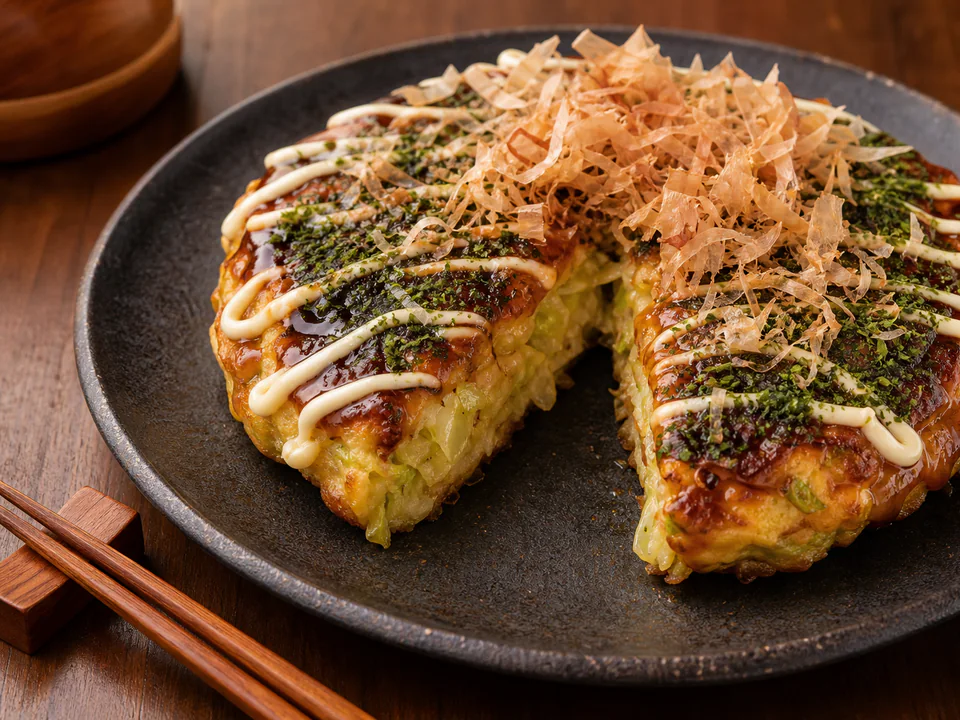
The close image shows the finished okonomiyaki clearly enough to inspect surface, filling distribution, or crumb. Use those visible features as comparison points while allowing for normal differences in ingredients, cookware, and portioning.
Why the method works
The name signals customization
Okonomiyaki is often explained through the idea of cooking what you like, but that does not mean every combination follows one method. Regional forms and home practices differ.
Sauce supplies sweet, tangy, and savory concentration
A small amount changes the whole plate. Keep it on the surface rather than using it to hide an underseasoned or undercooked center.
Cabbage is structural as well as flavorful
Its cut, moisture, and proportion affect whether the round holds together. Thick ribs and long shreds make turning harder.
Toppings create aroma and movement
Aonori adds seaweed aroma, while thin bonito flakes may move in the rising heat. These visual cues are not measures of doneness.
Diagnose and fix the current batch
Do not discard the whole okonomiyaki batch at the first imperfect result. Hold the formula constant where possible, choose the symptom that actually matches the cooked test, and make one bounded correction.
The round falls apart during the turn. Make it smaller, use two spatulas, and wait for a firmer first-side crust. Recheck cabbage-to-batter proportion on the next batch. After the correction, compare the next piece with the same portion and describe the center, surface, and release before changing another variable.
The center is wet. Lower heat, reduce thickness, and cover briefly only if the recipe supports it. Cut the center and distinguish wet batter from moist cabbage. After the correction, compare the next piece with the same portion and describe the center, surface, and release before changing another variable.
The outside burns before cabbage softens. Lower the heat and shred the cabbage more finely. Thick vegetables need a method change, not more sauce. After the correction, compare the next piece with the same portion and describe the center, surface, and release before changing another variable.
The finished flavor is too salty or sweet. Use less sauce, add unsauced cabbage or plain rice on the plate, and measure the finishing amount next time. After the correction, compare the next piece with the same portion and describe the center, surface, and release before changing another variable.
Hiroshima layers slide. Keep each layer compact, drain noodles, coordinate the egg layer, and use two spatulas. The dedicated Hiroshima guide provides the fuller sequence. After the correction, compare the next piece with the same portion and describe the center, surface, and release before changing another variable.
If the okonomiyaki smell spoiled, contain visibly raw animal ingredients, or have been mishandled, a texture adjustment is not the answer. Culinary rescue does not override food-safety judgment.
Serving directions that fit this article
- Osaka-style mixed cabbage okonomiyaki with pork belly
- A seafood version with shrimp and squid prepared safely
- Hiroshima-style layers with noodles and egg
- A vegetable-led version with mushrooms and spring onion
Choose one okonomiyaki serving direction and build a coherent plate. Keep one plain piece available for comparison; toppings and sauces can improve the meal, but they can also hide which part of the base needs adjustment.
Food safety and storage
Do not taste raw flour batter. Prepare meat, seafood, and egg components according to the selected okonomiyaki recipe and current official handling guidance, keeping raw ingredients away from sauces and garnishes. Check the center and the relevant protein itself; sauce color, bonito movement, or a browned cabbage surface cannot establish doneness. Cool leftovers promptly and store them under current official guidance.
For leftover okonomiyaki, label the container and keep wet sauces, fruit, vegetables, or garnishes separate when that protects texture and handling. Reheat only the portion needed until hot throughout, and check more than the surface when pieces are thick or filled.
Prevent the same problem next time
Record regional style, cabbage cut and weight, batter amount, diameter, protein preparation, griddle setting, and sauce quantity. That turns ‘delicious flavor’ into a repeatable balance.
A useful okonomiyaki batch note includes the exact ingredient or process change, not merely “better” or “worse.” Measured quantities and a short description of spread, browning, release, and center texture are enough to guide the next test.
Check the finished result before serving
Set one finished okonomiyaki portion aside before adding sauce or garnish. Look first at the surface and edges, then cut through the thickest or most heavily filled area. The goal is not to match a photograph exactly; it is to confirm that the visible result agrees with the method’s cues and that no wet batter remains.
Compare Finish in layers of flavor with The name signals customization. If the surface, release, and center point to different problems, give the center priority and adjust heat or portion size before cooking more. Taste only the fully cooked test, then decide whether salt, acid, sweetness, or toppings belong on the plate. This short check keeps a presentation choice from hiding a cooking problem.
Related Pancake World guides
- Use the okonomiyaki guide to Japan for its separate, more specific focus.
- Use the Hiroshima-style okonomiyaki for its separate, more specific focus.
- Use the pancakes in Japan for its separate, more specific focus.
Frequently asked questions
Is okonomiyaki a pancake?
It is often described in English as a savory Japanese pancake, but its cabbage-forward composition, griddle method, and regional forms deserve their own explanation.
What is the difference between Osaka and Hiroshima styles?
Osaka-style versions commonly mix cabbage with batter, while Hiroshima-style versions build layers and often include noodles. Individual recipes still vary.
Do I need bonito flakes?
No. They provide a distinctive savory aroma and visual finish, but the dish can be made without them. Check labels for fish if allergens matter.
Can I use any sauce?
A different sauce changes the flavor balance. Use okonomiyaki sauce or a carefully chosen substitute, then apply it modestly and taste.
Sources and editorial references
- Japan National Tourism Organization, Okonomiyaki Guide —
https://www.japan.travel/en/guide/okonomiyaki-guide/ - Ministry of Agriculture, Forestry and Fisheries Japan, Hiroshima Okonomiyaki —
https://www.maff.go.jp/e/policies/market/k_ryouri/search_menu/2805/index.html - U.S. Food and Drug Administration, Flour Is a Raw Food and Other Safety Facts —
https://www.fda.gov/consumers/consumer-updates/flour-raw-food-and-other-safety-facts
