
A useful fluffy-pancake tip should solve a visible problem. The checklist below connects measurement, leavener, mixing, batter consistency, portion size, pan heat, and turning to the result each control can change.
The fluffy pancake batch method gives measurable starting points, observable checks, a current-batch repair path, and a next-batch record. Start with the stated formula, then use the cooked result to decide whether liquid, portion size, heat, or handling needs one bounded adjustment.
Quick answer
The most useful tips are to weigh the flour, distribute the leavener, mix briefly, rest the batter, hold portion size constant, stabilize pan heat, and inspect the first cooked center. Each tip controls a different variable, so change only one when diagnosing a batch.
Use the first cooked fluffy pancake batch portion as evidence. Note how far this specific mixture spreads, whether it releases, how quickly it colors, and what its cut center looks like. Do not taste raw batter or assume a dark surface proves the interior is ready.
What you need
- one complete tested pancake recipe
- freshly checked baking powder or the leavener named by that recipe
- ingredients at the recipe’s stated temperature
- a measured liquid adjustment only when the cooked test supports it
- a thin, even film of cooking fat
- toppings held until the base pancake is evaluated
Equipment
A digital scale, consistent scoop, heavy pan, broad turner, timer for your own notes, and a knife for checking the first center make the tips actionable. The goal is repeatability, not owning specialized equipment.
These quantities and tools belong to this fluffy pancake batch method, not to every pancake style. Ingredient brands, flour milling, egg size, cookware, and stove response vary, so the measured test is part of the recipe rather than an optional sacrifice.
Step-by-step method
1. Tip 1: weigh before mixing
Flour packed into a cup can vary. Weighing keeps the flour-to-liquid relationship stable and makes any later adjustment interpretable.
2. Tip 2: whisk dry ingredients thoroughly
Distribute leavener and salt through the flour. A concentrated pocket cannot be repaired at the pan.
3. Tip 3: combine with restraint
Whisk wet ingredients separately, then fold into dry until no loose flour remains. Stop while the batter still looks softly lumpy.
4. Tip 4: use rest and ribbon as checks
A brief rest lets the batter settle. Watch how it falls from the scoop and spreads, because recipes and flours do not all share one perfect thickness.
5. Tip 5: standardize the pan test
Use the same scoop, pan zone, and turning cue. Cut the first pancake and adjust the heat/portion combination before the remaining batch.
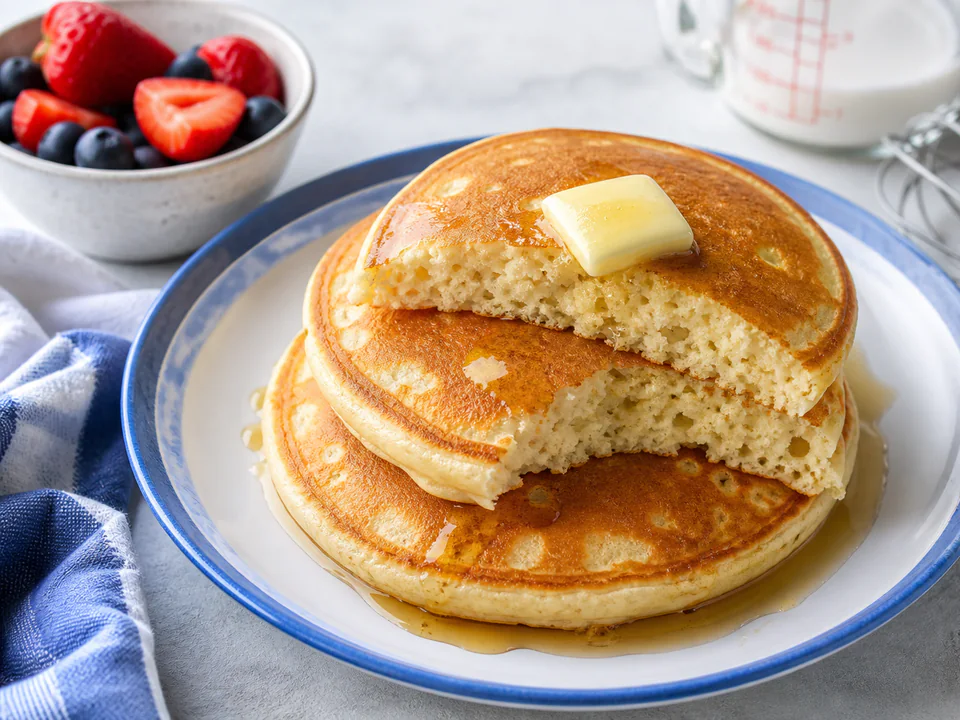
The close image shows the finished fluffy pancake batch clearly enough to inspect surface, filling distribution, or crumb. Use those visible features as comparison points while allowing for normal differences in ingredients, cookware, and portioning.
Why the method works
A tip needs a failure mode
Weighing addresses formula drift; gentle mixing addresses toughness; a consistent scoop addresses uneven centers. Advice is useful when you know which visible problem it is meant to control.
Height is not the only quality
A very tall pancake can still be gummy, dry, or undercooked. Judge the cut crumb, tenderness, flavor, and even cooking together.
One adjustment preserves the diagnosis
If you add milk, lower heat, change scoop size, and add leavener at once, the next pancake cannot tell you which change mattered.
The recipe determines the acid-leavener system
Baking soda and baking powder are not freely interchangeable. Follow the formula, especially when buttermilk or another acidic ingredient is present.
Diagnose and fix the current batch
Do not discard the whole fluffy pancake batch batch at the first imperfect result. Hold the formula constant where possible, choose the symptom that actually matches the cooked test, and make one bounded correction.
The first pancake is pale and greasy. Let the pan recover, reduce surface fat to a complete thin film, and repeat the same scoop. Do not raise heat dramatically without observing the next result. After the correction, compare the next piece with the same portion and describe the center, surface, and release before changing another variable.
The next pancakes scorch. The pan may have accumulated heat. Lower the setting, pause briefly, wipe away burned fat, and keep the portion unchanged while testing. After the correction, compare the next piece with the same portion and describe the center, surface, and release before changing another variable.
The center is gummy. Use a smaller scoop and moderate heat, then cut the next pancake. If the batter was mixed aggressively or made very wet, note that for the next batch rather than adding a late cure. After the correction, compare the next piece with the same portion and describe the center, surface, and release before changing another variable.
The pancakes are tender but low. Check leavener measurement and batter spread before chasing height. A wider pancake will look lower even when the crumb is acceptable. After the correction, compare the next piece with the same portion and describe the center, surface, and release before changing another variable.
The batch varies from pancake to pancake. Stir the bowl gently from the bottom between portions, keep the scoop level, and use the same pan zone or rotate deliberately on a large griddle. After the correction, compare the next piece with the same portion and describe the center, surface, and release before changing another variable.
If the fluffy pancake batch smell spoiled, contain visibly raw animal ingredients, or have been mishandled, a texture adjustment is not the answer. Culinary rescue does not override food-safety judgment.
Serving directions that fit this article
- Serve one plain pancake first to evaluate the base
- Add syrup lightly so lower pancakes do not become saturated
- Keep juicy fruit or compote mostly on top
- Serve creamy and crunchy elements separately for contrast
Choose one fluffy pancake batch serving direction and build a coherent plate. Keep one plain piece available for comparison; toppings and sauces can improve the meal, but they can also hide which part of the base needs adjustment.
Food safety and storage
Flour and egg batter is raw food, so do not taste it or use surface browning as a safety test. Keep raw batter and its utensils away from ready-to-eat toppings, cook until the center has no wet batter, and clean preparation surfaces. Cool cooked fluffy pancake batch promptly and follow current official leftovers guidance rather than inventing a universal hold time. Quality cues and food-safety boundaries are separate decisions.
For leftover fluffy pancake batch, label the container and keep wet sauces, fruit, vegetables, or garnishes separate when that protects texture and handling. Reheat only the portion needed until hot throughout, and check more than the surface when pieces are thick or filled.
Prevent the same problem next time
Choose the single largest problem, write the observed symptom, and change one variable in the next batch. A three-line test log is more valuable than collecting a dozen disconnected ‘secrets.’
A useful fluffy pancake batch batch note includes the exact ingredient or process change, not merely “better” or “worse.” Measured quantities and a short description of spread, browning, release, and center texture are enough to guide the next test.
Check the finished result before serving
Set one finished fluffy pancake batch portion aside before adding sauce or garnish. Look first at the surface and edges, then cut through the thickest or most heavily filled area. The goal is not to match a photograph exactly; it is to confirm that the visible result agrees with the method’s cues and that no wet batter remains.
Compare Tip 5: standardize the pan test with A tip needs a failure mode. If the surface, release, and center point to different problems, give the center priority and adjust heat or portion size before cooking more. Taste only the fully cooked test, then decide whether salt, acid, sweetness, or toppings belong on the plate. This short check keeps a presentation choice from hiding a cooking problem.
Related Pancake World guides
- Use the skillet guide for fluffy pancakes for its separate, more specific focus.
- Use the flat pancake diagnostics for its separate, more specific focus.
- Use the Pancake Troubleshooting for its separate, more specific focus.
Frequently asked questions
Does more baking powder make pancakes fluffier?
Not automatically. Use the tested recipe amount; excess can affect flavor and structure, while other causes such as spread, mixing, or heat may remain.
Should batter rest?
A short recipe-specific rest can help hydration, but it is not a universal overnight rule. Observe the batter before and after the planned rest.
Are bubbles the only flip cue?
No. Look for a set rim, bubbles that remain open, and a lower surface that releases. Thick pancakes may need more than one visible cue.
Why cut the first pancake?
The cut center separates a cooked texture problem from a surface-color problem and lets you adjust before the whole batch is committed.
Sources and editorial references
- Utah State University Extension, What Is Quick Bread? —
https://extension.usu.edu/createbetterhealth/blog/whatisquickbread - Illinois Extension, Recipe Rescue: Pancakes —
https://extension.illinois.edu/blogs/live-well-eat-well/2014-07-17-recipe-rescue-pancakes - U.S. Food and Drug Administration, Flour Is a Raw Food and Other Safety Facts —
https://www.fda.gov/consumers/consumer-updates/flour-raw-food-and-other-safety-facts
For more practical food and breakfast guides, visit Pancakes World.
For a closely related guide, see Pancakes Taste Like Baking Powder: Heat, Release and Batch Method.
A useful next comparison is Tips for Flipping Pancakes Without Falling Apart.
You can also continue with Fluffy Pancakes Without Milk: A Light, Reliable Method.
