Work breakfast planning
Breakfast ideas for work
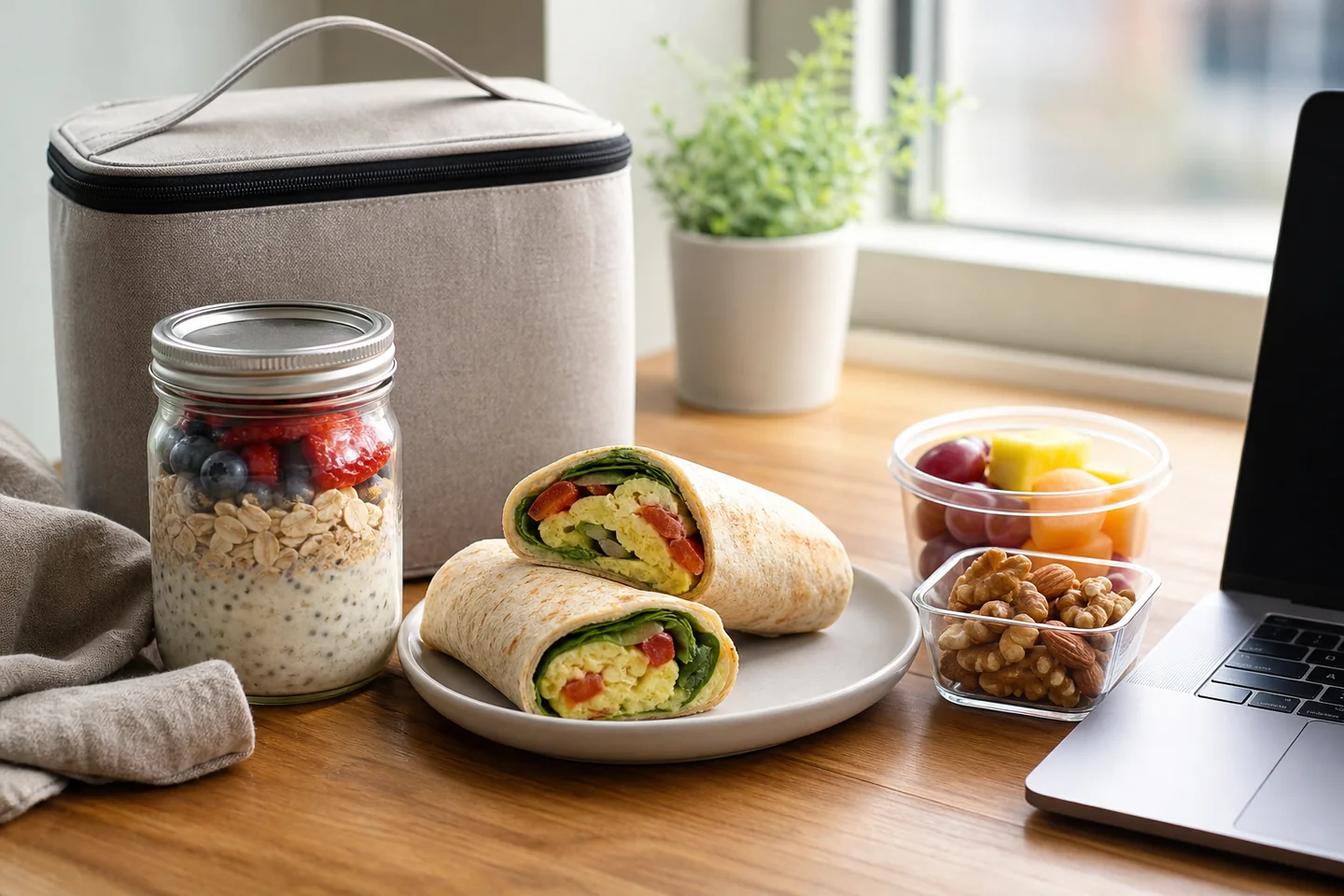
The most useful breakfast ideas for work are planned around the commute, the place you will eat, and the cold or heat control actually available—not around a photogenic recipe alone. Start by choosing one portable format, packing only the number of portions you can store safely, and keeping a shelf-stable fallback. Pancake World uses that practical sequence to turn work breakfast from a daily scramble into a small weekly plan.
The five-question work-breakfast plan
Before shopping, record commute length, refrigerator access, microwave access, break time, eating setting, and the containers that can travel with you. Those answers select the format before a recipe does.
A quick format decision
| Situation | Format | Do not rely on |
|---|---|---|
| Refrigerator confirmed | chilled jar or cold sandwich | a meal that needs reheating |
| Microwave and seated break | reheatable baked portion | a loose, spill-prone bowl |
| No cold storage | shelf-stable kit or nearby purchase | a perishable meal in a bag |
This is a planning aid, not a food-safety guarantee. Labels, recipes, and actual conditions set storage boundaries.
Pick one portable formula for the first batch
Choose two formats for a week, not five unrelated recipes. A chilled jar keeps a spoon breakfast contained; keep crisp toppings separate. A sturdy sandwich needs a filling that will not soak the bread. A baked portion works only where its cooling and storage instructions can be followed. A dry-and-wet kit keeps cereal or muesli separate from its wet component until work.
For jar texture, see the muesli breakfast guide. For another portable format, use the easy brunch sandwiches collection.
Set workplace capacity before batch day
Count the containers you own, the fridge space you can use, and the time available on your break. A five-portion batch is sensible only when every portion has a storage place and the selected recipe supports that schedule. Use leak-resistant vessels for wet items and separate dry containers when crunch matters.
Shop to a short, repeatable list
- Two bases for a jar and a sandwich or baked portion.
- Flexible add-ons that fit the selected recipe.
- A work kit: containers, spoon, napkins, labels, and cold-control items if appropriate.
- One unopened shelf-stable fallback.
The American breakfast hub is this guide’s live parent hub; this page remains the logistics plan.
Run a two-batch weekly schedule
Sunday: prepare the first window
Review the work calendar, select Monday and Tuesday formats, clear container space, and make only the portions supported by the recipe’s storage guidance. Label the preparation date.
Wednesday: reset instead of stretching leftovers
Wash returned containers and make a smaller second batch for the later week. If meetings have changed, reduce the batch or switch to the fallback.
Pack in commute order
- Confirm whether the meal needs cold storage or reheating.
- Separate wet and crisp elements when texture requires it.
- Add utensil and napkin before closing the bag.
- Use cold-control equipment immediately before leaving if required.
- Refrigerate food on arrival when it needs refrigeration.
FDA consumer guidance supports prompt temperature control for perishable food; it does not provide a universal commute rule for every ingredient.
Use a five-day example as a template
Where refrigeration and a microwave are confirmed, a possible pattern is chilled jars Monday and Tuesday, a recipe-approved reheatable baked portion Wednesday, and fresh sandwiches Thursday and Friday. The split—not the exact menu—is the useful part. Where no microwave is available, choose a deliberate cold option. Where refrigeration is uncertain, use the fallback or buy closer to eating time.
Build failure plans before the rushed morning
| Disruption | Response |
|---|---|
| Fridge unavailable | Use the shelf-stable fallback; do not improvise perishable storage. |
| Break moved | Refrigerate when required and follow recipe guidance. |
| Container leaks | Change the container system. |
| Microwave queue | Choose a cold option next day. |
The unique breakfast ideas guide can vary flavour once the work routine is dependable.
Final operational checklist
- Eating setting and break length recorded.
- Refrigerator and microwave confirmed.
- Two portable formats selected.
- Portion count matched to containers and storage guidance.
- First batch dated; second batch scheduled.
- Wet and crisp components separated.
- Work kit packed.
- Shelf-stable fallback ready.
Related reading
Sources and editorial references
- U.S. Food and Drug Administration, Food Safety at Home — consumer handling and refrigeration guidance.
- USDA Food Safety and Inspection Service, Keep Food Safe! Food Safety Basics — handling and storage context.
- USDA MyPlate, What Is MyPlate? — food-group planning context only.
- Food Standards Agency, Chilling food correctly in your business — temperature-control context, not a universal commute limit.