Muesli breakfast
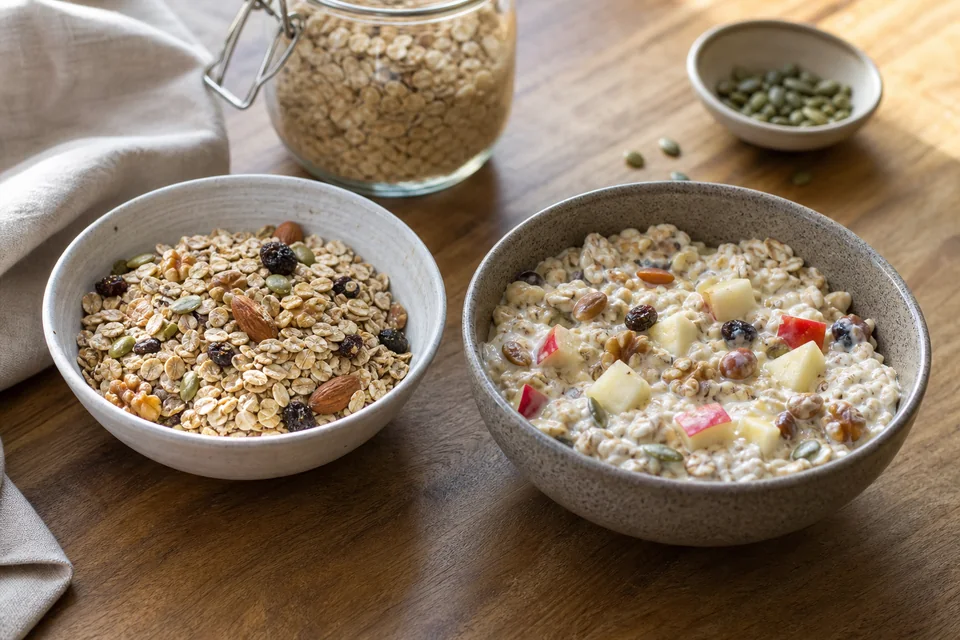
What a balanced muesli breakfast looks like
A balanced muesli breakfast is a bowl or jar with a measured rolled-grain base, enough liquid to soften it to the texture you want, one or two flavourful fruit elements, and a controlled amount of nuts, seeds, or other crisp ingredients. The useful balance is structural rather than nutritional: the grain should be hydrated but not pasty, the fruit should not flood the bowl, and the final sweetness should come from a deliberate combination instead of several overlapping sweeteners. Start with Pancake World and the Pancake World brunch guide for the wider meal context, then decide whether your bowl is for immediate eating, a short rest, or refrigerated holding.
There is no single universal ratio. Flake thickness, yogurt viscosity, dried-fruit size, seed content, and the temperature of the mixture all change the result. A reliable plan therefore records the dry base, the liquid, the rest time, and the toppings separately. That makes a soft or dry bowl diagnosable instead of turning every problem into a new ingredient guess.
Precise definition: what muesli is
Muesli is an uncooked cereal mixture built around rolled or flaked grain and commonly combined with nuts, seeds, dried fruit, fresh fruit, spices, or a modest sweetener. “Uncooked” describes the mixture format; it does not remove the need to follow the handling instructions for milk, yogurt, cut fruit, packaged ingredients, or any component that requires refrigeration. Muesli can be served dry, mixed with liquid immediately, or rested until the grain changes texture.
That definition separates muesli from a fixed recipe. A shop-bought blend may contain ingredients that absorb liquid at different speeds, while a home blend can be designed around a specific texture. Treat the label as an ingredient list and format description, not as a promise of a particular ratio, nutrition outcome, allergen status, or storage life. If a packaged product gives preparation or storage directions, use those directions as the controlling boundary.
Muesli versus granola, porridge, and overnight oats
These names overlap in casual conversation, but the preparation job is different. The comparison below helps choose the right format before you change ingredients. It avoids treating a crunchy baked mixture, a cooked cereal, and a cold soaked bowl as interchangeable.
| Format | Core process | Texture control | Best planning question |
|---|---|---|---|
| Muesli | Combine rolled or flaked ingredients; eat dry, immediately, or after a rest. | Control liquid, rest time, flake thickness, and when crisp items enter. | Do I want the grain chewy, tender, or still distinct? |
| Granola | Usually bake a bound grain mixture until the pieces dry and crisp. | Control binder, oven heat, spread depth, and cooling time. | Am I looking for a baked crisp texture rather than hydrated grain? |
| Porridge | Cook grain with liquid until heat and hydration soften it. | Control simmering, stirring, liquid addition, and serving temperature. | Is a hot cooked breakfast the intended result? |
| Overnight oats | Rest an oat-based mixture in the refrigerator, usually for several hours. | Control refrigeration, liquid viscosity, soak duration, and additions. | Do I have a complete refrigerated method and a safe holding plan? |
A bowl can borrow ideas from more than one format, but name the method you are actually using. Calling a short-soaked muesli “overnight oats” can hide an important difference in holding time; calling granola “muesli” can lead someone to expect a softer texture than the baked product provides.
A practical base formula
Use this ratio framework as a starting point, not as a tested universal recipe: for each 1 cup of rolled grain, begin with 1/2 to 3/4 cup of liquid, 1/4 cup of nuts or seeds, and 1/4 to 1/2 cup of fruit. Choose the lower liquid end for a bowl eaten quickly and the higher end when the grain or seeds need more time to soften. Yogurt is thicker than milk, so a yogurt-heavy bowl may need a separate splash of liquid rather than a blind one-to-one swap.
Portion calculator for one, two, four, and eight people
The calculator below scales the starting framework without pretending to know the appetite or the rest of the meal. It uses 1/2 cup dry grain per person, 1/4–3/8 cup liquid per person, 2 tablespoons nuts or seeds per person, and 1/4–1/2 cup fruit per person. Choose the lower end for a smaller breakfast with other food and the upper end for a larger bowl. Multiply a complete recipe instead when its method depends on a fixed pan, package, or food-safety instruction.
| People | Dry grain | Liquid starting range | Nuts or seeds | Fruit |
|---|---|---|---|---|
| 1 | 1/2 cup | 1/4–3/8 cup | 2 tbsp | 1/4–1/2 cup |
| 2 | 1 cup | 1/2–3/4 cup | 1/4 cup | 1/2–1 cup |
| 4 | 2 cups | 1–1 1/2 cups | 1/2 cup | 1–2 cups |
| 8 | 4 cups | 2–3 cups | 1 cup | 2–4 cups |
For a group, mix the grain and dry additions first, reserve juicy fruit, and keep a little liquid aside. Serve a test portion before loosening the whole bowl. This prevents one person’s preference for a softer texture from deciding the texture for everyone.
What rolled oats contribute to this formula
This page uses rolled oats because the cited overnight-oat method and the calculator are built around them. Keep the cut constant while testing liquid and rest time. Instant oats and steel-cut oats are not one-for-one controls here: their package directions and finished textures differ, so changing the oat type means starting a new test rather than claiming an exact substitution. The observable target is a hydrated flake that still has shape, not a mechanism claim about every oat product.
Milk, yogurt, and plant drinks: choose by observed function
Choose the liquid by the result in the bowl. Milk creates the baseline used in the formula. Yogurt makes the starting mixture visibly thicker, so loosen it with measured milk or water rather than assuming equal flow. Plant drinks vary by brand and label; begin with the same measured volume, rest the bowl, then add 15 ml at a time only if dry flakes remain. This is a repeatable kitchen test, not a claim that all dairy or plant products hydrate oats identically.
Fresh fruit and dried fruit: adjust from the visible bowl
Add firm fresh fruit at service when distinct pieces are the goal. Thawed or cut fruit that leaves liquid in its container should be drained or served as a separate compote so the measured oat base remains the control. Dried fruit is concentrated and product sizes vary; weigh it, keep the first test small, and do not assume that it replaces a measured amount of liquid. Adjust only after the rest period, using dry flakes or free liquid as the observable signal.
Nuts and seeds: crunch and recipe boundaries
Use chopped nuts as a late crisp element and keep them separate during a long soak. Seeds differ by type and preparation. This formula does not treat almonds, chia and flax as interchangeable binders: use a seed as a thickener only when a complete tested recipe names its amount and liquid. Check allergen needs, weigh the first addition and preserve the rolled-oat formula as the control.
Control sweetness without unsupported claims
Sweetness is easiest to control when it is treated as a budget. Count the sweetness already supplied by dried fruit, flavoured yogurt, juice, syrup, and sweetened plant drinks before adding anything else. Taste a small unsweetened portion with the planned fruit. If it is already pleasant, leave the sweetener out. If it is flat, add one measured element and record it. This creates a repeatable flavour decision without calling the result “healthy,” “low sugar,” or suitable for a medical condition.
Use spice, citrus zest, toasted aroma, acidity, or a contrasting crisp ingredient to create interest without automatically increasing sweetness. These changes still depend on the eater and the full ingredient labels. A strong cinnamon note does not cancel a sweetened yogurt, and a fruit label does not tell you how much sugar is in the finished bowl. Keep claims to observable flavour and texture.
Texture and soaking-time table
Rest time is a process variable. The times below are planning ranges for a small measured comparison, not a universal safety instruction. Use a complete recipe or package direction for the exact product, refrigerate perishable mixtures as required, and never treat a longer rest as proof that a mixture is safe or ready. Record the vessel, temperature, liquid amount, and topping timing so the comparison can be repeated.
Three complete preparation methods
Immediate method
Combine 50 g rolled oats with 100 ml milk and 80 g yogurt. Stir for 30 seconds, add firm fruit and crisp toppings, and eat immediately. The result should be loose with clearly firm flakes.
Short-soak method
Combine 50 g rolled oats with 110 ml milk and 60 g yogurt. Cover and rest 20 minutes in the refrigerator. Stir once, then add fruit and nuts at service. Add 15 ml milk only if dry flakes remain.
Overnight method
Combine 50 g rolled oats with 120 ml milk and 60 g yogurt in a covered jar. Refrigerate for 8–12 hours. Stir before eating, add fruit and crisp toppings at service, and keep the jar refrigerated until use. If free liquid remains, reduce the next batch by 15 ml rather than adding another dry ingredient after the fact.
Four combinations with different purposes
These combinations demonstrate planning roles rather than claiming a tested recipe. Use the base formula, check labels, and adjust the liquid for the actual ingredients.
1. Crisp immediate bowl
Use a distinct rolled-grain base, a thin liquid, fresh apple or berries added at the end, and toasted seeds held separately. The purpose is contrast and speed. Do not pre-soak the crisp element or the bowl will lose the texture that defines it.
Substitution framework
Substitution works when you preserve the function of an ingredient and re-check the variables it controls. Replacing milk with yogurt changes viscosity. Replacing rolled oats with a different flake changes hydration speed. Replacing nuts with seeds changes both the allergen question and the absorption pattern. Never assume equal volume means equal texture or equal safety. Keep the replacement labelled and test a small portion before scaling it to a group.
Troubleshooting matrix
Diagnose the first visible failure before adding a fix. Split a small portion when possible, change one variable, and record the result. These are practical texture and flavour diagnostics, not laboratory or clinical conclusions.
| Problem | Likely variable | First controlled fix | Limitation |
|---|---|---|---|
| Too dry | Thick flakes, too little liquid, or too short a rest. | Add a small measured splash or extend the declared rest; re-check. | Do not add several liquids and thickeners together. |
| Too wet | Excess liquid, yogurt dilution, or juice from fruit. | Hold the next liquid addition, separate juicy fruit, and wait within the method. | Do not assume more grain will repair a refrigerated mixture safely. |
| Too soft | Long rest, thin flakes, or absorbing seeds. | Use a shorter window next time and add crisp items at service. | Softness is a texture result, not a safety test. |
| Too chewy | Thick grain, insufficient contact, or dried fruit competing for liquid. | Check the complete method and extend only the intended rest. | Do not invent a universal soak time. |
| Bland | Low contrast between base, liquid, fruit, and spice. | Change one measured flavour element, then taste again. | Do not compensate automatically with multiple sweeteners. |
| Excessively sweet | Sweetened liquid, yogurt, dried fruit, and syrup overlap. | Remove one sweet element in the next portion and add acidity or spice if appropriate. | Labels and individual preferences still control the decision. |
| Fruit releases too much liquid | Juicy, thawed, cut, or salted fruit enters too early. | Drain or hold fruit separately and add close to service. | Follow the full recipe and handling guidance for cut fruit. |
Storage, refrigeration, and make-ahead boundaries
Once liquid, dairy, yogurt, or cut fruit is added, the mixture is no longer just a dry pantry blend. Use clean equipment, follow the package and current food-safety guidance for the most perishable ingredient, keep the mixture refrigerated when required, and label the preparation time when making it for other people. A dry blend can be portioned ahead, while the wet step should be planned around the serving window.
For make-ahead service, keep crisp additions and high-moisture fruit separate when possible. Do not use smell, thickness, or a reassuring appearance as a substitute for a storage instruction. If the holding history or temperature is uncertain, do not serve the portion. This article deliberately avoids a universal refrigerator-hours claim because products, ingredients, equipment, and local guidance differ.
Final decision checklist
- Have I defined whether this is immediate, short-soak, or overnight?
- Did I choose a flake and liquid that fit that window?
- Did I measure the dry base and reserve a small liquid adjustment?
- Are fresh fruit, dried fruit, nuts, and seeds serving the intended texture?
- Did I check labels, allergens, cross-contact, and dietary boundaries?
- Is sweetness controlled as a flavour decision rather than an unsupported health claim?
- For a group, did I label separate options and test a small portion first?
- For make-ahead service, did I follow current storage and refrigeration guidance?
- Can I explain the likely cause if the bowl is dry, wet, soft, chewy, bland, too sweet, or watery?
- Did I record the final ratio and rest window so the next batch is repeatable?
If the answers are yes, choose the method that matches the serving time and keep the final adjustment small. The goal is not one perfect universal bowl; it is a transparent process that lets you control texture, flavour, and ingredient boundaries deliberately.
Related Reading
Sources and editorial references
- USDA FoodData Central —
https://fdc.nal.usda.gov/ - Harvard T.H. Chan School of Public Health, Oats —
https://nutritionsource.hsph.harvard.edu/food-features/oats/ - University of Nevada, Reno Extension, Overnight Oatmeal with Berries —
https://extension.unr.edu/publication.aspx?pubid=6573 - USDA MyPlate, What Is MyPlate? —
https://www.myplate.gov/eat-healthy/what-is-myplate - FDA, Food Safety at Home —
https://www.fda.gov/consumers/consumer-updates/food-safety-home