
This vegetable besan chilla combines gram flour with cumin, carrot, onion, coriander, and a measured amount of water. Its medium-thin rounds are substantial enough for a meal but still flexible enough to fold around a dry filling.
The vegetable besan chilla method gives measurable starting points, observable checks, a current-batch repair path, and a next-batch record. Start with the stated formula, then use the cooked result to decide whether liquid, portion size, heat, or handling needs one bounded adjustment.
Quick answer
Whisk besan with cumin, turmeric, salt, and water to a pourable batter, then fold in grated carrot, red onion, coriander, and a small amount of chile. Cook medium thin pancakes until both surfaces are browned and the interior beside the vegetables is set.
Use the first cooked vegetable besan chilla portion as evidence. Note how far this specific mixture spreads, whether it releases, how quickly it colors, and what its cut center looks like. Do not taste raw batter or assume a dark surface proves the interior is ready.
What you need
- 180 g besan (gram flour)
- 1 teaspoon cumin seeds, lightly crushed
- 1/2 teaspoon turmeric
- 3/4 teaspoon fine salt
- 240 to 270 ml water, added gradually
- 60 g finely grated carrot
- 50 g finely chopped red onion
- 3 tablespoons chopped coriander
- 1 small green chile, optional
- neutral oil for cooking
- tomato chutney, cucumber, and lemon to serve
Equipment
Use a scale, grater, chopping board, medium bowl, whisk, 60 ml ladle, flat skillet or tawa, and broad turner. Squeeze the grated carrot only if it is unusually wet; the record should describe the prepared ingredient, not only the shopping weight.
These quantities and tools belong to this vegetable besan chilla method, not to every pancake style. Ingredient brands, flour milling, egg size, cookware, and stove response vary, so the measured test is part of the recipe rather than an optional sacrifice.
Step-by-step method
1. Bloom the dry flavor
Rub the lightly crushed cumin through the besan with turmeric and salt so the spices distribute before water enters.
2. Hydrate in stages
Whisk in enough water to make a smooth thick paste, then add more until the batter falls in a continuous ribbon. Rest for 10 minutes and reassess.
3. Fold in prepared vegetables
Add grated carrot, finely chopped onion, coriander, and chile. Stir from the bottom so solids do not collect in the last pancakes.
4. Spread a controlled portion
Heat and oil the skillet, pour roughly 60 ml, and guide it outward gently. Aim for an even medium-thin round rather than a paper-thin crepe.
5. Cook through and serve
Wait for a set upper surface and releasing edge, turn once, and finish the second side. Check the first center beside carrot and onion before serving with chutney.
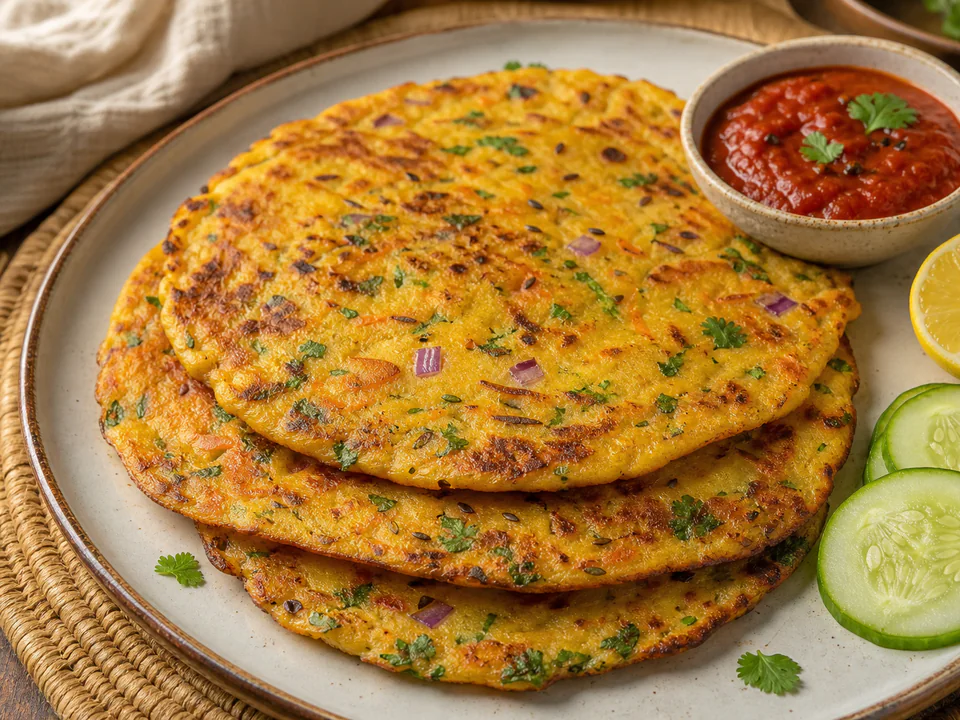
The close image shows the finished vegetable besan chilla clearly enough to inspect surface, filling distribution, or crumb. Use those visible features as comparison points while allowing for normal differences in ingredients, cookware, and portioning.
Why the method works
Rest reveals the real hydration
Besan may thicken during the short rest. Adjust after that point, one tablespoon of water at a time, instead of starting with an overly thin bowl.
Grated carrot changes both body and moisture
Fine shreds integrate more evenly than thick batons. Their weight adds structure but can also block spread if the batter is overloaded.
Cumin and turmeric are flavor choices, not identity tests
Besan chilla varies across homes and regions. This is one practical formula and should not be presented as the only authentic version.
The pan cue remains recipe-specific
A chilla should release before turning, but surface color varies with pan, oil, and vegetable distribution. Check the cooked interior rather than relying on a universal minute count.
Diagnose and fix the current batch
Do not discard the whole vegetable besan chilla batch at the first imperfect result. Hold the formula constant where possible, choose the symptom that actually matches the cooked test, and make one bounded correction.
The batter tears while spreading. Use less pressure, reduce the vegetable load in the next scoop, and add a spoonful of water only if the batter itself is clearly stiff. After the correction, compare the next piece with the same portion and describe the center, surface, and release before changing another variable.
Carrot collects at the bottom. Stir gently from the base before every ladle. If the shreds are too long, shorten them for the next batch rather than increasing batter thickness. After the correction, compare the next piece with the same portion and describe the center, surface, and release before changing another variable.
The chilla stays soft and pale. Allow the pan to recover, renew a thin oil film, and do not crowd the surface. Softness can also come from turning before the first side sets. After the correction, compare the next piece with the same portion and describe the center, surface, and release before changing another variable.
The edges burn. Lower the heat and stop spreading extremely thin. Wipe away dark spice or vegetable fragments between pancakes. After the correction, compare the next piece with the same portion and describe the center, surface, and release before changing another variable.
The center tastes floury. Continue cooking over gentler heat and use a smaller portion. Do not taste raw batter to compare; use a fully cooked test piece. After the correction, compare the next piece with the same portion and describe the center, surface, and release before changing another variable.
If the vegetable besan chilla smell spoiled, contain visibly raw animal ingredients, or have been mishandled, a texture adjustment is not the answer. Culinary rescue does not override food-safety judgment.
Serving directions that fit this article
- Tomato chutney, cucumber, and lemon
- Plain yogurt with cumin and coriander
- A dry paneer filling folded into the warm chilla
- Pickle and a crunchy cabbage salad
Choose one vegetable besan chilla serving direction and build a coherent plate. Keep one plain piece available for comparison; toppings and sauces can improve the meal, but they can also hide which part of the base needs adjustment.
Food safety and storage
For vegetable besan chilla, besan remains a raw flour ingredient, so do not taste the uncooked batter. Keep the whisk, ladle, and work surface clean, cook the center fully, and wash vegetables before cutting. If batter contains chopped vegetables, cook it in the same session unless a separately tested make-ahead process controls both hydration and refrigeration. Cool the finished chilla promptly and store it under current official guidance.
For leftover vegetable besan chilla, label the container and keep wet sauces, fruit, vegetables, or garnishes separate when that protects texture and handling. Reheat only the portion needed until hot throughout, and check more than the surface when pieces are thick or filled.
Prevent the same problem next time
Log the besan brand, rested water amount, prepared vegetable weights, portion size, and finished diameter. That creates a reproducible gram-flour recipe even when milling and vegetables vary.
A useful vegetable besan chilla batch note includes the exact ingredient or process change, not merely “better” or “worse.” Measured quantities and a short description of spread, browning, release, and center texture are enough to guide the next test.
Check the finished result before serving
Set one finished vegetable besan chilla portion aside before adding sauce or garnish. Look first at the surface and edges, then cut through the thickest or most heavily filled area. The goal is not to match a photograph exactly; it is to confirm that the visible result agrees with the method’s cues and that no wet batter remains.
Compare Cook through and serve with Rest reveals the real hydration. If the surface, release, and center point to different problems, give the center priority and adjust heat or portion size before cooking more. Taste only the fully cooked test, then decide whether salt, acid, sweetness, or toppings belong on the plate. This short check keeps a presentation choice from hiding a cooking problem.
Related Pancake World guides
- Use the complete classic besan chilla method for its separate, more specific focus.
- Use the chilla batter consistency guide for its separate, more specific focus.
- Use the besan chilla pairing guide for its separate, more specific focus.
Frequently asked questions
Can I omit carrot?
Yes. Replace it with no extra water at first, then judge the rested batter. The result will spread more easily and taste more directly of besan and cumin.
Can I make it without onion?
Yes. Increase coriander or add a dry grated vegetable, but keep total prepared additions controlled and recheck seasoning.
Why does besan taste bitter?
Old flour, scorched spices, too much turmeric, or an undercooked center can each contribute. Smell the flour, control heat, and assess a fully cooked test.
Is every gram flour gluten-free?
Do not assume. Check the product label and cross-contact statements if gluten avoidance matters.
Sources and editorial references
- USDA FoodData Central, chickpea-flour ingredient record —
https://fdc.nal.usda.gov/fdc-app.html#/food-details/174288/nutrients - Food Safety and Standards Authority of India, Eat Right recipe guidance —
https://fssai.gov.in/upload/EATRIGHTINDIA/English.pdf - U.S. Food and Drug Administration, Flour Is a Raw Food and Other Safety Facts —
https://www.fda.gov/consumers/consumer-updates/flour-raw-food-and-other-safety-facts
For more practical food and breakfast guides, visit Pancakes World.
For the wider topic, start with Guides/pancake Ingredients.
For a closely related guide, see Tomato and Herb Mini Frittatas.
A useful next comparison is How to Make Pancakes Without Eggs: A Reliable Method.
You can also continue with Almond-Flour Pancakes: A Tender, Easy-to-Turn Recipe.
For another practical angle, read IHOP-Style Pancakes: An Independent Copycat Recipe.
Related reading
Image note: Editorial images were created and refined with AI.
