
The best pancake topping is the one that balances the pancake already on the plate. Choosing an anchor flavor, a contrast, and one texture produces clearer combinations than piling on every sweet or savory option at once.
The topped pancake plate method gives measurable starting points, observable checks, a current-batch repair path, and a next-batch record. Start with the stated formula, then use the cooked result to decide whether liquid, portion size, heat, or handling needs one bounded adjustment.
Quick answer
A useful pancake topping combines one main flavor with one contrast and, if needed, one texture. Try fruit plus yogurt and nuts, banana plus nut butter and salt, or smoked salmon plus yogurt, cucumber, and herbs; keep wet toppings mostly on top so the stack does not become soggy.
Use the first cooked topped pancake plate portion as evidence. Note how far this specific mixture spreads, whether it releases, how quickly it colors, and what its cut center looks like. Do not taste raw batter or assume a dark surface proves the interior is ready.
What you need
- fresh berries, sliced banana, apples, pears, citrus, or cooked fruit
- plain yogurt, whipped cream, ricotta, or cottage cheese where appropriate
- toasted nuts, seeds, granola, or crisp crumbs
- maple syrup, honey, fruit sauce, chocolate, or caramel in controlled amounts
- savory options such as smoked salmon, eggs, mushrooms, cheese, herbs, pickles, or avocado
- lemon, salt, spices, or fresh herbs for contrast
Equipment
Use a small saucepan for cooked fruit, dry skillet for toasting nuts, sharp knife, separate serving bowls, and spoons that keep wet, creamy, and crunchy components apart until plating.
These quantities and tools belong to this topped pancake plate method, not to every pancake style. Ingredient brands, flour milling, egg size, cookware, and stove response vary, so the measured test is part of the recipe rather than an optional sacrifice.
Step-by-step method
1. Choose the pancake base first
A delicate crepe, thick American stack, oatmeal pancake, and savory chilla do not carry toppings the same way. Match weight and moisture to the base.
2. Pick one anchor flavor
Use fruit, chocolate, nut butter, mushroom, egg, or smoked salmon as the plate’s main direction. An anchor prevents the result becoming a random buffet.
3. Add one useful contrast
Pair sweet with tart, rich with fresh, soft with crisp, or salty with mild. The contrast should clarify the anchor rather than compete with it.
4. Control moisture and temperature
Drain washed fruit, cool compote slightly, and keep cold creamy toppings away from pancakes until the last moment. Warm sauces need not flood every layer.
5. Finish with restraint
Add crunch, zest, herb, or spice in a small amount. Serve extra syrup or sauce separately so each person controls the final balance.
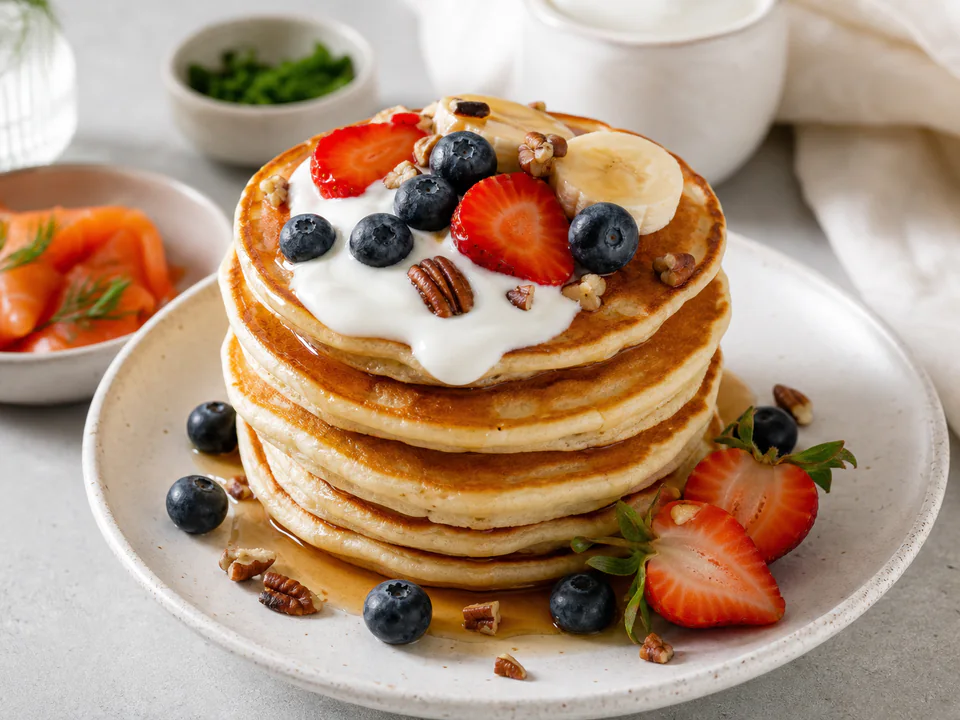
The close image shows the finished topped pancake plate clearly enough to inspect surface, filling distribution, or crumb. Use those visible features as comparison points while allowing for normal differences in ingredients, cookware, and portioning.
Why the method works
Best depends on the plate
A topping is successful when it fits the pancake, meal, and eater. This guide avoids a universal ranking and instead explains the tradeoffs.
Moisture is a structural choice
Syrup and compote soften the stack; that may be welcome on the top pancake but unpleasant through every layer. Placement changes texture.
Texture needs timing
Toast nuts in advance but scatter them only at service. Granola and crisp crumbs lose contrast when buried under warm sauce.
Dietary labels belong to products
Nut, dairy, gluten, and other allergen concerns require label and cross-contact checks. A fruit topping does not make an entire plate universally healthy.
Diagnose and fix the current batch
Do not discard the whole topped pancake plate batch at the first imperfect result. Hold the formula constant where possible, choose the symptom that actually matches the cooked test, and make one bounded correction.
The stack becomes soggy. Move wet toppings to the top, serve sauce at the table, and use a thicker compote rather than soaking every layer. A crisp garnish should be added last. After the correction, compare the next piece with the same portion and describe the center, surface, and release before changing another variable.
The plate is too sweet. Add plain yogurt, tart fruit, lemon zest, or a small pinch of salt. Do not keep adding toppings to hide an imbalance. After the correction, compare the next piece with the same portion and describe the center, surface, and release before changing another variable.
The combination tastes busy. Remove one element and identify the anchor. Keep either the sauce or flavored cream, not both, when fruit and crunch are already present. After the correction, compare the next piece with the same portion and describe the center, surface, and release before changing another variable.
Savory toppings slide off. Use a thin spread as an anchor, cut fillings smaller, and fold or roll a thinner pancake rather than building a vertical stack. After the correction, compare the next piece with the same portion and describe the center, surface, and release before changing another variable.
Fresh fruit releases water. Wash and dry it before slicing, drain macerated fruit, and plate immediately. Store leftover fruit separately from cooked pancakes. After the correction, compare the next piece with the same portion and describe the center, surface, and release before changing another variable.
If the topped pancake plate smell spoiled, contain visibly raw animal ingredients, or have been mishandled, a texture adjustment is not the answer. Culinary rescue does not override food-safety judgment.
Serving directions that fit this article
- Blueberries, plain yogurt, toasted pecans, and a little maple syrup
- Banana, peanut or almond butter, cinnamon, and a pinch of salt
- Warm apple, ricotta, lemon zest, and oat crumble
- Smoked salmon, yogurt, cucumber, dill, and lemon
- Mushrooms, soft egg, chives, and grated hard cheese
- Strawberries, dark chocolate, and lightly whipped cream
Choose one topped pancake plate serving direction and build a coherent plate. Keep one plain piece available for comparison; toppings and sauces can improve the meal, but they can also hide which part of the base needs adjustment.
Food safety and storage
Wash produce under running water before cutting, keep perishable creamy, egg, fish, or meat toppings under suitable temperature control, and use separate utensils when allergen separation matters. Store cooked pancakes apart from wet toppings so both safety handling and texture remain easier to manage. Follow the current official leftovers guidance referenced below; this article does not invent a universal storage life for every possible topping combination.
For leftover topped pancake plate, label the container and keep wet sauces, fruit, vegetables, or garnishes separate when that protects texture and handling. Reheat only the portion needed until hot throughout, and check more than the surface when pieces are thick or filled.
Prevent the same problem next time
Write the base style, anchor, contrast, crunch, and sauce quantity. If the plate feels unbalanced, alter one role rather than replacing every topping at once.
A useful topped pancake plate batch note includes the exact ingredient or process change, not merely “better” or “worse.” Measured quantities and a short description of spread, browning, release, and center texture are enough to guide the next test.
Check the finished result before serving
Set one finished topped pancake plate portion aside before adding sauce or garnish. Look first at the surface and edges, then cut through the thickest or most heavily filled area. The goal is not to match a photograph exactly; it is to confirm that the visible result agrees with the method’s cues and that no wet batter remains.
Compare Finish with restraint with Best depends on the plate. If the surface, release, and center point to different problems, give the center priority and adjust heat or portion size before cooking more. Taste only the fully cooked test, then decide whether salt, acid, sweetness, or toppings belong on the plate. This short check keeps a presentation choice from hiding a cooking problem.
Related Pancake World guides
- Use the fruit toppings for pancakes for its separate, more specific focus.
- Use the sweet pancake toppings for its separate, more specific focus.
- Use the savory pancake toppings for its separate, more specific focus.
Frequently asked questions
How many toppings should I use?
Three purposeful components are often enough: an anchor, a contrast, and a texture. A fourth can be a modest sauce or aromatic finish.
What toppings keep pancakes from becoming soggy?
Use drained fresh fruit, thick yogurt, toasted nuts, and sauce served separately. Keep wet components mostly on top and plate at the last moment.
Can toppings fix bland pancakes?
They can make the plate enjoyable but cannot identify the base recipe problem. Keep one pancake plain and use the troubleshooting guide if the batter itself needs work.
What is a good savory combination?
Try mushrooms, an egg, chives, and a little cheese, or smoked salmon, yogurt, cucumber, dill, and lemon. Keep portions light enough for the pancake to remain present.
More practical guides
Sources and editorial references
- U.S. Food and Drug Administration, Selecting and Serving Produce Safely —
https://www.fda.gov/food/buy-store-serve-safe-food/selecting-and-serving-produce-safely - U.S. Food and Drug Administration, Food Allergies —
https://www.fda.gov/food/food-labeling-nutrition/food-allergies - USDA Food Safety and Inspection Service, Leftovers and Food Safety —
https://www.fsis.usda.gov/food-safety/safe-food-handling-and-preparation/food-safety-basics/leftovers-and-food-safety
For more practical food and breakfast guides, visit Pancakes World.
For the wider topic, start with Guides/pancake Toppings.
For a closely related guide, see Pancake Toppings and Fillings: Build Better Combinations.
A useful next comparison is Best Pancake Toppings for the Breakfast You Want.
You can also continue with Bacon Hash Brown Quiche.
For another practical angle, read Spicy Sweetcorn Melt Pancakes.
Related reading
Image note: Editorial images were created and refined with AI.
