
Brunch Diet
There is no single brunch diet. The practical question is what a guest or household means by “diet”: a preference, a labelled ingredient boundary, a medical requirement, or simply a wish for a more varied brunch. Translate that word into a concrete brief, check current product labels, and build one substantial base, produce, and a chosen accompaniment rather than promising that one menu works for everyone. Pancake World keeps this route focused on understand what the ambiguous phrase means and make a bounded practical decision.
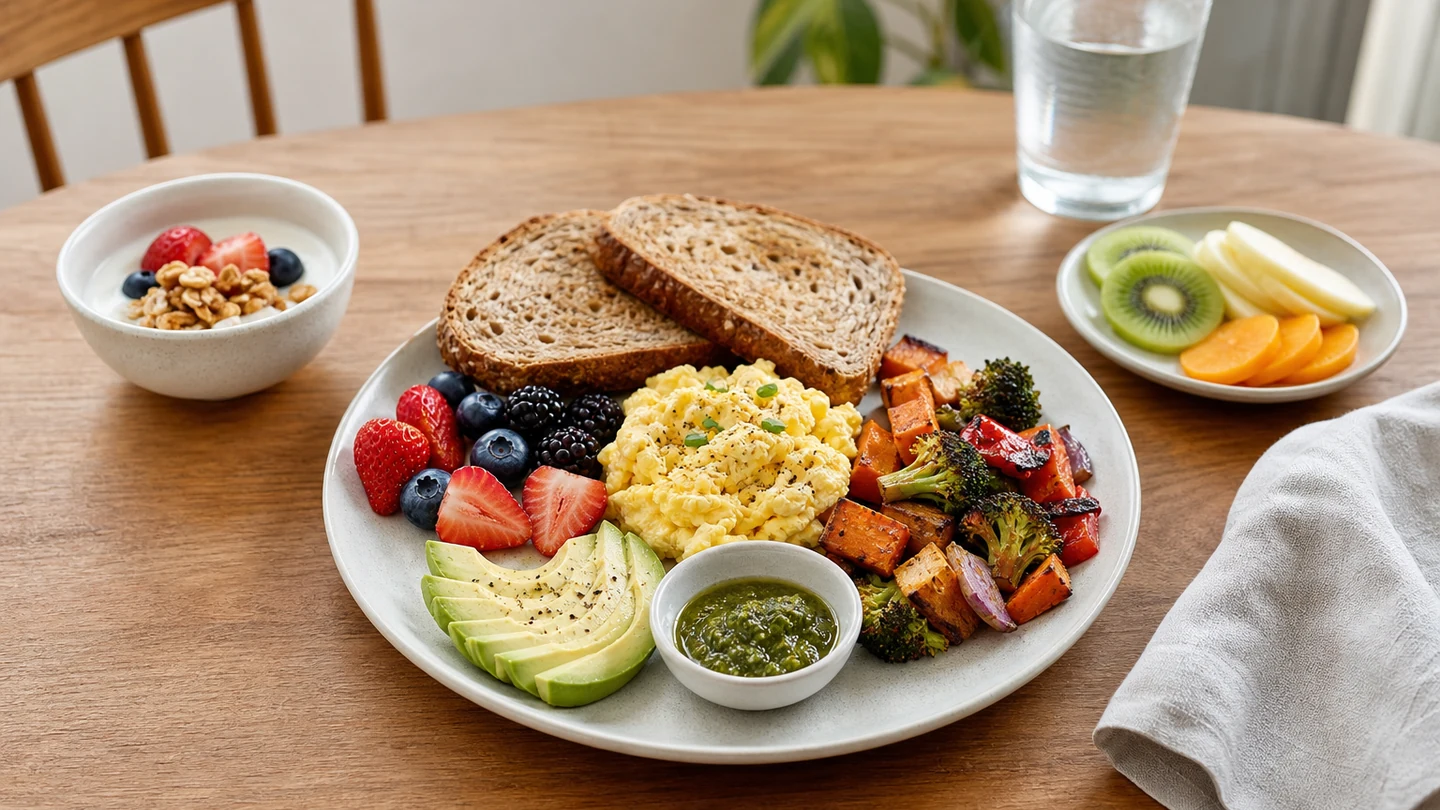
What this page owns
This is a guide to turning an ambiguous phrase into a bounded brunch decision. It does not prescribe weight loss, diagnose a condition, or certify a kitchen. A brunch menu becomes more reliable when its constraint is written in plain language: “vegetarian,” “no dairy ingredient in this dish,” “verify packaged gluten-free claims,” or “lower-sodium preference.”
Start with a role map
| Menu role | Question to settle | Example decision |
|---|---|---|
| Substantial base | What makes this feel like brunch? | Egg dish, tofu dish, potatoes, or a verified grain |
| Produce | Raw, roasted, or fruit? | Choose one preparation that can be served on time |
| Accompaniment | What needs a label check? | Bread, spread, plant alternative, sauce |
| Sweet item | Is it necessary? | Use one, not a dessert sequence |
Turn “diet” into a usable menu brief
Ask for the exact limitation before selecting substitutions. “Dairy-free” does not say anything about gluten; “vegetarian” does not settle egg or cheese use; “healthier” does not establish a measurable rule. For a medically necessary diet or allergy, the menu brief is only the starting point—individual guidance and product-level checks remain necessary.
Read the components, not just the headline
A brunch can fail its stated brief through bread, a bottled sauce, chocolate, stock, or a garnish. FDA guidance explains that a serving size is the basis for the Nutrition Facts information, while the ingredient list and allergen declaration identify different information. Read both when they matter to the plan. Do not infer a product’s status from its colour, cuisine, or a similar product you bought before.
A short decision tree
- Write the actual requirement in one sentence.
- Choose a substantial base that already fits that sentence.
- Check every packaged component in the version being used.
- Keep a separate serving utensil for the constrained dish.
- If a substitution changes structure, simplify the format rather than forcing it.
Example: flexible guest table
For mixed needs, make a plainly seasoned potato and vegetable base, provide a labelled dairy-free accompaniment separately, and place bread or pastries in their own area. This is not a promise that the table is safe for every medical need; it is a service design that makes the requirement visible and reduces accidental mixing.
Example: a lower-sodium preference without a diet claim
Build the meal around fresh ingredients, then compare packaged sauces, cured items and cheeses at their labelled serving sizes. The result is a practical preference-led decision, not treatment advice and not a claim that one person’s brunch will suit another person’s dietary plan.
When substitutions make the menu worse
If a dairy-free alternative breaks a sauce, serve it cold as a topping instead of trying to recreate the original. If a verified bread is not available, use potatoes, rice, fruit, or another suitable base rather than presenting an unverified substitute as equivalent. A clear, shorter menu is more useful than a list of cosmetic replacements.
Cross-contact and leftovers
The FDA distinguishes ingredient declaration from unintended allergen cross-contact. In a shared kitchen, use clean utensils and separate serving tools when a restriction matters. Refrigerate prepared leftovers promptly and follow the food-safety instructions appropriate to the dish; do not use a buffet’s appearance as evidence that food has been held safely.
Actionable summary
Plan brunch from a stated need, not from the word “diet.” Assign roles to the base, produce and accompaniment; read current labels; keep constrained components separate; and describe the result precisely without promising universal suitability.
Sources and editorial references
- USDA MyPlate — Meal Planning: https://www.myplate.gov/sites/default/files/2024-06/TipSheet-24-Meal-Planning.pdf
- U.S. FDA — How to Understand and Use the Nutrition Facts Label: https://www.fda.gov/food/nutrition-facts-label/how-understand-and-use-nutrition-facts-label
- U.S. FDA — Food Allergies: https://www.fda.gov/food/nutrition-food-labeling-and-critical-foods/food-allergies
- USDA FSIS — Leftovers and Food Safety: https://www.fsis.usda.gov/food-safety/safe-food-handling-and-preparation/food-safety-basics/leftovers-and-food-safety