Xmas breakfast ideas
At Pancakes World, for a calm Christmas morning, choose one hot centrepiece and one cold or make-ahead side. Good evidence-backed combinations include festive pancakes with fruit; apple-and-cinnamon turnovers with yoghurt; boxty with smoked salmon and thoroughly cooked eggs; ham-and-cheese waffles; citrus salad with granola; or a simple porridge, fruit, and toast table. Match the menu to your guests and to the oven or hob space needed later for Christmas dinner. Prepare fruit, dry mixes, serving dishes, and labels the night before, but keep chilled food at 5°C or below and cook egg dishes until piping hot.
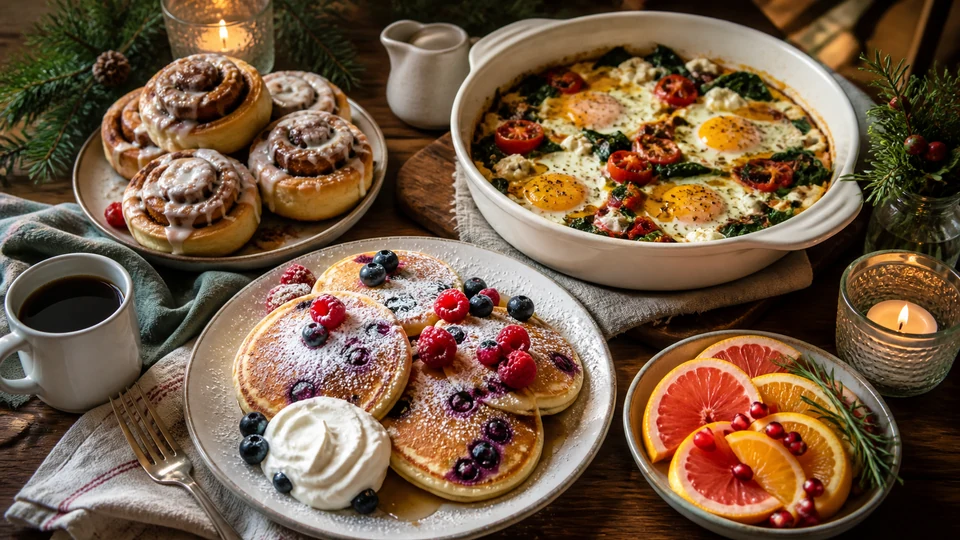
This is a planning guide, not a claim that one menu represents every Irish household. The breakfast hub offers other morning formats, and Pancake World connects the wider collection.
For broader context, continue with American Breakfast: Pancakes, Diner Plates and Brunch.
Direct answer: pick a low-conflict menu
If Christmas dinner will occupy the oven, choose pancakes, boxty, porridge, or a cold citrus-and-granola table. If the hob will be busy, choose turnovers baked early or a make-ahead cold breakfast. For young children, festive fruit-topped pancakes can turn assembly into an activity. For a later brunch, savoury waffles or boxty can carry the meal. When vulnerable guests are present, avoid raw or lightly cooked egg components and serve egg dishes piping hot throughout.
The easiest menu is not necessarily the shortest recipe. It is the one with few last-minute tasks, no competition for critical equipment, and a clear plan for cold storage, allergens, and washing up.
Six practical Christmas breakfast paths
| Menu | Best fit | Night-before work | Morning pressure |
|---|---|---|---|
| Festive pancakes and fruit | Families wanting an interactive plate | Measure dry ingredients; wash and organise fruit | Moderate hob work |
| Citrus salad, granola and yoghurt | Staggered arrivals or early dinner | Most components can be prepared ahead | Very low |
| Apple-and-cinnamon turnovers | Pastry breakfast with tea or coffee | Prepare filling; organise pastry | Oven required |
| Boxty, smoked salmon and eggs | Savoury Irish-market brunch | Prepare accompaniments and potatoes as source allows | Hob and egg timing |
| Ham-and-cheese waffles | Four-person savoury brunch | Grate cheese and organise source ingredients | Waffle iron plus egg work |
| Porridge, toast and toppings | Mixed preferences and small kitchens | Portion toppings and set table | Low and flexible |
Choose one path rather than attempting all six. A crowded menu increases food waste, cross-contact, and the number of hot items that must finish together.
1. Festive pancakes with fruit
RTÉ publishes Catherine Fulvio’s Christmas-morning menu with Santa-style pancakes, banana, berries, and cream. It documents one playful approach for six people; it does not establish a national tradition.
Choose this option when the group enjoys cooking or decorating together and a nonstick pan is available. Make the batter from the complete RTÉ Santa pancake recipe rather than combining it with another pancake formula.
The night before:
- measure flour and baking powder into a covered container;
- check milk, eggs, fruit, cream, and oil;
- wash berries, dry them well, and refrigerate;
- prepare serving plates and child-safe decorating tools;
- write allergen notes for wheat, milk, and egg.
On Christmas morning, mix and cook close to serving. Keep finished pancakes warm only for a short, controlled period; a long stack can steam and become soft. Slice banana just before assembly to limit browning. Put fruit in small bowls so each person can decorate without reaching into a shared reserve.
If vulnerable guests need fully cooked egg, ensure the pancakes are cooked through rather than relying on surface colour alone. Use pasteurised commercial cream products as labeled and keep dairy cold until needed.
2. Citrus salad, granola and yoghurt
Fulvio’s same RTÉ feature includes a citrus salad and granola intended for advance preparation. It is the lowest-pressure path when guests wake at different times or the main kitchen must remain clear.
Prepare the citrus component according to the source and refrigerate it. Bake granola in advance, cool it completely, and store it dry in a sealed container. Keep yoghurt refrigerated. Bring only a modest amount to the table and replenish from the fridge.
This menu needs careful allergen communication. Granola may contain walnuts, coconut, poppy seeds, and oats; yoghurt contains milk unless a verified alternative is chosen. Oats require appropriate labelling when gluten-free food is needed. Honey is not suitable for infants under one year.
For service, create three separate stations: chilled fruit, chilled yoghurt, and dry granola. Do not pour granola over the full fruit bowl in advance because it loses texture. Provide separate spoons and prevent a nut-contaminated spoon from returning to a nut-free ingredient.
Choose this path when the priority is conversation and flexibility, not a single dramatic hot plate.
3. Apple-and-cinnamon turnovers
RTÉ also publishes Kevin Dundon’s Christmas breakfast turnover built from puff pastry, apple, sultanas, cinnamon, sugar, lemon, and an egg-and-milk wash. It is a useful option when the oven can be scheduled before dinner preparation begins.
Follow the RTÉ apple-and-cinnamon turnover recipe for quantities and its 180°C process. Do not change pastry size and retain the same clock without checking the result; larger parcels have a deeper filling and different bake.
Prepare and cool the apple filling before it touches pastry. Hot filling can soften fat layers and make sealing difficult. Keep thawed pastry refrigerated according to its package, work efficiently, and return formed pastries to the fridge if baking is delayed.
Seal edges carefully and vent as the source directs. The egg wash contains raw egg, so wash the brush, bowl, hands, and contacted surfaces before touching ready-to-eat food. Bake until the pastry and filling reach the source endpoint.
Turnovers are practical with tea, coffee, yoghurt, or fruit. They are less useful when the oven must already preheat for a roast at a conflicting temperature. Map both recipes on paper before choosing this menu.
4. Boxty with smoked salmon and eggs
Donal Skehan’s RTÉ boxty breakfast combines mashed and grated potato cakes with smoked salmon, crème fraîche, capers, lemon, chives, and eggs. This is a substantial savoury brunch for four and a documented Irish-media option, not a claim that everyone in Ireland serves it on Christmas morning.
Use the complete RTÉ boxty potato breakfast for its ratios and method. Grated raw potato and mashed potato perform different roles; do not replace one with more of the other.
This menu uses the hob for both potato cakes and eggs, so allocate pans and burners. Mix the salmon accompaniment with clean, chilled ingredients and return it to the fridge until plating. Smoked salmon is ready to eat and must stay separate from raw egg shells and raw potato equipment.
Safefood advises that raw or lightly cooked eggs can be risky for babies, toddlers, pregnant people, and people who are unwell. For vulnerable guests, cook eggs until the yolk is solid and ensure egg-containing dishes are piping hot. If the source’s softer egg does not fit the group, choose a fully cooked egg approach from an authoritative recipe rather than serving it unchanged.
5. Ham-and-cheese savoury waffles
RTÉ’s Donal Skehan Christmas brunch documents waffles with leftover ham, Cheddar, thyme, poached eggs, spinach, and hollandaise. It is a rich later-morning brunch, not a quick side before a large early dinner.
Use the RTÉ Christmas brunch recipe as one complete formula. Do not detach its waffle liquid ratio and add it to another batter.
The equipment plan matters: the waffle iron handles one or two portions at a time; eggs and spinach need hob attention; hollandaise adds raw or lightly cooked egg risk. For vulnerable diners, Safefood advises avoiding homemade hollandaise and similar raw or lightly cooked egg sauces. Choose a pasteurised commercial alternative as labeled or omit the sauce and use a fully cooked egg option.
If using Christmas ham leftovers, only use meat that was cooled and refrigerated within Safefood’s two-hour boundary. Store leftovers in the fridge, use them within three days, reheat only once, and make them piping hot throughout. Do not use ham left on the table for several hours.
This brunch is best when breakfast is the main event and Christmas dinner is later or simpler.
6. Porridge, toast and a topping table
A simple table can be more useful than a complex festive recipe. Prepare porridge from a complete source or the oat package, toast bread in rounds, and provide a modest selection of fruit, yoghurt, nuts or seeds, and a measured sweetener.
This path fits small kitchens, early departures, and mixed appetites. It also lets guests avoid components that do not suit them, provided serving utensils stay separate.
Make it festive through presentation rather than untested substitutions: use labelled bowls, warm plates, citrus segments, berries, or cinnamon where appropriate. Do not add alcohol, raw egg, or unfamiliar allergens merely for a Christmas theme.
Porridge should be served hot and not held indefinitely. Refrigerate leftovers promptly if a reliable source permits reuse; otherwise make a smaller batch. Keep milk and yoghurt at 5°C or below.
Choose by timing
Breakfast before 09:00
Select citrus and granola, porridge, or a small pancake batch. Avoid a menu with waffles, poached eggs, hollandaise, and multiple pans unless someone is dedicated to breakfast cooking.
Late breakfast or brunch
Choose boxty or savoury waffles, with a cold fruit side. Treat the meal as the morning centrepiece and allow at least one person to manage hot components.
Large early Christmas dinner
Protect the oven and worktops. Use a cold assembly or hob-only menu, wash equipment immediately, and clear chilled ingredients before dinner preparation begins.
Guests arriving in waves
Use components that can remain safely separated: chilled citrus, yoghurt held in the fridge, dry granola, bread for toast, and fruit. Cook hot food in small rounds rather than leaving a large buffet uncontrolled.
A two-day preparation schedule
23 December
- Finalise guest count, allergies, dietary choices, and serving time.
- Select one primary recipe and one simple side.
- Check fridge space and confirm it remains at 5°C or below.
- Buy only quantities the group can use.
- Label any Christmas-dinner ingredient that must not be used at breakfast.
24 December afternoon
- Bake granola or prepare other source-approved make-ahead components.
- Cook and cool apple filling if using turnovers.
- Measure dry pancake ingredients.
- Wash and thoroughly dry fruit.
- Grate cheese or prepare garnishes when the source permits.
- Put clean serving dishes and utensils together.
24 December evening
- Refrigerate chilled components in covered containers.
- Set the table without putting food out.
- Write a short cooking order with oven, hob, and appliance times.
- Identify separate utensils for allergen-managed food.
Christmas morning
- Remove chilled food only when needed.
- Cook the hot centrepiece from its complete recipe.
- Serve a small first quantity and replenish safely.
- Refrigerate leftovers within two hours.
Equipment-conflict planning
List every appliance required for breakfast and dinner. Turnovers need the oven; pancakes and boxty need the hob; waffles need their own iron and counter space; granola made earlier needs no morning heat.
Do not plan breakfast at 180°C and a roast preheat at another temperature in the same period. Allow the oven to cool or heat between verified settings. Keep breakfast fat, crumbs, and spills from creating smoke during later cooking.
Assign washing up. A clean sink and clear worktop are part of the Christmas-dinner schedule. Do not leave raw egg bowls and dairy containers beside turkey or vegetable preparation.
Food safety for Christmas morning
Safefood advises keeping the fridge at 5°C or below. Return milk, yoghurt, cream, smoked salmon, cooked ham, and prepared fruit promptly. Put only a small amount on the table at once.
For leftovers, Safefood’s Christmas guidance says:
- cover and refrigerate or freeze within two hours of cooking;
- do not eat food left at room temperature for more than two hours;
- eat refrigerated Christmas leftovers within three days;
- reheat leftovers only once;
- reheat until piping hot throughout.
Use clean dishes and utensils. Smell and appearance cannot prove that a leftover was stored safely. When the history is uncertain, discard it.
Eggs need special planning. Cook egg dishes until piping hot. For babies, toddlers, pregnant people, people who are unwell, and other vulnerable diners, Safefood advises eggs with solid yolks and avoidance of raw or lightly cooked egg foods such as homemade hollandaise.
Dietary and allergen decisions
Ask before shopping, not at the table. Likely allergens across these menus include wheat, egg, milk, nuts, oats with possible gluten cross-contact, and fish.
For a gluten-free guest, choose a complete gluten-free recipe and appropriately labelled ingredients. Removing toast from a plate does not make boxty or waffles safe if their flour or shared equipment contains wheat.
For dairy-free service, check pastry, yoghurt, cream, cheese, butter, milk, and packaged alternatives. For vegan service, eggs, dairy, honey, and some pastry require attention. Choose a full vegan breakfast formula rather than deleting binders from a conventional recipe.
Keep allergen-managed food covered, labelled, and physically separate. Use dedicated utensils and serving plates. A shared butter knife or granola spoon can defeat the plan.
Common planning mistakes
Too many hot dishes
One person cannot reliably flip pancakes, poach eggs, run a waffle iron, warm pastries, and prepare dinner simultaneously. Choose one hot centrepiece and delegate or remove the rest.
Treating make-ahead as room-temperature holding
Make-ahead means preparing, cooling, covering, and refrigerating correctly. It does not mean leaving egg, dairy, fish, or cut fruit on the counter overnight.
Using leftovers without a storage record
Only use Christmas ham or another leftover when you know it entered the fridge within two hours and remained cold. Label date and contents. Reheat once, piping hot.
Assuming children need decorative sugar
Festive presentation can use shape, fruit, plates, or a shared decorating activity. There is no need to add unmeasured syrups, sweets, and cream to every option. Follow the selected recipe and offer additions separately.
Calling one dish traditional for everyone
Families in Ireland have varied customs. RTÉ chef recipes are documented ideas, not proof of a universal tradition. Describe the actual source and let the household choose.
Three ready-to-use menu plans
Lowest-work menu
- Make-ahead citrus salad
- Granola stored dry
- Chilled yoghurt
- Tea or coffee
This needs refrigerator space and allergen labels but almost no morning cooking.
Family activity menu
- Source-faithful pancakes
- Banana and berries for decorating
- Yoghurt or cream kept cold
- A simple savoury side if needed
One person cooks while others decorate. Keep raw batter away from ready fruit.
Savoury brunch menu
- Boxty with smoked salmon
- Fully cooked eggs appropriate to guests
- Citrus or plain fruit side
- Tea or coffee
This requires hob space and close timing but can replace a separate early lunch.
Final recommendation
For the easiest Christmas morning, prepare Catherine Fulvio’s citrus salad and granola in advance and keep yoghurt cold. For an interactive family breakfast, use her Santa pancake formula. For pastry, use Kevin Dundon’s apple turnovers. For a savoury Irish-media option, choose Donal Skehan’s boxty breakfast; choose his ham-and-cheese waffles only when a later, equipment-heavy brunch fits.
Limit the menu to one hot centrepiece plus one simple side. Protect oven and hob capacity, label allergens, keep the fridge at 5°C or below, cook eggs appropriately for the guests, and use Christmas leftovers only within Safefood’s two-hour cooling and three-day refrigerator boundaries.
Explore related Pancakes World guidance on American Pancakes, Maple Syrup, and Maple Syrup Pancakes.
Sources and editorial references
- RTÉ: Catherine Fulvio’s Christmas morning breakfast —
https://www.rte.ie/lifestyle/food/2025/1224/1268310-catherine-fulvios-christmas-morning-breakfast/ - RTÉ: Kevin Dundon’s Christmas breakfast —
https://www.rte.ie/lifestyle/recipes/2011/0929/746832-christmas-breakfast/ - RTÉ: Donal Skehan’s boxty potato breakfast —
https://www.rte.ie/lifestyle/recipes/2018/1219/1018077-boxty-potato-brekkie-donals-meals-in-minutes/ - RTÉ: Donal Skehan’s Christmas brunch —
https://www.rte.ie/lifestyle/recipes/2020/1225/1185796-donal-skehans-christmas-brunch/ - Safefood: How to cook eggs safely —
https://www.safefood.net/food-safety/cooking-eggs - Safefood: Christmas dinner leftovers —
https://www.safefood.net/christmas/christmas-dinner-leftovers - Safefood: How to avoid wasting food —
https://www.safefood.net/food-safety/storing-food-safely/how-to-avoid-wasting-food