Veggie breakfast
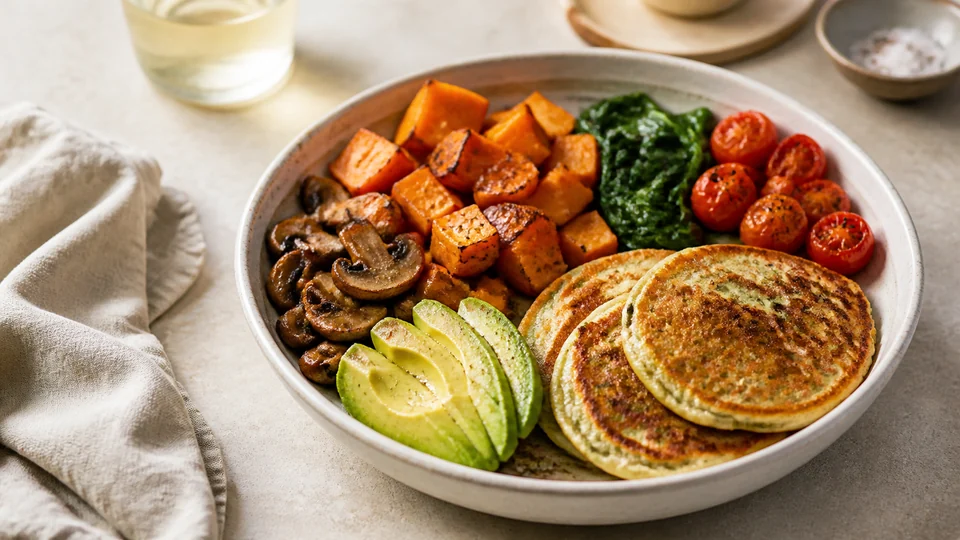
For veggie breakfast—working note 1—A useful veggie breakfast starts with vegetables as a real portion, then adds a defined protein or grain component and a complete cooking method. Choose two vegetables with compatible timing rather than filling one pan with every leftover, and keep “veggie” separate from any automatic vegan or health claim. Use Pancakes World to connect veggie breakfast with the wider breakfast and pancake collection.
Route-specific preparation and decision guide
For veggie breakfast—working note 2—For a veggie breakfast, start by setting a practical constraint: time, equipment, guest count, dietary requirement, or the desired finished texture. Read the selected source from beginning to end before shopping or preheating. Separate ingredients that must be measured from optional toppings and service elements. This prevents a familiar route name from being treated as a complete method. Current package labels remain important whenever a commercial product, allergen concern, or dietary claim is involved.
For veggie breakfast—working note 3—Prepare a small controlled test whenever a result depends on heat, moisture, batch size, or holding time. Use the stated pan, tray, blender, or bowl process as the baseline, then observe a specific result such as spread, browning, tenderness, yield, or serving temperature. Change one variable at a time if something needs correction. A home observation can improve the next batch, but it is not a promise that another brand, kitchen, or diner will have the same result.
For veggie breakfast—working note 4—Plan service before the last cooking step. Put plates, drinks, utensils, and cold accompaniments in place, then prepare the component that loses quality most quickly. For a group, choose one item to finish hot and make other parts stable enough to wait briefly. Keep optional sauces, toppings, and garnishes separate where practical so guests can identify what is on the plate. This makes the meal easier to serve without presenting one arrangement as the only correct breakfast.
For veggie breakfast—working note 5—Use a safety and storage checkpoint after the meal. Follow the current source and official food-safety guidance for the ingredients actually used, especially for eggs, dairy, meat, or prepared foods that need refrigeration. Do not use a general article as a substitute for individual allergy, medical, or nutrition advice. Record the exact product, quantity, equipment, and timing if the version is worth repeating.
For veggie breakfast—working note 6—For the next batch, review the route-specific decision rather than recreating the meal from memory. Note which part created congestion, whether the portion matched the people eating, and whether a substitution changed the result. That record supports a transparent adaptation while preserving the original source context. It also keeps a sensible boundary between practical cooking guidance and unsupported health, safety, or cultural claims.
For veggie breakfast—working note 7—Veggie can mean vegetable-forward or vegetarian depending on context. Eggs and dairy may be present, so the menu must state what it contains instead of relying on the label. The parent Pancake Science hub records the approved R10 context for veggie breakfast.
Direct answer explainer: definition, what the mechanism controls, examples, and limits
Choose the working format before shopping
For veggie breakfast—working note 8—For veggie breakfast, compare sheet-pan vegetables with a breakfast side, skillet hash with measured components and greens folded into eggs before buying ingredients. That comparison reveals the service format, occupied equipment and required finish time. Every cooked component still needs one complete source formula with its own quantities and endpoint cues.
Sheet-pan vegetables with a breakfast side
For veggie breakfast—working note 9—Group vegetables with similar density, cut them evenly and roast in the layer specified by the recipe. Add eggs, toast or pancakes separately so the pan is not overloaded with foods that need different endpoints.
Skillet hash with measured components
For veggie breakfast—working note 10—Start dense potatoes or roots at the correct stage, then add quicker peppers, greens or tomatoes later. A recipe that states pan size and order is more dependable than a “use any vegetables” instruction.
Greens folded into eggs
For veggie breakfast—working note 11—Cook and drain greens as required before they enter an omelet or scramble. Large wet handfuls can cool the pan and release liquid, so follow the selected ratio and cook the egg thoroughly.
Vegetable breakfast wrap
For veggie breakfast—working note 12—Use one cooked filling and one fresh garnish. Cool the filling briefly before packing for travel, keep wet condiments separate and label egg, dairy, wheat or other allergens clearly.
Savoury pancake plate
For veggie breakfast—working note 13—Place roasted or sautéed vegetables beside a tested pancake instead of improvising moisture-rich produce into its batter. A documented sauce can connect the components without changing the pancake formula.
A controlled preparation sequence
For veggie breakfast—working note 14—The veggie breakfast sequence below connects name the dietary scope and confirm whether eggs, dairy or other animal ingredients are included. with finish with a measured sauce, herb or acid and serve before crisp and tender textures decline. A written order exposes equipment conflicts before heat begins, while separate work zones protect finished sheet-pan vegetables with a breakfast side components from raw-food contact.
1. Name the dietary scope and
For veggie breakfast—working note 15—Name the dietary scope and confirm whether eggs, dairy or other animal ingredients are included.
2. Select vegetables by compatible cut
For veggie breakfast—working note 16—Select vegetables by compatible cut and cook time, then choose one protein or grain anchor.
3. Cook dense ingredients first and
For veggie breakfast—working note 17—Cook dense ingredients first and protect ready-to-eat garnishes from raw-food contact.
4. Finish with a measured sauce,
For veggie breakfast—working note 18—Finish with a measured sauce, herb or acid and serve before crisp and tender textures decline.
Practical diagnostics
For veggie breakfast—working note 19—When veggie breakfast misses its target, compare the observed result with sheet-pan vegetables with a breakfast side and savoury pancake plate controls first. Record one measurable variable—such as cut size, pan area, batch depth, ingredient identity, temperature, order or holding time—before changing the next attempt.
- A watery skillet usually contains too many quick-release vegetables or a crowded pan.
- Burned greens beside firm potatoes reveal that all ingredients entered at once.
- A bland result may need a deliberate sauce or acid, not a larger heap of seasoning.
- If the label confuses guests, replace “veggie” with a precise ingredient description.
Food-safety and factual boundary
For veggie breakfast—working note 20—For veggie breakfast, USDA MyPlate, “What Is MyPlate?” supports only its named domain, while USDA FSIS, “Leftovers and Food Safety” supplies a separate boundary. Neither source establishes a Pancake World test record, a medical outcome, or identical behaviour across every appliance and ingredient.
For veggie breakfast—working note 21—Quantities, timing, yield and storage for veggie breakfast must come from the selected complete recipe. Keep its perishable components under appropriate temperature control; prevent cross-contact around skillet hash with measured components; read current labels; and discard any batch with an uncertain time or temperature history.
Contextual routes for the next decision
- In Veggie breakfast, compare Quick breakfast menu for sheet-pan vegetables with a breakfast side decisions.
- In Veggie breakfast, compare Healthy egg breakfast recipes for greens folded into eggs sequencing.
- In Veggie breakfast, compare Crockpot breakfast potatoes for savoury pancake plate service choices.
Frequently asked questions
Is veggie breakfast the same as vegan breakfast?
For veggie breakfast—working note 22—No. Vegetarian dishes may contain egg or dairy; list the actual ingredients.
Can frozen vegetables be used?
For veggie breakfast—working note 23—Use a recipe written for them and account for thawing or added moisture.
How can pancakes fit?
For veggie breakfast—working note 24—Serve a complete pancake recipe with a vegetable side or choose a tested savoury pancake formula.
Current-batch observation
For veggie breakfast—working note 25—For a veggie breakfast, observe one concrete point before changing the method: batter flow, crisping, vegetable moisture, oven set, portion size, or the time a dish can wait before serving. Write down the actual product and equipment used. This keeps a useful kitchen note tied to the route rather than to an assumption about similar foods.
Bounded correction
For veggie breakfast—working note 26—For a veggie breakfast, make one safe correction at a time. Lower heat when colour advances too quickly, use the source-directed rest when moisture needs time to settle, or reduce the batch size when service is becoming crowded. Do not use a substitution to make a medical, allergy, or nutrition promise that the selected source and current label cannot support.
Next-batch prevention
For veggie breakfast—working note 27—For a veggie breakfast, prevent the same fault by preparing tools and components in advance. Measure the intended portion, identify the last-minute step, and keep optional toppings separate. If the route includes a packaged food, recheck the current label rather than relying on an earlier box, jar, or mix.
Service and storage record
For veggie breakfast—working note 28—For a veggie breakfast, record what reached the table, how long it held its intended texture, and which leftovers need ordinary food-safety handling. This record is a home planning aid. It does not replace the directions for the ingredients actually used or individual professional advice for a dietary condition.
Transparent adaptation note
For veggie breakfast—working note 29—For a veggie breakfast, name any change made for availability, preference, or timing. Preserve the complete source method as the reference point and describe the result as an adaptation. Clear wording helps the next cook repeat the useful parts without presenting a household outcome as a tested universal result.
Final practical record
For veggie breakfast—working note 30—For a veggie breakfast, make the next decision from the completed meal, not from a generic expectation. Note the exact route option used, the portion served, the equipment that controlled the result, and the moment at which the food was best for the table. If a component was changed, record why it changed and what that did to texture, timing, or service. Use current labels for packaged foods and retain the original source method as the reference point. This is a transparent household record, not a formal safety, nutrition, or performance claim.
For veggie breakfast—working note 31—When repeating a veggie breakfast, prepare the slowest or least flexible step first, keep the final hot component for last, and make optional elements visible to diners. Review any leftovers using ordinary food-safety guidance appropriate to the ingredients used. A small, clear note prevents an accidental hybrid recipe and gives the next cook a practical starting point.
Conclusion
Practical review 1
For veggie breakfast—working note 32—For a veggie breakfast, review 1 focuses on a separate kitchen choice. Confirm the exact ingredients, equipment, and serving plan before changing the source method. Measure the stated portion, observe the result at controlled heat or storage conditions, and record only what can be seen in that batch. A clear record distinguishes a product change from a timing change and avoids an unsupported general claim.
For veggie breakfast—working note 33—Choose the next step by the constraint that matters most in this meal: speed, texture, guest service, dietary clarity, or ingredient availability. Keep toppings and optional components separate where possible, check current labels, and state any adaptation plainly. A smaller, well-managed breakfast is usually easier to serve than a complicated menu that cannot be finished in order.
For veggie breakfast—working note 34—After eating, note whether the portion, temperature, and timing worked for the actual diners. Follow food-safety guidance for the ingredients used, and use individual professional advice where health or allergy questions arise. This route-specific note supports the next attempt without treating a household observation as a formal test.
Practical review 2
For veggie breakfast—working note 35—For a veggie breakfast, review 2 focuses on a separate kitchen choice. Confirm the exact ingredients, equipment, and serving plan before changing the source method. Measure the stated portion, observe the result at controlled heat or storage conditions, and record only what can be seen in that batch. A clear record distinguishes a product change from a timing change and avoids an unsupported general claim.
For veggie breakfast—working note 36—Choose the next step by the constraint that matters most in this meal: speed, texture, guest service, dietary clarity, or ingredient availability. Keep toppings and optional components separate where possible, check current labels, and state any adaptation plainly. A smaller, well-managed breakfast is usually easier to serve than a complicated menu that cannot be finished in order.
For veggie breakfast—working note 37—After eating, note whether the portion, temperature, and timing worked for the actual diners. Follow food-safety guidance for the ingredients used, and use individual professional advice where health or allergy questions arise. This route-specific note supports the next attempt without treating a household observation as a formal test.
Practical review 3
For veggie breakfast—working note 38—For a veggie breakfast, review 3 focuses on a separate kitchen choice. Confirm the exact ingredients, equipment, and serving plan before changing the source method. Measure the stated portion, observe the result at controlled heat or storage conditions, and record only what can be seen in that batch. A clear record distinguishes a product change from a timing change and avoids an unsupported general claim.
For veggie breakfast—working note 39—Choose the next step by the constraint that matters most in this meal: speed, texture, guest service, dietary clarity, or ingredient availability. Keep toppings and optional components separate where possible, check current labels, and state any adaptation plainly. A smaller, well-managed breakfast is usually easier to serve than a complicated menu that cannot be finished in order.
For veggie breakfast—working note 40—After eating, note whether the portion, temperature, and timing worked for the actual diners. Follow food-safety guidance for the ingredients used, and use individual professional advice where health or allergy questions arise. This route-specific note supports the next attempt without treating a household observation as a formal test.
Practical review 4
For veggie breakfast—working note 41—For a veggie breakfast, review 4 focuses on a separate kitchen choice. Confirm the exact ingredients, equipment, and serving plan before changing the source method. Measure the stated portion, observe the result at controlled heat or storage conditions, and record only what can be seen in that batch. A clear record distinguishes a product change from a timing change and avoids an unsupported general claim.
For veggie breakfast—working note 42—Choose the next step by the constraint that matters most in this meal: speed, texture, guest service, dietary clarity, or ingredient availability. Keep toppings and optional components separate where possible, check current labels, and state any adaptation plainly. A smaller, well-managed breakfast is usually easier to serve than a complicated menu that cannot be finished in order.
For veggie breakfast—working note 43—After eating, note whether the portion, temperature, and timing worked for the actual diners. Follow food-safety guidance for the ingredients used, and use individual professional advice where health or allergy questions arise. This route-specific note supports the next attempt without treating a household observation as a formal test.
Sources
- USDA MyPlate, “What Is MyPlate?” —
https:// www.myplate.gov/ eat- healthy/ what- is- myplate - USDA FSIS, “Leftovers and Food Safety” —
https:// www.fsis.usda.gov/ food- safety/ safe- food- handling- and- preparation/ food- safety- basics/ leftovers- and- food- safety - FoodSafety.gov, “Safe Minimum Internal Temperatures” —
https:// www.foodsafety.gov/ food- safety- charts/ safe- minimum- internal- temperatures