Vegetable breakfast
At Pancakes World, the editorial platform presents this evidence-bounded guide for the exact route intent.
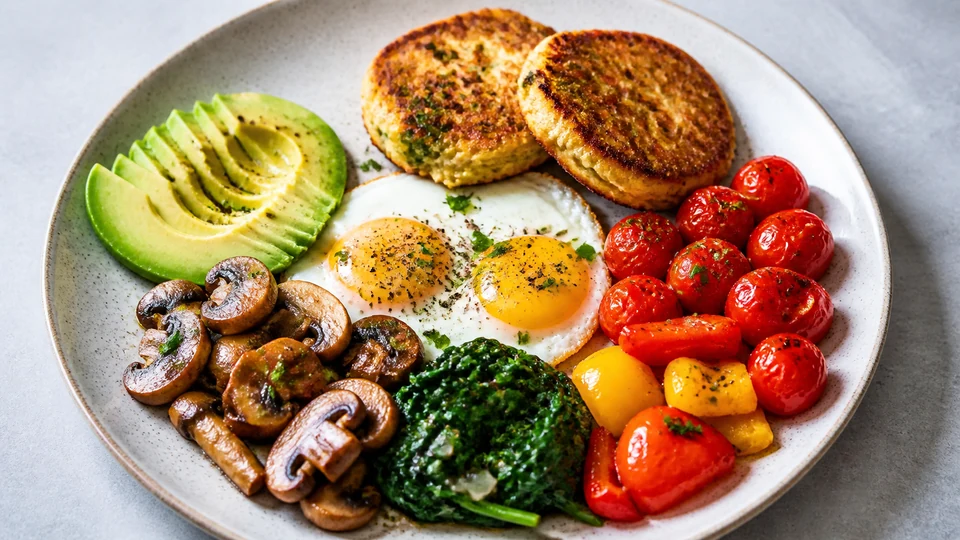

This guide belongs to Breakfast. A practical vegetable breakfast starts with the vegetable's water content and cooking time, not with a health slogan. Roast firm vegetables, sauté quick-cooking ones, keep fresh crisp items raw, and pair one or two of them with a dependable base such as eggs, tofu, grains, toast, potatoes or pancakes.
The combinations below are menu structures, not nutrition prescriptions, disease claims or tested recipes.
| Guide sections |
|---|
| Choose vegetables by water and cooking time |
| Build contrast without crowding the pan |
| Diagnose steam, softness and weak seasoning |
| Food safety, labels and claim boundaries |
For broader context, continue with American Breakfast: Pancakes, Diner Plates and Brunch.
Choose vegetables by water and cooking time
A practical plan can be built around mushroom toast, pepper potato hash and tomato breakfast bowl, with spinach egg plate and courgette pancakes added only when they serve a defined role. The remaining decisions concern control, service and repeatability. Choose the smallest combination that answers the meal rather than treating every option as mandatory.
Sort vegetables by behaviour
Firm roots and squash need more time than spinach, tomatoes or mushrooms. Grouping everything under “vegetables” hides the reason a tray cooks unevenly. Decide which item is the structural base, which supplies a quick-cooked layer, and which remains a fresh finish. Potatoes or squash can anchor a hash. Mushrooms need space for moisture to leave. Greens can wilt near the end. Tomato or avocado may be better added after heat. This sequence protects colour and texture without making claims about a universal ideal vegetable breakfast.
Control water before it reaches eggs or bread
Wet vegetables dilute egg mixtures, soften toast and steam pancakes. Wash produce safely, dry exterior water, and prepare each item by the selected method. Salted tomato, grated courgette and thawed spinach can release substantial liquid; drain or cook them only as the complete formula directs. For toast, assemble immediately before eating. For a baked egg dish, cool cooked fillings as required and distribute them before pouring the egg mixture. For a skillet, let steam escape before adding a component that needs browning.
Build contrast around one cooked element
A practical plate can pair one warm vegetable preparation with a stable base and one fresh accent. Mushroom toast can use crisp bread and a sharp herb finish. A potato-pepper hash can take a separately cooked egg or tofu component. Roasted squash can sit over a prepared grain with a cool sauce added at service. These are construction patterns, not fixed recipes. Keeping the roles visible makes it easier to diagnose sogginess, blandness or crowding and to replace one vegetable without rewriting the whole meal.
Use leftovers only when their history is known
Roasted vegetables can become a breakfast component, but the new meal does not restart their storage clock. Record when they were cooked, how they cooled and how they were stored. Reheat only what will be served, or use a supported cold application. Avoid mixing several unidentified containers into a hash merely to reduce waste. Waste prevention begins with smaller planned batches and labelled storage, not with an obligation to rescue food whose history cannot be verified.
Build a three-texture plate
Start with one browned or roasted vegetable, add one tender component, and finish with something fresh or sharp. For example, crisp-edged potatoes can carry wilted greens and a fresh tomato relish added at service. Roasted squash can pair with a prepared grain and crunchy seeds. Mushroom toast can take herbs and a small acidic finish. The pattern creates contrast while keeping the number of pans manageable.
Prepare a weekday component safely
If advance cooking is needed, choose one vegetable whose complete method includes cooling and storage. Label it and use it in a defined second meal rather than keeping a vague “vegetable box.” Reheat only the portion needed, or serve it cold when the source supports that use. Fresh toppings stay separate. This approach reduces morning work without repeatedly warming the same container or losing track of its history.
Diagnose seasoning after texture
Do not add more sauce to a watery skillet. First correct pan crowding, draining or cooking order. Once texture is acceptable, adjust flavour with salt, acid, herbs, spice or a measured condiment. Taste the packaged condiment and check its label before adding it. A vegetable breakfast can be savoury, mild or spicy; the article does not assign a health outcome to any of those choices.
Additional route decisions
Mushroom toast
Cook mushrooms until free moisture is managed before placing them on crisp bread.
Pepper potato hash
Cut pieces consistently and stage peppers so potatoes can brown rather than steam.
Tomato breakfast bowl
Drain very juicy tomatoes or keep them as a fresh finish over a stable base.
Spinach egg plate
Wilt greens separately and use an independently reliable egg method.
Courgette pancakes
Choose a documented formula that specifies grating and moisture control.
Roasted squash grain bowl
Roast squash by a complete method and combine it with a prepared grain at service.
Avocado vegetable toast
Treat avocado as a cool finish and protect toast from wet layers.
Broccoli breakfast bake
Use a tested bake that accounts for vegetable moisture and vessel depth.
Leftover vegetables
Use only food with a known storage history and change the format without extending safety limits.
Vegetable board
Group raw, cooked, sharp and creamy components so each contributes a different texture.
Build contrast without crowding the pan
The sequence below ties the first control to mushroom toast, the equipment decision to tomato breakfast bowl, and the service check to vegetable board. It is intentionally narrower than a universal cooking timetable.
1. Define the result
For mushroom toast, write the intended texture, serving format and dietary boundary before shopping.
2. Verify the inputs
For pepper potato hash, read the complete formula and current package labels, then record every consequential variation.
3. Stage the equipment
For tomato breakfast bowl, reserve the pan, oven, counter, cooling space and serving utensils the method actually needs.
4. Prepare one control
For spinach egg plate, keep the first portion close to the source so a later correction has a clear baseline.
5. Observe before changing
For courgette pancakes, note spread, moisture, release, colour and centre condition rather than guessing from the clock.
6. Serve and record
For roasted squash grain bowl, protect safe handling, label the finished components and write one useful note for the next batch.
Diagnose steam, softness and weak seasoning
Steamed hash
Use a wider pan, smaller batch or staged cooking instead of raising heat blindly.
Watery eggs
Drain or pre-cook vegetables before they enter the egg mixture.
Burnt edges
Match cut size and vegetable density before roasting one tray.
Bland bowl
Add acid, herbs or a measured sauce after the main texture is correct.
Limp toast
Assemble juicy toppings immediately before eating.
Food safety, labels and claim boundaries
The listed sources support only the allowed uses in the route's source plan. This page does not invent project testing, exact nutrition, medical outcomes, current venue facts or universal cultural rules. Where vegetable breakfast requires a complete formula, that formula remains the authority for quantities, timing, yield and equipment.
A better next batch
Record the exact condition of mushroom toast, the preparation of pepper potato hash, the equipment used for tomato breakfast bowl, and the service result of vegetable board. Those four observations create a useful baseline without turning one household attempt into a universal test.
If the main defect was steamed hash, repeat the complete method with only the bounded correction recorded above. If the result instead showed watery eggs, return to the preparation stage that creates that symptom. Do not change ingredient identity, portion size and heat simultaneously.
Verify the result before service
Review roasted squash grain bowl first because it is the control that commits the remaining batch. Apply its stated action—roast squash by a complete method and combine it with a prepared grain at service—and compare the result with avocado vegetable toast. The second element matters because treat avocado as a cool finish and protect toast from wet layers. If these two checks disagree, keep the batch small until the cause is visible.
Next inspect broccoli breakfast bake in the condition in which it will actually be served. The route plan says to use a tested bake that accounts for vegetable moisture and vessel depth. Do that before adding leftover vegetables, since the latter is intended to use only food with a known storage history and change the format without extending safety limits. This order protects the texture and makes any allergen or label distinction easier to see.
Finish with vegetable board. Its purpose is to group raw, cooked, sharp and creamy components so each contributes a different texture. Check the thickest or most heavily loaded portion, not the most attractive one, and compare it with the two leading warning signs: steamed hash and watery eggs. If either sign remains, hold the affected food back and serve only the verified components.
Frequently asked questions
Which vegetable is best?
Choose the one that fits the available cooking method, season and intended texture.
Can frozen vegetables work?
Yes when the selected method accounts for their water and preparation instructions.
Do vegetables make breakfast complete?
Completeness is individual, so build a satisfying plate without promising a nutrition outcome.
Can I prep the night before?
Wash, cut or cook only through a safe source-supported route.
How do I reduce waste?
Plan one vegetable across two distinct meals while preserving its storage history.
Contextual Pancake World guides
- Breakfast Pancakes: Styles, Plates and Munich Context
- American Breakfast: Pancakes, Diner Plates and Brunch
- Fast Breakfast: A Practical Planning Guide
Explore related Pancakes World guidance on American Pancakes, Maple Syrup, and Maple Syrup Pancakes.
Sources and editorial references
- U.S. Food and Drug Administration: Handling Flour Safely —
https://www.fda.gov/consumers/consumer-updates/handling-flour-safely-what-you-need-know - U.S. Food and Drug Administration: Food Allergies —
https://www.fda.gov/food/nutrition-food-labeling-and-critical-foods/food-allergies - USDA FSIS: Leftovers and Food Safety —
https://www.fsis.usda.gov/food-safety/safe-food-handling-and-preparation/food-safety-basics/leftovers-and-food-safety