Vegan protein powder pancakes no flour
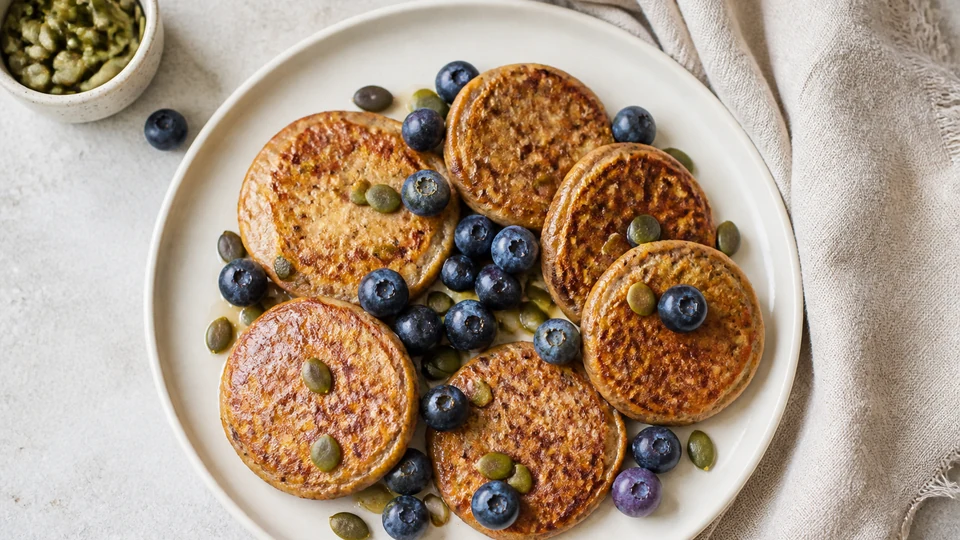
At Pancakes World, vegan protein-powder pancakes with no flour need a purpose-built formula because protein powder cannot be treated as a cup-for-cup flour replacement and egg is unavailable to hold the batter together. Choose a recipe developed for the exact powder type and a defined vegan binder, then use its liquid, leavener, rest, portion, and pan method. Read the powder’s complete ingredient list and Supplement Facts panel, measure by weight, and cook small pancakes over moderate heat. “No flour” should mean no grain, nut, seed, or legume ingredient functioning as flour—not simply no wheat flour.
For broader context, continue with Healthy Pancake Guides.
Direct answer for vegan protein powder pancakes with no flour
The credible route is a complete formula using a named plant protein powder plus a binder and moisture source that the author actually designed together. Depending on the recipe, the supporting system might include banana, pumpkin, seed gel, tofu, or another ingredient, but those options are not interchangeable. A powder based on pea, soy, rice, hemp, or a blend can absorb, thicken, sweeten, and cook differently.
Do not start from an egg-and-dairy protein pancake and remove the structural ingredients. King Arthur Baking’s flourless oat protein pancakes use four eggs and cottage cheese, so they prove that “no flour” does not mean “no structure”; they do not prove a vegan conversion. This guide therefore gives selection, label-reading, and troubleshooting steps rather than publishing an untested protein-powder ratio.
What the reader needs to know
Define “no flour” before choosing a recipe
The phrase has at least three common meanings:
- no wheat flour;
- no conventional milled grain flour, but ground oats or almond meal are allowed;
- no ingredient functioning as flour, including oat flour, ground oats, almond flour, coconut flour, chickpea flour, or another milled staple.
This route uses the third, strict meaning. If a recipe blends rolled oats into powder, it may be wheat-free but it is no longer a useful answer for someone who wants no flour-like base. If almond or coconut flour supplies the solids, the result belongs to a nut- or coconut-flour formula instead.
The strict definition does not imply gluten-free status. Protein powders can contain flavorings, grains, or cross-contact statements, and the binder or leavener may raise separate questions. If gluten-free preparation is required, verify every package and the cooking environment according to the eater’s needs.
Protein powder is a variable manufactured ingredient
A container may be sold as a conventional food or as a dietary supplement. FDA explains that dietary supplements carry a Supplement Facts panel listing serving size and dietary ingredients, while other ingredients such as flavors, colors, and sweeteners appear in the ingredient statement. Read both. “Plant protein” on the front does not reveal sweetener, gum, allergen, flavor, or scoop weight.
Powders differ in source and processing. An unflavored pea isolate can behave differently from a flavored pea-rice blend containing gum and sweetener. A soy product can differ from hemp. Even two vanilla products can have different scoop sizes and solids. A recipe that says only “one scoop” without giving grams or the tested product leaves a material measurement unresolved.
FDA also notes that the agency does not test dietary supplements before they are sold. That fact does not make every powder suspect; it means a recipe article should not claim the government pre-approved or certified the product. Use the manufacturer’s current label and, if third-party certification matters to the reader, verify the actual certification and lot rather than relying on vague marketing.
Vegan status requires more than a plant protein source
Check milk, whey, casein, egg, honey, dairy-derived flavor components, and the complete “other ingredients” list. A protein blend described as plant-based may still be manufactured in a context relevant to a specific allergy. Vegan status also applies to the binder, cooking spray, chocolate pieces, yoghurt, and toppings.
Do not infer that a powder with no obvious animal protein meets every vegan standard. When the requirement is strict, use the manufacturer’s current statement and the ingredient evidence available to the reader.
Structure has to come from somewhere
In standard pancakes, flour supplies the bulk and egg can help bind. In this route, both are absent. The recipe therefore has to distribute several jobs among protein powder, binder, moisture source, and heat.
| Formula element | Job to solve | Evidence required | Weak shortcut |
|---|---|---|---|
| Plant protein powder | Dry solids and protein ingredient | Exact type, brand or composition, and grams | “Any protein powder” by scoop |
| Moisture source | Hydrates powder and controls spread | Named plant drink, water, puree, or tofu amount | Adding liquid until it resembles wheat batter |
| Vegan binder | Keeps the cooked pancake together | Defined seed gel, puree, starch-free system, or other method | Replacing egg from a generic chart |
| Leavener | Provides gas where formula supports it | Measured amount and compatible batter | Doubling baking powder to offset density |
| Fat | Pan release and tenderness | Named oil or verified cooking spray | Assuming nonstick cookware needs no formula adjustment |
| Flavor balance | Manages bitterness or sweetness | Source-approved vanilla, spice, fruit, or sweetener | Hiding an unsuitable powder with excessive syrup |
The table is an audit, not a recipe. If the supporting ingredient is ground flax, some readers may consider it a seed meal rather than flour; the page should state it openly. If a starch is used, “no flour” may still be accurate, but “only protein powder” would not be.
Nutrition numbers belong to the complete serving
FDA’s label guidance places serving size at the centre of interpretation. The powder’s declared protein applies to its labelled serving, not automatically to one pancake. A recipe may use more or less than one powder serving and divide the batter into several pancakes. Plant drink, binder, puree, cooking fat, and toppings change the finished nutrition.
Do not multiply the front-of-pack number by guesswork. Record powder grams, actual yield, and number of pancakes per serving. If the page makes a protein claim, the applicable label rules and calculation need to be considered. This article supplies no universal protein total because it does not supply a fixed tested formula.
Practical options and examples
A banana-bound formula
A credible recipe may pair a measured plant protein powder with mashed banana, liquid, leavener, and oil. Banana supplies moisture, solids, sweetness, and flavor. It is not neutral, and its size or ripeness introduces variation. The formula should give a weight or mashed volume and describe post-rest consistency.
Do not replace banana with applesauce, pumpkin, or a seed gel while keeping everything else fixed. Each alternative changes water, solids, sweetness, and binding. Use a separate tested variation.
A tofu-supported formula
Silken tofu can provide moisture and body in a complete vegan pancake recipe. Good Food’s tofu breakfast pancakes show tofu functioning in an egg-free, dairy-free system, although that published formula also uses buckwheat flour and therefore does not meet this route’s strict no-flour definition. The useful evidence is limited: tofu can be a deliberate structural ingredient. A no-flour version still requires its own complete formula.
A seed-binder formula
Ground flax or chia can form a hydrated mixture, but it adds visible seed solids and water. The recipe should state the grind, quantity, hydration liquid, and stand time. Adding a seed “egg” to a random protein shake does not create pancake batter.
If the reader interprets ground seed as a flour, this option fails the strict definition. Clarify the personal boundary before choosing it rather than arguing over labels after cooking.
A prepared protein pancake mix
A mix may combine plant protein with starch, flour, leavener, sweetener, and gums. It can be vegan, but it usually is not “no flour” under the strict definition. Read the ingredient list. A product marketed as protein pancake mix answers a convenience query, not necessarily this ingredient-exclusion query.
When oats are acceptable
If the real need is only “no wheat flour,” an oat-based formula can be practical. King Arthur’s Super Protein Pancakes process oats finely and uses egg and dairy, so the cited version is neither vegan nor strict no-flour. Seek a separate vegan oat formula and label it accurately as oat-based. Do not use it as evidence for a protein-powder-only structure.
Choosing the right approach
Use this decision order:
- Define whether ground oats, nuts, seeds, or starch count as flour for the reader.
- List vegan and allergy requirements separately.
- Select the exact protein powder source allowed: pea, soy, rice, hemp, or blend.
- Find a complete recipe developed with that powder type and the accepted binder.
- Confirm grams, not merely scoops.
- Check yield, serving size, rest, and pan cue.
- Run the original formula before changing flavor or binder.
If no credible recipe fits the strict definition and the allowed binder list, revise the requirement. A gluten-free vegan potato pancake or another vegetable cake may solve a savory flour-free intent without pretending protein powder is flour. The high-fiber breakfast and fiber-rich breakfast routes answer menu and ingredient-selection questions, not this batter architecture.
The broader vegan pancakes guide includes less restrictive formulas. Pancake World keeps this route narrow so “protein,” “vegan,” and “no flour” are each verified instead of assumed.
Common mistakes
Using scoop count without grams. Scoops differ in size and can settle. Weigh the powder.
Treating protein powder as flour. Its proteins, gums, sweeteners, and flavorings do not reproduce wheat or a balanced gluten-free blend.
Starting from an egg-heavy recipe. Egg may be the main binder. A one-line substitute cannot be assumed to replace several eggs.
Calling ground oats flourless without defining the term. Ground oats function as flour in the batter even if the package says rolled oats.
Mixing several binders. Banana, flax, chia, gum, and commercial replacer can create a pasty or rubbery centre when stacked without evidence.
Adding powder after the rest. A large dry correction may clump and changes nutrition and yield. Use only the source’s adjustment.
Making large rounds. A flourless, eggless pancake is easier to turn at a smaller diameter.
Cooking too hot. Flavored powder and puree can brown before the centre sets.
Reading dark color as doneness. Check that the interior has set and the base releases.
Claiming a precise protein amount from the powder label alone. The finished serving and actual yield matter.
Promising health results. A pancake does not guarantee muscle gain, weight loss, satiety, or a clinical outcome.
Step-by-step checklist
Screen the powder
- Read the statement of identity: conventional food or dietary supplement.
- Read serving size and protein amount on the applicable facts panel.
- Read every other ingredient, including sweetener, gum, flavor, and color.
- Confirm vegan status with current evidence.
- Check allergens and relevant cross-contact statements.
- Record grams per scoop but plan to weigh the recipe amount.
- Check date and storage instructions.
- Reject a powder whose flavor or ingredients conflict with the formula.
Screen the recipe
- Confirm it contains no flour under the chosen definition.
- Identify the binder and moisture source.
- Check that the tested protein powder type matches the available product.
- Look for weights, post-rest texture, portion size, and pan heat.
- Confirm actual yield and nutrition calculation method.
- Separate author-tested substitutions from reader comments.
- Avoid a formula that says “add liquid as needed” without any texture boundary.
Prepare the batter
- Weigh powder and binder ingredients.
- Prepare seed gel only for the stated time and liquid.
- Weigh or measure puree consistently.
- Combine wet ingredients until uniform.
- Add dry ingredients without prolonged beating.
- Scrape the bowl for dry pockets.
- Rest for the source’s interval.
- Judge consistency only after the rest.
- Make one small authorised correction if necessary.
Cook cautiously
- Preheat a clean skillet over moderate or source-specified heat.
- Apply a thin film of verified vegan oil.
- Portion one small pancake.
- Spread gently only when the method directs it.
- Wait for set edges and clean release.
- Support most of the round during turning.
- Turn once and leave it unpressed.
- Reduce heat when the surface colors before the center sets.
- Clean dark residue before the next batch.
Calculate honestly
- Record the exact grams of powder used.
- Record the actual number of pancakes.
- Define pancakes per serving.
- Add other ingredient label values using the actual amounts.
- Include cooking fat and toppings when the claim covers the plated serving.
- Recalculate when brand, quantity, or yield changes.
- Do not present an estimate as laboratory analysis.
Troubleshooting by symptom
Batter becomes cement-like
Check powder weight and whether it contains gums. Confirm that a scoop was not larger than the recipe’s gram amount. If the source permits extra liquid, add the named liquid in the smallest measured increment, mix, and wait. Do not chase a conventional pourable pancake texture when the formula describes scoopable batter.
Batter is thin after resting
Look for an omitted binder or puree and verify the protein powder type. Make one small pancake before changing the bowl. A different powder may absorb less, but adding large amounts of it changes both flavor and the claimed serving.
Pancake breaks at the turn
Use a smaller portion, wait longer at moderate heat, and support it fully. Confirm that the binder was prepared. Do not add an unlisted flour merely to save the bowl and continue calling the result flourless.
Centre is rubbery
Review excess binder, gum-containing powder, and prolonged cooking. Protein-rich solids can become firm; stacking extra commercial replacer on a gum-heavy powder may worsen texture. Return to the original formula before making another change.
Exterior burns
Lower the heat and remove scorched oil. Vanilla powder, sweetener, or banana can accelerate color. A darker surface does not mean the centre is safe or set.
Flavor is bitter or chalky
Use a powder the source designed around. Do not cover an unsuitable powder with enough syrup to invalidate the intended serving calculation. An unflavored powder may need a source-approved vanilla or spice; a strongly sweetened powder may need no additional sweetener.
Pancake sticks
Check preheat, pan condition, and thin oil coverage. A nonstick label does not remove the need to follow the formula’s fat guidance. Scraping a fragile pancake before it releases can tear a correct batter.
Variations or substitutions when relevant
Pea, soy, rice, and blended powders
Treat each as a separate dry ingredient. A blend may include gums or sweetener absent from an isolate. Use the powder named by the formula or a publisher-tested alternative. If soy or pea is an allergen concern, select the complete recipe again rather than swapping only the powder.
Banana-free version
Choose a recipe developed with tofu, pumpkin, applesauce, seed gel, or another binder. These ingredients do not exchange one for one. If the alternative contains starch or ground seed, disclose it under the chosen no-flour definition.
Gluten-free version
The absence of conventional flour does not prove gluten-free status. Verify powder, leavener, plant drink, flavorings, binder, toppings, and preparation conditions.
Unsweetened or savory version
Use unflavored powder and a source designed for savory seasoning. Do not remove sweetener from a flavored formula if it also supplied bulk or moisture. Add cooked, drained toppings after the pancake sets rather than mixing large wet vegetables into a fragile batter.
Batch preparation
Protein-powder batter may thicken while waiting, especially when gum or seed binder is present. Mix smaller batches rather than repeatedly diluting a large bowl. Store cooked pancakes only according to the source’s guidance and label the serving count.
For related but structurally different pages, gluten-free vegan pumpkin pancakes uses puree with a flour system, while gluten-free vegan sourdough pancakes depends on starter and fermentation history. Neither validates a flourless protein-powder swap.
An evidence card for the finished batch
Record the powder name, lot or date information retained from the package, gram amount, binder, wet ingredient, leavener, oil, rest, pan, yield, and serving definition. Attach a photograph of the facts panel only for the cook’s own record; do not copy manufacturer marketing as independent evidence.
Under observations, note whether the batter thickened, how large the successful pancake was, and whether the center set before the surface became too dark. Under claims, permit only what the record supports: vegan ingredient selection, no-flour definition used, and calculated protein based on declared data. Exclude health outcomes, product superiority, and universal texture promises.
If the formula changes, issue a new card. A different protein powder is not a cosmetic substitution; it can change the ingredient list, allergen context, gram-per-scoop value, and batter. This discipline makes the recipe repeatable without pretending a domestic batch underwent laboratory analysis.
Compare powder labels before comparing recipes
Place the two containers side by side and normalize the information. Start with serving weight in grams, not scoop count. Then list protein source, protein grams per declared serving, total carbohydrate, fat, sweeteners, gums, flavorings, allergens, and other ingredients. A larger serving can show a larger protein number without being a more concentrated powder.
Next, compare the quantity the recipe actually uses. If formula A uses forty grams of one powder and formula B uses sixty grams of another, the front labels cannot be compared directly. Calculate from the declared data and retain the assumption that label values have normal rounding. Do not present the result as a laboratory assay.
Flavored powders introduce another decision. Vanilla, cocoa, salt, non-nutritive sweetener, and thickener may already be present. A recipe tested with unflavored isolate may become overly sweet or thick with a dessert-style blend. Conversely, an unflavored product can make a formula designed around flavored powder taste less balanced. Choose the recipe-powder pairing before deciding which product is “better.”
Check whether the ingredient statement changes between package sizes or markets. Use the container in hand, not an old review or screenshot. If a manufacturer reformulates the product, treat the next batch as a changed input and update the evidence card.
Equipment choices for a fragile batter
A digital scale resolves the largest measurement problem: variable scoops. A flexible spatula helps scrape dense batter from the bowl so actual yield is closer to the calculation. A level portion scoop keeps pancake size consistent. A broad turner supports the weak center during the flip.
Use a skillet whose behavior is familiar. A very large griddle can encourage the cook to portion many pancakes before the first reveals whether heat and structure are correct. Start with one or two. The surface should be intact and clean; residue can glue a low-starch batter to the pan.
A blender is appropriate only when the source calls for it. It can make tofu or banana smooth, but it also changes aeration and may overprocess some binders. Do not blend merely because a protein shake is normally blended. A whisk, fork, or spatula may be the intended tool.
Keep raw-batter utensils separate from the serving plate. Even without raw egg, flourless does not mean ready-to-eat; packaged powders and other ingredients may be intended for use according to their labels, and the pancake should be cooked through.
Questions to answer before serving
Does no flour also mean no oats? On this page, yes. If oats are acceptable, describe the result as oat-based rather than strict no-flour.
Does protein powder replace breakfast protein needs? The page does not assign individual needs. Use the product label and any personal professional guidance.
Can one powder scoop equal one pancake? Only if the recipe’s gram quantity and actual yield produce that relationship. Scoop volume is not a serving proof.
Can the powder be omitted when the batter is too thick? Removing the central dry ingredient creates another formula. Choose a non-protein-powder pancake instead.
Can water replace plant milk? Only within a supported variation. Plant milk may add solids, flavor, sweetness, or fat.
Can the cooked pancake be called high protein? A nutrient-content claim needs applicable evidence, serving definition, and regulatory context. Do not attach it from the recipe title alone.
Can children eat the same powder? Follow the product label and seek appropriate professional advice; this guide does not recommend supplements for children.
Can the batter be made the night before? Use the source’s instruction. Gum, protein, binder, and leavener can change during a long hold.
Why did a formerly successful formula fail? Compare the powder label, scoop weight, banana or puree weight, plant drink, and pan. A reformulation or product change may be more important than technique.
A safer publication boundary
An editorial page may say that a cited source uses oats, eggs, and cottage cheese; that FDA requires Supplement Facts on dietary supplements; or that a current label lists a specified serving. It should not say that an untested combination is optimal, that a product contains exactly what an independent laboratory would find, or that eating the pancakes produces a health result.
Practical advice can remain useful without those claims. Tell the cook how to weigh the powder, read the label, select a binder-compatible formula, keep portions small, recognize heat problems, and document yield. Those steps answer the cooking intent while respecting the evidence boundary.
Explore related Pancakes World guidance on American Pancakes, American Breakfast: Pancakes, Diner Plates and Brunch, and Maple Syrup.
Sources and editorial references
- U.S. Food and Drug Administration: Dietary Supplement Labeling Guide—Nutrition Labeling —
https://www.fda.gov/food/dietary-supplements-guidance-documents-regulatory-information/dietary-supplement-labeling-guide-chapter-iv-nutrition-labeling— Supplement Facts, serving size, and dietary-ingredient declaration framework. - U.S. Food and Drug Administration: Regulation of Dietary Supplements —
https://www.fda.gov/drugs/news-events-human-drugs/fdas-regulation-dietary-supplements-dr-cara-welch— ingredient-list scope and the boundary that supplements are not FDA-tested before sale. - U.S. Food and Drug Administration: How to Understand and Use the Nutrition Facts Label —
https://www.fda.gov/food/nutrition-facts-label/how-understand-and-use-nutrition-facts-label— serving-size and protein-label context for packaged foods. - King Arthur Baking: Super Protein Pancakes —
https://www.kingarthurbaking.com/recipes/super-protein-pancakes-recipe— recognized culinary example showing that a flourless oat pancake obtains structure from oats, eggs, and cottage cheese; explicitly not vegan or strict no-flour evidence. - Good Food: Tofu brekkie pancakes —
https://www.bbcgoodfood.com/recipes/tofu-brekkie-pancakes— recognized culinary example of silken tofu in a vegan pancake system; explicitly contains buckwheat flour and is not the requested no-flour formula. - King Arthur Baking: Easy Vegan Pancakes —
https://www.kingarthurbaking.com/recipes/easy-vegan-pancakes-recipe— recognized culinary evidence that vegan pancakes require a complete egg-free and dairy-free system.
Evidence checked 16 August 2026. Powder formulations, labels, serving sizes, and recipes can change; verify the current container and source.