Vegan pancakes for two
At Pancakes World, the editorial platform presents this evidence-bounded guide for the exact route intent.
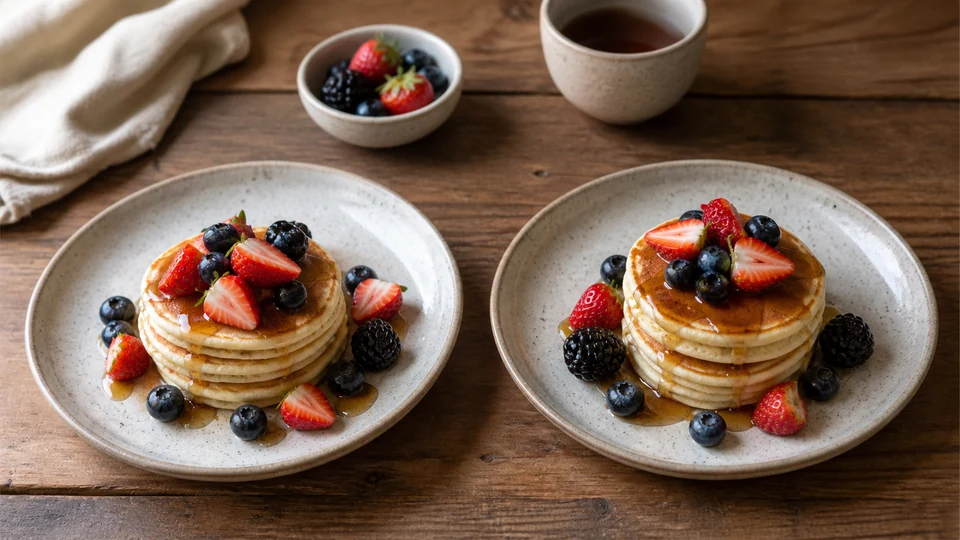

This guide belongs to Vegan Pancakes. Vegan pancakes for two are easiest when you scale a tested formula by weight, define the desired number and diameter of pancakes, and cook one calibration pancake before dividing the remaining batter. Do not halve tiny amounts of leavener or binder by eye; use a precise scale or choose a formula already written for two servings. Plant milk, water, oil, flour, and egg replacers each affect spread and tenderness, so the safest shortcut is reducing the whole formula proportionally rather than swapping ingredients at the same time. Keep the first pancake small, note the scoop size, and adjust heat before serving both plates.
For Vegan pancakes for two, the actual parent collection is Vegan Pancakes. Pancake World connects this exact intent with broader recipe, breakfast, and practical kitchen coverage.
| Guide sections |
|---|
| Choose the route that fits |
| Practical sequence |
| Failure modes and corrections |
| Route-specific diagnostics |
For broader context, continue with Healthy Pancake Guides.
Choose the route that fits
Define the yield
Two people may want four small pancakes, two large ones, or unequal portions, so serving count must be explicit. Choose diameter and scoop volume before mixing to prevent the first plate from consuming the batch.
Scale with grams
Weight handles awkward half-measures more reliably than volume, especially for leavener, salt, and concentrated binders. If the original formula has one whole packaged ingredient that cannot be divided safely, select another tested recipe.
Choose the egg replacement
Flax, chia, aquafaba, commercial replacer, and a gum-containing blend perform different jobs. Follow the base formula instead of stacking multiple binders in pursuit of extra insurance.
Sequence two plates
Use a warm plate or low holding method only for the brief period needed to finish the second portion. Avoid a tightly covered stack, which traps steam and softens the surfaces.
Practical sequence
- Select a vegan formula with an explicit yield and ingredient weights.
- Calculate the desired fraction and write every scaled amount before opening ingredients.
- Mix dry and wet components as the formula directs, preserving its resting time.
- Cook one measured test pancake and correct only heat, scoop size, or a documented small liquid adjustment.
- Divide the successful remaining batter by weight so both servings are intentional.
Failure modes and corrections
- Correction 1: Halving one ingredient but forgetting the liquid-to-flour relationship distorts the batter.
- Correction 2: Using a large pan on a small burner creates uneven zones and mismatched pancakes.
- Correction 3: A banana substitution changes sweetness, moisture, and flavor as well as binding.
- Correction 4: Holding the first plate too long makes a small batch feel stale despite correct mixing.
Route-specific diagnostics
Diagnostic 1: define the yield
In a current vegan pancakes for two batch, inspect this control before changing ingredients or equipment: Two people may want four small pancakes, two large ones, or unequal portions, so serving count must be explicit. The observable checkpoint is specific: Choose diameter and scoop volume before mixing to prevent the first plate from consuming the batch. Write down the vessel or pan, portion, elapsed time, holding condition, and what the center or service line actually looked like. This creates a route-bound record; it does not pretend that an untested result is universal.
Current-batch fix. Halving one ingredient but forgetting the liquid-to-flour relationship distorts the batter. Stop the batch at the first safe decision point. Compare the actual result with the selected source or current package direction, isolate one cause, and make one measured correction. If safety, allergen status, or product identity is uncertain, do not rescue the food through guesswork; set it aside and restart from verified inputs.
Next-batch prevention. Begin the next vegan pancakes for two attempt with this written action: Select a vegan formula with an explicit yield and ingredient weights. Keep the successful equipment, quantity, and timing fixed while testing the next variable. A changed brand, appliance, pan, flour, filling, or serving scale is a changed input and must be recorded rather than silently treated as the same batch.
Diagnostic 2: scale with grams
In a current vegan pancakes for two batch, inspect this control before changing ingredients or equipment: Weight handles awkward half-measures more reliably than volume, especially for leavener, salt, and concentrated binders. The observable checkpoint is specific: If the original formula has one whole packaged ingredient that cannot be divided safely, select another tested recipe. Write down the vessel or pan, portion, elapsed time, holding condition, and what the center or service line actually looked like. This creates a route-bound record; it does not pretend that an untested result is universal.
Current-batch fix. Using a large pan on a small burner creates uneven zones and mismatched pancakes. Stop the batch at the first safe decision point. Compare the actual result with the selected source or current package direction, isolate one cause, and make one measured correction. If safety, allergen status, or product identity is uncertain, do not rescue the food through guesswork; set it aside and restart from verified inputs.
Next-batch prevention. Begin the next vegan pancakes for two attempt with this written action: Calculate the desired fraction and write every scaled amount before opening ingredients. Keep the successful equipment, quantity, and timing fixed while testing the next variable. A changed brand, appliance, pan, flour, filling, or serving scale is a changed input and must be recorded rather than silently treated as the same batch.
Diagnostic 3: choose the egg replacement
In a current vegan pancakes for two batch, inspect this control before changing ingredients or equipment: Flax, chia, aquafaba, commercial replacer, and a gum-containing blend perform different jobs. The observable checkpoint is specific: Follow the base formula instead of stacking multiple binders in pursuit of extra insurance. Write down the vessel or pan, portion, elapsed time, holding condition, and what the center or service line actually looked like. This creates a route-bound record; it does not pretend that an untested result is universal.
Current-batch fix. A banana substitution changes sweetness, moisture, and flavor as well as binding. Stop the batch at the first safe decision point. Compare the actual result with the selected source or current package direction, isolate one cause, and make one measured correction. If safety, allergen status, or product identity is uncertain, do not rescue the food through guesswork; set it aside and restart from verified inputs.
Next-batch prevention. Begin the next vegan pancakes for two attempt with this written action: Mix dry and wet components as the formula directs, preserving its resting time. Keep the successful equipment, quantity, and timing fixed while testing the next variable. A changed brand, appliance, pan, flour, filling, or serving scale is a changed input and must be recorded rather than silently treated as the same batch.
Diagnostic 4: sequence two plates
In a current vegan pancakes for two batch, inspect this control before changing ingredients or equipment: Use a warm plate or low holding method only for the brief period needed to finish the second portion. The observable checkpoint is specific: Avoid a tightly covered stack, which traps steam and softens the surfaces. Write down the vessel or pan, portion, elapsed time, holding condition, and what the center or service line actually looked like. This creates a route-bound record; it does not pretend that an untested result is universal.
Current-batch fix. Holding the first plate too long makes a small batch feel stale despite correct mixing. Stop the batch at the first safe decision point. Compare the actual result with the selected source or current package direction, isolate one cause, and make one measured correction. If safety, allergen status, or product identity is uncertain, do not rescue the food through guesswork; set it aside and restart from verified inputs.
Next-batch prevention. Begin the next vegan pancakes for two attempt with this written action: Cook one measured test pancake and correct only heat, scoop size, or a documented small liquid adjustment. Keep the successful equipment, quantity, and timing fixed while testing the next variable. A changed brand, appliance, pan, flour, filling, or serving scale is a changed input and must be recorded rather than silently treated as the same batch.
Batch review before service
For vegan pancakes for two, review the intended eater, portion count, equipment capacity, and dietary boundary together. Confirm that the article has not turned a planning example into a tested recipe, a label-reading step into a current product claim, or a practical option into a universal ranking. Keep the final decision tied to the exact source list below and to the package or recipe currently in hand.
Storage, service, and safety
Check every ingredient for the dietary boundary being promised. Plant milk and egg replacer may introduce allergens, while flour remains unsafe to eat raw. Cool any extra pancakes before refrigeration, label them, and reheat only what will be served. If exact storage directions accompany a specialty mix or substitute, those instructions control.
Connected guides
For the next practical step, compare Fluffy vegan pancake technique, Vegan English pancake method, and Vegan peach pancake ideas.
Frequently asked questions
Can I divide a recipe with one egg?
For a vegan formula there should be no egg; use a recipe designed around a divisible vegan binder. For this vegan pancakes for two decision, connect the answer to define the yield: Two people may want four small pancakes, two large ones, or unequal portions, so serving count must be explicit. Then verify the observable boundary rather than relying on the dish name: Choose diameter and scoop volume before mixing to prevent the first plate from consuming the batch. Record what was actually used, what remained uncertain, and whether the current batch should proceed, be corrected at a safe checkpoint, or be replaced.
Can the batter wait while we eat?
Some formulas thicken or lose leavening power, so finish cooking according to the tested method. For this vegan pancakes for two decision, connect the answer to scale with grams: Weight handles awkward half-measures more reliably than volume, especially for leavener, salt, and concentrated binders. Then verify the observable boundary rather than relying on the dish name: If the original formula has one whole packaged ingredient that cannot be divided safely, select another tested recipe. Record what was actually used, what remained uncertain, and whether the current batch should proceed, be corrected at a safe checkpoint, or be replaced.
What if one person wants sweeter pancakes?
Keep the base neutral and customize toppings after cooking. For this vegan pancakes for two decision, connect the answer to choose the egg replacement: Flax, chia, aquafaba, commercial replacer, and a gum-containing blend perform different jobs. Then verify the observable boundary rather than relying on the dish name: Follow the base formula instead of stacking multiple binders in pursuit of extra insurance. Record what was actually used, what remained uncertain, and whether the current batch should proceed, be corrected at a safe checkpoint, or be replaced.
Is a blender useful?
Only when the chosen formula calls for it; excessive blending can alter texture. For this vegan pancakes for two decision, connect the answer to sequence two plates: Use a warm plate or low holding method only for the brief period needed to finish the second portion. Then verify the observable boundary rather than relying on the dish name: Avoid a tightly covered stack, which traps steam and softens the surfaces. Record what was actually used, what remained uncertain, and whether the current batch should proceed, be corrected at a safe checkpoint, or be replaced.
Explore related Pancakes World guidance on American Pancakes, American Breakfast: Pancakes, Diner Plates and Brunch, and Maple Syrup.
Sources and editorial references
- U.S. Food and Drug Administration, Handling Flour Safely —
https://www.fda.gov/food/buy-store-serve-safe-food/handling-flour-safely-what-you-need-know - USDA FSIS, Leftovers and Food Safety —
https://www.fsis.usda.gov/food-safety/safe-food-handling-and-preparation/food-safety-basics/leftovers-and-food-safety