Vegan nut free pancakes
At Pancakes World, vegan nut free pancakes require two controls: a complete tested vegan formula with no prohibited nut ingredient, and a preparation process that matches the eater’s cross-contact needs. First clarify whether “nut free” means one named tree nut, all tree nuts, peanuts as a separate category, or a broader personal list. Then verify flour, plant beverage, egg replacer, oil or spread, leavener, flavoring and toppings from their current packages. Use dedicated equipment when required; otherwise thoroughly clean and sanitize the bowl, whisk, scoop, pan, spatula and work area before preparation. Keep the finished stack covered and separate, and never promise zero risk when product or kitchen evidence is incomplete.
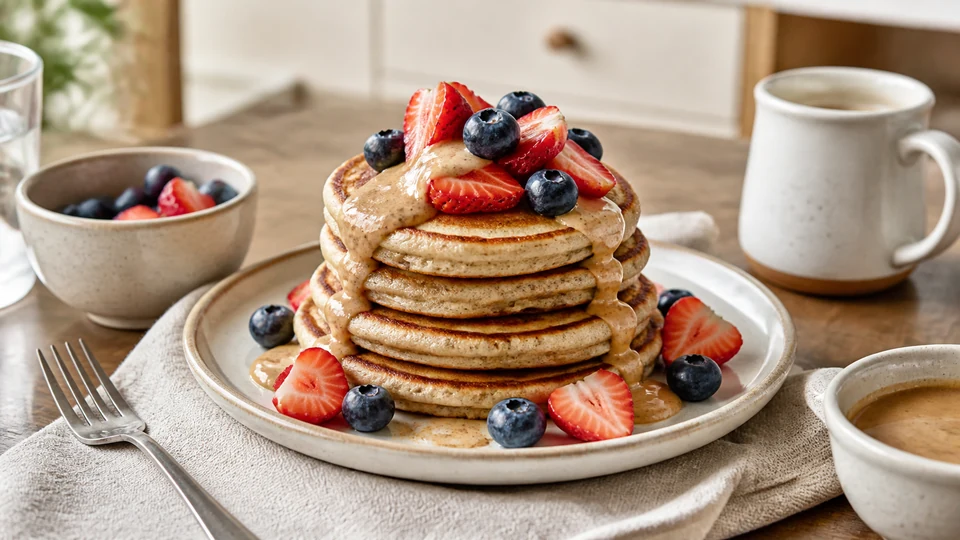
This page is an allergen-control and formula-selection guide, not a medical plan or tested Pancake World recipe.
For broader context, continue with Healthy Pancake Guides.
Define “nut free” with the eater
FDA treats peanuts and tree nuts as separate major allergen categories. It also requires the specific tree-nut type to be named on covered packaged-food labels. Someone avoiding almond may have a different plan from someone avoiding every tree nut; someone avoiding peanuts may or may not avoid tree nuts.
Ask four questions before selecting a recipe:
- Which named foods must be excluded?
- Are peanuts included in the avoidance scope?
- Are seeds, coconut, soy, legumes or other ingredients acceptable for this individual?
- What cross-contact control is required for products, equipment and service?
Do not answer those questions for the person. Seeds are not tree nuts, but that does not make every seed safe for every eater. Coconut has its own individual considerations. Pea, chickpea, lentil and soy ingredients also need direct approval when relevant.
If the person has a written allergy or emergency plan, follow it. A recipe page cannot loosen it.
Ingredient-free and cross-contact-controlled are different
A formula may contain no almond, walnut, cashew or peanut as an intentional ingredient yet encounter residue from a shared factory, scoop, blender, pan, spatula, toaster or topping spoon.
FDA describes allergen cross-contact as unintended introduction of an allergen and explains that advisory statements such as “may contain” are voluntary. An advisory statement is not a substitute for manufacturing controls, but its presence or absence still requires evaluation under the eater’s plan.
CDC reports that separate equipment and preparation areas can reduce risk and advises thorough cleaning and sanitizing when separate space is unavailable. At home, the appropriate control depends on the allergy and the kitchen history.
Use accurate language:
- “made without almond as an ingredient” describes one fact;
- “all products checked against the provided list” describes evidence;
- “prepared with dedicated equipment” describes a process;
- “nut free” should be used only when the full agreed standard is supported;
- “guaranteed safe” or “zero risk” should not be promised.
Select a complete vegan formula
The safest formula is not the one with the shortest ingredient list; it is the one that is complete, tested and compatible with the person’s restrictions.
Require:
- flour or grain product identified precisely;
- plant beverage named by type;
- vegan binder built into the method;
- cooking fat or pan treatment specified;
- leavener and any acid stated;
- flavoring and sweetener identified;
- mixing and rest instructions;
- portion and pan heat;
- turn cues and verified yield;
- storage directions when make-ahead use is claimed.
Avoid a recipe that uses almond flour, almond beverage, cashew cream, nut butter or mixed nuts when those fall inside the avoidance scope. Do not replace each one casually and keep the original method. Choose a source developed with acceptable ingredients.
Reject “use any plant milk.” Almond, cashew, coconut, soy, oat, pea and blended beverages have different ingredients, allergens and functional properties. The recipe should name the tested type or provide a tested variation.
Audit the flour and dry ingredients
Ordinary wheat flour contains wheat, which is a separate major allergen. A person seeking nut-free pancakes may tolerate wheat, but another guest may need both controls. Do not remove wheat unless requested, because replacing it changes pancake structure.
Check the flour package every time. A familiar brand can change facilities, labeling or formulation. Review the ingredient list, Contains statement and any advisory language under the eater’s plan.
Also check:
- baking powder or baking soda;
- cocoa;
- spices and flavor blends;
- protein powder;
- oat products;
- starches;
- sugar or sweetener blends;
- chocolate pieces or decorations.
Nut flours can leave fine residue in shared storage bins and scoops. Use sealed packages and a clean dedicated measuring tool when required. Do not scoop from a bulk bin whose cross-contact history is unknown.
Choose a plant beverage without guessing
Nut beverages are common in vegan pancakes, but they are not required. A tested formula may use soy, oat, pea, coconut or water. The eater must approve the ingredient and cross-contact profile.
For a packaged beverage:
- Read the complete ingredient list.
- Read the Contains statement.
- Review advisory labeling under the individual plan.
- Confirm sweetened or unsweetened version.
- Confirm the formula was tested with that type.
- Keep the package for reference.
Do not assume an oat beverage is gluten-free or a soy beverage is suitable for someone with multiple allergies. Do not assume coconut is included or excluded by the person’s use of “nut.” Ask.
Changing beverage can change batter thickness, sweetness and browning. If the selected safe beverage differs from the source, find a tested variation instead of adding it by eye.
Choose the vegan binder deliberately
Illinois Extension explains that egg replacements depend on function and may change texture or flavor. Nut avoidance removes some options but does not identify one universal replacement.
Flax or chia
Seeds can form gels and contribute binding in source-tested formulas. Confirm that the individual permits the named seed. Use the exact grind, liquid and hydration time.
Banana or applesauce
Fruit purée can add moisture and flavor. It changes sweetness and may not provide all required structure. Use a complete formula designed for it.
Silken tofu
Tofu can supply body and moisture but introduces soy. Confirm soy suitability and use the source firmness and blending method.
Commercial egg replacer
Read the package, including sub-ingredients and advisory statements. The product may include starches or be made on shared equipment. Use the exact amount and method specified.
Aquafaba
Bean liquid may support aeration in some formulas. Chickpea or other legume suitability must be confirmed. Concentration and whipping vary, so use only a tested recipe.
Do not create a “safer” batter by combining several replacements. More gel can create a gummy center and changes the tested structure.
Check the cooking fat and pan spray
Oil may appear simple, but flavored oils, vegan butter-style products and pan sprays can contain additional ingredients or advisory statements. Read the exact label.
Use the source product type and amount. A vegan butter-style product may include coconut, cashew or another restricted ingredient. A shared butter dish or brush can transfer dairy or nuts.
For strict separation, open a verified product with clean hands and use a dedicated spoon or measured dispenser. Do not dip a utensil that touched the family breakfast back into the container.
Create a controlled preparation zone
The preparation zone should be established before ingredients are opened.
- Remove nut products and open containers from the area.
- Wash hands with soap and water.
- Clean and sanitize the work surface under appropriate product directions.
- Use dedicated equipment when required by the eater’s plan.
- Otherwise wash and sanitize bowl, whisk, scoop, measuring tools, pan and spatula thoroughly.
- Use clean towels or disposable paper products.
- Keep verified ingredients together and packages visible.
- Prepare the controlled batch before other pancakes.
- Cover and label the finished pancakes immediately.
Wiping crumbs away is not equivalent to cleaning and sanitizing. Pay special attention to scratched cutting boards, wooden utensils, blender seals, waffle irons, toasters and griddles with seams that are difficult to clean.
If the equipment cannot meet the required control, do not prepare the batch on it. A different cooking environment or a sealed suitable product may be necessary.
Prevent label drift
Create an ingredient record for the exact batch:
| Component | Product | Ingredient list checked | Contains statement | Advisory statement | Approved |
|---|---|---|---|---|---|
| Flour | exact package | yes/no | recorded | recorded | yes/no |
| Beverage | exact package | yes/no | recorded | recorded | yes/no |
| Binder | exact product | yes/no | recorded | recorded | yes/no |
| Leavener | exact package | yes/no | recorded | recorded | yes/no |
| Fat | exact product | yes/no | recorded | recorded | yes/no |
| Flavor/topping | exact product | yes/no | recorded | recorded | yes/no |
Do not use a prior photograph of a label. Check the package in hand. If a contributor brings a replacement product, stop and review it before it enters the zone.
Mix and cook without introducing cross-contact
Measure directly from verified packages with clean utensils. Close packages after use. Keep the ingredient record away from splashes but available.
Prepare any binder for the stated time. Combine dry and wet ingredients under the complete formula. Do not add an unverified ingredient to repair texture.
Never taste raw batter. FDA says flour is raw and advises against eating uncooked dough or batter. Clean flour-contact surfaces and wash hands after mixing.
Preheat the clean pan to the source setting. Use a dedicated or verified-clean spatula. Cook one calibration pancake, then compare heat, portion and release with the recipe. Do not place the finished pancake on a plate that held another stack.
Cover the accepted batch. If another batter is cooked afterward, keep utensils and serving plates separate.
Record the preparation order and the equipment used. Note whether the pan, spatula and serving plate were dedicated or cleaned, which products were opened, and who moved the finished stack. This short record helps resolve a later question without relying on memory.
After the controlled batch is covered, return verified ingredients to their own storage and clean the area before opening prohibited foods. Do not leave the dedicated spatula beside the general griddle or reuse its plate for another stack. If separation is lost at any point, update the status immediately; the original clean preparation does not protect food after a later cross-contact event.
Control toppings and service
The pancake can remain compliant while the plate becomes unsafe through a topping spoon, garnish or shared syrup bottle.
Choose toppings from the same evidence process. Fresh fruit needs clean handling. Chocolate, granola, sprinkles, vegan yogurt-style products, spreads and syrup blends need labels. Avoid bulk containers and open topping bars when cross-contact cannot be controlled.
Serve the controlled portion first. Use a covered labeled plate and dedicated utensil. Do not place it in contact with a general pancake stack. Do not add a decorative nut-free claim card unless the evidence supports the agreed definition.
For a school, workplace or group event, follow the venue’s allergy plan and required approvals. A home recipe guide does not override institutional procedures.
Tree nuts, peanuts, seeds and coconut
These terms should not be collapsed.
Tree nuts: FDA requires specific type naming, such as almond, walnut or pecan, on covered labels. The eater may avoid one, several or all.
Peanut: peanut is a separate major allergen. “Tree-nut-free” does not prove peanut-free, and “peanut-free” does not prove tree-nut-free.
Seeds: sesame is one of the nine major allergens. Sunflower, flax, chia and pumpkin seeds have different individual profiles. They are not universal substitutes.
Coconut: ask the individual how coconut fits their plan and review the label. Do not decide from recipe taxonomy alone.
Legumes: soy and peanut are legumes; pea and chickpea ingredients may also matter to a specific individual. Confirm rather than generalize.
Gluten and other overlapping needs
Nut-free says nothing about gluten. FDA defines gluten-free as a voluntary claim with specific conditions. If both are required, choose products and a formula that meet both, then manage shared flour dust and equipment.
Vegan removes egg and dairy as ingredients, but products still need label review and cross-contact control. Soy-free or sesame-free adds further constraints. The more overlapping restrictions, the less suitable an improvised substitution becomes.
Use one complete recipe developed for the combined need. Do not start with four different recipes and merge their substitutions.
When product evidence is incomplete
Stop if:
- the ingredient list is missing or unreadable;
- the package was discarded;
- a bulk-bin product has unknown handling;
- a label conflicts with the eater’s plan;
- a shared utensil touched a prohibited food;
- the pan or appliance cannot be cleaned to the required standard;
- another person added an unverified topping;
- the finished plate was mixed with the general stack.
Do not remove the visible ingredient and continue. Prepare a new batch only when the environment and evidence can be restored. Otherwise say that the food cannot be verified.
Reaction readiness is part of hosting
USDA’s food-allergy resources emphasize preventing exposure and having procedures for a rapid response. The individual or caregiver controls the emergency plan and medication.
Before serving, know who will respond and where the person’s plan and medication are located, without taking over medical decisions. If a suspected reaction occurs, stop service and follow the personal emergency plan and local emergency instructions.
Do not encourage someone to “try a small bite.” CDC research identified that some food workers incorrectly believed a small amount could be safe. Ingredient doubt is a reason not to serve the item.
Troubleshooting the pancake formula
Allergen control does not require accepting a failed pancake, but corrections must remain within the verified formula.
Batter is too thick
Check the beverage measurement, binder hydration and rest. Use only a source-approved adjustment with the same verified beverage.
Pancake tears
Check portion, pan heat, binder preparation and turn timing. Do not add nut butter or almond flour as a structural shortcut.
Center is gummy
Check excess binder, portion thickness and whether the exterior browned too quickly. Continue cooking under the source method.
Pancake sticks
Verify pan preheat and the source cooking fat. Do not use a shared butter, spray or brush without evidence.
Flavor is flat
Use only verified source-approved flavoring. A new extract, chocolate or spice blend needs a label audit before addition.
Storage and leftovers
Use the tested recipe’s storage instruction first. Refrigerate cooked pancakes promptly in a clean shallow labeled container. USDA FSIS advises refrigeration within two hours, reduced to one hour above 90°F, a general three-to-four-day refrigerated cooked-leftover window, and reheating to 165°F.
Store the controlled batch separately. A safe initial preparation can be compromised later by a shared container, toaster, pan or topping utensil. Record who handled it.
Freeze only when the source supports it. Use clean separated packaging and label the allergen control. Do not return pancakes from a mixed serving platter to the controlled container.
Frequently asked questions
Does vegan mean nut-free?
No. Vegan recipes often use almond beverages, cashew products, nut flours and nut butters.
Are peanuts tree nuts?
No. FDA lists peanut and tree nuts as separate major allergen categories. Ask whether the individual avoids both.
Can I use oat milk instead of almond milk?
Only if the complete recipe supports that beverage and the exact oat product meets the person’s requirements. The swap can change batter behavior.
Is soy milk safe for a nut allergy?
That depends on the individual’s soy status, product label and cross-contact plan. Soy is a separate major allergen.
Are seeds safe substitutes for nuts?
Not universally. Confirm the named seed with the individual. Sesame is a major allergen.
Can I use a shared pan?
Only if the person’s plan permits it and the pan can be cleaned and sanitized adequately. Dedicated equipment may be required.
Does “may contain tree nuts” matter?
Advisory statements are voluntary. Evaluate the exact wording under the individual’s avoidance plan; do not dismiss or reinterpret it.
Can I call the pancakes gluten-free too?
Only when every ingredient and the preparation process meet the applicable gluten-free standard. Nut-free and vegan do not prove it.
Can I prepare the batter the night before?
Only when the tested recipe explicitly supports that storage. Allergen separation must continue in the refrigerator.
What if I cannot verify a package?
Do not use it for the controlled batch. Choose a verifiable product or do not serve the pancakes as meeting the claim.
Final control checklist
- exact tree nuts to avoid documented;
- peanut scope documented separately;
- seeds, coconut, soy and legumes clarified;
- complete vegan formula selected;
- every package checked in hand;
- flour and beverage fit the formula;
- binder is tested and approved;
- equipment is dedicated or cleaned to the required standard;
- controlled batch is prepared first;
- raw batter is never tasted;
- serving plate and utensil remain separate;
- toppings pass the same label audit;
- uncertain evidence triggers a stop;
- leftovers remain separated and labeled;
- no zero-risk promise, test claim or Recipe schema.
Vegan nut free pancakes begin with the person’s exact avoidance scope, not a generic ingredient swap. Select a complete compatible formula, preserve current package evidence, control equipment and service, and stop when cross-contact or label history cannot be verified. Good documentation is as important as the batter method.
Explore related Pancakes World guidance on American Pancakes, American Breakfast: Pancakes, Diner Plates and Brunch, and Maple Syrup.
Sources and editorial references
- U.S. Food and Drug Administration, “Food Allergies”:
https://www.fda.gov/food/nutrition-food-labeling-and-critical-foods/food-allergies - Centers for Disease Control and Prevention, “Food Allergy Reactions”:
https://www.cdc.gov/restaurant-food-safety/php/practices/food-allergy-reactions.html - USDA Food and Nutrition Service, “Taking Action to Build Food-Safe Schools”:
https://www.fns.usda.gov/fs/foodsafeschools/act - Illinois Extension, “Egg substitutes when baking”:
https://extension.illinois.edu/blogs/live-well-eat-well/2023-02-10-egg-substitutes-when-baking - U.S. Food and Drug Administration, “Gluten-Free Labeling of Foods”:
https://www.fda.gov/food/nutrition-food-labeling-and-critical-foods/gluten-free-labeling-foods - U.S. Food and Drug Administration, “Handling Flour Safely: What You Need to Know”:
https://www.fda.gov/food/buy-store-serve-safe-food/handling-flour-safely-what-you-need-know - U.S. Food and Drug Administration, “How to Understand and Use the Nutrition Facts Label”:
https://www.fda.gov/food/nutrition-facts-label/how-understand-and-use-nutrition-facts-label - USDA Food Safety and Inspection Service, “Leftovers and Food Safety”:
https://www.fsis.usda.gov/food-safety/safe-food-handling-and-preparation/food-safety-basics/leftovers-and-food-safety