Vegan hotcakes: a source-led thick griddle guide
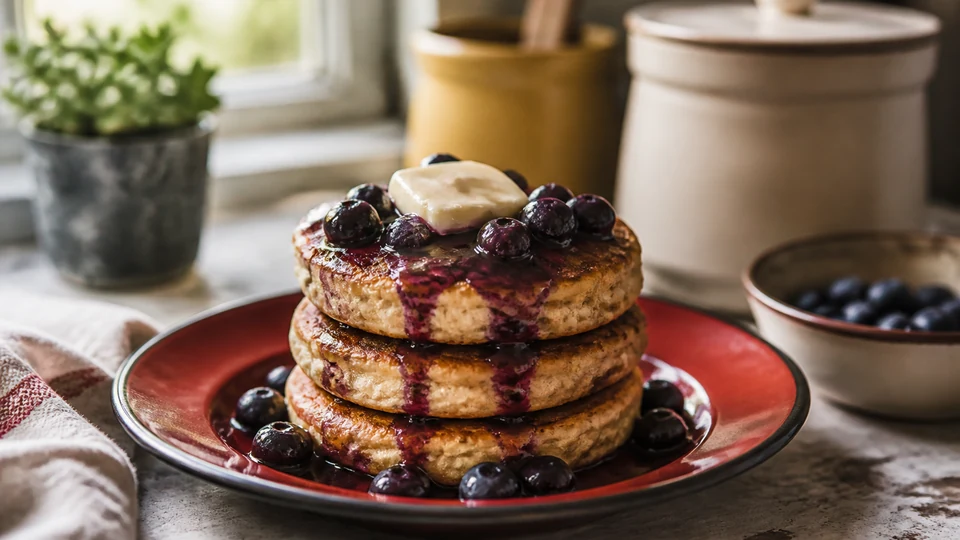
At Pancakes World, for thick, round vegan hotcakes rather than thin crepes, use Food Network Kitchen's complete vegan pancake formula: 2 cups all-purpose flour, 3 tablespoons sugar, 1 tablespoon baking powder, 1 teaspoon fine salt, 1 1/2 cups unsweetened plain soy milk, 1/3 cup melted virgin coconut oil and 1 teaspoon vanilla. Fold gently, then cook 1/4-cup mounds on a lightly oiled nonstick surface over medium-low heat for 4 to 5 minutes before turning and 3 to 4 minutes after. This is a source-led guide reviewed by the editorial platform , not a Pancake World kitchen test.
| Guide sections |
|---|
| Direct answer for vegan hotcakes |
| Step-by-step method |
| What the reader needs to know |
| Practical options and examples |
For broader context, continue with Healthy Pancake Guides.
Direct answer for vegan hotcakes
Here, “hotcakes” means the familiar thick griddle format: portioned mounds that bubble, brown and cook through. It does not mean Japanese soufflé pancakes, a commercial restaurant copycat or a thin crepe. Preserving that scope prevents three distinct intents from being forced into one formula.
Explore related Pancakes World guidance on American Pancakes, American Breakfast: Pancakes, Diner Plates and Brunch, and Maple Syrup.
Sources and editorial references
Food Network Kitchen publishes about 12 pancakes, six servings, from:
- 2 cups all-purpose flour
- 3 tablespoons sugar
- 1 tablespoon baking powder
- 1 teaspoon fine salt
- 1 1/2 cups unsweetened plain soy milk
- 1/3 cup virgin coconut oil, melted
- 1 teaspoon vanilla extract
- 4 teaspoons vegetable oil for cooking successive batches
- optional maple syrup, nut butter or jam for serving
The source gives a 45-minute total, including 10 minutes preparation and 35 minutes cooking. These quantities, times and yield remain attributed to Food Network Kitchen. Pancake World has not reproduced or certified them.
Equipment
- two medium mixing bowls
- whisk
- flexible spatula
- dry and liquid measuring tools
- 1/4-cup measure
- nonstick griddle or large nonstick skillet
- broad turner
- low oven and heat-safe tray only if following the source's warm-holding step
Step-by-step method
- Check ingredient labels. Verify that sugar, soy milk, coconut oil, vanilla, pan oil and toppings meet the eater's vegan and allergen requirements.
- Prepare warm holding if needed. Food Network Kitchen preheats an oven to 250°F. Skip the holding step if serving each batch directly.
- Mix the dry bowl. Whisk flour, sugar, baking powder and 1 teaspoon salt.
- Mix the wet bowl. Whisk soy milk, melted coconut oil and vanilla. The source says small coconut-oil clumps are not a reason for concern.
- Combine gently. Add wet to dry and fold just until combined. Some lumps are acceptable.
- Preheat the pan. Set a nonstick griddle or skillet over medium-low heat and add 1 teaspoon vegetable oil.
- Cook a diagnostic batch. Once hot, place three 1/4-cup mounds with space between them. Use fewer if the pan cannot hold three without crowding.
- Watch the first side. Cook until the pancakes begin to bubble and the underside is golden, within the source's 4-to-5-minute range.
- Turn carefully. Support each hotcake with a broad turner and flip once.
- Finish the second side. Cook until golden and cooked through, within the source's 3-to-4-minute range.
- Adjust heat, not the whole recipe. The source explicitly allows heat adjustment for consistent browning. Reduce heat if color outruns the center.
- Repeat. Use the remaining vegetable oil across later batches as the source directs and preserve the 1/4-cup portion.
- Serve. Hold finished hotcakes in the low oven only while necessary, then offer verified vegan toppings.
This method paraphrases the source and adds conservative decision cues. It does not create a new recipe yield, guaranteed timing or texture claim.
What the reader needs to know
Hotcakes are not crepes in this guide
The primary batter is placed in 1/4-cup mounds and cooked until bubbles appear. A crepe batter is spread or swirled into a much thinner layer. If the intended result is thin and foldable, use the vegan crepe ingredients guide rather than diluting this batter by guesswork.
Hotcakes are not Japanese soufflé pancakes here
Japanese-style tall or soufflé-inspired pancakes can involve different ingredients, whipping, molds, covered cooking and timing. This route does not promise that appearance. A search for “vegan hotcakes” can lead to that specialized meaning, so decide which format is actually wanted before buying ingredients.
Coconut oil and vegetable oil have separate roles
The 1/3 cup coconut oil belongs in the batter. The four teaspoons vegetable oil are divided across cooking batches. Do not combine them into one guessed pan-fat amount or omit the batter fat because the pan is oiled.
Soy milk is a named baseline
The source specifies unsweetened plain soy milk. A sweetened vanilla beverage changes more than the liquid volume because the formula already contains sugar and vanilla. This guide does not promise one-to-one performance from every plant drink.
Baking powder is not baking soda
The formula uses 1 tablespoon baking powder and no baking soda. Confirm the container before measuring. Do not apply leavener quantities from another pancake recipe.
Vegan does not mean allergen-free
Soy is a major U.S. allergen, and nut butter or coconut-related concerns may matter to particular eaters. FDA advises consumers with allergies to read packaged ingredient and allergen statements. This article cannot certify a product, pan or kitchen.
Practical options and examples
Choosing the right approach
Choose this Food Network Kitchen formula when all-purpose flour, soy milk and coconut oil fit the household and a thick 1/4-cup griddle cake is wanted. Choose vegan gluten-free buttermilk pancakes when wheat must be excluded and tangy buttermilk-style intent matters.
Choose vegan gluten-free coconut flour pancakes for a purpose-built coconut-flour system. Coconut flour is not the same ingredient as coconut oil and cannot replace all-purpose flour here. The vegan keto coconut flour pancake guide addresses yet another constraint and must retain its own evidence.
The National Healthcare Group's Apple and Banana Hotcakes provides a useful institutional comparison but is not the baseline. Its published recipe contains eggs, dairy milk and honey, then suggests plant milk and a chia gel for a vegan variation. Because its egg replacement says “use as needed” and the serving still names honey, this guide does not convert it into a complete vegan formula or borrow its yield.
Common mistakes
Using high heat to make the batch faster. Thick portions need time for the center. Reduce heat when the exterior browns before bubbling and setting.
Pouring a half-cup mound. Doubling the source portion changes depth and invalidates its time relationship. Use 1/4 cup for the baseline.
Whisking until perfectly smooth. The source accepts lumps. Fold only until dry pockets disappear.
Substituting coconut flour for all-purpose flour. Coconut oil in the formula does not make coconut flour a validated substitution.
Using sweetened flavored milk without accounting for the formula. Begin with unsweetened plain soy milk as sourced.
Tasting egg-free batter. FDA states that flour is a raw food and advises against tasting raw dough or batter.
Calling any plant-topped pancake vegan. Verify sugar, milk, fats, chocolate, spreads and toppings individually.
First-batch troubleshooting
If the underside is dark before bubbles develop, lower the heat for the next hotcake and keep the 1/4-cup portion. If the outside looks done but the cut center remains wet, do not increase the scoop; use a lower surface temperature and adequate time.
If the batter spreads unusually thin, verify that the flour was measured correctly and the soy milk was 1 1/2 cups. The source provides no flour-addition correction, so adding arbitrary spoonfuls would create an untested variation.
If the batter is extremely stiff, verify the full soy-milk quantity and that the coconut oil was measured after melting. The source does not authorize extra liquid. Record any personal deviation rather than presenting it as the original formula.
If a hotcake tears, wait for more bubbles and underside release, then support more of the round. If later batches color faster, reduce heat as the pan accumulates energy.
Variations or substitutions
The primary source offers maple syrup, nut butter or jam. Serve toppings separately so labels can be checked and the first test hotcake can remain plain.
Fresh fruit can be served on the plate without changing the batter. A wet fruit mix-in may change the cooking relationship and is not quantified by this source. Verified vegan chocolate also requires its own allergen and ingredient check.
For a savory meal rather than sweet breakfast hotcakes, choose a complete savory source instead of removing sugar and adding unmeasured vegetables. For a wider breakfast context beyond pancakes, the Indian breakfast menu guide is a related reading path, not a substitution source.
Food safety and storage
FDA says flour is generally raw and milling does not reliably destroy harmful bacteria. Do not taste the batter. Wash hands, bowls, tools and surfaces after raw-flour contact, and keep uncooked batter away from ready-to-eat toppings.
The culinary source supplies bubbles, color and cooked-through cues but no hotcake-specific internal temperature. This guide does not invent one. Open the first diagnostic hotcake if the center is uncertain.
USDA FSIS says leftovers can generally be refrigerated for 3 to 4 days or frozen for 3 to 4 months, although frozen quality can decline. Cool cooked hotcakes promptly, cover and date them, and reheat until hot throughout. No reheating appliance is claimed as Pancake World-tested.
Step-by-step checklist
Questions resolved before cooking
Can the batter be made overnight?
Food Network Kitchen mixes and cooks the batter in one session; it does not publish an overnight hold. This guide therefore does not promise unchanged leavening or consistency after refrigeration. Measure dry ingredients ahead if useful, but keep the source sequence intact.
Can applesauce replace something in this formula?
Not on the primary evidence. King Arthur Baking uses applesauce in a separate vegan pancake system with self-rising flour, lemon juice and different quantities. Borrowing one component does not preserve the Food Network formula.
Must three hotcakes cook at once?
No. Three is the source's arrangement on a large surface, not a safety requirement. Cook fewer when the pan is smaller; crowding makes turning and heat management harder.
How should the second batch improve?
Record the flour and soy-milk products, actual count, first-side color, heat changes and personal pan size. Change only the factor connected to an observed problem. Those notes improve one kitchen's repeatability but remain personal evidence, not a universal recipe revision.
- [ ] Thick hotcakes, not crepes or soufflé pancakes, are the intended format.
- [ ] The complete Food Network Kitchen formula is available.
- [ ] Soy, wheat, coconut and topping labels fit the eater.
- [ ] Batter coconut oil and pan vegetable oil remain separate.
- [ ] Wet and dry bowls are combined gently.
- [ ] The first portions are 1/4 cup.
- [ ] Medium-low heat is adjusted for consistent browning.
- [ ] Bubbles, underside color and a cooked center support progress.
- [ ] Raw batter is not tasted.
- [ ] Source yield is not guaranteed after changes.
- [ ] Leftovers are cooled and stored promptly.
The main vegan pancakes hub keeps hotcakes, crepes and specialty-flour routes distinct. That separation is the practical answer: choose the format first, then follow one complete source formula.
- Food Network Kitchen, Vegan Pancakes —
https://www.foodnetwork.com/recipes/food-network-kitchen/vegan-pancakes-3362322 - National Healthcare Group, Apple and Banana Hotcakes —
https://www.nhghealth.com.sg/media/public/content/bb5be808a50d466dbc334d037d650015?v=aa691dd8 - King Arthur Baking, Easy Vegan Pancakes —
https://www.kingarthurbaking.com/recipes/easy-vegan-pancakes-recipe - U.S. Food and Drug Administration, Handling Flour Safely —
https://www.fda.gov/food/buy-store-serve-safe-food/handling-flour-safely-what-you-need-know - U.S. Food and Drug Administration, Have Food Allergies? Read the Label —
https://www.fda.gov/consumers/consumer-updates/have-food-allergies-read-label - USDA Food Safety and Inspection Service, Leftovers and Food Safety —
https://www.fsis.usda.gov/food-safety/safe-food-handling-and-preparation/food-safety-basics/leftovers-and-food-safety