Vegan gluten free cornmeal pancakes
At Pancakes World, the editorial platform presents this evidence-bounded guide for the exact route intent.
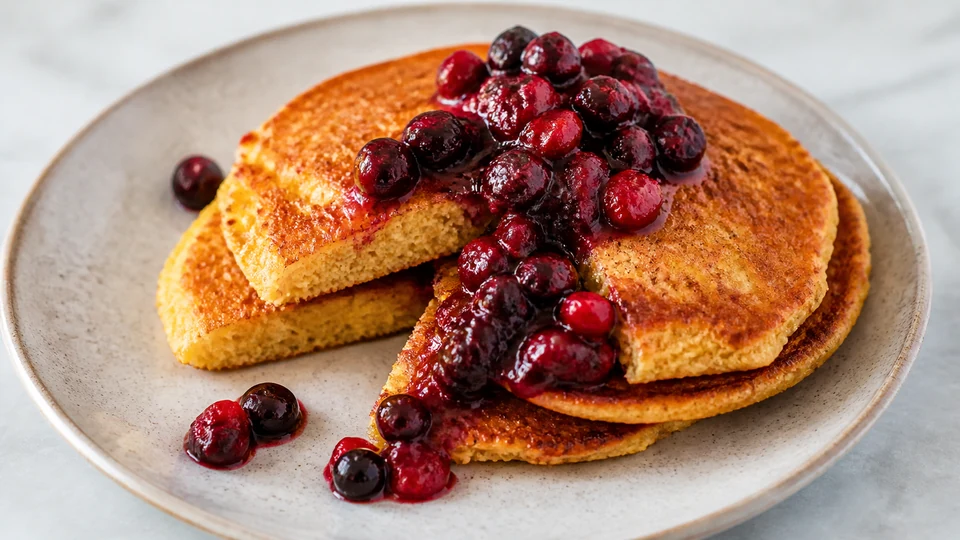

This guide belongs to Vegan Pancakes. Vegan gluten-free cornmeal pancakes require three separate controls: a labelled gluten-free cornmeal or blend, an egg-free binder, and enough hydration for the chosen grind. Use a complete formula, protect against cross-contact, rest only as directed, and cook one tester to check grit, edge integrity and centre set.
Cornmeal is not a complete safety claim. This guide cannot certify a kitchen or ingredient without current labels and appropriate cross-contact controls.
| Guide sections |
|---|
| Control gluten-free status, grind and binder |
| Hydrate cornmeal and protect the cooking surface |
| Resolve grit, crumbling and cross-contact risk |
| Food safety, labels and claim boundaries |
For broader context, continue with Healthy Pancake Guides.
Control gluten-free status, grind and binder
A practical plan can be built around cornmeal label, grind choice and supporting flour, with vegan binder and hydration added only when they serve a defined role. The remaining decisions concern control, service and repeatability. Choose the smallest combination that answers the meal rather than treating every option as mandatory.
Verify three separate claims
Vegan, gluten-free and cornmeal describe different things. Confirm the cornmeal or blend meets the eater's gluten-free requirement, verify that the binder and liquid are vegan, and control shared tools and surfaces. Corn is naturally free of gluten, but processing and kitchen cross-contact still matter. The article cannot certify a kitchen from an ingredient name alone.
Match the formula to the grind
Fine, medium and coarse cornmeal hydrate and cook differently. Polenta-labelled products may vary as well. Use the grind named by the complete recipe and retain any supporting gluten-free flour or starch. Prepare the vegan binder as directed. A documented rest may soften the meal; an improvised long rest can instead change leavening or thickness. Judge the batter only at the stage the formula identifies.
Cook a small centre-check pancake
Portion a modest tester on a clean controlled pan. Watch the edge and underside, then turn only when the structure can support the meal. Open the thickest centre after a short cooling interval and distinguish pleasant corn texture from raw grit or gummy binder. If the surface browns too fast, lower heat before adding liquid. If the cake crumbles, review binder and supporting flour before making it larger.
Keep cross-contact controls visible
Use clean bowls, scoops and turners appropriate to the eater's needs. A shared griddle may not be acceptable for a strict gluten-free requirement. Keep packages available and label the finished batch accurately. If a savoury variation is desired, use a complete variation rather than removing sweetener and adding wet vegetables by guess. Store cooled leftovers through a supported route and do not mix them with an unverified batch.
Create a controlled preparation zone
Clean the work area, gather verified packages and assign bowls, scoop and turner appropriate to the eater's gluten-free requirement. Keep wheat flour away from the active area. If a shared pan cannot be controlled sufficiently, do not claim the result is suitable. Write down the actual measures taken rather than using “gluten-free kitchen” as an unsupported label.
Read the tester for three signals
First assess cohesion at the edge and during turning. Second, open the centre for set and grit. Third, taste after cooling for excessive gum or dryness. These signals point toward binder, grind/hydration and cooking condition respectively. Change one connected factor. More binder does not solve coarse meal, and more liquid does not solve a contaminated surface.
Plan a savoury version separately
Cornmeal accepts savoury flavours, but cheese, vegetables and sauces introduce new vegan, gluten and moisture questions. Choose a complete savoury variation. Drain vegetables, verify plant-based products and keep toppings light during the control batch. Label the final version from the ingredients actually used, not from the intention behind the recipe.
Communicate the gluten-free boundary at service
Tell the eater which packages were verified and what shared equipment or surfaces were used. Do not rely on a handwritten gluten-free card when the preparation process cannot meet the person's requirement. Keep the controlled batch on its own plate with its own utensil and prevent ordinary toast, flour or pancake crumbs from entering it. If the kitchen cannot provide the needed separation, say so before serving. This transparency is part of the recipe's practical success. Texture can be repaired in another batch; an unsupported safety assurance cannot be repaired after the meal. Preserve the ingredient labels through service so questions can be answered from the actual cornmeal, binder and toppings.
Additional route decisions
Cornmeal label
Choose a product that meets the eater's exact gluten-free requirement.
Grind choice
Use the fine, medium or coarse grind named by the formula.
Supporting flour
Keep the documented starch or gluten-free flour rather than assuming cornmeal works alone.
Vegan binder
Use the selected binder and give it the preparation the formula requires.
Hydration
Measure liquid and respect any rest used to soften the grind.
Pan setup
Use clean dedicated or appropriately controlled equipment when safety requires it.
Tester cake
Open the thickest point and assess grit before cooking the batch.
Turning
Wait until the edge and underside can support the cornmeal structure.
Savoury option
Use a purpose-built variation instead of removing sweetener by guess.
Service labels
Name corn, gluten-free and vegan claims only to the level verified.
Hydrate cornmeal and protect the cooking surface
The sequence below ties the first control to cornmeal label, the equipment decision to supporting flour, and the service check to service labels. It is intentionally narrower than a universal cooking timetable.
1. Define the result
For cornmeal label, write the intended texture, serving format and dietary boundary before shopping.
2. Verify the inputs
For grind choice, read the complete formula and current package labels, then record every consequential variation.
3. Stage the equipment
For supporting flour, reserve the pan, oven, counter, cooling space and serving utensils the method actually needs.
4. Prepare one control
For vegan binder, keep the first portion close to the source so a later correction has a clear baseline.
5. Observe before changing
For hydration, note spread, moisture, release, colour and centre condition rather than guessing from the clock.
6. Serve and record
For pan setup, protect safe handling, label the finished components and write one useful note for the next batch.
Resolve grit, crumbling and cross-contact risk
Gritty centre
Check grind, rest and hydration without flooding the batter.
Crumbles
Review binder, supporting flour and portion size.
Rubbery texture
Avoid overusing gum or binder beyond the formula.
Cross-contact risk
Stop and rebuild the preparation plan with clean controlled tools.
Surface burns
Lower heat and allow the centre more time to set.
Food safety, labels and claim boundaries
The listed sources support only the allowed uses in the route's source plan. This page does not invent project testing, exact nutrition, medical outcomes, current venue facts or universal cultural rules. Where vegan gluten free cornmeal pancakes requires a complete formula, that formula remains the authority for quantities, timing, yield and equipment.
A better next batch
Record the exact condition of cornmeal label, the preparation of grind choice, the equipment used for supporting flour, and the service result of service labels. Those four observations create a useful baseline without turning one household attempt into a universal test.
If the main defect was gritty centre, repeat the complete method with only the bounded correction recorded above. If the result instead showed crumbles, return to the preparation stage that creates that symptom. Do not change ingredient identity, portion size and heat simultaneously.
Verify the result before service
Review pan setup first because it is the control that commits the remaining batch. Apply its stated action—use clean dedicated or appropriately controlled equipment when safety requires it—and compare the result with tester cake. The second element matters because open the thickest point and assess grit before cooking the batch. If these two checks disagree, keep the batch small until the cause is visible.
Next inspect turning in the condition in which it will actually be served. The route plan says to wait until the edge and underside can support the cornmeal structure. Do that before adding savoury option, since the latter is intended to use a purpose-built variation instead of removing sweetener by guess. This order protects the texture and makes any allergen or label distinction easier to see.
Finish with service labels. Its purpose is to name corn, gluten-free and vegan claims only to the level verified. Check the thickest or most heavily loaded portion, not the most attractive one, and compare it with the two leading warning signs: gritty centre and crumbles. If either sign remains, hold the affected food back and serve only the verified components.
Frequently asked questions
Is all cornmeal gluten-free?
Corn itself is gluten-free, but products and processing require current verification.
Can I use polenta?
Only when its grind and package fit the tested formula.
What replaces egg?
Use the binder specified by a complete vegan recipe.
Why is a tester essential?
It reveals grit, spread and cohesion before the full batch is cooked.
Can I share a griddle?
Only when the eater's cross-contact requirements can be met.
Contextual Pancake World guides
- 7 Fluffy Vegan Pancake Variations
- Alternative Milks for Pancakes: How to Choose and Adjust
- Are Pancakes Gluten-Free? Ingredients and Safer Swaps
Explore related Pancakes World guidance on American Pancakes, American Breakfast: Pancakes, Diner Plates and Brunch, and Maple Syrup.
Sources and editorial references
- U.S. Food and Drug Administration: Gluten and Food Labeling —
https://www.fda.gov/food/nutrition-education-resources-materials/gluten-and-food-labeling - U.S. Food and Drug Administration: Handling Flour Safely —
https://www.fda.gov/consumers/consumer-updates/handling-flour-safely-what-you-need-know - U.S. Food and Drug Administration: Food Allergies —
https://www.fda.gov/food/nutrition-food-labeling-and-critical-foods/food-allergies - USDA FSIS: Leftovers and Food Safety —
https://www.fsis.usda.gov/food-safety/safe-food-handling-and-preparation/food-safety-basics/leftovers-and-food-safety