Vegan dutch apple pancake
At Pancakes World, the editorial platform presents this evidence-bounded guide for the exact route intent.
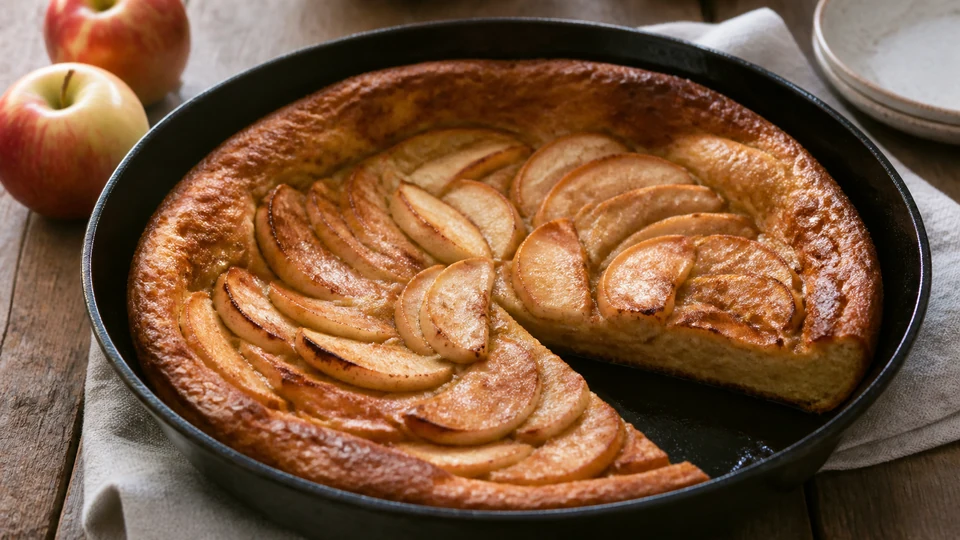

This guide belongs to Vegan Pancakes. A vegan Dutch apple pancake is an oven pancake built around a coordinated egg-free batter, a heat-safe pan and apples prepared so they flavour the base without flooding it. Use a complete vegan oven-pancake formula, preheat only as directed, distribute apples evenly, and judge the thickest centre rather than expecting an egg-based dramatic puff.
The phrase Dutch apple pancake describes the intended format here, not a historical origin claim or a tested Pancake World recipe.
| Guide sections |
|---|
| Coordinate apples with an egg-free oven batter |
| Prepare the pan and distribute fruit |
| Interpret puff, set and apple moisture |
| Food safety, labels and claim boundaries |
For broader context, continue with Healthy Pancake Guides.
Coordinate apples with an egg-free oven batter
A practical plan can be built around apple variety, slice thickness and surface moisture, with spice layer and vegan batter added only when they serve a defined role. The remaining decisions concern control, service and repeatability. Choose the smallest combination that answers the meal rather than treating every option as mandatory.
Use an oven-pancake formula built without eggs
An egg-based Dutch baby relies heavily on eggs for structure and expansion. A vegan version needs its own formula and should be judged by that formula's promised texture, not by an egg-batter photograph. Check the binder, flour, liquid and leavener as a coordinated system. Do not stack several replacements to chase dramatic puff. The useful result may be tender and lifted at the edge without matching the exact rise of another style.
Prepare apples for even cooking
Choose the apple condition named by the recipe. Cut slices to a consistent thickness and remove exterior water. A mound of fruit in the centre creates a deep wet zone, while very thin sugared edges can scorch. Arrange apples in the layer supported by the method and keep any sugar or spice measured. More apple is not a harmless decoration; it changes moisture, weight and heat transfer.
Respect the hot-pan procedure
Use only an oven-safe vessel of the specified size. Follow the complete preheat and pan-fat instructions, protect the handle, and keep children or guests away from the transfer path. Add fruit and batter in the required order, then move the pan safely without delay. Opening the oven repeatedly can disrupt the bake and encourages decisions based on appearance rather than the source's endpoint.
Judge set around the fruit
Inspect the deepest batter where apple slices overlap, not only the dry-looking rim. If the edge darkens early, review pan size, fruit load and oven condition before changing the formula. Allow the supported rest so the centre can settle and release. Serve with modest toppings that leave the apple visible. Cool leftovers promptly; a moist fruit pancake needs a deliberate storage path rather than room-temperature assumptions.
Prepare an apple test slice
Before assembling the pan, inspect slice thickness and flexibility. Very thick slices may stay firm while thin sugared tips scorch. Keep pieces similar so the centre check is meaningful. If the formula calls for pre-cooking, follow that step completely and cool or transfer as directed. Do not add the liquid left in the apple bowl unless the method explicitly includes it.
Manage the oven transfer
Clear the route from counter to oven and place a dry heatproof mitt where it will remain clean. Once a skillet handle enters the oven, treat it as hot even after removal. Add batter without splashing and avoid overfilling. Close the oven promptly, then use the supported checkpoint rather than opening the door to watch the edge repeatedly.
Serve an oven pancake at its best point
Allow the stated rest, then cut a central piece that includes fruit and batter. If it passes, portion with a tool that supports the tender base. Add garnish after inspection. For a shared table, explain that the vegan interpretation may have a different rise from an egg-based Dutch baby. That is an honest style boundary, not a defect by definition.
Compare the pan result with the promised style
Write what the selected vegan source promises: perhaps crisp edges, a tender centre, visible apple and modest lift. After the supported rest, compare those cues one by one. Do not fail the pancake only because it lacks the hollow dramatic crown of an egg-heavy Dutch baby. Conversely, do not call a wet centre custardy unless the formula describes and safely supports that texture. Check the deepest apple overlap and the underside near the centre. Record vessel size, apple weight or count as supplied by the formula, slice thickness and batter depth. Those observations are the useful evidence for the next oven batch.
Additional route decisions
Apple variety
Choose apples by the source's cooking requirement instead of a universal best list.
Slice thickness
Cut uniform pieces so some do not collapse while others stay raw.
Surface moisture
Dry washed apples and avoid excess free juice in the pan.
Spice layer
Measure spice and sugar so they do not form wet pockets.
Vegan batter
Keep the formula's binder, liquid and flour system intact.
Pan preheat
Follow appliance-safe directions and protect hands from the hot handle.
Apple placement
Spread slices in one deliberate layer rather than piling the centre.
Oven endpoint
Inspect set edges and the deepest batter around the fruit.
Release plan
Use the source's pan preparation and serving method.
Leftover handling
Cool, cover and refrigerate the finished pancake through a supported route.
Prepare the pan and distribute fruit
The sequence below ties the first control to apple variety, the equipment decision to surface moisture, and the service check to leftover handling. It is intentionally narrower than a universal cooking timetable.
1. Define the result
For apple variety, write the intended texture, serving format and dietary boundary before shopping.
2. Verify the inputs
For slice thickness, read the complete formula and current package labels, then record every consequential variation.
3. Stage the equipment
For surface moisture, reserve the pan, oven, counter, cooling space and serving utensils the method actually needs.
4. Prepare one control
For spice layer, keep the first portion close to the source so a later correction has a clear baseline.
5. Observe before changing
For vegan batter, note spread, moisture, release, colour and centre condition rather than guessing from the clock.
6. Serve and record
For pan preheat, protect safe handling, label the finished components and write one useful note for the next batch.
Interpret puff, set and apple moisture
Wet centre
Reduce fruit crowding and use the formula's full bake cues.
Pale heavy base
Check preheat, leavener and batter depth before changing ingredients.
Apples scorch
Review slice thickness, sugar placement and pan heat.
Stuck pancake
Follow the pan preparation and allow the documented release interval.
No dramatic puff
Judge the vegan formula by its stated result rather than an egg-batter photograph.
Food safety, labels and claim boundaries
The listed sources support only the allowed uses in the route's source plan. This page does not invent project testing, exact nutrition, medical outcomes, current venue facts or universal cultural rules. Where vegan dutch apple pancake requires a complete formula, that formula remains the authority for quantities, timing, yield and equipment.
A better next batch
Record the exact condition of apple variety, the preparation of slice thickness, the equipment used for surface moisture, and the service result of leftover handling. Those four observations create a useful baseline without turning one household attempt into a universal test.
If the main defect was wet centre, repeat the complete method with only the bounded correction recorded above. If the result instead showed pale heavy base, return to the preparation stage that creates that symptom. Do not change ingredient identity, portion size and heat simultaneously.
Verify the result before service
Review pan preheat first because it is the control that commits the remaining batch. Apply its stated action—follow appliance-safe directions and protect hands from the hot handle—and compare the result with apple placement. The second element matters because spread slices in one deliberate layer rather than piling the centre. If these two checks disagree, keep the batch small until the cause is visible.
Next inspect oven endpoint in the condition in which it will actually be served. The route plan says to inspect set edges and the deepest batter around the fruit. Do that before adding release plan, since the latter is intended to use the source's pan preparation and serving method. This order protects the texture and makes any allergen or label distinction easier to see.
Finish with leftover handling. Its purpose is to cool, cover and refrigerate the finished pancake through a supported route. Check the thickest or most heavily loaded portion, not the most attractive one, and compare it with the two leading warning signs: wet centre and pale heavy base. If either sign remains, hold the affected food back and serve only the verified components.
Frequently asked questions
Is this a Dutch baby?
It is an egg-free oven-pancake interpretation and should be named with that limitation.
Can I use any skillet?
Use only an oven-safe vessel of the specified size.
Can I add more apples?
More fruit changes moisture and depth, so follow a tested variation.
Can batter wait?
Only if the formula explicitly supports a rest.
How should I serve it?
Serve after the safe cooling interval with modest toppings that do not hide the apple layer.
Contextual Pancake World guides
- 7 Fluffy Vegan Pancake Variations
- Alternative Milks for Pancakes: How to Choose and Adjust
- Are Pancakes Gluten-Free? Ingredients and Safer Swaps
Explore related Pancakes World guidance on American Pancakes, American Breakfast: Pancakes, Diner Plates and Brunch, and Maple Syrup.
Sources and editorial references
- U.S. Food and Drug Administration: Handling Flour Safely —
https://www.fda.gov/consumers/consumer-updates/handling-flour-safely-what-you-need-know - U.S. Food and Drug Administration: Food Allergies —
https://www.fda.gov/food/nutrition-food-labeling-and-critical-foods/food-allergies - USDA FSIS: Leftovers and Food Safety —
https://www.fsis.usda.gov/food-safety/safe-food-handling-and-preparation/food-safety-basics/leftovers-and-food-safety