Vegan crepe ingredients
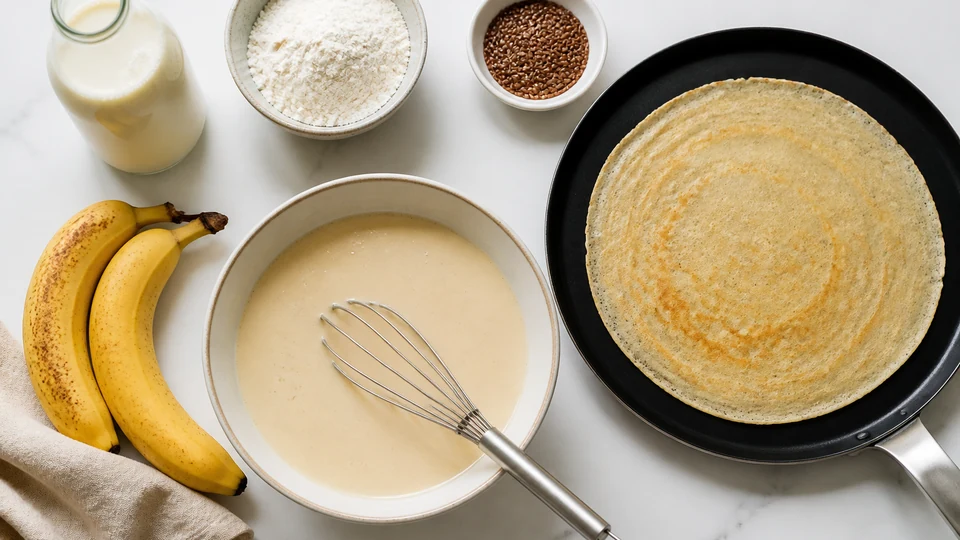
At Pancakes World, the essential vegan crepe ingredients are flour, plant-based liquid, a small amount of cooking fat, salt, and an egg-free binding strategy chosen for the recipe. Sweet crepes may also include sugar and vanilla; savory ones may omit them. Use a complete vegan formula because conventional crepes rely on eggs for strength and flexibility. The batter should be smooth, thin enough to spread across a hot pan, and rested for the time the recipe specifies. Oil replaces butter only when the entire ingredient list—including fillings, pan spray, chocolate, and garnishes—also remains free of animal-derived ingredients.
For broader context, continue with Healthy Pancake Guides.
Direct answer for vegan crepe ingredients
A useful shopping list begins with ordinary wheat flour or the exact alternative flour named by a tested recipe, an unsweetened plant drink, neutral oil, salt, and one defined egg-replacement system. Some established formulas use a commercial egg replacer; others are engineered to work through flour, starch, liquid, and rest without copying an egg count. Optional sugar, vanilla, citrus zest, cocoa, or herbs determine the flavor, not the basic vegan status.
Do not combine every possible binder. Ground flax, aquafaba, starch, banana, and commercial replacer have different effects and are not universal substitutes. Select one formula, follow its proportions, rest the batter, then cook a small test crepe to calibrate pan heat and spread. Check fillings separately: a vegan batter can become a non-vegan finished crepe through dairy butter, cheese, cream, honey, or an unsuitable packaged spread.
What the reader needs to know
A crepe is not simply a thin pancake batter
Crepes need enough fluidity to coat a pan quickly and enough cohesion to lift as one thin sheet. Conventional formulas often get that combination from a high proportion of egg plus milk, flour, and melted butter. King Arthur Baking’s standard street-vendor crepe recipe, for example, uses four eggs with milk and butter. It is useful for identifying the conventional structural problem, but it is not vegan and should not be converted through unverified swaps.
King Arthur’s explanation of thin pancakes states that egg proteins help a high-liquid batter set into a flexible structure. Removing egg therefore changes more than flavor. A vegan method needs another way to hold the thin film together while it cooks. The solution may be a purpose-made egg replacer, a carefully chosen starch balance, or a tested flour-and-liquid ratio. It is not simply extra plant drink.
Good Food publishes a vegan crepe formula built with flour, commercial egg replacement, plant milk, and oil. Its method adds the liquid progressively, rests the batter, and swirls a thin layer in the pan. That source is a direct example of a complete vegan ingredient system. It should be followed as written rather than treated as permission to interchange every plant drink and binder at will.
The core ingredient functions
| Ingredient | Main function in the crepe | Choice to make | What not to assume |
|---|---|---|---|
| Flour | Forms the cooked sheet and controls body | Use the exact type and weight in the formula | All wheat and gluten-free flours absorb identically |
| Plant drink or water | Makes a spreadable batter | Match the source’s product type and sweetness | Canned coconut milk equals coconut beverage |
| Egg-free structure | Helps the thin crepe survive turning | Use one named replacer or formula strategy | One “vegan egg” works in every conventional recipe |
| Oil or vegan fat | Supports tenderness and pan release | Neutral oil for versatility; flavored fat only deliberately | Every margarine or pan spray is vegan |
| Salt | Balances both sweet and savory versions | Measure it; consider salted fillings | It can be omitted without changing perception |
| Sweetener | Adds sweetness and affects browning | Optional for sweet crepes | More sugar only changes flavor |
| Flavoring | Directs the filling style | Vanilla, zest, cocoa, herbs, or spices | A large wet addition leaves consistency unchanged |
This table is a way to read a recipe, not a standalone ratio. A strong formula specifies quantities, order, rest, pan size, and yield. Without those details, an ingredient list cannot predict how fast the batter sets or whether the sheet will tear.
Flour choices define the method
All-purpose wheat flour is common in vegan crepes because it develops a network when hydrated and mixed. A lower-protein flour can produce a more delicate result, but it may also be easier to tear. Use the flour in the chosen method on the first attempt.
Buckwheat crepes are a separate formula family. King Arthur’s buckwheat crepe recipe uses a flour combination, eggs, milk, butter, a long rest, and later water adjustment. It supplies credible evidence that buckwheat batter may be rested and adjusted for thickness, but the published recipe is not vegan. Choose an expressly vegan buckwheat recipe instead of removing several structural ingredients from that one.
Gluten-free crepes require their own blend and binder strategy. A gluten-free claim also requires ingredient and cross-contact review appropriate to the eater. Do not turn a wheat-based vegan recipe gluten-free through a casual one-for-one substitution unless the recipe publisher has validated that variation. Coconut flour is especially unsuitable as a direct swap because its hydration behavior is very different and it tends to produce thicker, more fragile pancake systems.
Plant drinks are not chemically identical
Soy, oat, almond, pea, rice, hemp, and coconut beverages differ in protein, fat, sugar, viscosity, and flavor. King Arthur’s non-dairy milk comparison found that many can work in baking but do not behave exactly alike. For crepes, the practical issue is whether the batter coats the pan in the few seconds before it sets.
Plain unsweetened drink is an easier baseline than vanilla-sweetened drink. Added sugar can accelerate browning; flavoring can limit savory fillings. Barista products may contain more oil or stabilizer than standard beverages. Canned coconut milk and coconut cream are far more concentrated than cartons intended for drinking. Match the source before experimenting.
Water-based crepes can also exist when a complete recipe supports them. Do not assume plant milk is mandatory, but do not replace it with water in a formula that relies on its solids. The ingredient function matters more than the name.
Binder options need boundaries
A commercial egg replacer is the clearest direct option when the recipe specifies it. Follow the brand’s preparation and the recipe’s equivalent; different products use different starches or gums.
Ground flax or chia can make a gel, but visible seed particles and a thicker texture may not suit a delicate crepe. Aquafaba contributes different water and protein behavior and varies in concentration. Cornstarch, tapioca, or potato starch may help a formula set, but each behaves differently. Banana and applesauce add flavor, sugar, and solids and can push the result toward a soft pancake rather than a neutral flexible crepe.
The correct rule is not “never use” any of them. It is “use only inside a formula designed around that ingredient.” Mixing flax gel, starch, and commercial replacer to imitate certainty can make the crepe gummy.
Practical options and examples
Minimal neutral batter
Choose a tested formula based on wheat flour, plain plant drink, neutral oil, salt, and its named egg-free binder. This is the most flexible base for sweet or savory filling. Keep vanilla and sugar out if half the batch will be savory. Flavor can be added at service.
The batter should become smooth before the rest and remain pourable afterward. Some settling is normal; stir gently before cooking. If the formula allows thinning, use its specified liquid in small increments. A crepe should coat the pan, not sit as a mound, but an over-thinned batter may create holes and tear.
Sweet crepes
A modest quantity of sugar, vanilla, citrus zest, or cocoa can define a dessert version. Sugar affects browning, so lower heat if the first side darkens before the top looks set. Cocoa is a dry ingredient and cannot simply be added by spoonfuls without considering flour and liquid. Use a chocolate-crepe variation supplied by the source.
Suitable vegan filling categories include fresh or cooked fruit, verified plant yogurt, nut or seed butter, fruit spread, and appropriately labeled chocolate. “Dark chocolate” does not automatically mean dairy-free; read the current label. Honey is not considered vegan by many readers, so choose an unambiguous alternative when the page promises vegan preparation.
Savory crepes
Use a neutral batter without vanilla and with little or no sugar when the formula supports that change. Fill after cooking with mushrooms, spinach, beans, lentils, tofu, or vegetable mixtures prepared so they are not watery. A wet filling can soften the sheet and make it split during folding.
Season the filling separately. Putting a large amount of chopped vegetable into thin batter prevents an even pan coating. Herbs or fine spices may work in the batter, but substantial ingredients belong on the cooked crepe.
Buckwheat direction
Buckwheat can bring a distinct flavor and is associated with savory crepe traditions, but the flour ratio and rest need a dedicated recipe. If gluten-free status is required, every flour and the preparation context require review; the plant origin of buckwheat does not verify the whole dish.
Do not confuse this thin format with millet flour pancakes vegan, which uses a different grain and is generally structured as a thicker pancake. For menu ideas around the finished crepes, Indian breakfast menu offers a separate regional planning intent; it is not a source of automatic vegan crepe fillings.
Choosing the right approach
Choose in this order:
- Decide whether the crepes will be sweet, savory, or neutral.
- Decide whether wheat flour is acceptable.
- List any separate allergy or cross-contact needs.
- Pick a complete vegan formula using the chosen flour.
- Buy the exact plant drink and binder named by the recipe.
- Match the pan diameter to the published portion.
- Make the first crepe before preparing a large filling bar.
- Record the liquid correction only if the source permits one.
For a beginner, a small nonstick skillet and a neutral wheat-flour formula reduce the number of variables. For a gluten-free cook, source selection is more important than a generic substitution chart. For a crowd, two fillings—one sweet and one savory—are easier to control than changing the batter several times.
The vegan pancakes hub covers thicker formats and broader egg-free choices. Pancake World gives crepes their own route because the high-liquid, thin-sheet problem deserves separate instructions.
Common mistakes
Starting with a conventional egg-rich formula. Replacing several eggs mechanically does not prove that a thin crepe will stay flexible.
Using too many binders. Gums, starches, and seed gels can accumulate. More cohesion is not always better; excess can create an elastic or gummy sheet.
Skipping the rest. Rest allows flour and starch to hydrate. King Arthur’s conventional and buckwheat crepe methods both use substantial rests, while Good Food’s vegan version also rests before cooking. Follow the selected formula’s time rather than borrowing another recipe’s duration.
Using a cold pan. Batter may adhere before it sets and become difficult to spread. Preheat as directed, then adjust from the first crepe.
Using a pan that is far hotter than the formula expects. Batter sets before it reaches the edges, leaving a thick center and ragged outline. Reduce heat slightly.
Pouring before lifting the pan. Have the measured batter ready, add it, and immediately tilt or swirl. Delays create uneven thickness.
Adding too much batter. A thick crepe cooks like a pancake and is harder to fold. Return excess only if the method teaches that technique; otherwise use a smaller measured portion next time.
Greasing heavily. Pools of oil can make the batter slide unevenly and produce fried patches. Apply a thin film.
Turning before release. Wait until the edge looks dry, the surface is mostly set, and a spatula can slide underneath. Forcing a stuck center tears it.
Overfilling. A thin sheet has limited carrying capacity. Use a narrow strip or modest spoonful and fold without compressing.
Ignoring packaged filling labels. Biscuit spread, chocolate, caramel, margarine, pesto, and cheese substitutes vary. Verify the exact product.
Step-by-step checklist
Ingredient selection
- Choose the flour system first: wheat, buckwheat blend, or a tested gluten-free blend.
- Select a vegan formula written for that flour.
- Identify its single binding strategy.
- Buy plain plant drink of the specified type.
- Choose neutral oil or the exact vegan fat named.
- Measure salt even for sweet crepes.
- Add sugar and vanilla only when the formula or intended filling calls for them.
- Read labels on pan spray and fillings.
- Do not use raw batter as a taste test; adjust seasoning through measured ingredients and the cooked first crepe.
Mixing
- Weigh flour where weights are available.
- Combine dry ingredients so salt, starch, or replacer distributes evenly.
- Prepare the egg replacer exactly as directed if it needs hydration.
- Add part of the liquid first to form a smooth, lump-free base.
- Whisk in the remaining liquid gradually.
- Add oil at the stage named by the recipe.
- Strain only if the source recommends it and lumps remain.
- Cover and rest for the prescribed time and temperature.
- Stir gently after the rest to reincorporate settling.
Pan setup
- Use a pan with a flat, intact cooking surface.
- Match the pan size to the recipe’s portion where possible.
- Preheat before adding batter.
- Apply a light, even film of oil.
- Keep a measured scoop nearby for consistent thickness.
- Prepare a broad, thin spatula and a plate for finished crepes.
- Keep fillings separate until the sheets are cooked.
The first pour
- Lift or tilt the pan as the measured batter enters.
- Rotate promptly so a thin film covers the base.
- Return the pan to heat without trying to patch every tiny edge.
- Watch the surface change from glossy to set.
- Loosen the perimeter and test release.
- Slide the spatula well under the center.
- Turn with one deliberate movement.
- Cook the second side only until the method’s cue is met.
Calibrate one variable
- If the batter sets before spreading, lower the pan heat first.
- If it reaches the edges but leaves many holes, check whether it is too thin or the pan is over-oiled.
- If the crepe is thick everywhere, reduce the measured portion before adding liquid.
- If it tears despite proper setting, review binder preparation and flour measurement.
- If it is rubbery, review excess binder, overmixing, and prolonged cooking.
- Write down the successful pan setting and portion.
Fill and serve
- Place filling in a narrow line or modest central area.
- Fold in halves, quarters, or a roll according to filling weight.
- Keep wet sauces for the plate when they would soak the sheet.
- Separate utensils when fillings have different allergen or vegan status.
- Cool unused crepes according to the selected recipe before covering.
- Label stacks if several batter types look alike.
Pan and batter diagnostics
| Result | Likely question | First response |
|---|---|---|
| Thick center, thin edge | Was too much batter poured? | Reduce portion before altering formula |
| Batter freezes before swirling | Is the pan excessively hot? | Lower heat slightly and work promptly |
| Pale sheet sticks | Was the pan preheated and lightly greased? | Restore heat and inspect the surface |
| Lace-like holes across the sheet | Is batter too thin or oil pooled? | Stir, verify measurement, wipe excess oil |
| Edge tears while center releases | Was the edge dried hard? | Shorten first-side cooking slightly after heat is stable |
| Center tears while edge browns | Is structure set and binder correct? | Wait longer at a slightly lower heat |
| Finished crepe cracks when folded | Was it overcooked or left uncovered? | Shorten second side; stack as the recipe directs |
| Crepe feels gummy | Was multiple binder used? | Return to the single formula system |
Diagnostics should begin with process because the bowl may be correct. Altering flour after a pan-temperature problem makes the next result harder to interpret.
Variations or substitutions when relevant
Gluten-free vegan crepes
Use a formula explicitly developed for both conditions. A gluten-free blend may already contain xanthan gum, so adding a commercial egg replacer with more gum can change texture. Verify the flour, binder, baking ingredients, fillings, and preparation area according to the eater’s requirements. Do not describe ordinary wheat crepes as gluten-free because the filling is flourless.
Oil-free request
Oil contributes to the batter and pan release in many recipes. Removing it is not a semantic vegan change; it alters cooking. Find a formula designed without added oil and use suitable cookware rather than omitting oil from a standard method and promising the same result.
Whole-grain direction
Whole-grain flour changes flavor and absorption. Select a recipe that names it, and expect the rest and liquid to differ. Do not replace all-purpose flour by volume and then correct repeatedly at the pan.
Filled breakfast crepes
Build a practical meal by choosing one warm filling and one fresh element. Examples include mushrooms with greens, beans with tomato, or fruit with verified plant yogurt. These are menu combinations, not nutrition prescriptions. Keep fillings drained and portions modest.
Dessert crepes
Use a batter whose sweetness matches the filling. A very sweet batter plus sweet spread may brown early and overwhelm fruit. Add crisp toppings only at service so stored crepes do not become damp.
Make-ahead planning
Some formulas permit refrigerated batter; others are better cooked after a shorter rest. Follow the source. For cooked crepes, stacking and covering can preserve flexibility, but cooling and storage directions vary. Do not quote another recipe’s two-day or freezer instruction as universal. Record the chosen formula’s guidance with the batch.
For nearby comparisons, Greek yogurt breakfast contains dairy unless a specific alternative is chosen, buttermilk hotcake is a thicker cultured-dairy format, and pancakes using buttermilk solves a different acidity and leavening question. They are not vegan-crepe substitutions.
An ingredient-card method for serving guests
Write one card for the batter and one for each filling. The batter card should name the flour, plant drink, binder, oil, sweetener, and flavorings. Filling cards should name packaged spreads, garnishes, and cooking fats. This prevents the common mistake of verifying the batter while forgetting a dairy-containing finish.
Place serving utensils with their respective fillings and avoid returning a used knife to a shared jar. If cross-contact carries medical significance, follow the guest’s required protocol rather than assuming card labels solve the risk. The card is communication, not a safety guarantee.
When an ingredient changes, update the card immediately. “Same kind” is not enough when one chocolate, margarine, or plant yogurt has a different formula. This small administrative step is more useful than adding broad “free-from” claims unsupported by the complete meal.
Shopping decisions by intended use
For breakfast crepes, prioritize a neutral plant drink and an oil without a dominant flavor. That leaves the same batter compatible with fruit, nut or seed spread, and savory leftovers. Buy fillings after choosing the batter so a package does not force an unplanned sweetness or allergen into every serving.
For dessert service, decide whether sweetness belongs in the sheet, the filling, or both. A lightly sweet crepe gives more control when chocolate, caramel-style spread, or jam is already concentrated. Check cocoa and chocolate separately: cocoa powder is not the same ingredient as a finished chocolate bar, and the latter may contain milk even when described as dark.
For savory lunch crepes, choose unsweetened drink and omit vanilla only when the base recipe permits it. Select fillings that can be cooked and drained before assembly. Mushrooms should not carry pan liquid into the fold; wilted greens can be squeezed or drained; beans should be seasoned without excessive sauce. This is texture management, not a rule about which cuisine a crepe must represent.
For children or a self-serve table, make smaller sheets that fit the plate and offer a short list of clearly identified fillings. A crowded topping station makes it harder to keep serving utensils with the right bowl. Avoid making broad allergen claims when guests are combining their own ingredients.
For travel or packed food, use a filling that remains contained and follow appropriate storage guidance. A rolled crepe with a thin layer is easier to wrap than one filled with loose fruit and sauce. Cool components before packing so steam does not soften the sheet. Food-safety time and temperature controls depend on the filling, not on the vegan batter label.
For a first attempt, do not buy several exotic binders. Purchase the one named by the chosen recipe and enough flour and plant drink for a second small batch. The ability to repeat the same formula is more valuable than a pantry of untested alternatives. Keep the package information until the final crepe has been evaluated.
This use-first shopping method prevents the ingredient list from expanding without purpose. Every item should answer a defined function: structure, liquid, release, seasoning, or filling. If an ingredient has no clear job, leave it out of the first batch and add it only through an approved variation later.
Explore related Pancakes World guidance on American Pancakes, American Breakfast: Pancakes, Diner Plates and Brunch, and Maple Syrup.
Sources and editorial references
- Good Food: Vegan crepes —
https://www.bbcgoodfood.com/recipes/vegan-pancakes— recognized culinary example using flour, commercial egg replacement, plant milk, oil, rest, and pan swirling. - King Arthur Baking: How to make delicate and thin pancakes —
https://www.kingarthurbaking.com/blog/2019/04/04/how-to-make-delicate-and-thin-pancakes— culinary explanation of fluidity, egg structure in conventional thin batter, and pan technique; not used as a vegan formula. - King Arthur Baking: Parisian Street Vendor Crêpes —
https://www.kingarthurbaking.com/recipes/parisian-street-vendor-crepes-recipe— conventional reference for ingredient roles, rest, pan coating, and turning cues; explicitly non-vegan. - King Arthur Baking: Buckwheat Crêpes —
https://www.kingarthurbaking.com/recipes/buckwheat-crepes-recipe— evidence that flour system, rest, later thinning, and pan spread are recipe-specific; explicitly non-vegan. - King Arthur Baking: Best non-dairy milk for baking —
https://www.kingarthurbaking.com/blog/2024/08/12/best-non-dairy-milk-for-baking— comparative evidence that plant drinks differ in protein, fat, sugar, thickness, and baking behavior. - King Arthur Baking: Easy vegan pancakes —
https://www.kingarthurbaking.com/recipes/easy-vegan-pancakes-recipe— recognized culinary example of a complete egg-free and dairy-free pancake system, used only for the vegan-formula boundary.
Evidence checked 16 August 2026. Ingredient labels and published formulas can change; verify the current source and every packaged component used.