Vegan buckwheat pancakes savory: a source-led filling guide
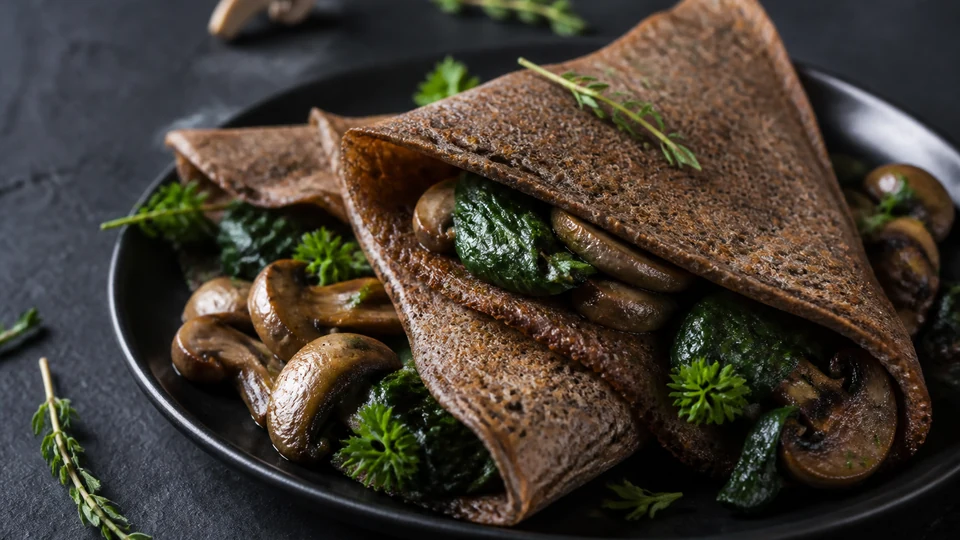
At Pancakes World, for thin savory vegan buckwheat pancakes, follow the Abel & Cole formula: whisk 250 grams sprouted buckwheat flour and 50 grams ground flaxseed with a pinch of salt, then gradually whisk in 450 milliliters almond drink until the batter is smooth and about the thickness of double cream. Cook a thin swirled layer in a lightly oiled pan over medium-high heat for about 2 minutes per side. Fill with its lime-garlic dressed tomatoes, avocado, coriander and verified vegan macadamia white. This is a source-led guide reviewed by the editorial platform , not a Pancake World kitchen test.
| Guide sections |
|---|
| Direct answer for vegan buckwheat pancakes savory |
| Evidence boundary |
| The complete primary formula |
| Step-by-step method |
For broader context, continue with Healthy Pancake Guides.
Direct answer for vegan buckwheat pancakes savory
The route is savory by design. The batter contains no sugar, syrup, vanilla or banana, and the published plate uses vegetables, herbs, chile, citrus dressing and a vegan cheese-style product. Preserve its thin-pancake method rather than pouring a thick American-style scoop and expecting the same timing.
Evidence boundary
Abel & Cole is the primary source because its recipe explicitly identifies the dish as vegan and savory, supplies a complete buckwheat-flax batter, gives a filling, describes batter consistency, and publishes heat and timing. Kimchimari provides an independent thin savory buckwheat model: Korean memil jeon with cabbage and green onion. Jessica in the Kitchen provides a separate thicker vegan buckwheat breakfast model and practical heat diagnostics, but it uses all-purpose flour and sweet ingredients in its baseline.
These formulas are not combined. The primary uses sprouted buckwheat flour, ground flax and almond drink. The Korean comparison uses Korean buckwheat flour, water and salt. The thick comparison uses buckwheat plus all-purpose flour, sugar, baking powder, plant milk, oil, vinegar, vanilla and cinnamon. Each architecture answers a different need.
No Pancake World yield, diameter, nutrition, texture verdict or exact extra-milk amount is invented. Abel & Cole states four servings but does not publish a pancake count or fixed ladle volume. Its brand-specific “macadamia white” is treated as an optional verified vegan topping category, not a product endorsement or permanent availability claim.
The complete primary formula
Batter
- 250 grams sprouted buckwheat flour
- 50 grams ground flaxseed
- a pinch of salt
- 450 milliliters almond drink
- a little additional almond drink only if the batter looks too thick
- olive oil for brushing the pan
Savory filling and dressing
- 1 garlic clove
- juice of 1 lime
- salt and pepper
- a pinch of dried chile flakes, adjusted to preference
- 1 tablespoon olive oil
- 250 grams cherry vine tomatoes
- 1 avocado
- a handful of coriander, leaves and stalks
- a jar of verified vegan macadamia white, used to dot the finished plate
The source lists four servings and a 30-minute total split into 15 minutes preparation and 15 minutes cooking. Those are source statements, not independently reproduced results.
Equipment
- digital kitchen scale for the two dry ingredients
- large bowl for batter
- jug for almond drink
- whisk
- separate bowl for the filling
- fine grater for garlic
- knife and stable cutting board
- citrus squeezer, optional
- frying pan
- brush for a thin oil film
- ladle
- broad turner
- warm plate and clean tea towel
Use separate utensils for raw batter and ready-to-eat filling. Buckwheat flour is raw flour; a turner or whisk that touched uncooked batter should not be set directly into the tomato bowl.
Step-by-step method
- Verify the flour. The source names sprouted buckwheat flour. Do not silently use buckwheat groats, cooked buckwheat, pancake mix or wheat flour and preserve the source label.
- Check every package. Confirm that almond drink, macadamia white and any optional sauce meet vegan, allergen and gluten-control requirements for the eater.
- Weigh the batter ingredients. Put 250 grams sprouted buckwheat flour and 50 grams ground flaxseed into a large bowl. Add a pinch of salt and whisk the dry mixture.
- Add almond drink gradually. Measure 450 milliliters into a jug. Pour slowly while whisking rather than dumping it all into one spot.
- Judge the published consistency. The source describes a smooth batter about as thick as double cream. If it looks a little thick, the source permits a little more almond drink but gives no fixed amount. Make any addition small and recorded.
- Set the batter aside. The source has the batter wait while the filling is prepared. It does not publish a minute-based batter rest.
- Build the dressing. Finely grate one peeled garlic clove into the separate bowl. Add the juice of one lime, a good pinch of salt and pepper, chile flakes to preference, and 1 tablespoon olive oil. Stir.
- Prepare the vegetables. Halve 250 grams cherry vine tomatoes. Halve, pit and cut one avocado into small chunks. Add them to the dressing.
- Add coriander. Roughly chop a handful, including leaves and stalks as the source directs, and fold it into the dressed vegetables. Set aside away from raw batter.
- Preheat the pan. Brush the base with a little olive oil and warm it over medium-high heat.
- Cook one diagnostic pancake. Ladle in a small amount and immediately swirl the pan to form a thin layer, adding a little batter only to close gaps.
- Set the first side. Cook about 2 minutes, until the pancake is set and golden underneath.
- Turn with support. Use a broad turner to flip carefully. Cook the second side for about 2 minutes.
- Hold it warm. Slide onto a warm plate and cover with a clean tea towel as the source instructs.
- Repeat consistently. Brush with more oil as needed and continue until the batter is used. Since no ladle size or pancake count is published, aim for similar thin layers rather than a guessed yield.
- Assemble at serving. Divide pancakes among four plates, add tomatoes, avocado and dressing, then dot with verified vegan macadamia white.
The method above paraphrases the source and adds only conservative separation and diagnostic cues. It does not claim this batch has been cooked or tasted by Pancake World.
What the reader needs to know
Savory is a complete architecture, not a missing syrup
The batter has no sweetener, and the topping system is deliberately acidic, herbal, lightly hot and vegetable-forward. If a cook makes the unsweetened buckwheat pancake but serves it with maple syrup, that is a personal sweet variation, not the exact user intent of this page.
For the savory baseline, keep at least one of the source's defined serving systems: lime-garlic tomatoes and avocado with coriander, or a separately sourced savory buckwheat model such as the Korean cabbage-and-green-onion comparison. Do not add every option to the same pancake.
This is a thin pancake
Abel & Cole tells the cook to ladle a little batter, swirl it into a thin layer and fill gaps. That method is closer to a savory crepe than a tall griddle stack. A large fixed scoop poured into the center without swirling creates a deeper object that cannot inherit the same 2-minute timing.
The visual goal before the turn is a set surface and golden underside, not American-style height. Use the first pancake to calibrate ladle volume for the particular pan, then repeat that personal amount without publishing it as the source's measure.
Ground flax is part of the flour system
The formula weighs 50 grams ground flaxseed beside 250 grams sprouted buckwheat flour. Do not replace ground flax with whole seeds or treat it as an optional garnish. Particle form matters to how it disperses through the batter.
Do not pre-hydrate it as a separate “flax egg” unless another source says to do so. The primary source combines flour and ground flax dry, then gradually whisks in almond drink.
Sprouted buckwheat flour is the named ingredient
The source does not simply say any buckwheat flour. This guide therefore preserves “sprouted buckwheat flour” and does not guarantee a one-for-one result with dark, light, freshly milled, Korean or conventional flour.
Kimchimari documents a useful product-specific observation rather than a universal law: its author found one American organic buckwheat flour coarser and gummier than the Korean flour used for memil jeon. The author explicitly limits that finding to what was tested. This guide keeps the same limitation and does not declare all flour from one country superior.
Almond drink and macadamia topping are allergen-relevant
Almond and macadamia are tree nuts. FDA includes tree nuts among the nine major allergen categories recognized in United States packaged-food labeling. A vegan dish can still contain major allergens.
Read the exact almond drink and vegan cheese-style product labels, including cross-contact statements relevant to the eater. If tree nuts must be avoided, do not improvise a substitute under this source formula and call it verified; use an appropriately sourced nut-free batter and topping plan.
Practical options and examples
Choosing the right approach
Choose the Abel & Cole path when:
- a thin, savory, filled pancake is wanted;
- sprouted buckwheat flour and ground flax are available;
- almond drink and macadamia topping fit the eater;
- tomato, avocado, lime, garlic and coriander suit the meal;
- four plated servings are useful, while exact pancake count is not required.
Choose the Kimchimari memil-jeon path when a thinner Korean-style buckwheat pancake with cabbage and green onion is the actual target. Its source formula uses 1/2 cup Korean buckwheat flour, 9 tablespoons water, 1/4 teaspoon fine sea salt and oil, with cabbage and green onions. It makes large thin pancakes in a 10-inch pan and uses a different flour and liquid system.
Choose a thick breakfast format when the eater wants a stack rather than a wrap or filled crepe. Jessica in the Kitchen's separate formula contains buckwheat flour plus all-purpose flour, sugar and leavening, so it is not gluten-free as written and it is not the savory source formula here.
Batter diagnostics
Too thick to swirl
The primary source expressly allows a little extra almond drink when the batter looks too thick. It does not publish a tablespoon count. Add a small measured amount, whisk, and test whether a thin layer can now move around the pan.
Do not pour freely from the carton. An unlimited correction can turn a controlled batter into an unknown ratio. Record the personal addition so a repeat batch starts from evidence rather than memory.
Runs like water and leaves bare patches
Stop before adding flour. Confirm that 250 grams flour and 50 grams ground flax were weighed, the drink was 450 milliliters, and the product was almond drink rather than a concentrate that was diluted incorrectly.
The source gives no flour-addition correction. A cook may choose to experiment, but that result cannot retain the published timing or evidence status in this guide.
Tears during swirling
Swirl immediately after the batter reaches the hot pan. If it sets before reaching the edge, the pan may be too hot or the pour too small for the pan area. Change one factor on the next pancake, not the entire ingredient system.
Small gaps can be filled with a little more batter because the source permits that. Do not keep layering until the pancake becomes thick.
Sticks during the turn
Check whether the pan was brushed with olive oil, preheated, and allowed the full first-side set. Slide the turner under more of the pancake rather than lifting one fragile edge.
If the bottom is already dark while the surface is still unset, reduce heat. Jessica in the Kitchen independently recommends lowering heat when a buckwheat pancake burns outside while remaining gooey inside; use that only as a general heat diagnostic, not as evidence for the primary formula's timing.
Later pancakes cook faster
The pan can accumulate heat. Reduce the burner setting before the next pour if gold color arrives earlier than it did on the diagnostic pancake. Do not shorten cooking automatically and leave the center unset.
Common mistakes
Mistake: using buckwheat groats in place of flour
Correction: use the named sprouted buckwheat flour. Whole groats, cooked buckwheat and flour are different physical ingredients.
Mistake: substituting whole flax seeds
Correction: use ground flaxseed at the stated 50-gram weight. The source does not validate a whole-seed substitution.
Mistake: making a separate flax egg
Correction: whisk flour and ground flax dry, then add almond drink gradually. A separate hydration step belongs to other recipes, not this source.
Mistake: pouring all optional liquid at once
Correction: begin with 450 milliliters. Add only a small recorded amount if the batter is too thick to achieve the source consistency.
Mistake: using a fixed large scoop
Correction: ladle a little and swirl a thin layer. The source does not state a scoop or count.
Mistake: spreading the filling into raw batter
Correction: cook the pancakes fully, then plate them with the dressed vegetables and vegan topping. The filling is not a pan-cooked mix-in in this formula.
Mistake: assuming every vegan cheese is interchangeable
Correction: the source names a macadamia white product. A replacement needs its own label check and may change flavor, allergens and consistency.
Mistake: calling the plate gluten-free from the flour name alone
Correction: use appropriately labeled flour and all other ingredients, and control cross-contact. FDA's U.S. gluten-free label rule requires that unavoidable gluten be below 20 parts per million and excludes prohibited gluten-grain ingredients.
Mistake: tasting uncooked batter
Correction: FDA states that flour is a raw food and advises consumers not to eat raw dough or batter. Vegan batter removes egg, not the raw-flour boundary.
Explore related Pancakes World guidance on American Pancakes, American Breakfast: Pancakes, Diner Plates and Brunch, and Maple Syrup.
Sources and editorial references
Korean cabbage and green onion
Kimchimari's memil-jeon is a complete alternative, not a topping swap. It uses Korean buckwheat flour, water, salt and oil, spreads the batter very thin, places napa cabbage and green onion on the first side, then turns and presses the pancake. Follow that source's quantities and method together.
Its soy-sesame dipping sauce and gochujang sauce introduce soy, sesame and possible wheat depending on the labeled product. Verify every package; do not assume a sauce is gluten-free or vegan from its category name.
Tomato and avocado without macadamia white
Removing an optional serving product may suit preference, but the resulting plate will not reproduce the complete source presentation. Keep the lime-garlic dressing, tomato, avocado and coriander if the exact savory intent is still desired.
Lower chile heat
The source explicitly says to use as much or as little dried chile as preferred. Reducing or omitting it stays within that instruction. Do not use heat level as a proxy for food safety or freshness.
Coriander choice
The source uses both leaves and stalks. If coriander is unwanted, omitting it changes the source filling but does not require changing the batter. Choose another fresh herb only as a personal variation, not a tested equivalent.
Breakfast-stack direction
Do not add sugar, vanilla and baking powder to this thin batter by intuition. For a stack, begin with a complete source formula designed for height. The vegan breakfast pancakes guide helps separate those formats.
Coconut-flour direction
Coconut flour is not a buckwheat substitute on this evidence. Its route has a different liquid and binding problem. Use vegan gluten-free coconut flour pancakes or vegan keto coconut flour pancakes without merging quantities.
Food safety, allergens and gluten boundaries
FDA advises that raw flour, dough and batter should not be tasted because milling does not reliably destroy harmful bacteria. Keep the uncooked batter away from avocado, tomatoes, herbs and finished pancakes. Wash hands, whisk, ladle, bowl and surfaces after raw-flour contact.
Almond, macadamia, soy and sesame are relevant allergen categories depending on the chosen version. The primary source uses two tree nuts through almond drink and macadamia white. The Korean comparison's sauces commonly bring soy and sesame ingredients. Check exact labels rather than relying on the recipe title.
Buckwheat is not one of the gluten-containing grains named in FDA's regulation, but cross-contact can occur in grain production and shared kitchens. A gluten-free requirement needs appropriately labeled ingredients and controlled tools. The article cannot certify a home batch or pan.
The source uses set and golden cues plus about 2 minutes per side. It supplies no pancake-specific internal temperature. Do not invent one; cook through and inspect the diagnostic pancake before serving the batch.
Storage and make-ahead limits
The primary source tells the cook to keep pancakes warm under a clean tea towel and serve with the freshly dressed filling. It does not publish an overnight batter or assembled-pancake storage method. This guide does not promise those preparations will retain the same structure.
USDA FSIS states that leftovers can be refrigerated for 3 to 4 days or frozen for 3 to 4 months, although frozen quality can decline. Store cooked pancakes covered and separately from the wet tomato-avocado filling when practical. Cool and refrigerate promptly.
Avocado quality can change after cutting, but this article does not publish a special preservation claim. Prepare the filling close to serving for the source-led route. If storage history is uncertain, do not taste a small amount as a safety check.
Reheat pancakes until hot throughout using suitable equipment. No reheating method is claimed as Pancake World-tested for this formula.
Step-by-step checklist
First-batch record for a repeatable second batch
Because the source gives neither a ladle volume nor a pancake count, a short batch record is more useful than guessing. Record the exact flour label, almond-drink label, total extra drink if any, pan diameter, personal ladle volume, burner changes and observed number of pancakes. Keep those observations clearly marked as household results.
For the next batch, change only the item tied to an observed problem. If the first pancake would not swirl, use the recorded small liquid correction. If it darkened before setting, begin the next batch at a lower heat. If the batter behaved well but the filling was too hot, reduce only the chile, which the source already leaves to preference.
Do not turn a successful personal observation into a categorical claim. Another flour grind, pan, almond drink or ladle can change the result. The editorial source remains the published formula; the record improves repeatability for one kitchen.
Questions resolved before cooking
Can ordinary buckwheat flour replace sprouted buckwheat flour?
The primary source does not publish that substitution. Use the named flour for source fidelity. If a different buckwheat flour is used, label the batch as a personal variation and do not retain the source result as guaranteed.
Does buckwheat mean the recipe contains wheat?
Buckwheat is not a wheat ingredient, but that fact does not certify a bag or kitchen as gluten-free. FDA's labeling and cross-contact requirements still make the exact package and preparation environment relevant.
Can water replace almond drink?
Not in the primary formula on this evidence. Kimchimari uses water in a separate Korean buckwheat batter with different flour, quantities and vegetables. Follow that complete model if water is the desired liquid.
Can the batter be made the night before?
The source only sets it aside while the filling is prepared. It does not validate an overnight hold. Ground flax and flour can continue interacting with liquid, so this guide does not promise the same swirl or timing after refrigeration.
Must the pancakes be flipped in the air?
No. The source instructs the cook to use a spatula or fish slice. A broad turner supports the thin pancake and avoids an unnecessary airborne maneuver.
Can the filling be cooked into the pancake?
Not in the Abel & Cole method. It is dressed and added at serving. The Kimchimari comparison places cabbage and green onion on the first side, but that is a different batter and cooking sequence.
Is the macadamia topping required for the batter to work?
No; it is a serving element added after cooking. Omitting it changes the complete plate but not the published batter quantities. Any replacement needs a current vegan and allergen label check.
Before mixing
- [ ] Sprouted buckwheat flour and ground flax are weighed separately.
- [ ] Almond drink and macadamia topping meet vegan and allergen requirements.
- [ ] Flour and all ingredients meet the eater's gluten controls if required.
- [ ] Raw-batter tools can remain separate from the ready-to-eat filling.
- [ ] A broad turner and pan suitable for thin pancakes are ready.
Batter and filling
- [ ] 250 grams flour and 50 grams ground flax are whisked with salt.
- [ ] 450 milliliters almond drink is added gradually.
- [ ] The batter is smooth and thin enough to swirl.
- [ ] Any extra almond drink is small and recorded.
- [ ] Garlic, lime, seasoning and 1 tablespoon olive oil form the dressing.
- [ ] Tomatoes, avocado and coriander stay away from raw batter.
Cooking
- [ ] The pan has a thin olive-oil film and is preheated.
- [ ] A small ladleful is swirled into a thin layer.
- [ ] Gaps are filled without building a thick pancake.
- [ ] About 2 minutes is a source checkpoint, not proof by itself.
- [ ] The underside is set and golden before turning.
- [ ] Later heat is reduced if color accelerates.
Serving
- [ ] Pancakes are held warm on a plate under a clean towel.
- [ ] The filling and vegan topping are added after cooking.
- [ ] Four source servings are distinguished from an unstated pancake count.
- [ ] Personal yield and extra liquid are recorded as personal results.
- [ ] Leftovers are cooled, covered and stored promptly.
Related vegan pancake routes
For another griddle format, see vegan hotcakes. For a tangy gluten-free route with a different evidence system, read vegan gluten-free buttermilk pancakes. The main vegan pancakes hub keeps thin savory, thick breakfast and specialty-flour intents separate.
The reliable decision is to choose the format before mixing. Use the Abel & Cole sprouted-buckwheat and flax batter for a thin vegetable-filled plate, the Korean source for memil jeon, or a complete stack formula for thick pancakes. Do not merge their liquid, flour and timing claims.
- Abel & Cole, Savoury Buckwheat Pancakes —
https://www.abelandcole.co.uk/recipes/savoury-buckwheat-pancakes - Kimchimari, Korean Buckwheat Pancake (Memil Jeon) —
https://kimchimari.com/buckwheat-pancake-korean-winter-olympics/ - Jessica in the Kitchen, Buckwheat Pancakes —
https://jessicainthekitchen.com/buckwheat-pancakes/ - U.S. Food and Drug Administration, Questions and Answers on the Gluten-Free Food Labeling Final Rule —
https://www.fda.gov/food/nutrition-food-labeling-and-critical-foods/questions-and-answers-gluten-free-food-labeling-final-rule - U.S. Food and Drug Administration, Handling Flour Safely —
https://www.fda.gov/food/buy-store-serve-safe-food/handling-flour-safely-what-you-need-know - U.S. Food and Drug Administration, Have Food Allergies? Read the Label —
https://www.fda.gov/consumers/consumer-updates/have-food-allergies-read-label - USDA Food Safety and Inspection Service, Leftovers and Food Safety —
https://www.fsis.usda.gov/food-safety/safe-food-handling-and-preparation/food-safety-basics/leftovers-and-food-safety