Vegan brunch spread
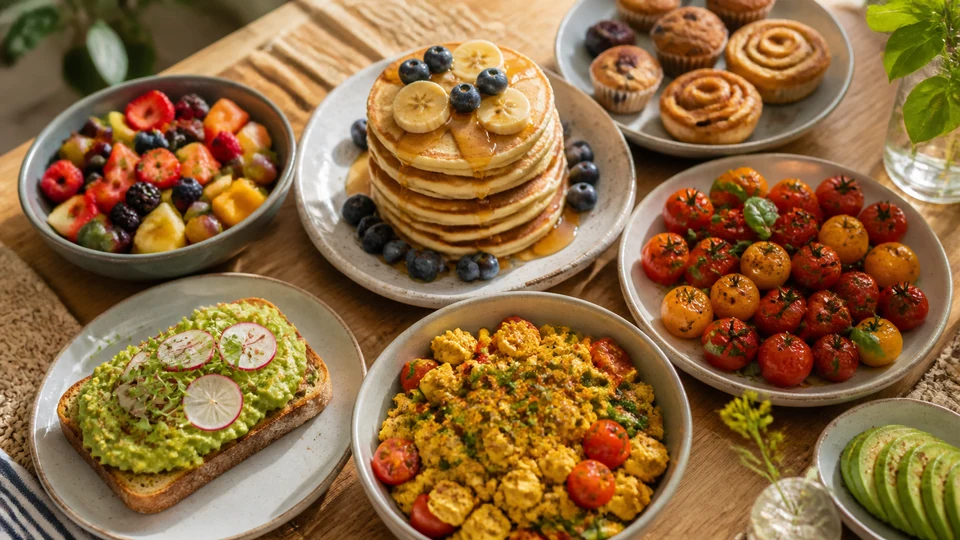
At Pancakes World, a useful vegan brunch spread needs contrast and a service plan, not a crowded table. Choose one hot centerpiece, one savory protein component, a fresh fruit or vegetable dish, bread or pancakes, two toppings, and drinks. Make at least half the menu ahead, label allergens and special ingredients, and put perishable food out in small batches so it can be held safely. A simple example is vegan pancakes, tofu scramble, roasted potatoes, fruit, maple syrup, seed butter, coffee, and tea. Scale the quantities to confirmed guests and their appetites rather than treating a display photograph as a shopping list.
| Guide sections |
|---|
| Direct answer: how to build a vegan brunch spread |
| What makes a brunch spread work |
| Three workable vegan brunch spread formats |
| Choosing the right format |
For broader context, continue with Healthy Pancake Guides.
Direct answer: how to build a vegan brunch spread
Start with six menu roles: centerpiece, savory dish, produce, starch, condiments, and drinks. For six adults, a practical planning baseline is one pancake batch yielding about three small pancakes per guest, one warm savory pan, one large fruit platter, roasted potatoes or bread, and two clearly labeled toppings. These are host-planning quantities, not universal serving rules. Confirm vegan ingredients product by product, ask about allergens separately, finish fragile hot items close to service, and reserve refrigerator or warming space before cooking. Put a modest first batch on the table and replenish it instead of exposing every perishable portion at once.
This format answers the “spread” intent: a coordinated selection people can assemble for themselves. It is not one giant recipe, and it does not require a formal buffet. The same menu can be plated family-style at a kitchen table. The parent vegan pancake guide covers the pancake component; this guide focuses on how the parts fit together.
What makes a brunch spread work
Give every dish a job
A centerpiece provides the recognizable anchor. Pancakes, waffles, a baked French-toast-style casserole made without animal ingredients, breakfast sandwiches, or a savory slab bake can take that role. Select one. Two elaborate centerpieces usually compete for oven space, attention, and appetite.
A savory protein component balances a sweet anchor. Tofu scramble, tempeh, beans, lentil patties, or a clearly labeled plant-based sausage are possible directions. USDA MyPlate lists beans, peas, lentils, nuts, seeds, and soy products among vegetarian protein-food options. That general classification supports menu variety; it does not assign a protein target or prove that a particular commercial product is suitable for every guest.
Produce adds freshness and color without requiring decorative excess. Use one fruit platter, a citrus salad, tomatoes and greens, sautéed mushrooms, or roasted seasonal vegetables. Pick produce that fits the service method. Cut melon and berries need cold holding; whole oranges and bananas behave differently. A dressed leafy salad wilts faster than roasted vegetables.
A starch or bread component gives guests an alternative to the centerpiece. Roasted potatoes, toast, bagels, biscuits, or a suitable loaf can work, but a pancake-centered menu may already contain enough cooked starch. Avoid adding items merely to fill the table. Each extra dish creates a label, utensil, storage, and timing obligation.
Condiments should solve choices rather than multiply them. Maple syrup plus one nut-free seed butter may be enough. For savory food, offer one sauce and one fresh garnish. Check all prepared condiments for animal-derived ingredients and allergens. Honey is not accepted by many vegans; dairy can appear in spreads, dressings, chocolate, and flavored sauces.
Drinks complete the spread without occupying the cooking line. Coffee, tea, water, and one juice or infused-water option are usually easier to manage than a custom beverage menu. Put plant drinks in labeled containers and keep their original packages available when guests need to review ingredients.
Vegan and allergen-safe are different claims
A vegan menu excludes animal-derived ingredients according to the host's and guests' understanding, but it does not automatically exclude wheat, soy, peanuts, tree nuts, or sesame. Many common vegan brunch foods use these ingredients. Ask about allergies and other dietary requirements before planning; do not wait until someone is standing at the table.
The FDA identifies nine major food allergens for US food labeling: milk, egg, fish, crustacean shellfish, tree nuts, peanuts, wheat, soybeans, and sesame. Packaged foods generally identify a major allergen in the ingredient list or a “Contains” statement under the applicable rules. Advisory “may contain” statements address a different cross-contact question and are not a replacement for reading the ingredient list.
Keep packages until service so guests can inspect the current label. A product bought last month may not have the same formula as a familiar version. Do not decant every ingredient into anonymous jars before the dietary review. When transferring a product for presentation, retain a label card and the original package nearby.
If one guest needs a distinct meal, use separate utensils, plates, storage containers, and preparation steps as appropriate to their requirement. This article cannot guarantee an allergen-free environment. Honest communication about shared equipment is more useful than a blanket safety claim.
Temperature and time belong in the menu design
The USDA Food Safety and Inspection Service advises holding hot buffet food at 140°F or warmer and cold food at 40°F or colder. It also states that perishable food should not remain at room temperature for more than two hours, reduced to one hour when the ambient temperature is above 90°F. Those US safety boundaries affect which dishes can sit on the table and which should arrive in batches.
Do not interpret “warm” by touch when a measured holding temperature matters. Use appropriate equipment and a food thermometer. A slow cooker or warming tray can hold a compatible savory item, while cold dishes can sit over ice. Pancakes held too long may dry out, so a rack in a low oven can be a short culinary holding step only when the chosen source recipe supports it; it is not a substitute for safe hot holding of every food.
Small platters solve several problems. They protect the reserve portion in the refrigerator or approved hot-holding setup, make the table easier to navigate, and reduce waste if attendance is lower than expected. Replace a nearly empty platter with a fresh one rather than adding new food on top of a long-exposed remainder.
Three workable vegan brunch spread formats
Pancake-table spread
Use pancakes as the only cooked-to-order centerpiece. Pair them with tofu scramble or a bean dish, roasted potatoes, fruit, maple syrup, and two textured toppings. The advantages are familiarity and visible customization. The risk is pan congestion: cooking pancakes for a group can consume the final service window.
King Arthur Baking's easy vegan pancake recipe is a direct recognized-culinary example using self-rising flour, plant milk, applesauce, oil, and lemon juice. Its method calls for gentle mixing, a short batter rest, and holding cooked pancakes on a rack in a low oven. Use that exact source only if its ingredients and method fit the group; do not extract individual measurements into a different formula and claim the same result.
For efficient service, cook a first batch shortly before guests eat, then make a smaller fresh batch if needed. Keep toppings at the table so the cook is not plating individual requests. Use one scoop size to make production predictable. If the griddle capacity is six pancakes and each round takes several minutes, calculate how many rounds the selected recipe requires before announcing a service time.
Make-ahead bake spread
Choose one oven dish that can be assembled earlier using an independently sourced vegan recipe. Add fruit, a cold bean or grain salad, suitable bread, and drinks. This moves work away from the pan but creates oven timing and holding questions. Confirm the dish's pan size, refrigeration limits, and cooking cues from its source rather than improvising a large overnight mixture.
King Arthur's brunch collection demonstrates the breadth of brunch categories, including bakes, breads, and build-your-own components, but the collection is not wholly vegan. It can support menu architecture, not ingredient suitability. Any non-vegan recipe would require a separately validated adaptation; substitution guesses do not inherit the original recipe's authority.
The make-ahead format works best when cold components are finished before the hot dish enters its final cooking period. Set the table, prepare drink stations, arrange whole fruit, and label condiments early. Dress delicate salad and slice heat-sensitive foods near service.
Build-your-own savory spread
Offer warm beans or tofu, roasted vegetables, potatoes, bread or tortillas, avocado or another fresh component, and two sauces. Guests assemble bowls, toast, or wraps. This format accommodates different appetites without requiring multiple finished entrées.
Keep the architecture clear. One warm protein, two vegetables, one starch, and two condiments are enough. If every possible topping is included, labels multiply and the line slows. Place items in assembly order and give each its own utensil. Position allergen-containing toppings at the end or in a separate area when appropriate to the guest plan.
This version can also include a small sweet item rather than pancakes. A tray of fruit and a sourced vegan breakfast bake may be easier to replenish. The spread remains brunch because of the combined service context, not because every recognizable breakfast food is present.
Choosing the right format
Match the menu to the kitchen
Inventory the oven racks, burners, refrigerator shelves, counter space, serving platters, and electrical outlets. A slow cooker and warming tray both need safe placement and power. A narrow kitchen cannot support three cooks turning, roasting, and blending simultaneously.
If the oven handles the centerpiece, use room-temperature or cold accompaniments. If the griddle handles pancakes, roast potatoes earlier or remove them from the plan. If refrigerator space is limited, avoid multiple large chilled bowls. The menu should flow through the available equipment rather than requiring equipment the host does not own.
Match complexity to the guest count
For two to four people, one hot dish, fruit, bread or pancakes, and drinks can feel complete. For five to eight, add one savory component and a second topping. For a larger group, simplify individual choices and use batch-friendly dishes with documented scaling. These bands are planning suggestions, not nutrition-based portion standards.
Confirm the attendance deadline and ask guests to identify dietary requirements privately. Plan a modest reserve rather than doubling every item. Reserve foods can remain correctly stored and be brought out only when needed.
Match the schedule to freshness
Write three lists: two days before, the day before, and the final hour. Shopping, label verification, dry measuring, sauce preparation, and table setup belong earlier. Fruit cutting, batter mixing, hot cooking, and delicate garnish belong later according to the selected recipe and safety guidance.
Do not refrigerate or hold a batter overnight unless its source explicitly provides that method. Chemical leavening and hydrated flour can change during storage. Instead, premeasure the dry and wet components separately if the recipe permits, then combine at the correct time.
Quantity planning without pretending there is one serving size
Begin with the number of confirmed guests and the number of substantial menu items. A brunch with pancakes, scramble, potatoes, fruit, and bread needs smaller allocations of each than a brunch consisting only of pancakes and fruit.
Use source recipe yields as the unit. If a recipe says it yields eight four-inch pancakes, decide how many such pancakes fit the rest of the menu. Multiply complete batches cautiously and check pan capacity. Scaling baking powder, salt, and binder by guesswork can distort a batter; two normal batches may be easier to mix than one enormous bowl.
For a build-your-own spread, calculate components by assembled plate. Decide whether a typical plate contains one scoop of the warm filling, one scoop of potatoes, vegetables, and bread. Measure the serving utensil, then multiply by guests and add a transparent reserve. This is operational planning, not a dietary recommendation.
For fruit, buy by edible portions and preparation loss rather than decorative abundance. Whole berries need little trimming; pineapple, melon, and citrus produce peels or cores. Avoid presenting an exact universal amount because fruit type and menu role vary.
Drinks depend on duration, weather, and whether guests bring their own. Provide water regardless. Brew coffee in a planned first quantity with the ability to make more instead of letting a large pot decline for hours.
A 24-hour production plan
The day before
- Confirm headcount, arrival time, and dietary requirements.
- Finalize one menu version and stop adding dishes.
- Shop with the ingredient and allergen list in hand.
- Photograph or retain labels for packaged products.
- Prepare source-approved sauces, spreads, or bake components that can be held overnight.
- Wash serving pieces and assign each dish a vessel and utensil.
- Clear refrigerator space and check the appliance temperature.
- Write the cooking order backward from service.
Three hours before
- Set the table and beverage station.
- Prepare oven-safe dishes according to their source recipes.
- Cut sturdy vegetables and begin any documented roasting process.
- Place labels and packages in a reference area away from food preparation.
- Chill platters intended for cold food if useful and safe for the material.
- Set out clean storage containers for leftovers before the kitchen becomes busy.
One hour before
- Start the longest hot component.
- Prepare cold dishes and return them to refrigeration.
- Mix pancake batter only at the source-directed time.
- Heat approved holding equipment and verify it operates as expected.
- Arrange shelf-stable condiments but keep perishables controlled.
- Put a visible start time on foods that enter room-temperature service.
At service
- Put out a small first batch of each perishable dish.
- Label dishes in plain language and flag key allergens without promising absence of unlisted hazards.
- Give every bowl its own utensil.
- Keep reserve cold food refrigerated and reserve hot food safely held.
- Replenish with a clean platter rather than topping up an old one.
- Monitor time and temperature instead of relying on appearance.
Common mistakes
Planning for a photograph. A display with twelve dishes may look abundant but creates cold food, duplicate starches, and exhausted hosts. Plan for eating and service.
Making every item hot. The last pan waits while the first one cools. Balance hot anchors with cold or room-temperature components that are appropriate for that service.
Assuming a product is vegan from its category. Bread, chocolate, dressings, sausage alternatives, and mixes require current label review.
Treating vegan as allergen-free. Soy, wheat, peanuts, tree nuts, and sesame are common in vegan food.
Using one utensil for several dishes. Shared utensils transfer ingredients and confuse labels. Assign and replace them.
Putting all food out at once. Small-batch service is easier to control and reduces prolonged exposure.
Scaling an unfamiliar recipe for the first time. A double batch can change mixing and cooking logistics even when ingredient arithmetic is correct.
Holding pancakes in a sealed stack. Trapped steam softens surfaces. Use the holding method specified by the chosen recipe.
Leaving toppings unlabeled. A sauce or spread may carry the ingredient most relevant to a guest.
Promising a “healthy” spread. That broad term hides individual needs and unsupported judgments. Describe the actual dishes and ingredients.
Inventing nutrition totals. Different products, batch yields, and guest portions defeat a universal estimate. Calculate only from verified inputs for a defined purpose.
Forgetting leftovers. Storage space and shallow containers need to exist before service ends.
Variations for different gatherings
Small table for two
Make one sourced pancake recipe at its normal scale or a documented small-batch version. Add fruit and one savory side. Put condiments in their normal containers rather than creating a miniature buffet. The host should be able to sit down while the food is hot.
Family brunch for six
Use the six-role framework: pancakes, tofu scramble, roasted potatoes, fruit, syrup and seed butter, plus drinks. Prepare potatoes first, hold the scramble only through a source-supported service window, and make pancakes near the end. Offer a second batch only if the first is consumed.
Potluck
Assign categories, not vague requests. Ask one person for a clearly labeled vegan savory dish, another for fruit, another for bread, and another for drinks. Require ingredient information and storage instructions. Do not assume a guest-prepared dish meets another guest's allergen needs.
Outdoor brunch
Reduce the menu to foods that can be transported and held with the equipment available. Use coolers with adequate ice or cold sources for perishable food, protect the serving area from sun, and follow the USDA's shorter one-hour room-temperature boundary when ambient temperature exceeds 90°F. Avoid fragile cream-style toppings without reliable cold holding.
Gluten-free and vegan
Use a recipe specifically designed for both requirements and verify every mix, plant milk, leavener, topping, and preparation surface. A vegan pancake based on wheat remains unsuitable. Consider making the entire pancake batch gluten-free when that reduces cross-contact complexity, subject to the guests' needs.
Nut-free planning
Replace nut butter with a suitable seed spread only after checking its label and the guest's specific allergy requirements. Plant milks made from oats, rice, soy, or other sources have their own ingredient and cross-contact questions. “Nut-free” should not be promised from a casual substitution alone.
Final host checklist
- One centerpiece selected.
- One savory component selected.
- One produce component selected.
- Optional starch justified rather than duplicated.
- Two condiments checked and labeled.
- Drinks planned away from the cooking line.
- Attendance and dietary requirements confirmed.
- Current packaged labels retained.
- Separate utensils assigned.
- Oven, pan, refrigerator, and holding capacity checked.
- Recipe yields converted into realistic batches.
- Day-before and final-hour jobs separated.
- Hot and cold holding equipment available.
- Small replacement platters ready.
- Perishable-food service time recorded.
- Shallow leftover containers available.
- No medical, nutrition, or allergen guarantee attached to the menu.
Service blueprint for a six-person pancake spread
This example translates the planning framework into a sequence without presenting an untested house recipe. Select a published vegan pancake formula with a stated yield, then use its full batches. If one batch yields eight small pancakes and the menu goal is roughly three per guest, three batches provide twenty-four pancakes and a visible reserve. The arithmetic is a hosting estimate; actual appetite and pancake size decide what is eaten. Mixing three separate normal batches may preserve the source method better than placing triple quantities in one oversized bowl.
The supporting menu is one pan of tofu scramble from a source the host has chosen, one tray of roasted potatoes, one fruit platter, maple syrup, and a seed or nut spread suitable for the group. Coffee, tea, and water remain self-service. There is no extra bread because pancakes and potatoes already fill the starch roles. There is no second sweet bake because the fruit and pancake toppings provide a sweet path.
Equipment map
Assign the oven first. Potatoes use it during the early phase; a rack and sheet pan can then provide the brief pancake-holding setup described by the selected pancake source. The hob uses one pan for scramble and one griddle or skillet for pancakes. If there are only two burners, hot-water preparation for tea waits until the scramble leaves its burner or uses an electric kettle placed away from the food line.
Reserve one refrigerator shelf for fruit and other perishable cold items. Place the backup platter there, covered, until needed. Keep plant milk refrigerated except while it is being poured or used. Put original packages and ingredient notes in one reference basket where guests can read them without entering the cooking area.
Every serving dish receives its utensil before food arrives. Use a wide spatula for pancakes, a serving spoon for scramble, tongs or a spoon for potatoes, and separate spoons for each condiment. This assignment prevents the common final-minute search that leads to one spoon moving between bowls.
Backward schedule
At the announced eating time, the first pancakes should be ready, the scramble and potatoes should be hot, and the cold food should just have reached the table. Work backward from that point.
Forty-five to sixty minutes earlier, begin the potatoes according to their sourced recipe and actual cut size. This range is a scheduling placeholder, not a cooking direction; the recipe's directions and doneness cues control. While the potatoes cook, arrange beverages, labels, serving utensils, and shelf-stable condiments.
About thirty minutes before service, prepare the scramble ingredients and keep cold items refrigerated. About twenty minutes before, start the scramble if its source method fits that interval. Mix only the first pancake batch at the moment its formula directs, allowing its required rest. Preheat the griddle during that rest when the source recipe uses that sequence.
Cook predictable rounds with the same scoop. Transfer finished pancakes to the source-approved rack setup rather than sealing them under a lid. Begin the next normal batter batch only when the first batch's behavior is known and demand justifies it. A reserve of measured dry and wet components can speed the second mix without allowing hydrated batter to stand indefinitely.
Five minutes before eating, transfer a small portion of fruit to its platter, bring the first batch of hot foods to the service area, and check that each label matches its dish. Tell guests what is available and which foods have relevant allergens. Keep reserve perishables under temperature control.
What to do when one component is late
If potatoes need more time, do not start the final pancakes merely to preserve the written schedule. Hold the scramble only by an appropriate safe method, delay batter mixing if possible, and tell guests the realistic service time. If pancakes are slow, serve the savory dishes and fruit first only if that matches the gathering style; otherwise keep the supporting dishes controlled and reduce pancake scoop size for later rounds rather than turning up heat until surfaces burn.
If a guest arrives late, do not leave a personal plate at room temperature for an open-ended period. Keep reserve components stored safely and assemble a fresh plate when the person arrives. Delicate pancakes can be reheated according to a source-supported method, or a small fresh batch can be cooked if ingredients and time remain.
If attendance is lower than expected, stop production before mixing every reserved batch. Dry and wet ingredients that remain separate may be easier to repurpose than a large bowl of activated batter. Leave packaged toppings closed and keep fruit uncut where possible. Abundance is not measured by how much food must become leftovers.
Clearing the spread
Record when perishable dishes entered uncontrolled room-temperature service. Return eligible food to storage before the USDA time boundary, using shallow containers for prompt cooling where appropriate. Do not mix a fresh reserve with an older served portion. Discard food when the safety boundary or uncertain handling makes that necessary.
Label containers with the item and date. Decide which leftovers tolerate reheating and which are better served cold or not retained. USDA FSIS says most cooked leftovers should be used within three to four days and reheated leftovers should reach 165°F; apply that government guidance to foods within its scope and follow more specific source directions where they are stricter.
Clean the beverage and condiment area as well as the hot-food line. Shared spoons, drips, and crumbs may contain allergens even when the remaining sealed product does not. Preserve any notes about quantities actually used; they improve the next gathering without turning one event into a universal serving standard.
A good spread makes the host's decisions visible and keeps the guest's choices understandable. Pancake World frames the menu as a practical system: fewer deliberate dishes, documented ingredients, controlled service, and enough flexibility to fit the actual gathering.
Explore related Pancakes World guidance on American Pancakes, American Breakfast: Pancakes, Diner Plates and Brunch, and Maple Syrup.
Sources and editorial references
- Keep Food Safe: Food Safety Basics —
https://www.fsis.usda.gov/food-safety/safe-food-handling-and-preparation/food-safety-basics/steps-keep-food-safe - Food Allergies —
https://www.fda.gov/food/nutrition-food-labeling-and-critical-foods/food-allergies - Brunch Recipes —
https://www.kingarthurbaking.com/recipes/collections/brunch-recipes - Easy Vegan Pancakes —
https://www.kingarthurbaking.com/recipes/easy-vegan-pancakes-recipe - MyPlate Protein Foods Group —
https://www.myplate.gov/web/web/eat-healthy/protein-foods