Vegan brunch potluck ideas
At Pancakes World, the best vegan brunch potluck ideas are dishes assigned by transport lane before anyone cooks. Ask one guest for a chilled protein dish such as tofu-and-bean salad, one for a fully cooked hot centerpiece such as baked falafel or bean casserole, one for vegan pancakes or another baked item, and others for whole fruit, vegetables, verified breads and labeled sauces. Cold perishables travel at 40°F or below; hot food travels and holds at 140°F or above. Give every dish its own serving utensil and ingredient card, track cumulative buffet time, use small refill dishes, and discard perishables after two uncontrolled hours—or one hour above 90°F.
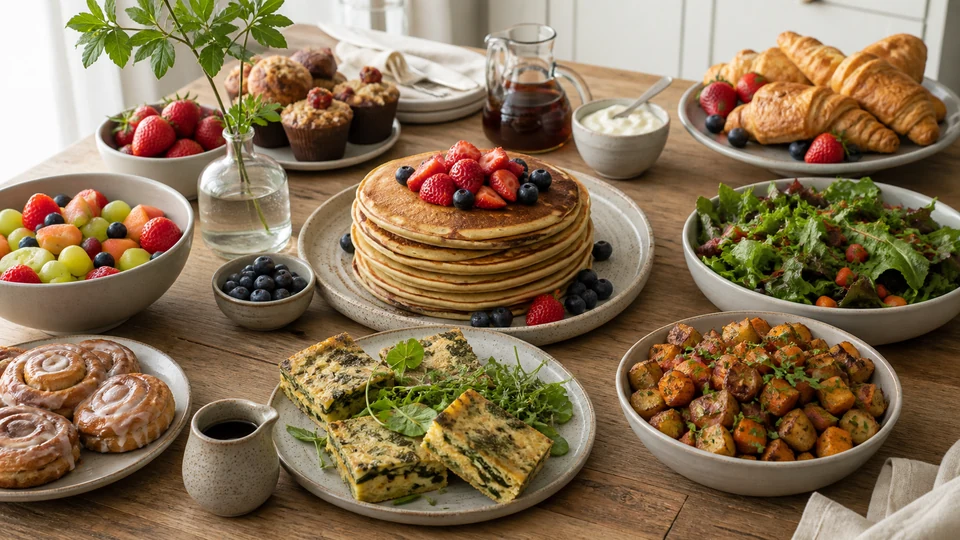
A potluck differs from an ordinary brunch because food comes from several kitchens, travels for different lengths of time and arrives with uneven ingredient information. The menu therefore needs assignments, receiving rules and a leftover decision before invitations go out. This page supplies that operating system, not untested recipes.
For broader context, continue with Healthy Pancake Guides.
Start with transport lanes, not a wish list
Each contributor should claim one lane and one role. A dish that cannot stay inside its lane should be changed before the event.
Cold lane
Cold dishes leave the contributor’s refrigerator in a clean covered container, ride in a cooler with enough ice or frozen packs, and return to refrigeration or an iced service setup on arrival. Penn State Extension advises keeping cold foods at 40°F or below and placing beverages in a separate cooler so the food cooler is opened less often.
Good cold-lane roles include a complete tofu salad, bean salad, chilled grain-and-legume dish, cut fruit, vegetable platter, hummus or another tested dip, and plant beverages. Cut fruit and prepared dips are perishable; “vegan” does not make them safe at room temperature.
Hot lane
A hot contributor finishes cooking before departure, packs food in a clean insulated carrier designed for hot transport, and confirms that the host has compatible holding equipment. Hot food should remain at 140°F or above under federal buffet guidance.
Possible roles include baked falafel, a source-tested lentil or bean casserole, tofu scramble, cooked breakfast potatoes or another complete hot dish. A household slow cooker is useful only when the recipe and appliance support the dish and the host has electrical capacity.
Shelf-stable support lane
Whole uncut fruit, certain sealed packaged foods and other products that the manufacturer labels for room-temperature storage can reduce cooler and oven pressure. Verify the package storage instruction; do not classify a homemade baked item as shelf-stable by appearance.
This lane works for tableware, tea bags, coffee supplies, sealed condiments and verified breads when their labels permit it. Once food is cut, mixed with perishable ingredients or opened, its handling needs can change.
Cook-on-arrival lane
Use this lane sparingly. Pancakes and waffles can be appealing, but they consume a burner or appliance, counter space and one cook’s attention. The contributor must confirm equipment, outlet capacity, cleanup and safe raw-batter handling with the host.
Bring a complete tested vegan formula, measured ingredients in separate safe containers, and dedicated utensils. Never transport an improvised batter with unknown storage time. Do not taste raw batter.
Assign six potluck roles
The host should fill roles, not collect five versions of the same dish.
1. Protein-centered main
Assign at least one substantial dish based on tofu, tempeh, beans, lentils, chickpeas, edamame, nuts or seeds as suitable for the group. Utah State University Extension emphasizes variety across plant foods and identifies these as useful protein options. The exact dish still needs a complete recipe.
2. Baked or griddled brunch item
Vegan pancakes, waffles, muffins, quick bread or a savory bake fill the familiar brunch role. Choose one or two. Every batter must come from a formula developed without animal ingredients; deleting eggs or milk at the event is not a recipe.
3. Vegetable dish
A chilled salad, roasted vegetables, tomato-cucumber plate or vegetable-and-bean combination adds contrast. State whether the dish belongs in cold or hot holding and whether its dressing contains sesame, soy, nuts or another allergen.
4. Fruit dish
Whole fruit is simplest. Cut fruit needs clean preparation, covered cold transport and a chilled service plan. Avoid an unlabeled glaze, dairy garnish or honey.
5. Bread, grain or potato support
Verified bread, a complete grain dish or source-tested potatoes can support the centerpiece. Check bakery products for milk, egg, honey and shared-equipment statements. A grain salad may also need cold holding.
6. Sauce, spread and beverage
Ask one person to coordinate sauces so every contributor does not bring a separate open jar. Label hummus or tahini for sesame, nut butter for the named nut, and creamy vegan products for soy, nuts or other ingredients. Keep plant beverages at the temperature stated on the package after opening.
Fourteen transport-aware dish ideas
These are selection patterns. Use the named authoritative recipe where provided or choose another complete reliable formula for quantities, timing and yield.
1. Long-bean and tofu salad
Illinois Extension publishes a complete tofu-and-long-bean salad that can be served warm or chilled. For potluck use, the chilled lane is easier to verify: prepare by the source method, cool under its directions, pack at 40°F or below and transfer to refrigeration on arrival.
The published formula includes soy and peanut. The ingredient card must identify both. Do not remove visible peanuts and call the already mixed dish peanut-free.
2. Baked falafel
Colorado State University Extension’s baked falafel offers a complete chickpea-patty option. It can act as a hot centerpiece or, only if the source supports it, a chilled component. Follow the source’s amounts, portioning and baking sequence.
Transport with the sauce separate. Check flour, sesame and bread. Do not wrap hot patties tightly for a long trip without a verified hot-holding plan.
3. Tested bean casserole
A bean casserole can feed a group and hold in compatible hot equipment. Choose a vegan recipe that states pan dimensions, safe cooking, yield and holding or reheating. Confirm the host’s oven or warming capacity before volunteering it.
Do not partially cook at home and finish after an uncontrolled trip. Cook completely, maintain safe hot transport, or transport cold and use an approved reheating plan at the destination.
4. Lentil bake or loaf
A sliceable lentil dish travels neatly when a reliable formula controls binder, moisture and pan depth. It is not automatically gluten-free or nut-free. Check breadcrumbs, oats, sauce and binder ingredients.
Carry the serving knife and a clean platter. If it is served hot, keep it in the hot lane; if the recipe supports chilled service, cool and transport it in the cold lane.
5. Vegan breakfast burritos
Burritos are portable only when their complete formula and handling are controlled. A tofu or bean filling, vegetables and verified tortilla can form the dish. Prepare with a tested method and avoid overfilling or wrapping food while it is lingering at a warm temperature.
Choose either safe hot transport or complete cooling followed by cold transport and verified reheating. Attach reheating instructions. Do not ask the host to guess whether the center is hot.
6. Vegan pancakes
Pancakes can arrive fully cooked or be cooked on site. Fully cooked pancakes require a recipe-defined cooling, transport and reheating plan. On-site pancakes require reserved equipment and clean raw-batter controls.
Bring toppings in labeled containers. Keep fruit, vegan yogurt-style products and opened plant beverages cold. Nut or seed butter needs its own utensil.
7. Baked oatmeal
Use a vegan baked-oatmeal formula that states the binder, plant beverage, pan size, bake time and storage. Decide whether it arrives hot or fully chilled; an uncovered warm pan in a car is not a transport plan.
Label oats, nuts, seeds, soy and plant-beverage allergens as applicable. Gluten-sensitive guests need product and cross-contact verification beyond the word vegan.
8. Savory muffins
Savory muffins are easy to portion, but their storage classification comes from the formula and ingredients, not the shape. A vegetable- or legume-containing muffin may need refrigeration.
Keep the source recipe, yield and ingredient card together. Transport in a covered food-safe container and use tongs rather than repeated bare-hand contact.
9. Bean and grain salad
A complete bean-and-grain salad can combine the cold protein and starch roles. Use a source that defines grain cooking, dressing, cooling and storage. Pack the serving spoon with the covered container.
Avoid adding fresh herbs, vegetables or dressing after an uncontrolled trip. Finish at home under clean conditions or assemble on arrival only if the host has an appropriate preparation space.
10. Hummus and vegetables
Hummus can provide a chickpea-based spread when made from a complete recipe or supplied in a sealed labeled package. Sesame from tahini is a major allergen. Keep the dip cold and use a smaller service bowl nested in ice or replaced on a timed schedule.
Vegetables should be washed and cut at home, packed separately and kept cold. Do not return pieces that guests handled to the storage container.
11. White-bean spread and verified bread
A complete white-bean spread offers a sesame-free alternative only if its recipe and handling truly exclude sesame and cross-contact. Do not advertise it as free-from without checking every ingredient and utensil.
Keep spread cold. Leave bread in its original package or bring the full label. Use one spreader per bowl and a clean bread basket for refills.
12. Roasted vegetable platter
Roasted vegetables can travel hot in proper equipment or cold after complete cooling. Choose the lane before cooking. A tray that cools slowly during transit may spend too long uncontrolled.
Pack dressing separately when the recipe permits. Identify nuts, sesame or soy in garnishes and sauces.
13. Fruit salad
Fruit salad is a cold dish. Prepare with clean equipment, cover it, transport with ice packs and place only a small portion on the buffet. Refill from the refrigerator or cooler.
Whole berries and cut melon still require careful handling. Do not rely on citrus juice or appearance as a preservation method.
14. Whole-fruit basket
Whole, clean fruit can support the shelf-stable lane and gives guests a simple option with minimal shared-utensil contact. Choose intact fruit and wash it according to current produce guidance before the event if it will be eaten with the peel.
Keep whole fruit separate from cut fruit and perishable dips. Once cut, move it into the cold lane.
Host message that prevents duplicate dishes
Send one structured request rather than “bring something vegan.” Include:
- event date and serving time;
- expected number of guests;
- assigned role and preferred transport lane;
- travel duration requested from each contributor;
- available refrigerator, freezer, oven, burner, outlet and counter capacity;
- whether cooking on arrival is permitted;
- required ingredient and allergen card;
- requirement for a dedicated serving utensil;
- arrival temperature expectation for hot or cold food;
- leftover and container-return plan.
Do not promise equipment until it has been counted. Four contributors cannot all use one outlet, one oven rack or the same refrigerator shelf.
Contributor dish card
Every homemade dish should arrive with a readable card:
| Field | What to record |
|---|---|
| Dish name | Plain descriptive name |
| Prepared by | Contributor name |
| Complete ingredients | Including packaged sub-ingredients where known |
| Major allergens | Milk, egg, fish, crustacean shellfish, tree nut by type, peanut, wheat, soy, sesame |
| Cross-contact | What could not be controlled |
| Serving lane | Cold, hot, source-verified ambient or cook-on-arrival |
| Departure time | When food left safe holding |
| Arrival time and temperature | Measured for perishable hot or cold dishes |
| Source recipe | Enough information for the host to identify it |
| Leftover instruction | Source-specific plus host time record |
FDA requires packaged foods to identify major allergen sources. For a homemade potluck dish, keeping product packages and transcribing the complete information helps the host answer questions. Never guess when a guest asks about an allergy.
Departure checklist for contributors
Finish food early enough to pack without rushing but not so early that it sits out. Wash hands. Use clean covered food-safe containers. Pack the ingredient card and dedicated utensil.
For the cold lane:
- chill the completed dish fully under its recipe instructions;
- start with a clean cooler;
- pack directly from the refrigerator;
- surround food with sufficient ice or frozen packs;
- add a thermometer;
- keep drinks elsewhere;
- carry the cooler in the air-conditioned passenger area rather than a hot trunk.
For the hot lane:
- cook completely under the source recipe;
- preheat the approved insulated carrier if its instructions call for it;
- pack immediately in a covered container;
- minimize travel stops;
- measure on arrival;
- transfer to verified hot holding.
If safe temperature cannot be maintained, choose a cold dish or a manufacturer-labeled shelf-stable contribution.
Receiving table at the host’s home
The host or one delegate should receive every dish before it reaches the buffet.
- Read the dish card.
- Confirm the assigned role and lane.
- Record arrival time.
- Measure perishable food with a clean thermometer where appropriate.
- Put cold food in the refrigerator or iced holding.
- Put hot food into working hot-holding equipment.
- Keep shelf-stable support covered until service.
- Set aside anything with unknown ingredients, uncertain time or unsafe temperature.
Do not “rescue” a dish with an unknown history by quickly reheating it. Reheating does not erase every risk created by improper holding.
Plan for a venue or equipment failure
The host needs a fallback before food is in transit. A refrigerator shelf can become unavailable, an outlet can trip, a warming appliance may not fit, or an outdoor table can move into direct sun. The fallback must preserve the food’s lane rather than rely on serving it quickly and hoping for the best.
For cold food, reserve additional clean coolers, frozen packs and thermometers. Do not use the beverage cooler as emergency food storage unless it can remain closed and hold 40°F or below. Keep replacement ice protected from food and melting-water contamination.
For hot food, identify which single centerpiece has priority in the available holding equipment. If another dish cannot remain at 140°F or above, use its documented safe alternative only when the source supports one—for example, immediate service within a tracked limit or complete cooling and cold transport arranged before departure. Do not allow a hot casserole to drift to lukewarm while waiting for an outlet.
For an outdoor move, bring shade, stable tables and covered serving containers. The one-hour limit above 90°F applies to uncontrolled perishables, so record the ambient condition and shorten the service window. A table moved indoors does not reset time already accumulated outside.
The cancellation rule should also be explicit: a contributor whose cooler fails, journey is substantially delayed, or temperature history is unknown should bring the sealed shelf-stable backup or arrive without the dish. The menu can lose one item; it cannot recover reliable safety evidence after it has been lost.
Design the buffet for safe refills
USDA FSIS advises keeping cold buffet food at 40°F or colder and hot food at 140°F or warmer. When holding equipment is unavailable, use small platters and replace them within the applicable time limit.
Label every dish before guests arrive. Place one utensil with each. Put verified allergen-restricted dishes at a separate end or separate table with their own utensils. Do not place loose bread above a gluten-controlled dish or nut topping beside an uncovered nut-free option.
Start a timer when perishable food leaves control. Exposure is cumulative: preparation, travel, waiting and buffet service all matter. University of Minnesota Extension flags no more than two cumulative hours at room temperature for a potluck without holding equipment.
Refill with a clean dish. Do not add new food on top of an old platter. Move the old dish away, replace the utensil and record the new batch’s time. Small service vessels protect both temperature and quality.
Use clean plates for return trips. Discourage guests from tasting with serving utensils. Keep beverage traffic away from the main food line.
Allergen controls without false reassurance
Vegan removes animal-derived foods, but common potluck ingredients include wheat, soy, sesame, peanuts and tree nuts. A vegan label does not answer an allergy question.
Before assigning dishes, ask guests what they avoid and what cross-contact control they require. If a severe allergy is present, a multi-kitchen potluck may not support the needed assurance. State that limitation plainly and agree on a safer individual option.
For a controlled alternative:
- choose a complete recipe developed for the restriction;
- buy products with suitable labels;
- clean the preparation area and equipment;
- prepare it before other dishes;
- cover and label it immediately;
- transport it separately;
- keep it away from shared topping bars;
- give it a dedicated utensil.
Never remove nuts, croutons or another visible ingredient after preparation and relabel the dish. Never promise “gluten-free” because a dish contains no obvious wheat.
A potluck menu matrix
This sample assignment avoids stove and cooler overload. It does not set quantities; calculate those from each complete source recipe and guest count.
| Contributor | Dish role | Example | Lane | Critical control |
|---|---|---|---|---|
| A | centerpiece | baked falafel | hot | insulated transport and hot holding |
| B | cold protein | tofu-and-long-bean salad | cold | soy/peanut label and cooler |
| C | griddle/bake | cooked vegan pancakes | recipe-defined | topping labels and reheat plan |
| D | vegetable | roasted vegetable platter | chosen hot or cold | no uncontrolled cooling in transit |
| E | spread | hummus | cold | sesame label and small-bowl refill |
| F | fruit | whole fruit plus small cut-fruit batch | split | cut fruit stays cold |
| Host | beverages and bread | labeled products | package rule | protect restricted dishes from crumbs |
The host should decline extra dishes that duplicate a filled role or cannot be held safely. A smaller controlled menu is more useful than an overflowing uncertain table.
Leftover decision before cleanup
Do not assume every potluck leftover should go home. The host’s time record controls the first decision.
Discard perishable food after more than two uncontrolled hours, or more than one hour when ambient temperature is above 90°F. Discard a dish with unknown cumulative time. University of Minnesota Extension also advises discarding ready-to-eat food that could have been contaminated by guests.
Eligible leftovers should be moved into clean shallow containers and refrigerated promptly. Label contents and date. USDA FSIS generally gives cooked leftovers a three-to-four-day refrigerated window and advises reheating to 165°F.
Do not pour several contributors’ leftovers into one container. That destroys ingredient, allergen and time records. Return containers only after food has been transferred safely or discarded; wash them rather than sealing uncertain buffet remnants inside for a long trip.
Common potluck failures and fixes
Everyone brings a baked starch
Fix: assign roles and approve dishes before shopping.
The host has one crowded refrigerator
Fix: measure space, prioritize cold protein and cut fruit, and move suitable support items to verified shelf-stable forms.
Three guests plan slow cookers
Fix: count outlets and circuits, approve one hot-holding centerpiece, and reassign other contributors to cold dishes.
A contributor says “probably vegan”
Fix: require the full ingredient card and packages; otherwise keep the dish off the verified vegan table.
A warm casserole arrives without a temperature history
Fix: do not place it on the buffet. Unknown holding is not corrected by optimism or a quick warm-up.
Fresh food is added to a half-empty tray
Fix: replace the tray and utensil with clean ones.
Guests move serving spoons
Fix: use distinctive utensils, clear labels and a buffet monitor for refills.
Leftovers are automatically divided among guests
Fix: decide from cumulative time, temperature and contamination exposure first.
Frequently asked questions
What is the easiest vegan brunch dish to transport?
A manufacturer-labeled shelf-stable support item or whole fruit has the fewest temperature controls. For a substantial dish, choose a complete cold recipe and use a properly packed cooler.
What vegan dish feeds a potluck crowd?
A tested bean casserole, lentil bake, baked falafel or grain-and-legume dish can serve as a centerpiece. Use the source yield to calculate batches and preserve pan capacity.
Can I bring tofu scramble?
Yes, with a complete recipe and verified hot transport and holding. If the host cannot keep it at 140°F or above, choose a cold contribution.
Can vegan pancakes sit on a buffet?
Only within the applicable time control or under suitable holding. Toppings such as cut fruit and yogurt-style products need cold control. Track exposure rather than treating pancakes as automatically shelf-stable.
Is a vegan potluck safe for someone with a nut allergy?
Not automatically. Almond, cashew and other nut ingredients are common. The group must evaluate products, kitchens, cross-contact, transport and buffet separation against the person’s needs.
Should contributors bring ingredient packaging?
Yes. Packages help verify sub-ingredients, major allergens and storage instructions. They are more reliable than memory.
How long can food stay out?
Federal buffet guidance uses two hours at room temperature, reduced to one hour above 90°F, unless food remains safely hot or cold. Count cumulative uncontrolled time.
Can I reheat a dish that arrived lukewarm?
Not when its time and temperature history is unknown. Reheating is not a universal rescue for improperly held food.
Who keeps the leftovers?
Only distribute food that remains eligible based on time, temperature and guest-contact records. Pack it in clean shallow labeled containers and refrigerate promptly.
Final potluck control sheet
- roles assigned before shopping;
- every dish tied to a complete reliable recipe;
- transport lane selected;
- refrigerator, oven, outlet and buffet capacity confirmed;
- contributor cards completed;
- packages retained;
- dedicated serving utensil packed with each dish;
- cold transport at 40°F or below;
- hot transport and holding at 140°F or above;
- arrival time and temperature recorded;
- allergen-restricted dishes separated;
- buffet refills use clean small dishes;
- cumulative uncontrolled time tracked;
- leftovers evaluated before packing;
- no untested recipe, nutrition panel or Recipe schema invented.
A vegan brunch potluck succeeds when coordination is treated as part of the food. Assign transport lanes and menu roles, verify every ingredient, receive each dish deliberately, and run a timed small-batch buffet. That structure gives guests genuine choices while preserving the evidence, allergen controls and temperature history needed to decide what is safe to serve and save.
Explore related Pancakes World guidance on American Pancakes, American Breakfast: Pancakes, Diner Plates and Brunch, and Maple Syrup.
Sources and editorial references
- FoodSafety.gov, “Food Safety by Events and Seasons”:
https://www.foodsafety.gov/keep-food-safe/food-safety-by-events-and-seasons - USDA Food Safety and Inspection Service, “How do I keep foods safe at a buffet?”:
https://ask.fsis.usda.gov/article/How-do-I-keep-foods-safe-at-a-buffet - University of Minnesota Extension, “Service style risks and safe practices”:
https://extension.umn.edu/cooking-safely-crowd/service-style-risks-and-safe-practices - Penn State Extension, “Healthy and Safe Picnics”:
https://extension.psu.edu/healthy-and-safe-picnics - Utah State University Extension, “Plant-Powered: A Guide to Balanced Vegan and Vegetarian Eating”:
https://extension.usu.edu/nutrition/research/vegan-and-vegetarian-eating - Illinois Extension, “Long Bean and Tofu Salad”:
https://eat-move-save.extension.illinois.edu/eat/recipes/long-bean-and-tofu-salad - Colorado State University Extension, “Baked Falafel”:
https://extension.colostate.edu/resource/baked-falafel-recipe/ - U.S. Food and Drug Administration, “Food Allergies”:
https://www.fda.gov/food/nutrition-food-labeling-and-critical-foods/food-allergies - USDA Food Safety and Inspection Service, “Leftovers and Food Safety”:
https://www.fsis.usda.gov/food-safety/safe-food-handling-and-preparation/food-safety-basics/leftovers-and-food-safety