Vegan breakfast recipes
At Pancakes World, useful vegan breakfast recipes start with a clear plant-based anchor instead of merely removing eggs and dairy. For savory meals, choose tofu, beans, lentils, chickpea patties or seitan; for sweet breakfasts, combine oats or whole grains with soy foods, nuts, seeds or a verified alternative. Build around tofu scramble, bean tacos, savory oats, overnight oats, baked oatmeal, pancakes from a tested vegan formula, breakfast sandwiches, grain bowls, smoothies or chickpea patties. Check breads, sauces, sweeteners and processed products for animal-derived ingredients, keep allergens visible, use fortified-food labels when planning vitamin B12, and refrigerate cooked leftovers promptly rather than assuming vegan food is shelf-stable.
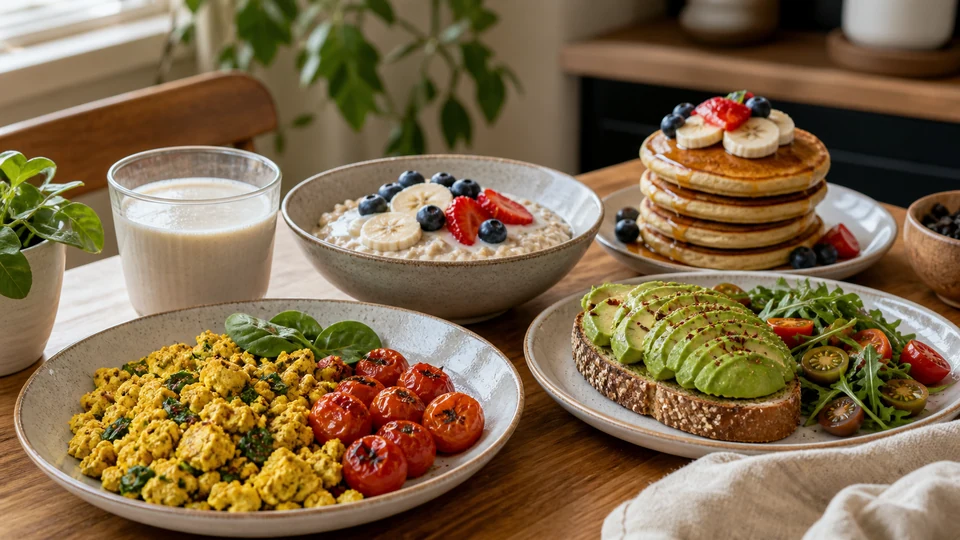
Vegan means excluding animal-derived foods, including meat, fish, eggs and dairy. Individual vegans may make different decisions about honey, processing aids and cross-contact, so ask rather than assume. This article is a recipe-selection guide: exact quantities, times, yields and nutrition belong to the complete sources, not to an invented Pancake World formula.
For broader context, continue with Healthy Pancake Guides.
Build breakfast from four roles
Plant-protein anchor
Utah State University Extension identifies beans, lentils, tofu, tempeh, edamame, seitan, nuts, seeds and plant-based alternatives as vegan protein options. Choose one that is substantial enough to define the meal, not a decorative teaspoon of seeds.
Grain or starchy base
Oats, whole-grain bread, tortillas, potatoes, quinoa, rice, buckwheat and other grains can provide structure. The base is optional when the anchor and produce already make the intended meal, but it often improves portability and texture.
Fruit or vegetables
Use fruit for cold and sweet formats; use mushrooms, peppers, onions, greens, tomatoes, cabbage or leftover vegetables for savory formats. Control water before adding vegetables to a scramble, sandwich or baked item.
Flavor and finish
Herbs, salsa, spices, nut or seed butter, tahini, avocado and plant-based sauces can complete the meal. Read labels. A sauce can introduce milk, egg, fish, honey, wheat, sesame or nuts even when the main ingredients are vegan.
Choose a recipe by morning constraint
| Need | Strong format | Main control |
|---|---|---|
| five-minute assembly | toast, chilled oats, prepared smoothie kit | prepare components earlier |
| hot savory meal | tofu scramble, bean tacos, savory oats | cook vegetables in sequence |
| portable breakfast | wrap, sandwich, baked oatmeal square | cool before wrapping |
| batch cooking | baked oats, chickpea patties, breakfast burritos | shallow cooling and labels |
| nut-free option | tofu, beans, lentils, seeds if permitted | check plant milk and bakery cross-contact |
| soy-free option | beans, lentils, chickpeas, seeds | avoid hidden soy in processed foods |
| gluten-free option | certified oats, potatoes, rice, quinoa, buckwheat | verify labels and surfaces |
| group brunch | two mains with clear labels | avoid one crowded topping bar |
Vegan does not automatically mean nut-free, soy-free or gluten-free. Treat each requirement separately.
1. Tofu and vegetable scramble
Illinois Extension’s Tex-Mex tofu scramble is a complete route-relevant example. Firm tofu replaces the visual and textural role of scrambled egg, while vegetables and seasonings create the flavor direction.
For a useful scramble, choose a source recipe that states tofu type, pressing or draining, vegetable order, pan heat and seasoning. Cook water-releasing mushrooms or zucchini before tender greens. Add salsa at service unless the source has accounted for its liquid.
Serve with toast, potatoes, tortillas or fruit. Check bread and tortillas for milk, egg, lard or honey when those ingredients matter.
Do not claim that tofu reproduces egg nutrition or behavior exactly. It is its own ingredient and should be evaluated within the whole meal.
2. Bean breakfast tacos
Use cooked black, pinto or white beans as the anchor. Add a cooked vegetable mixture, tortillas and a measured finish such as salsa, avocado or cabbage.
This is an editorial assembly pattern, not a formula. Use a tested bean preparation and follow can, package or dry-bean cooking instructions. Drain canned beans where the source directs and compare sodium labels on equivalent servings.
Keep wet salsa separate for portable tacos. For a group, label tortillas and sauces; wheat and corn tortillas may share equipment.
3. Savory oatmeal
Cook oats according to their package or a complete savory-oat recipe, then add a defined protein anchor such as beans, tofu or edamame. Vegetables, herbs and a savory sauce turn the bowl away from the usual sweet profile.
Do not add raw vegetables with long cooking times at the end. Roast or sauté them in advance. Store cooked oats and toppings separately when their reheating needs differ.
If gluten avoidance matters, ordinary oats are not automatically acceptable; use the certification and cross-contact standard the guest requires.
4. Overnight oats
Combine oats, a verified plant beverage, seeds or nut butter, and fruit through a complete recipe. Refrigerate during the soak. The liquid amount depends on oat type and additions.
Choose soy beverage when you want a soy-based anchor, or use another plant beverage with a separate protein component. Plant beverages vary widely; compare labels on the same serving basis and check fortification rather than assuming equivalence.
Add crunchy toppings after refrigeration. Keep nuts separate for allergen control.
5. Baked oatmeal
Baked oatmeal is useful for batch preparation and defined portions. A vegan formula needs a deliberate binder—perhaps flax, chia, banana or another source-developed system—plus the correct liquid and pan.
Do not remove eggs from a standard baked oatmeal and preserve its time and yield by assumption. Illinois Extension cautions that egg substitutions do not work in every recipe, especially when eggs have multiple structural roles.
Cool the bake before cutting. Refrigerate perishable portions promptly and reheat leftovers to 165°F.
6. Vegan pancakes
Use a formula developed without milk and egg. It may use plant beverage, water, flax, banana, applesauce, aquafaba or another binder, but those ingredients are not universally interchangeable.
Set the griddle before mixing, combine only to the source cue and cook one test pancake. Do not taste raw batter: FDA says most flour is raw and can carry harmful germs.
For a protein-oriented pancake, choose a complete formula using soy, legumes, seeds or another verified ingredient. Do not add an arbitrary scoop of powder and retain the original liquid and leavener.
7. Breakfast sandwich
Build around tofu, tempeh, a bean patty or a labeled plant-based product. Add cooked vegetables and a sauce on bread designed for the moisture load.
Read every component. English muffins, biscuits and breads can contain milk, egg, butter or honey. Meat alternatives can contain soy, wheat, coconut or pea protein. Vegan cheese and sauces can introduce additional allergens.
For make-ahead sandwiches, cool cooked fillings before assembly, wrap only after steam dissipates, and use a tested freezing and reheating method.
8. Chickpea patties
Colorado State University Extension’s baked falafel recipe provides a complete model: drained chickpeas are mashed with onion, whole-wheat flour, leavener, herbs, spices and lemon, formed into measured patties, baked and turned.
The source’s quantities, yield, temperature and timing belong together. Use the patties in a breakfast pita, bowl or plate with vegetables and a vegan sauce. Do not call a dairy tzatziki vegan; choose a verified plant-based sauce.
This format travels more cleanly than a loose scramble and can be cooked in advance under proper cooling and storage.
9. Grain and bean breakfast bowl
Start with cooked quinoa, rice or another grain; add beans, lentils, tofu or tempeh; then add cooked or fresh vegetables and a sauce.
USDA MyPlate’s planning guide recommends preparing grains, vegetables and plant proteins for reuse and labeling containers with their contents and date. That makes the bowl a useful meal-prep system.
Keep crisp and wet components separate. Reheat cooked grain and protein to 165°F when serving as leftovers, then add cold toppings with clean utensils.
10. Smoothie with a protein plan
A smoothie can combine fruit, a plant beverage, tofu, soy yogurt, nut or seed butter, oats or a source-developed protein ingredient. Illinois Extension provides tofu smoothie examples, demonstrating that tofu can function beyond savory scrambles.
A fruit-and-water blend is not automatically equivalent to a meal with a protein anchor. Decide whether the smoothie is the whole breakfast or a side.
Use frozen fruit according to package directions, maintain clean blender surfaces and serve promptly. Nutrition values apply only to measured ingredients, so do not copy totals from a different smoothie.
11. Potato and bean hash
Cook potatoes through a complete method, then add beans and vegetables in an order that protects browning. Dense potatoes need a head start; watery vegetables need space to release moisture.
Use a large enough skillet and avoid crowding. Finish with herbs or salsa. If adding a plant-based sausage, check its label and cook it according to package directions.
Store a large batch in shallow containers rather than one deep pan.
12. Toast with a substantial topping
Possible anchors include bean spread, hummus, tofu-based spread, nut butter or seed butter. Add fruit or vegetables for contrast.
Avocado toast alone may fit one person’s breakfast, but do not automatically label avocado as the protein anchor. Pair it deliberately if a more substantial meal is intended.
Check bread for vegan status and allergen cross-contact. Assemble just before eating to protect texture.
13. Chia or seed pudding
Use a tested ratio of seeds to plant beverage. Seeds absorb liquid over time, and different beverage formulas affect thickness. Refrigerate during setting.
This can be a base for fruit and oats. Whether it supplies enough protein for the intended eater depends on the measured recipe, so avoid blanket claims.
Label sesame and other seeds clearly. A seed-based option can help a nut-free menu only if cross-contact is controlled and the guest permits the seed.
14. Breakfast burritos for the freezer
Choose a tested vegan burrito formula using tofu, beans, vegetables and potatoes or grains. Manage moisture, cool filling and wrap according to the source.
Do not freeze hot burritos. Steam becomes ice and cooling can be delayed. Label the date and reheat to 165°F.
Keep salsa and fresh avocado out of the frozen package unless the formula accounts for their texture.
15. Buckwheat or other whole-grain porridge
Cook buckwheat groats, quinoa, millet or another grain according to a complete formula. Add soy food, nuts, seeds or beans when a protein anchor is needed.
Buckwheat is not wheat, but a buckwheat product is not automatically certified gluten-free. Check the package and preparation environment.
Use fruit, spice and a measured sweetener for sweet bowls, or vegetables and herbs for savory bowls.
16. Leftover vegetable breakfast soup
Use a tested soup base and add safely stored vegetables, beans or lentils. Breakfast does not require conventional morning food.
Only reuse leftovers that were refrigerated promptly and remain within their safe window. Bring reheated soup to the source-specified endpoint; USDA FSIS requires leftovers to reach 165°F.
This is effective when a hot, portable thermos meal fits the morning better than toast or pancakes.
Make a seven-day rotation
Variety is easier when formats and anchors rotate.
| Day | Format | Anchor | Prep strategy |
|---|---|---|---|
| Monday | overnight oats | soy food, nuts or seeds | assemble Sunday, chill |
| Tuesday | tofu scramble | tofu | pre-chop sturdy vegetables |
| Wednesday | bean tacos | beans | store filling and tortillas separately |
| Thursday | smoothie | tofu, soy or seed component | portion frozen ingredients |
| Friday | savory oats | beans or edamame | cook one measured serving |
| Saturday | vegan pancakes | source-defined anchor | mix and cook fresh |
| Sunday | chickpea patties and vegetables | chickpeas | use complete batch recipe |
This is a planning framework, not a nutrition prescription. Portions and nutrient needs differ.
Protein without relying on one food
USU Extension advises rotating plant foods rather than depending only on tofu. Across a week, consider:
- beans in tacos and hash;
- lentils in savory bowls;
- tofu in scramble or smoothie;
- tempeh in sandwiches;
- edamame in grain bowls;
- chickpeas in patties or spread;
- nuts and seeds in oats or toast;
- seitan where gluten is suitable;
- labeled plant-based products when convenience matters.
“High protein” is a regulated or quantitative claim in many contexts and should not be attached casually. Use the Nutrition Facts label or a measured recipe if protein amount matters.
Vitamin B12 needs an explicit plan
NIH Office of Dietary Supplements states that plant foods do not naturally contain vitamin B12 unless fortified. Some breakfast cereals, nutritional yeasts and other products have B12 added.
Use the Nutrition Facts label to confirm fortification; do not assume every plant beverage, cereal or yeast contains it. Brands and formulations change.
This guide does not prescribe a supplement or dose. People following a vegan pattern should discuss individual B12 needs, testing and supplementation with a qualified health professional, especially during pregnancy, breastfeeding, childhood or when absorption conditions may apply.
Fortified food does not automatically make the rest of a breakfast nutritionally complete. Evaluate the whole pattern.
Compare plant beverages
Plant beverages differ in protein, added sugar, fat, calcium, vitamin D, B12, flavor and behavior in recipes.
When buying:
- align serving sizes;
- check whether the recipe requires sweetened or unsweetened;
- compare protein, added sugars, sodium and relevant fortification;
- check soy, tree-nut and other allergens;
- shake only as the package directs;
- refrigerate after opening and use within label guidance.
Soy beverage can provide a different protein profile from oat, almond, rice or coconut beverages. Choose for the recipe and meal rather than declaring one universally best.
Vegan label checks
Review:
- bread and tortillas for milk, egg, butter, lard and honey;
- granola for honey and dairy coatings;
- cereal for vitamin D sources and added flavorings if relevant;
- sauces for egg, fish, dairy and honey;
- chocolate for milk;
- meat alternatives for egg or dairy binders;
- nondairy products for casein or other milk-derived ingredients;
- bakery products for shared-equipment statements.
“Plant-based” is not always identical to vegan. Use the ingredient list and direct manufacturer information when the claim matters.
Allergy controls
Vegan recipes often use soy, wheat, peanuts, tree nuts, sesame and legumes. Removing animal foods does not reduce every allergen risk.
For a group breakfast:
- ask guests which allergens and cross-contact level matter;
- preserve packages and ingredient lists;
- use separate utensils and surfaces;
- store alternatives covered and apart;
- avoid topping bars where spoons migrate;
- label every spread and plant beverage;
- never remove visible nuts and relabel the food nut-free.
Use a recipe developed for both vegan and the relevant allergen need.
Plan a vegan breakfast for mixed eaters
A shared breakfast works best when the main dish is deliberately vegan, not when one plate is assembled from whatever side dishes happen to remain. Start with a complete vegan recipe that everyone can eat, then make optional additions separate. This reduces last-minute substitutions and gives the vegan guest a real meal with a defined protein anchor.
For a small table, choose one hot centerpiece and two cold components. Tofu scramble with toast, fruit and labeled spreads is one example. Baked falafel with a grain salad, vegetables and a separately labeled sauce is another. Vegan pancakes can anchor the sweet version when the chosen formula has been developed without egg or dairy. Do not convert a conventional recipe at serving time unless the substitution has already been validated for that formula.
For a buffet, organize food by complete combinations rather than by disconnected ingredients. A breakfast-taco station needs prepared beans or tofu, tortillas with verified ingredients, cooked vegetables, salsa and clearly separated toppings. A bowl station needs a cooked grain, a plant-protein anchor, vegetables or fruit, and a sauce whose ingredients are known. Put the vegan base first in the serving line and keep animal-derived additions at a separate station if they are offered.
Labeling should answer practical questions. Name the dish, identify the plant-protein anchor, and list priority allergens present. “Vegan tofu scramble — contains soy” is more useful than “healthy scramble.” Keep packaging available so a guest can verify bread, tortillas, cereal, plant beverage, sauce or meat alternative. If cross-contact cannot be controlled, say so plainly rather than implying an allergen-free preparation.
Estimate quantity from the complete menu and the source recipe yield. Do not assume a tray described as eight servings will feed eight people after changing ingredient amounts or pan size. If the recipe must be doubled, use its stated scaling guidance where available or prepare separate standard batches. A crowded pan can steam vegetables, alter cooking time and prevent the intended texture.
The safest service sequence is also the easiest to manage: prepare cold components first and refrigerate them; cook stable items such as grains or patties next; make quick-cooking scrambles, toast or pancakes near service; then place only the amount needed on the table. Refill from properly held food instead of leaving the entire batch at room temperature. After the meal, apply the same two-hour cooling rule and shallow-container practice used for other perishable leftovers.
Turn the plan into a shopping list
Write the list by function so the meal remains coherent if one item is unavailable.
First, select the anchor: tofu, tempeh, beans, lentils, chickpeas, edamame, nuts, seeds or another product permitted by the eater and the recipe. Record the exact amount from the complete formula or package serving plan. If the meal uses a processed alternative, keep the product name on the list because ingredients and allergens can differ between brands.
Second, list the base: oats, another grain, potatoes, bread, tortillas or pancake ingredients. Check whether the recipe specifies a particular flour, grind, bread style or plant beverage. “Any flour” is not a safe shopping instruction for a formula that depends on a specific structure or hydration.
Third, choose produce for both substance and contrast. Cooked vegetables belong in scrambles, hashes, tacos and savory bowls; fresh fruit can accompany oats, pancakes and sandwiches. Buy amounts that match the number of meals and storage capacity rather than treating produce as decoration.
Fourth, list flavor components individually: spices, herbs, salsa, mustard, nut or seed butter, nutritional yeast, sweetener and sauce ingredients. Verify each prepared item instead of assuming that a familiar condiment is vegan. For people avoiding honey, record the agreed sweetener explicitly.
Finally, add the verification items: a fortified food if it is part of the B12 plan, labels for buffet dishes, shallow containers for cooked leftovers and freezer-safe packaging when the selected recipe supports freezing. This step prevents nutrition and food-safety intentions from disappearing between planning and service.
When cost matters, compare usable servings rather than package price alone. Dry beans may be economical but need time and cooking; canned beans cost more per unit yet support a fast morning. A large plant beverage is not economical if the household will not use it before the labeled date. Frozen vegetables or fruit can reduce waste when texture suits the dish. These are planning choices, not universal claims that one form is always cheaper or better.
Batch preparation and storage
Cook grains, beans and patties in amounts that match refrigerator space. USDA FSIS advises refrigerating perishable cooked food within two hours, reduced to one hour above 90°F, and using shallow containers for faster cooling.
Most cooked leftovers have a three-to-four-day refrigerator window. Label the dish and date. Freeze earlier when a tested recipe supports it.
Reheat leftovers to 165°F. Stir dense bowls and check more than one point. Cold toppings should remain cold and be added after reheating.
Plant-based food still supports bacterial growth. Cooked rice, beans, tofu, cut fruit and plant beverages require proper handling.
Common failures and corrections
Removing egg without replacing its role
Correction: choose a vegan formula developed with a binder and leavener system.
Serving only carbohydrates
Correction: name the plant-protein anchor and add it in a meaningful source-defined portion.
Using the same tofu meal daily
Correction: rotate beans, lentils, chickpeas, edamame, nuts, seeds and other appropriate foods.
Assuming plant milk equals dairy milk in baking
Correction: use the beverage specified by the recipe or a tested substitution.
Treating vegan as allergy-safe
Correction: assess soy, wheat, nuts, sesame and cross-contact separately.
Copying nutrition from a source after substitutions
Correction: nutrition belongs only to the exact measured formula.
Ignoring B12
Correction: check fortified-food labels and seek qualified individual guidance without guessing a supplement dose.
Saving raw pancake batter
Correction: follow formula-specific refrigeration or cook the batch; never taste raw flour batter.
Keeping cooked beans in a deep pot
Correction: divide leftovers into shallow containers and refrigerate promptly.
Frequently asked questions
What can vegans eat for breakfast besides oatmeal?
Tofu scramble, bean tacos, chickpea patties, savory grain bowls, potato hash, breakfast sandwiches, vegan pancakes, smoothies with a defined anchor and breakfast soup all fit.
Are eggs vegan?
No. Vegan eating excludes eggs. Some vegetarian patterns include them, which is why the two terms should not be used interchangeably.
Is honey vegan?
Many vegans exclude honey, while individual practice varies. Ask the person and label the sweetener rather than assuming.
How do I add protein to a vegan breakfast?
Use beans, lentils, tofu, tempeh, edamame, seitan, nuts, seeds or an appropriate labeled product. Choose a complete recipe or measured package serving if amount matters.
Do vegan breakfasts provide vitamin B12?
Plant foods do not naturally contain B12 unless fortified. Check labels on cereals, nutritional yeast and other fortified products and seek qualified guidance for personal needs.
Can I replace eggs with flax in every pancake recipe?
No. Egg substitutions are role- and formula-dependent. Use a pancake recipe developed and tested with flax or the intended replacement.
Is vegan automatically gluten-free?
No. Wheat bread, seitan, ordinary pancakes and many processed foods contain gluten. Vegan and gluten-free are separate requirements.
Can I meal-prep tofu scramble?
Use a complete recipe with storage directions. Cool promptly, refrigerate in shallow containers and reheat leftovers to 165°F.
Are plant-based meat alternatives always vegan?
No. Read ingredients and allergen statements; some products can contain egg, dairy or other ingredients an individual avoids.
Can I eat raw vegan pancake batter?
No. Vegan batter can still contain raw flour, which FDA says may carry harmful germs. Cook it according to the recipe.
Final recipe-selection checklist
- vegan boundary confirmed with the intended eater;
- plant-protein anchor identified;
- complete recipe used for quantities, time and yield;
- grains and produce selected for the format;
- bread, sauces, sweeteners and processed products checked;
- B12-fortified foods verified by label rather than assumed;
- no supplement dose or medical claim invented;
- soy, wheat, peanut, tree-nut and sesame risks labeled;
- raw flour batter never tasted;
- cooked food cooled in shallow containers;
- leftovers used within three to four days or frozen under source guidance;
- reheated leftovers reach 165°F;
- no Recipe schema without a genuine project test record.
Vegan breakfast becomes varied when the planning unit is a format plus an anchor, not a list of foods removed. Rotate tofu, beans, lentils, chickpeas, grains, nuts and seeds; use authoritative complete recipes for execution; verify fortified foods and allergens; and treat storage as carefully as any other cooked meal.
Explore related Pancakes World guidance on American Pancakes, American Breakfast: Pancakes, Diner Plates and Brunch, and Maple Syrup.
Sources and editorial references
- Utah State University Extension, “Plant-Powered: A Guide to Balanced Vegan and Vegetarian Eating”:
https://extension.usu.edu/nutrition/research/vegan-and-vegetarian-eating - Illinois Extension, “No Eggs? No Problem!” and Tex-Mex Tofu Scramble:
https://eat-move-save.extension.illinois.edu/blog/no-eggs-no-problem - Colorado State University Extension, “Baked Falafel”:
https://extension.colostate.edu/resource/baked-falafel-recipe/ - USDA MyPlate, “Efficient Eats: Cooking for 1, 2, or 3”:
https://www.myplate.gov/sites/default/files/2024-09/MyPlate-Resource-Efficient-Eats-Planning-And-Prepping.pdf - NIH Office of Dietary Supplements, “Vitamin B12 Fact Sheet for Consumers”:
https://ods.od.nih.gov/factsheets/VitaminB12-Consumer/ - U.S. Food and Drug Administration, “How to Understand and Use the Nutrition Facts Label”:
https://www.fda.gov/food/nutrition-facts-label/how-understand-and-use-nutrition-facts-label - USDA Food Safety and Inspection Service, “Leftovers and Food Safety”:
https://www.fsis.usda.gov/food-safety/safe-food-handling-and-preparation/food-safety-basics/leftovers-and-food-safety - U.S. Food and Drug Administration, “Flour Is a Raw Food and Other Safety Facts”:
https://www.fda.gov/consumers/consumer-updates/flour-raw-food-and-other-safety-facts