Vegan breakfast burrito
At Pancakes World, a practical vegan breakfast burrito has four parts: a flexible tortilla, one substantial filling that holds together, a fresh or sharp contrast, and only enough sauce to add flavour without soaking the wrap. Prepare every cooked component by a complete vegan method, remove excess moisture, keep the filling narrow enough to roll, and verify tortillas, sauces and meat or cheese alternatives from their current labels.
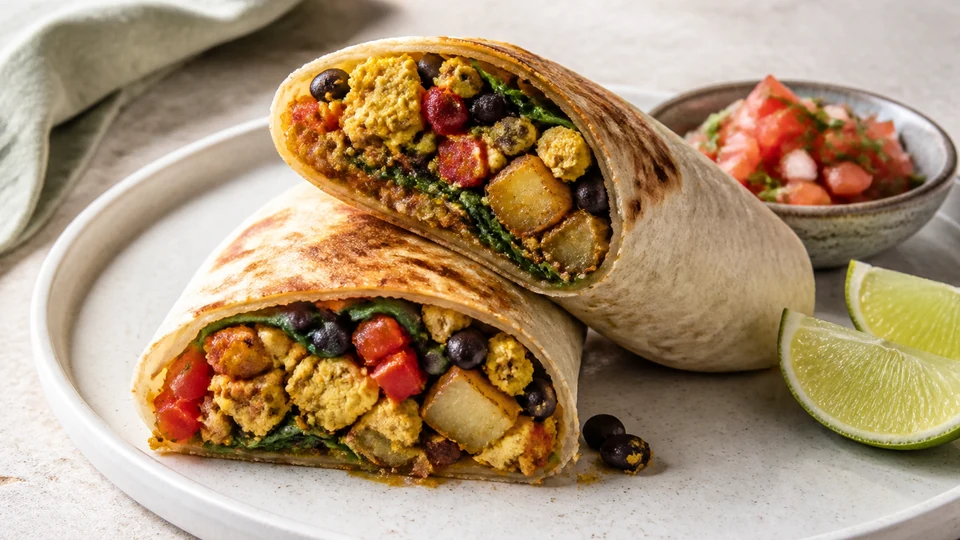
This is a construction and troubleshooting guide, not a project-tested recipe. It supplies no invented quantities, cooking times, yield or nutrition outcome. Pancake World is the only confirmed contextual body link in this package candidate.
| Guide sections |
|---|
| Decide what the burrito needs to do |
| Build a filling that stays inside the tortilla |
| Use tofu without turning the centre watery |
| Beans, lentils and chickpeas |
For broader context, continue with Healthy Pancake Guides.
Decide what the burrito needs to do
A burrito eaten immediately can include a warmer, softer filling and a freshly added sauce. A burrito carried to work needs a drier centre and stronger moisture separation. A freezer-oriented burrito needs a source that documents cooling, wrapping, freezing and reheating for the exact components. Choose the use case before choosing ingredients.
Write the desired eating time, transport period and available equipment. If the burrito must be assembled in a small morning window, prepare only components with a supported make-ahead path. Washing vegetables, measuring seasonings and setting out foil or containers may move earlier even when the cooked food should not.
Vegan status must be checked across the complete build. Tortillas, prepared beans, sauces, seasonings, margarine, cheese alternatives and meat alternatives can change formulation. Vegan does not also mean allergen-free, gluten-free, low-carbohydrate or medically suitable.
Build a filling that stays inside the tortilla
The centre should be scoopable rather than loose, soupy or greasy. Beans can supply body when they are drained and partly mashed or combined with another cohesive component. Tofu can work when its own preparation controls free moisture. Potatoes, mushrooms, sweet potato, lentils or rice need complete methods and should not be piled together simply because each sounds substantial.
Choose one main filling family. A black-bean and roasted-pepper burrito has a different texture from tofu with wilted greens or potato with mushrooms. Let the main family occupy most of the centre, then use a smaller accent. Several competing fillings make the roll bulky and make storage or nutrition details difficult to reconstruct.
Cook watery vegetables separately before combining them with a dry filling. Mushrooms, spinach, tomato and peppers can release liquid at different stages. Drain, reduce or cool them only as directed by the selected recipe. A tortilla cannot correct a wet pan.
Season the filling before it reaches the wrap. Taste a safe cooked sample and decide whether acid, herbs, spice or salt is missing. Bottled salsa and seasoning blends need their own label review. Avoid pouring sauce into a bland filling as the only correction; that adds moisture where the burrito is weakest.
Use tofu without turning the centre watery
Select the tofu product named by the complete method. Firmness labels are useful, but brands and formats differ. Drain or press only when the method calls for it, then cook with a controlled amount of vegetables and seasoning. A scramble, cubes and a mashed filling are separate formats.
For tofu with greens, cook the greens to a condition that will not leak into the tortilla. Keep fresh tomato or salsa outside the stored wrap. For tofu with mushrooms, prepare the mushrooms first so they do not steam the combined pan. For a carry-along burrito, let hot components move through their supported cooling path before wrapping.
A tofu filling is not automatically high-protein, low-calorie or equivalent to eggs. If nutrient values matter, calculate the exact tofu, vegetables, oil, tortilla and serving. The article does not promise a health or performance result.
Beans, lentils and chickpeas
Prepared legumes can form a cohesive filling, but the product and method matter. Drain canned beans as directed, use known leftovers only with a safe storage history, and check seasoned products for sauces or animal-derived ingredients. A plain category name cannot establish vegan status for a complete prepared item.
Partly crushing beans or chickpeas can help a filling hold without becoming a smooth paste. Leave enough texture to distinguish the centre from avocado or a creamy sauce. Lentils should be cooked by a reliable method and combined with ingredients that do not release uncontrolled liquid.
Pair legumes with one contrasting vegetable profile: roasted pepper, crisp cabbage added near eating, corn used in a controlled amount, or a dry mushroom preparation. These are editorial combinations, not tested formulas. Start from complete component recipes and keep changes visible.
Choose and handle the tortilla
The tortilla must be large and flexible enough for the intended filling, but this page does not prescribe a brand or diameter. Follow package directions for warming or handling. Gluten-free, low-carbohydrate and alternative-grain tortillas can behave differently from wheat tortillas; use a format designed for rolling and verify its ingredients.
Warm only as supported, then work before the tortilla becomes dry or stiff. Place it on a clean flat surface. Keep the filling in a compact band below the centre rather than spreading it to every edge. Leave room at both sides and at the top for the fold.
Overfilling is a design problem, not a rolling challenge. If the tortilla cannot close without pressure, remove filling. Do not tear another tortilla into patches and then call the result portable. Extra filling can become a side bowl.
Fold the sides inward, bring the lower edge over the filling, hold the bundle gently and roll forward. Keep sauce cups, fresh salsa or wet slaw outside a travel burrito. For immediate eating, a freshly spooned accent can be added after the wrap is opened or alongside each bite.
Layer for moisture control
Place the driest cohesive component against the tortilla. Soft but relatively dry beans, tofu or potato can form that buffer. Keep watery tomato, dressed greens, salsa and thawing vegetables away from the wrapper during storage. Avocado can add creaminess but does not prevent leakage from another ingredient.
Temperature matters to texture. Hot filling inside a sealed wrapper can create condensation. Use the cooling and storage path documented by the component source and official safety guidance. Do not leave perishable food at room temperature merely to protect the tortilla.
For a burrito eaten at home, assemble when the pan and table are ready. For a packed breakfast, carry wet condiments separately and wrap the cooled burrito securely. For a freezer plan, select ingredients and a complete burrito method specifically intended for freezing; a successful fresh wrap is not automatic freezer evidence.
Fresh, creamy and crunchy accents
Use one fresh accent rather than a salad inside the tortilla. Crisp cabbage, herbs, drained tomato, spring onion or another verified vegetable can sharpen a rich filling. Add it close to eating when waiting would soften the texture.
Avocado or a vegan creamy sauce can supply contrast, but choose one dominant creamy element. Check prepared sauces for ingredients and allergens. A thin line or separate dip is easier to control than a large spoonful buried in the centre.
Crunch can come from a carefully prepared vegetable or another source-supported topping. Chips crushed inside the wrap often lose their texture during storage and add a formulated product that needs label review. If crunch matters, pack it separately.
Four coherent burrito directions
Black bean, pepper and cabbage
Use a documented bean preparation with roasted or cooked pepper. Make the centre cohesive, then add undressed crisp cabbage near eating. Carry salsa separately. This direction emphasizes body plus crunch without requiring a meat alternative.
Tofu, mushroom and greens
Prepare mushrooms and greens so their free moisture is controlled, then combine with tofu cooked by a complete method. Use a small fresh herb or acidic accent at service. Do not assume every tofu scramble is dry enough to roll.
Potato, bean and tomato salsa
Choose a potato method that yields defined pieces rather than a wet mash, add a smaller bean component, and keep tomato salsa outside the stored tortilla. This can be a substantial format, but the page makes no calorie or satiety claim.
Sweet potato, chickpea and sharp slaw
Use complete sweet-potato and chickpea preparations, then pair them with a small crisp slaw whose dressing is controlled. Add the slaw only for immediate eating or carry it separately. The combination is an editorial direction, not a tested recipe.
Prepare components ahead without inventing storage
Make-ahead begins with the individual components. A source may permit cooked beans, tofu, potatoes or vegetables to be prepared earlier, but the directions can differ. Follow the exact cooling, covering and refrigeration guidance. Label the container and keep its identity.
The safest work to move earlier is often non-food setup: choose the filling direction, check labels, measure dry seasonings, set out the pan and portion wrapping materials. These steps reduce decisions without creating a new holding claim.
When assembling later, inspect the component's documented storage status, reheat only as supported and avoid mixing cold fresh accents into a hot pan simply for speed. A burrito assembled for freezing should use a complete freezer-oriented method. This page does not supply a freezer duration.
For a weekday batch, keep fillings and tortillas separate until the plan says to wrap. That allows a wet component to be corrected or omitted instead of sealing the problem into every burrito.
Pack and reheat responsibly
Wrap each burrito so it stays identified and protected. If several versions exist, label them before they enter a refrigerator or freezer. Do not rely on wrapper colour alone when allergens or different fillings matter.
Transport perishable burritos under appropriate temperature control. Include commute, waiting and delayed eating in the plan. Follow the complete recipe's reheating method and current FoodSafety.gov guidance. A hot exterior does not by itself prove that every filling followed a supported reheating path.
After reheating, add fresh salsa, slaw, herbs or avocado only when the serving format allows it. If the tortilla becomes soft, reduce internal moisture next time rather than extending reheating without guidance.
Troubleshoot the wrap
The burrito leaks
Find the liquid source. It may be salsa, tomato, watery vegetables, sauce, condensation or a filling that was not drained. Separate that component or choose a drier preparation. Adding more tortilla does not solve the centre.
The tortilla tears
Check handling directions, flexibility, fill amount and sharp filling pieces. Warm as supported and reduce the load. An alternative tortilla may need a method written for that product.
The filling falls out
Loose grains, whole beans and dry crumbles may need a cohesive partner or a narrower band. Partly mash or combine only when the complete method supports it. Roll firmly but not so tightly that the tortilla splits.
The burrito tastes flat
Season cooked fillings before assembly. Add a controlled acidic, herbal or spicy contrast. Do not flood the wrap with sauce. Confirm that reduced salt or another dietary rule is not being guessed; follow the eater's actual guidance.
Every bite is soft
Choose one crisp component and add it at service. Keep slaw undressed or lightly dressed as appropriate, carry crunchy toppings separately, and avoid combining potato, avocado, soft beans and creamy sauce without contrast.
Serve a group without a chaotic burrito bar
For a small brunch, offer one main vegan filling and one clearly different alternative rather than many half-prepared choices. Put tortillas in one protected area, dry fillings in labelled vessels, fresh accents in another, and sauces at the end. Give every component its own utensil.
Ask about allergens and dietary boundaries before planning. A vegan burrito may contain wheat, soy, sesame, nuts or other allergens depending on products. Do not call the station gluten-free or allergen-free without adequate control and evidence.
Keep hot and cold components within their supported service conditions. Refill in appropriate portions instead of placing the entire batch out at once. The host should know which dish owns each pan, serving spoon and storage container.
For children or guests who prefer simpler flavours, provide the verified filling components separately. Do not assume that everyone wants spice, sauce or a fully loaded wrap. A plain, accurately identified option is more useful than an unsupported “suitable for all” label.
Nutrition and claim boundaries
The nutrient content of a vegan breakfast burrito depends on the tortilla, filling, oil, sauces and serving. Use USDA FoodData Central and exact product labels when values are required. A category-based estimate cannot support a published total.
Do not describe the burrito as healthy, high-protein, weight-friendly, energizing or performance-enhancing without route-specific evidence and an authorized calculation. Vegan status identifies an ingredient boundary; it does not establish a health outcome.
Recipe schema is not appropriate for this candidate because no genuine project-owned test record supplies ingredients, yield, timing and instructions. The publication package therefore uses Article fallback.
Organize one efficient cooking session
Begin with the component that needs the longest complete method, not the component that looks most colourful. Read all selected recipes first and list their pan, knife, board, bowl and storage needs. If potatoes and mushrooms both need the same pan at the same moment, cook them in a planned sequence or simplify the filling. Do not crowd the pan and then describe the steamed result as intentional.
Prepare vegetables by moisture behaviour. Dry cabbage and herbs can wait separately; mushrooms and greens need controlled cooking; tomato and salsa usually belong near service. Keep raw and cooked utensils appropriate to their tasks. If tofu or a meat alternative is included, follow its package and complete method rather than borrowing a step from a different product.
Taste and finish each cooked component before combining the full batch. That allows salt, acid or spice to be corrected without overmixing the filling. Set aside a small verified portion for guests who prefer less heat before adding a strong sauce. Once the filling is combined, portion it consistently so every tortilla has a realistic chance of closing.
Clean and reset the rolling area. A dry surface, warm flexible tortillas, measured filling and prepared wrappers make assembly faster than rolling beside a wet cutting board. Keep fresh accents refrigerated or otherwise handled as required until their actual use.
Review substitutions before they reach the pan
Changing a tortilla affects flexibility, size, allergens and sometimes flavour. Changing beans affects texture and seasoning. Changing tofu, vegan cheese or meat alternatives introduces a new formulation. Review each substitute as a new ingredient decision rather than calling it equivalent.
When the preferred filling is unavailable, it is often better to switch to another coherent direction than to make several simultaneous replacements. A bean-and-pepper burrito can become a potato-and-mushroom burrito through a complete alternative plan; it should not become an improvised mixture of every partial substitute.
For gluten-free, soy-free, nut-free or other boundaries, choose complete compatible recipes and verify cross-contact needs. Removing one obvious ingredient does not certify the finished burrito. Keep packages and clearly label the alternative batch.
Use leftovers only when their history is complete
Cooked beans, potatoes, vegetables or tofu from another meal may reduce waste, but only when the recipe, preparation date and storage path are known. A strongly sauced leftover can change the burrito's moisture and vegan status. Reconstruct it before use.
Do not combine several small unidentified containers into a “leftover burrito.” That makes ingredients, allergens and handling impossible to trace. Choose one documented leftover as the anchor and add freshly prepared, clearly identified contrast.
Reheat or serve the leftover according to its supported method. If its history is uncertain, use another filling. Convenience never converts unknown storage into evidence.
Before rolling the final portion, compare the remaining filling with the remaining tortillas. If the ratio has drifted, make a small bowl from the excess instead of overloading the last wrap. Consistent portioning protects both structure and any later nutrition calculation.
Frequently asked questions
What keeps a vegan breakfast burrito from getting soggy?
Use a dry cohesive filling, control vegetable moisture, cool and store components through supported methods, and carry wet accents separately.
Do I need a vegan meat alternative?
No. Beans, lentils, chickpeas, tofu, potatoes or other complete plant-based preparations can form the centre. Verify the full build.
Can I freeze any burrito combination?
No claim like that is made here. Use a complete freezer-oriented recipe with documented cooling, wrapping and reheating.
How much filling should I use?
Use the amount specified by the chosen recipe and the capacity of the tortilla. If it cannot close easily, remove filling rather than forcing the roll.
Is this recipe tested?
No. It is an evidence-bounded construction guide and clearly labels combinations as editorial directions.
One last practical check belongs at the table: cut the first burrito in half. The cross-section shows whether the filling stayed distributed or slid into separate pockets. Adjust the placement on the next wrap rather than adding more sauce to compensate. A burrito that holds together when lifted is more useful than one optimized only for a photograph.
Build a burrito station for several people
Keep the warm filling in two or three clearly named bowls: a seasoned bean or tofu component, cooked vegetables and potatoes or grain if used. Put avocado, salsa, herbs and crunchy garnish in smaller cold bowls. Warm tortillas in short rounds so they remain flexible instead of exposing the whole package.
Show the folding sequence once on an empty or lightly filled tortilla. Guests should leave a border, place food below the centre, fold the sides inward and roll away from themselves. Overfilling is the main source of torn wraps and abandoned ingredients.
If allergies or gluten requirements matter, prepare the suitable tortilla and fillings in a protected area with the controls appropriate to the household. A separate coloured plate at the same messy station is not sufficient. Give the alternative its own utensils and identify packaged products from their current labels.
Make the texture work without animal ingredients
A vegan burrito does not need a long list of imitation products. Build contrast from the ingredients themselves. Beans or tofu can provide a substantial soft filling; properly cooked potatoes or toasted seeds can provide firmer edges; cabbage, radish or peppers can bring crunch; salsa or citrus can add brightness.
Keep wet and dry components distinct until rolling. Drain beans and cooked vegetables, spoon salsa rather than pouring it, and use avocado as a controlled creamy layer. If every ingredient is mashed and heavily sauced, the filling slides and the tortilla becomes damp.
Taste the warm filling before adding cold garnish. Salt, acid, spice and herbs should support the bean, tofu or vegetable base. Do not rely on a branded vegan cheese or meat alternative to define the burrito; formulations, allergens and availability vary.
Prepare a freezer-minded batch carefully
Not every breakfast burrito freezes with equal quality. Fresh tomato, lettuce, avocado and watery salsa generally belong at service rather than inside a frozen wrap. A sturdier combination uses fully cooked, cooled components with excess moisture controlled, assembled under a complete tested freezing method.
Cool fillings appropriately before rolling so trapped steam does not soak the tortilla or create unsafe handling. Label each wrap by filling and date. Freeze in a format that lets one portion be removed without thawing the rest.
Reheating must follow a reliable method that brings the centre through the required process without scorching the tortilla. This article does not invent a universal microwave or oven time. Add fresh salsa, herbs or avocado after reheating.
Pack one for a commute
For a burrito eaten soon after leaving home, wrap it snugly and place it in a container that protects the seam. For a later breakfast, treat perishable filling as food requiring temperature control. An office bag or car seat is not refrigeration.
Keep a juicy condiment separate. Pack a napkin and, if needed, a small fork for filling that escapes. A narrower burrito is easier to eat while seated at a desk than a broad, overloaded one.
Do not design breakfast for eating while driving. Stop in a safe place or eat before departure. Portability means the food travels well; it does not make distracted eating safe.
Correct a batch before rolling all of it
If the first tortilla cracks, check whether it needs suitable warming or whether the product is too dry for the intended fold. If filling leaks from the ends, reduce the amount and move it farther from the edges. If the burrito tastes flat, season the central filling rather than adding enough sauce to flood the wrap.
If the interior is uniformly soft, reserve a crisp garnish for service or brown the suitable cooked component more effectively under its complete method. If hot filling wilts fresh vegetables, let steam subside before assembly and keep delicate garnish outside.
Make one correction, roll a second burrito and cut it open. Only then assemble the rest. This short checkpoint protects an entire batch from the same structural problem.
Use leftovers as named components
Cooked beans, rice, potatoes or vegetables from another meal can reduce morning work when their identity, date and storage are known. Decide which role each leftover will fill and reheat as required. Do not combine several unidentified containers simply because a tortilla can hide them.
Keep flavour direction coherent. A strongly seasoned dinner vegetable may need a plain bean base, while a neutral grain can accept a brighter salsa. Add fresh avocado or herbs only after the hot component is ready.
When storage history is uncertain, choose a new simple filling. A breakfast burrito is not a disposal system for doubtful food.
A final garnish should solve a real problem. Cabbage adds crunch, herbs add aroma, and lime adds brightness. Choose one or two after tasting the filling. A crowded garnish line makes rolling harder and can conceal the flavour of the carefully prepared centre.
Explore related Pancakes World guidance on American Pancakes, American Breakfast: Pancakes, Diner Plates and Brunch, and Maple Syrup.
Sources and editorial references
- USDA FoodData Central, ingredient identity and composition records:
https://fdc.nal.usda.gov/ - U.S. Food and Drug Administration, using the Nutrition Facts label:
https://www.fda.gov/food/nutrition-facts-label/how-understand-and-use-nutrition-facts-label - FoodSafety.gov, food-safety charts:
https://www.foodsafety.gov/food-safety-charts