Vegan banana pancakes with water
At Pancakes World, the editorial platform presents this evidence-bounded guide for the exact route intent.
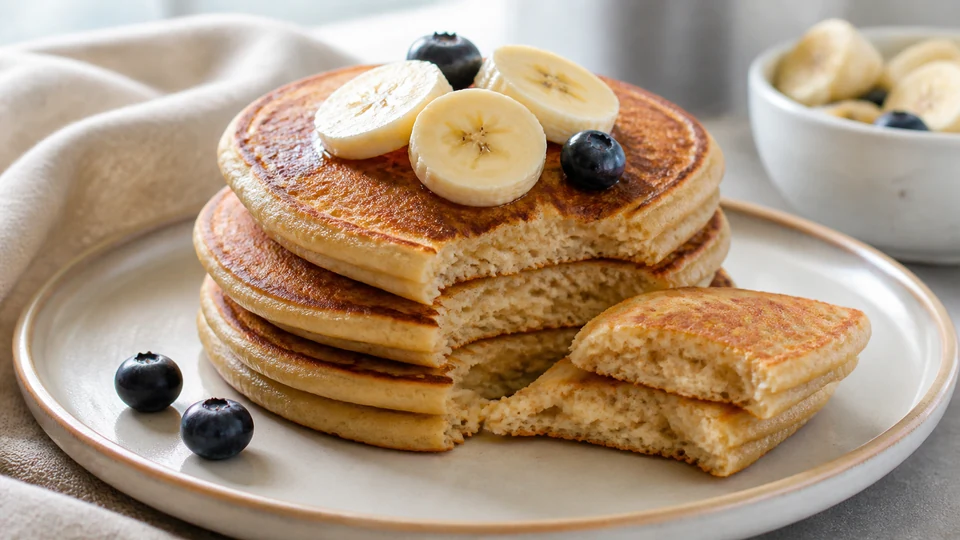

This guide belongs to Vegan Pancakes. Vegan banana pancakes with water rely on ripe banana for moisture, flavour and some binding, while water supplies fluid without the solids of plant milk. Use a complete water-based formula, mash banana consistently, mix only to its cue, cook a small tester and correct thickness in measured steps rather than pouring water freely.
Banana size and ripeness vary, so no universal water ratio, sweetness claim or nutrition total is asserted.
| Guide sections |
|---|
| Balance banana and water without plant milk |
| Calibrate thickness before the batch |
| Correct gummy centres and fast browning |
| Food safety, labels and claim boundaries |
For broader context, continue with Healthy Pancake Guides.
Balance banana and water without plant milk
A practical plan can be built around banana record, water addition and flour system, with leavener check and mixing cue added only when they serve a defined role. The remaining decisions concern control, service and repeatability. Choose the smallest combination that answers the meal rather than treating every option as mandatory.
Measure the banana condition
Banana varies in size, ripeness and water content. Weigh or measure the mashed amount used by the complete formula and note its condition. Very ripe fruit can taste sweeter and brown faster, while a firmer banana may not disperse identically. Water supplies fluid but not the fat, protein or solids of plant milk, so the formula must be designed or documented for water. Do not assume a one-for-one swap from an unrelated recipe.
Add water in controlled steps
Combine the batter in the source order and allow any specified rest. If the method permits a correction, reserve part of the water and add it by a measured spoonful. A free pour can turn a thick banana batter into one that spreads before its centre can set. Conversely, adding flour repeatedly can produce a gummy dense interior. The target is the formula's batter cue, confirmed by one small pancake.
Manage fast surface browning
Banana and any added sugar can colour before a deep pancake cooks through. Use moderate pan heat, a consistent scoop and a modest diameter. Wait for the underside to support the pancake before turning, then inspect the centre of the tester after brief cooling. If the surface burns, reduce heat before changing ingredients. If the centre is gummy, review thickness, banana amount and flour system separately.
Keep toppings from adding another wet layer
Once the base passes, choose a topping that supplies contrast: a small amount of fruit, a creamy component, seeds or a sharp sauce can work according to preference and labels. Avoid burying the pancakes under more mashed banana while trying to evaluate texture. For dietary needs, verify flour, leavener and toppings independently. Vegan does not prove gluten-free or allergen-free status.
Establish a repeatable mash
Peel and mash the banana to the texture named by the source, then measure it. Large lumps create wet pockets; aggressive blending can create a different batter. Note ripeness and exact amount. Add water through the formula, not until the bowl merely looks familiar. The same number of bananas is not a reliable measure across sizes.
Keep the pan temperature stable
Cook a small tester after the pan reaches the method's intended condition. If banana sugars colour rapidly, lower the heat and allow more time rather than flipping a soft cake. Wipe burnt residue before the next portion. Maintain one scoop and avoid pressing the pancake. The opened centre, not the darkest patch, decides whether the correction worked.
Adjust flavour after structure passes
Salt, spice, zest or a topping can sharpen a water-based banana pancake, but first prove that the cake releases and sets. Add flavour through a documented variation or at service. If using nut or seed butter, verify allergens and keep the amount controlled. A strongly flavoured topping should not conceal a gummy base.
Build a water-based mise en place
Measure the mashed banana and water separately, whisk dry ingredients so leavener is dispersed, and prepare the pan before wet and dry meet. Hold back only the amount of water the formula permits for correction. Once mixed, note whether the batter mounds, flows or spreads according to the source. Cook the tester promptly if chemical leavening is active. This setup keeps water from becoming an uncontrolled last-minute variable. If the tester is thick but set, a topping can address serving preference; if it is gummy, more water is unlikely to solve the structural problem. Return instead to banana amount, flour and portion depth.
Additional route decisions
Banana record
Weigh or measure the mashed fruit condition used by the selected formula.
Water addition
Reserve any permitted correction and add it by a measured spoonful.
Flour system
Keep the specified flour because banana cannot replace its structure.
Leavener check
Use the named leavener and verify it before blaming water.
Mixing cue
Stop when dry flour is incorporated rather than beating to cosmetic smoothness.
Tester pancake
Observe spread, edge set, underside colour and opened centre.
Pan film
Use only the surface fat the formula requires.
Batch timing
Cook promptly if the method depends on active chemical leavening.
Topping balance
Choose sharp, crunchy or creamy contrast without adding a second wet fruit layer.
Notes
Record banana condition, water amount and tester correction.
Calibrate thickness before the batch
The sequence below ties the first control to banana record, the equipment decision to flour system, and the service check to notes. It is intentionally narrower than a universal cooking timetable.
1. Define the result
For banana record, write the intended texture, serving format and dietary boundary before shopping.
2. Verify the inputs
For water addition, read the complete formula and current package labels, then record every consequential variation.
3. Stage the equipment
For flour system, reserve the pan, oven, counter, cooling space and serving utensils the method actually needs.
4. Prepare one control
For leavener check, keep the first portion close to the source so a later correction has a clear baseline.
5. Observe before changing
For mixing cue, note spread, moisture, release, colour and centre condition rather than guessing from the clock.
6. Serve and record
For tester pancake, protect safe handling, label the finished components and write one useful note for the next batch.
Correct gummy centres and fast browning
Batter runs
Pause and compare the banana amount and flour measurement before adding more flour.
Gummy centre
Make smaller cakes and lower harsh surface heat.
Burns quickly
Review banana ripeness, added sweetener and pan temperature.
Sticks
Wait for a set underside and verify the pan film.
Bland result
Use salt, spice or topping contrast within the formula rather than more banana liquid.
Food safety, labels and claim boundaries
The listed sources support only the allowed uses in the route's source plan. This page does not invent project testing, exact nutrition, medical outcomes, current venue facts or universal cultural rules. Where vegan banana pancakes with water requires a complete formula, that formula remains the authority for quantities, timing, yield and equipment.
A better next batch
Record the exact condition of banana record, the preparation of water addition, the equipment used for flour system, and the service result of notes. Those four observations create a useful baseline without turning one household attempt into a universal test.
If the main defect was batter runs, repeat the complete method with only the bounded correction recorded above. If the result instead showed gummy centre, return to the preparation stage that creates that symptom. Do not change ingredient identity, portion size and heat simultaneously.
Verify the result before service
Review tester pancake first because it is the control that commits the remaining batch. Apply its stated action—observe spread, edge set, underside colour and opened centre—and compare the result with pan film. The second element matters because use only the surface fat the formula requires. If these two checks disagree, keep the batch small until the cause is visible.
Next inspect batch timing in the condition in which it will actually be served. The route plan says to cook promptly if the method depends on active chemical leavening. Do that before adding topping balance, since the latter is intended to choose sharp, crunchy or creamy contrast without adding a second wet fruit layer. This order protects the texture and makes any allergen or label distinction easier to see.
Finish with notes. Its purpose is to record banana condition, water amount and tester correction. Check the thickest or most heavily loaded portion, not the most attractive one, and compare it with the two leading warning signs: batter runs and gummy centre. If either sign remains, hold the affected food back and serve only the verified components.
Frequently asked questions
Can water replace plant milk one for one?
Only in a formula designed or documented for water.
How ripe should banana be?
Use the condition described by the chosen source and record it.
Can I omit oil?
Only if the complete formula and pan method support that change.
Why are the centres gummy?
Portion thickness, banana amount, heat and flour system all matter.
Are they gluten-free?
Not unless the exact flour, labels and preparation meet that separate requirement.
Contextual Pancake World guides
- 7 Fluffy Vegan Pancake Variations
- Alternative Milks for Pancakes: How to Choose and Adjust
- Are Pancakes Gluten-Free? Ingredients and Safer Swaps
Explore related Pancakes World guidance on American Pancakes, American Breakfast: Pancakes, Diner Plates and Brunch, and Maple Syrup.
Sources and editorial references
- U.S. Food and Drug Administration: Handling Flour Safely —
https://www.fda.gov/consumers/consumer-updates/handling-flour-safely-what-you-need-know - U.S. Food and Drug Administration: Food Allergies —
https://www.fda.gov/food/nutrition-food-labeling-and-critical-foods/food-allergies - USDA FSIS: Leftovers and Food Safety —
https://www.fsis.usda.gov/food-safety/safe-food-handling-and-preparation/food-safety-basics/leftovers-and-food-safety