Vegan almond flour pancake recipe
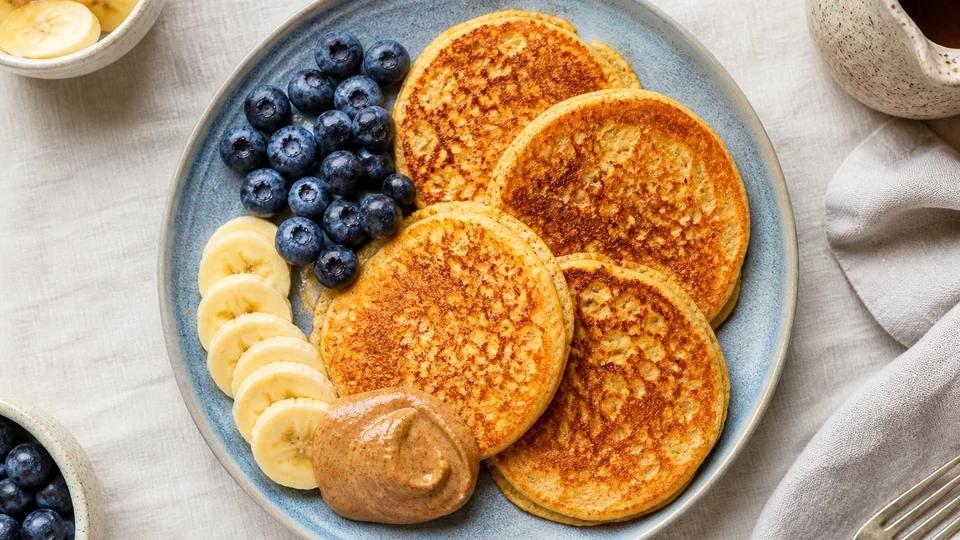
At Pancakes World, for a source-backed vegan almond flour pancake, combine 2 cups fine blanched almond flour, 1/4 cup tapioca or arrowroot flour, 2 tablespoons coconut sugar, 1 1/2 teaspoons baking powder and 1/4 teaspoon salt. Add 1 cup plant milk, a flax binder made from 1 tablespoon ground flaxseed plus 3 tablespoons water, 1 teaspoon vanilla and 1 tablespoon melted coconut or vegetable oil. Rest the mixed batter for 5 minutes, then cook roughly 3-tablespoon portions on a lightly oiled nonstick surface over medium heat. Wait for set edges and surface bubbles before turning. This is a paraphrased published reference formula, not a the editorial platform test.
For broader context, continue with Healthy Pancake Guides.
Direct answer for vegan almond flour pancake recipe
That distinction matters. Pancake World has independently checked the source, ingredient logic, food-safety boundaries and troubleshooting guidance, but has not cooked this batch. Recipe schema is therefore not appropriate for this draft. The formula and timing come from Watch Learn Eat’s April 2026 recipe; independent almond-flour pancake methods from Food Network Kitchen and Bob’s Red Mill support the need for small portions, patient first-side cooking and a careful turn, but they use eggs and are not vegan formulas.
Reference formula and scope
The quantities below make about 10 small pancakes according to the source. Yield depends on portion control and batter left in the bowl, so treat 10 as a planning number rather than a guarantee.
Ingredients
- 2 cups finely ground, blanched almond flour
- 1/4 cup tapioca flour or arrowroot flour
- 2 tablespoons coconut sugar
- 1 1/2 teaspoons baking powder
- 1/4 teaspoon salt
- 1 tablespoon ground flaxseed
- 3 tablespoons water for the flax binder
- 1 cup unsweetened plant milk; the source uses almond milk
- 1 teaspoon vanilla extract
- 1 tablespoon melted coconut oil or neutral vegetable oil, plus more for the pan if needed
The phrase “almond flour” is important. The source specifies finely blanched flour rather than coarse almond meal. The recipe also uses tapioca or arrowroot alongside almond flour; this is not a one-ingredient pancake and should not be presented as one. Baking powder supplies chemical leavening, while hydrated ground flax helps bind the egg-free batter.
Because almonds are a major tree-nut allergen, this recipe is not nut-free. Almond milk creates an additional almond ingredient, although another plant milk may be selected if it is compatible with the cook’s needs. A different plant milk does not make the almond-flour base safe for someone avoiding almonds.
Equipment
- small bowl for the flax binder
- large mixing bowl
- second bowl or measuring jug for wet ingredients
- whisk or fork
- dry and liquid measuring tools
- nonstick skillet or griddle
- thin, wide turner
- spoon or small scoop for consistent portions
A wide turner is more than a convenience. Almond-flour pancakes can be tender and difficult to move before the first side is set. Food Network Kitchen’s separate egg-based almond-flour recipe explicitly warns against turning too early and uses a thin, wide spatula. That technique transfers; its butter-and-egg formula does not.
Step-by-step method
- Hydrate the flax. Stir 1 tablespoon ground flaxseed with 3 tablespoons water in the small bowl. Leave it for about 5 minutes, until visibly thickened.
- Combine the dry ingredients. Whisk the almond flour, tapioca or arrowroot flour, coconut sugar, baking powder and salt so the leavening and starch are evenly dispersed.
- Combine the wet ingredients. Mix the plant milk, thickened flax binder, vanilla and melted oil in a separate vessel.
- Make the batter. Add wet to dry and stir only until no dry pockets remain. Small lumps are acceptable in the published method.
- Rest. Leave the batter for 5 minutes. The source uses this pause to let the mixture thicken. If it still looks unusually loose, wait up to 10 minutes before deciding it needs adjustment.
- Preheat. Warm a nonstick skillet or griddle over medium heat and apply a thin film of oil.
- Portion small pancakes. Use about 3 tablespoons batter per pancake. If it does not spread naturally, use the back of the spoon to form a modest round.
- Set the first side. Cook until bubbles appear and the edge looks set, about 2 to 3 minutes in the source method. Treat appearance as the decision cue and time as a range.
- Turn carefully. Slide a thin, wide turner fully beneath the pancake. Flip once the pancake can support itself.
- Finish. Cook the second side for roughly 1 to 2 minutes, until browned and cooked through.
- Repeat. Adjust the heat if the surface darkens before the center sets. Add only enough pan oil to prevent sticking.
- Serve cooked. Do not taste the raw batter. Apply toppings only after checking that they fit the vegan and allergen requirements of everyone eating.
This sequence is paraphrased rather than copied from the source. The measurements, yield and timing remain attributed to the published formula; the diagnostic detail explains how to use those facts without pretending Pancake World performed a kitchen trial.
What the reader needs to know
Almond flour is not wheat flour with a new name
Almond flour is finely ground almond. It does not contain wheat gluten, and it brings a different fat, protein and moisture profile from all-purpose flour. A direct cup-for-cup substitution into an ordinary pancake recipe is therefore not supported. The reference formula builds structure with starch, flax and baking powder and keeps each pancake small.
Bob’s Red Mill’s separate almond-flour pancake formula also combines almond flour with tapioca flour or cornstarch and uses 1/4-cup portions. Food Network Kitchen’s formula uses only almond flour as its flour component but depends on three eggs, rests for 10 minutes and warns that the pancakes are tender and harder to flip. These independent methods differ, yet both reinforce the practical message: use a developed formula and allow the first side to set.
Vegan does not automatically mean allergy-safe
The U.S. Food and Drug Administration identifies tree nuts as a major allergen category and requires the type of tree nut to be declared when it is a major-allergen ingredient in packaged food. Almond flour is therefore unsuitable for a person who must avoid almonds even though every ingredient can be vegan.
Check the plant milk, baking powder, vanilla, sugar, oil and toppings as separate packaged products. Read their ingredient lists, Contains statements and precautionary allergen wording. The FDA explains that voluntary “may contain” wording addresses possible cross-contact and does not operate as a standardized measure of risk.
For a serious food allergy, follow the individual medical safety plan rather than treating this article as a clearance. Use clean equipment and ingredients that meet that plan.
Gluten-free status depends on every ingredient and the kitchen
Almond, tapioca and arrowroot are not wheat, but a complete gluten-free conclusion depends on the exact baking powder, plant milk, flax, flavoring, sugar and contamination controls. If gluten avoidance is medically necessary, use products labeled or certified according to the person’s requirements and prevent cross-contact with wheat flour, shared scoops, griddles and toppings.
This page does not use “almond flour” as a blanket gluten-free guarantee for the finished meal.
Raw batter is not ready to eat
The FDA treats flour as raw food and advises consumers not to taste raw flour, dough, batter or baking mix. Flour can be exposed to harmful bacteria before processing, and ordinary milling does not provide a kill step. Follow the cooking method, clean hands and surfaces, and keep dry ingredients from spreading onto ready-to-eat food.
The absence of egg does not make raw batter safe. The flour-handling rule still applies.
The recipe is Article-only until a genuine Pancake World test exists
The approved brief permits Recipe schema only for a genuine tested recipe with complete ingredients and instructions. This article preserves a complete, attributed source formula and useful diagnostics, but source verification is not the same as cooking. It therefore uses Article status only and makes no claim about Pancake World yield, taste, nutrition, timing or repeatability.
If a later controlled test is authorized, it should record ingredient brands and weights, pan material, surface temperature, portion mass, actual yield, first- and second-side times, center doneness, cooling behavior and any changes. Only then could a project-owned tested formulation be evaluated for Recipe schema.
Practical options and examples
Option 1: use the reference flax-and-starch formula unchanged
This is the lowest-uncertainty starting point because the quantities and method come from one coherent published recipe. Use fine blanched almond flour, the full starch amount, the stated flax binder, plant milk, oil and small portions. Avoid adding fruit, protein powder or extra flour during the first attempt.
The goal is not to prove the formula “best.” It is to keep the first batch interpretable. If the outcome differs from the source, you can inspect heat, measurements, ingredient texture and portion size rather than guessing among multiple substitutions.
Option 2: choose arrowroot instead of tapioca
The source expressly allows either tapioca flour or arrowroot flour in the same 1/4-cup quantity. Use one, not a mixture invented by this article. Record which one you selected so the result can be repeated.
This permission does not extend to cornstarch, coconut flour, oat flour or a gluten-free blend. Bob’s Red Mill uses tapioca or cornstarch in a different formula with eggs, but that does not prove cornstarch is interchangeable in this vegan formula.
Option 3: choose a different unsweetened plant milk
The source says plant milk can vary and names almond, oat, coconut, cashew and macadamia options in its explanatory text. The recipe card itself uses almond milk. Different beverages have different solids, fat, sweetness and flavor, so use 1 cup as the source starting quantity and observe batter consistency after the prescribed rest.
If avoiding soy, coconut or another ingredient, verify the exact beverage label. If avoiding almonds, changing only the milk does not resolve the almond-flour allergen.
Option 4: use a multi-flour vegan pancake when almond is only a supporting ingredient
Minimalist Baker’s published gluten-free vegan dry mix uses equal quantities of brown rice, almond and oat flours plus potato starch, baking powder, flaxseed meal, sugar and salt. That produces a different pancake architecture from the almond-dominant reference formula. It may be more appropriate for a reader who wants almond flour present but not dominant.
Do not combine the quantities from the two recipes. Choose one formula as a unit. The multi-flour route also requires certified gluten-free oats when needed and brings its own ingredient and allergen questions.
Option 5: use a non-vegan almond-flour reference only for diagnostics
Food Network Kitchen’s six-pancake formula uses almond flour, three eggs, butter, almond milk, brown sugar, baking powder and salt. It is not a vegan alternative. Its useful comparison points are the 10-minute rest, roughly 4-inch portion, patient 3-to-4-minute first side and 1-to-2-minute second side.
Those details show that tenderness and turning difficulty are expected characteristics in at least one independent almond-flour method. They do not authorize replacing eggs with flax in that formula or merging its ingredient ratios with the vegan source.
Choosing the right approach
Choose based on the actual constraint:
| Priority | Route to take | Important boundary |
|---|---|---|
| Exact vegan almond-dominant pancake | Use the 2-cup almond-flour reference formula | Source-led, not Pancake World tested |
| Almond present in a balanced flour blend | Use a developed multi-flour vegan recipe | Different intent and texture architecture |
| Nut-free vegan pancake | Choose a recipe designed without almond | Almond milk substitution alone is insufficient |
| Banana as primary binder and flavor | Use a banana-based developed recipe | Do not add banana invisibly to this formula |
| Lower-carbohydrate commercial convenience | Evaluate a mix with separate vegan and label checks | Recipe and commercial mix intents differ |
| Guaranteed gluten-free preparation | Verify every ingredient and cross-contact control | Vegan status does not supply this guarantee |
Common mistakes
Using almond meal when the source calls for fine flour
Coarser particles can change absorption, spread and cohesion. Use the exact texture specified before troubleshooting anything else.
Omitting the starch
This recipe is almond-dominant, not almond-only. Tapioca or arrowroot is part of the published structure. Removing it creates an untested formula.
Making the flax binder and using it immediately
The source rests ground flax and water for about 5 minutes. Skipping that hydration changes the state of the binder entering the batter.
Skipping the batter rest
The five-minute rest allows the mixture to thicken. A batter that initially looks loose may change without extra flour. Wait before correcting.
Making large pancakes
Large rounds are harder to turn because the center has farther to set before the underside overbrowns. Use the roughly 3-tablespoon source portion for the first batch.
Turning on bubbles alone
Look for both surface bubbles and visibly set edges. Slide the turner underneath only when the pancake holds together. A wet edge signals that the center may not support the flip.
Using high heat to speed the batch
Almond flour can brown before a thick center sets. Medium heat is the source instruction. If the outside darkens too quickly, reduce the heat rather than shortening the cook to leave a wet middle.
Pressing after the turn
Pressing forces out steam and can compress the tender structure. Let the second side cook without flattening.
Changing flour, binder and milk together
Multiple changes make diagnosis impossible. Establish a baseline, then change one variable in a later small batch.
Calling the result keto or low-calorie without calculation
Almond flour alone does not establish the complete meal’s nutrition. Sugar, starch, plant milk, oil, portion size and toppings all count. This article publishes no nutrition estimate and makes no weight-loss claim.
Adding honey to a vegan plate
Honey is animal-derived under standard vegan criteria. Use a topping that meets the eater’s chosen vegan standard and check its label.
Step-by-step checklist
Before mixing
- Confirm finely blanched almond flour, not coarse meal.
- Verify tapioca or arrowroot quantity.
- Check baking-powder freshness and ingredient suitability.
- Read plant-milk, vanilla, sugar and oil labels.
- Confirm almond and any other allergen controls for the diners.
- Set out a nonstick surface and wide turner.
- Plan small 3-tablespoon portions.
While mixing
- Measure flax and water separately.
- Give the binder its full 5-minute hydration.
- Disperse baking powder through the dry ingredients.
- Mix wet ingredients in a separate vessel.
- Stop stirring once dry pockets disappear.
- Rest the completed batter for 5 minutes before judging thickness.
While cooking
- Use medium heat and a thin film of oil.
- Cook one test pancake first.
- Keep the pancake small.
- Wait for set edges plus bubbles.
- Insert the turner fully beneath the pancake.
- Turn once and finish the center.
- Reduce heat if browning outruns setting.
- Never taste the raw batter.
After cooking
- Record actual portion size and yield.
- Note whether the center set before the surface became too dark.
- Cool leftovers promptly rather than stacking them hot into a sealed container.
- Refrigerate or freeze according to authoritative food-safety guidance.
- Reheat leftovers thoroughly and discard food that was mishandled.
The U.S. Department of Agriculture’s Food Safety and Inspection Service advises prompt refrigeration of leftovers and use of shallow containers for rapid cooling. It also gives a 165°F reheating target for leftovers. This safety guidance does not establish a guaranteed texture or storage life for almond-flour pancakes.
Troubleshooting by observable symptom
Batter is thin after mixing
Wait for the full five-minute rest. If it remains unusually fluid, check whether the flax was ground, whether the binder hydrated separately, whether the milk was overmeasured and whether the starch was included. The source suggests a longer wait of up to 10 minutes or a small amount of additional almond flour, but make one correction at a time.
Batter is too stiff to portion
Check for packed almond flour, too much starch or an undersized liquid measure. Add plant milk only in small increments. A sudden large pour can move the batter past the correct range.
Pancake breaks during the turn
The likely operational causes are an early flip, an oversized pancake, insufficient binder hydration, a wet center or a turner that does not support the full round. Let the next pancake cook longer on the first side and reduce its diameter.
Surface is dark but center remains wet
The pan is delivering heat faster than the center can set. Lower the heat and keep portions small. Do not call a dark exterior proof of doneness.
Pancake sticks
Confirm a genuinely nonstick, clean surface, adequate preheating and a light oil film. Wet edges also make release difficult, so allow the first side to set.
Pancake is dense
Check the baking-powder date, measurement and distribution. Confirm that the batter was not heavily stirred after combining and that the oil was not omitted. Because this route is untested by Pancake World, do not claim a single universal cause.
Pancakes spread into each other
Use fewer portions per pan, respect spacing and let the batter rest. Keep each scoop near 3 tablespoons rather than increasing to a conventional 1/4-cup pancake.
Variations or substitutions when relevant
Banana
Banana adds moisture, sugar, flavor and binding. It cannot be inserted without rebalancing the formula. For a banana-led version, follow vegan almond-flour banana pancakes or three-ingredient vegan banana oatmeal pancakes rather than modifying all variables here.
Chia binder
The source says a chia egg may be used if needed, but its recipe card is built around flax. Treat chia as the source-authorized variation, not as an identical ingredient. Record the amount and resting behavior.
For other uses of chia at breakfast, chia seed breakfast recipes is a separate intent and should not be folded into this pancake formula.
Coconut flour
Coconut flour is highly absorbent in culinary use and cannot be swapped cup-for-cup for almond flour. Choose a recipe developed with coconut flour rather than guessing a conversion.
Sweetness
The source uses 2 tablespoons coconut sugar. Changing the sweetener can alter bulk, moisture and browning. A liquid syrup is not a direct dry-sugar replacement. Keep the baseline amount for the first batch and adjust toppings instead.
Blueberries or chocolate
Heavy or wet add-ins make a tender pancake harder to turn. For a later experiment, use a small quantity on the surface of each portion after it reaches the pan rather than stirring a large volume into the bowl. Verify chocolate as vegan and allergen-compatible.
Breakfast context
This recipe does not make a low-calorie claim. Portion, oil and toppings materially affect the finished meal. Use low-calorie breakfast foods for that separate planning question.
For a source-review intent rather than this exact formula, the vegan gluten-free pancakes Minimalist Baker guide examines a different multi-flour approach.
Frequently asked questions
Can I make these with almond flour only?
Not with the cited formula. It includes 1/4 cup tapioca or arrowroot flour alongside 2 cups almond flour. Removing the starch would create a different, untested recipe. Food Network Kitchen publishes an almond-flour-only flour base, but that separate formula depends on three eggs and butter and is not vegan. Do not combine its flour choice with this recipe’s flax binder and assume the result is validated.
Can I replace the flax with nothing?
The source uses hydrated ground flax as its egg replacement. Omitting it removes a structural ingredient. If flax is unsuitable, the source names chia as a possible alternative, but a reader seeking predictable results should use a complete recipe developed around the binder they can eat.
Why is the first pancake breaking?
Check four observable details before changing ingredients: portion size, first-side setting, pan heat and turner coverage. A portion larger than about 3 tablespoons has a wider tender center. A shiny wet edge signals that it needs more time. A very dark underside with a wet top signals excessive heat. A narrow turner bends the pancake instead of supporting it. Correct one variable and cook another small test.
Can I make the batter the night before?
The cited recipe publishes a short same-session rest, not an overnight batter method. Baking powder activity, flax hydration and batter thickness may change over a long hold. Prepare the dry ingredients ahead if convenient, but combine and cook according to the source unless a tested make-ahead method is available.
Is almond flour the same as ground almonds?
Product terminology varies, which is why texture matters more than casual naming. The source calls for finely blanched almond flour and rejects coarse almond meal. Read the package description and inspect the grind instead of assuming every bag labeled ground almond behaves identically.
Can I use a cast-iron skillet?
The source specifies a nonstick skillet or griddle. Cast iron may work in an experienced kitchen, but seasoning, preheat and oil behavior vary, and this article has not tested that change. For the first batch, use the source equipment. If testing cast iron later, begin with one small pancake and lower risk by keeping the surface evenly greased.
How do I know the middle is cooked without cutting every pancake?
Use a combination of set edges, surface bubbles, structural release before the turn and a finished second side. The source requires the pancake to be cooked through, while Food Network’s independent almond-flour method likewise waits for a well-set first side. Cut open the first test pancake if uncertain; that direct observation is more reliable than inventing a universal time for every pan.
Are these automatically lower in carbohydrate than wheat pancakes?
No complete nutrition comparison is made here. The formula contains almond flour, starch and coconut sugar, and the finished plate may include syrup or fruit. Brand composition, portion size and toppings all affect the comparison. Use exact package labels or a validated nutrition calculation for the ingredients actually used.
Why is there no Recipe schema?
Recipe schema would imply a project-owned recipe state that has passed the required genuine test gate. This article reports and explains a complete published formula but does not claim Pancake World cooked it. Article-only status keeps that distinction honest while still giving the reader actionable quantities, method and diagnostics.
Practical verdict
The defensible route is simple: use one complete published vegan formula, keep almond flour fine, retain the starch and hydrated flax, rest the batter, portion small and wait for the first side to set. Do not merge egg-based almond-flour ratios into it, promise a direct flour substitution or claim Pancake World testing that did not occur.
This article supplies a complete source-led cooking path and diagnosis without upgrading it to a project-owned recipe. That makes the guidance useful now while preserving the evidence boundary required for future testing and schema.
For more egg-free formats, use the vegan pancakes hub.
Explore related Pancakes World guidance on American Pancakes, American Breakfast: Pancakes, Diner Plates and Brunch, and Maple Syrup.
Sources and editorial references
Sources were reviewed on August 16, 2026. External URLs are provided as non-clickable editorial references.
- Watch Learn Eat, “Vegan Almond Flour Pancakes”:
https://watchlearneat.com/vegan-almond-flour-pancakes/ - Food Network Kitchen, “Almond Flour Pancakes”:
https://www.foodnetwork.com/recipes/food-network-kitchen/almond-flour-pancakes-7996357 - Bob’s Red Mill, “Almond Flour Pancakes or Waffles”:
https://www.bobsredmill.com/recipes/how-to-make/almond-flour-pancakes-or-waffles - Minimalist Baker, “Gluten-Free Pancake Mix (Vegan)”:
https://minimalistbaker.com/gluten-free-pancake-mix-vegan/ - U.S. Food and Drug Administration, “Food Allergies”:
https://www.fda.gov/food/nutrition-food-labeling-and-critical-foods/food-allergies - U.S. Food and Drug Administration, “Handling Flour Safely: What You Need to Know”:
https://www.fda.gov/food/buy-store-serve-safe-food/handling-flour-safely-what-you-need-know - USDA Food Safety and Inspection Service, “Leftovers and Food Safety”:
https://www.fsis.usda.gov/food-safety/safe-food-handling-and-preparation/food-safety-basics/leftovers-and-food-safety