Veg breakfast ideas
At Pancakes World, for useful veg breakfast ideas, first decide whether “veg” means vegetable-forward, vegetarian with eggs or dairy, or fully vegan. Then build the meal from a clear protein anchor, one or two vegetables, a grain or starchy base when wanted, and a measured sauce or garnish. Try eggs with mushrooms and greens, tofu with peppers and cabbage, beans in breakfast tacos, yogurt with fruit and seeds, vegetable hash, savory oats, a grain bowl, a frittata, vegetable strata or a breakfast salad. Pre-cook watery vegetables, check packaged sauces and meat substitutes, keep allergens visible, cook egg dishes to 160°F, and reheat leftovers to 165°F.
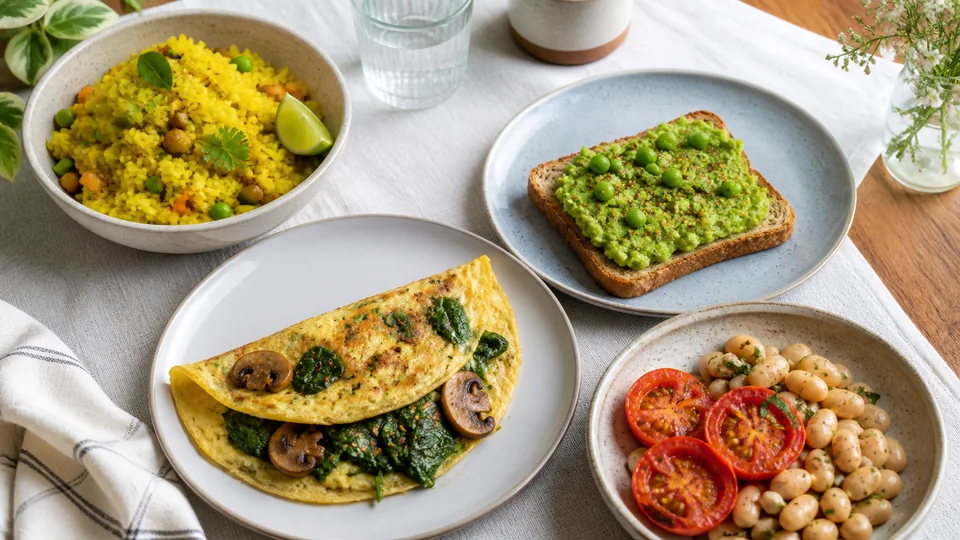
This definition-first approach prevents a common failure: presenting an egg-and-cheese list to a vegan reader or offering vegetables with no planned protein to someone seeking a complete vegetarian meal. The ideas below are modular decisions, not invented recipes. Use the breakfast hub for other morning formats, or return to Pancake World for the wider collection.
For broader context, continue with American Breakfast: Pancakes, Diner Plates and Brunch.
Clarify the three meanings of veg
Vegetable-forward
The breakfast includes a substantial vegetable component but may contain meat, fish, eggs or dairy. This lane is useful when the goal is simply to add vegetables without adopting a vegetarian pattern.
Vegetarian
The meal excludes meat, poultry and seafood. Some vegetarian patterns include eggs, dairy or both; others do not. Ask or label rather than assume.
Vegan
The meal excludes animal-derived foods, including eggs and dairy. Honey and certain additives may also matter to individual vegans. Product labels and preparation surfaces need review.
USDA MyPlate identifies beans, peas, lentils, nuts, seeds and soy products as vegetarian protein options; eggs apply for ovo-vegetarians. Utah State University Extension emphasizes balance, variety and planning across vegetables, grains, legumes, nuts, seeds and fruit rather than relying on tofu alone.
Choose the lane before selecting a recipe. A vegetable frittata is vegetarian but not vegan. Tofu scramble can be vegan if every seasoning, fat and accompaniment also fits. A vegetable hash cooked in bacon fat is vegetable-forward but not vegetarian.
Build breakfast from four roles
Use a repeatable assembly system:
| Role | Vegetarian options | Vegan options | Decision |
|---|---|---|---|
| protein anchor | eggs, yogurt, cottage cheese, cheese, beans, tofu, nuts, seeds | beans, lentils, tofu, tempeh, nuts, seeds | choose one visible anchor |
| vegetables | greens, mushrooms, peppers, tomatoes, onions, zucchini, cabbage | same | manage water and cooking time |
| base | whole-grain toast, oats, potatoes, tortilla, rice, quinoa | same, after label check | select by format and portion |
| finish | yogurt sauce, cheese, herbs, salsa, nuts, seeds | herbs, salsa, tahini, avocado, nuts, seeds | check sugar, sodium and allergens |
The protein anchor should be more than a decorative sprinkle. A few seeds over a large vegetable bowl may contribute texture but not serve the same role as a defined tofu, bean, egg or dairy portion. Individual needs vary, so use the person’s MyPlate plan or professional guidance for amount.
Do not force every breakfast to include a grain. A frittata with vegetables and fruit may already match the intended meal. Conversely, excluding grains automatically does not make a meal more balanced.
Match vegetables to cooking behavior
Vegetables differ in water, density and time.
Fast-cooking and tender
Spinach, tender greens, scallions and herbs need brief heat. Add them near the end so they wilt without flooding the pan.
Water-releasing
Mushrooms, zucchini, tomatoes and frozen spinach can release enough water to dilute eggs, soften toast or prevent browning. Cook, drain or press them before assembly.
Firm and slow
Potatoes, sweet potatoes, winter squash, broccoli stems and carrots need a head start or a complete pre-cooking step. Cut evenly and follow a tested recipe.
Crisp and fresh
Cucumber, cabbage, radish and some peppers can finish a hot breakfast. Keep them chilled and add at service.
Canned or frozen
These are practical and still count as vegetables under MyPlate. Read the package for sauces, sodium and added sugar. Drain canned vegetables when the recipe says so, and account for water released during thawing.
Limit a skillet to one firm vegetable and one or two faster vegetables until the timing is familiar. A pan crowded with six raw ingredients will steam rather than brown.
Idea 1: egg and vegetable toast
Illinois Extension’s Scrambled Egg & Veggie Breakfast Pizza is a complete model: onion and red pepper are sautéed, spinach is wilted, an egg-and-milk mixture is scrambled with the vegetables, cheese is added, and portions are served on toasted whole-wheat English muffins.
The source demonstrates proper sequencing. Vegetables cook before eggs; bread stays separate from the stored egg mixture; servings are defined. Use the source intact when you want its outcome.
For a different vegetable combination, select another tested recipe or make a controlled change and recalculate. Do not add raw mushrooms and tomato to the source while retaining its cook time or nutrition.
This option is ovo-lacto vegetarian, not vegan. A vegan conversion needs a formula developed for tofu or another binder; simply removing eggs and cheese leaves no structure.
Idea 2: tofu scramble with vegetables
Use firm tofu from a complete scramble recipe. Drain or press as directed, crumble to a consistent size and season with a checked blend. Sauté slow or watery vegetables first, then add tofu so it can warm and take on some surface color.
Spinach, mushrooms, peppers, cabbage and onions are workable directions when the recipe accounts for them. Add fresh herbs or salsa after the pan is ready. Check salsa, seasoning blends and meat-like toppings for sugar, sodium and allergens.
Tofu is soy; soy allergy requires another anchor. Beans or lentils may work in a different format, but they are not a one-for-one tofu replacement in texture or moisture.
For packed breakfast, cool promptly and refrigerate. Reheat leftovers to 165°F and add avocado or crisp vegetables afterward.
Idea 3: bean breakfast tacos
Choose a complete bean preparation, warm tortillas and add cooked vegetables. Black beans, pinto beans or lentils can be the protein anchor. Use eggs or cheese only in the vegetarian lane; keep them out for vegan service.
Control moisture by draining beans and salsa. Warm tortillas separately so they stay flexible. Assemble just before eating with cabbage, herbs, avocado or a measured cheese garnish.
Read tortillas for wheat, corn cross-contact, lard, milk and serving size. Refried beans may contain animal fat; a “bean taco” is not automatically vegetarian.
For a group, label vegan and ovo-lacto components and use separate utensils. One shared cheese spoon moving into beans defeats separation.
Idea 4: vegetable hash
Hash works when ingredients enter the pan according to density. Cook the potato or other firm base by a complete method, brown it in a wide pan, then add pre-cooked vegetables and the chosen protein.
Vegetarian options include egg or cheese added by a validated method. Vegan anchors include tofu, tempeh or beans. Do not add all components at the start; eggs overcook while raw potato softens, and wet vegetables prevent crust.
Keep sauce on the side until texture is established. A sweet bottled sauce can turn hash into a wet glaze. Check label and serving amount.
Use leftovers only when their dates and storage histories are known. Reheat the finished combination to 165°F.
Idea 5: savory oats
Cook oats by a complete method, then treat them like a warm grain base. Top with sautéed mushrooms and greens, an egg for ovo-vegetarian service, or tofu and seeds for vegan service.
Keep toppings distinct instead of stirring every ingredient into the pot. This preserves texture and makes portion and allergen information clearer. Cheese, soy sauce, miso and packaged broth can all contribute sodium; choose one salty direction rather than stacking several.
Oats can carry cross-contact concerns for people who require gluten-free food. Use appropriately labeled products and clean utensils. Gluten-free does not mean vegan, and vegan does not mean gluten-free.
Idea 6: frittata with planned vegetables
Illinois Extension’s Kale and Artichoke Frittata is a complete example using potato, onion, kale, artichoke, eggs, milk and cheese. The source cooks potato and onion, wilts kale, transfers vegetables to a defined dish, adds the egg mixture and bakes until set.
This is a useful group breakfast because the yield is defined and wedges can be portioned. It is not a blank formula. Replacing kale with frozen spinach, omitting potato or doubling cheese changes water, depth and nutrition.
Egg dishes need 160°F. Refrigerate leftovers within two hours. Reheat cooked egg dishes to 165°F.
For vegan guests, make a separate tested vegan bake rather than calling a slice without cheese vegan; eggs and milk remain.
Idea 7: vegetable strata
Strata combines bread, vegetables and an egg-based binder. Illinois Extension’s Vegetable Strata pre-cooks vegetables and garlic, cools them, combines them with whole-wheat bread, eggs and cream cheese, then uses a defined dish, bake sequence and cheese finish.
Pre-cooking is essential because raw vegetables would release water into bread and custard. The formula is ovo-lacto vegetarian. It is not converted to vegan by removing egg, cream cheese and cheese; those ingredients provide structure and moisture.
Use strata when a bread-based sliceable breakfast fits the group. Keep a lighter salad or fruit side separate. For allergies, note wheat, egg and milk explicitly.
Idea 8: yogurt, fruit and seed bowl
This no-cook option suits lacto-vegetarian breakfast. Choose plain yogurt, add fruit and use a measured seed or nut topping. Sweetened yogurt, granola, dried fruit and honey all change added sugars.
For vegan service, choose a fortified plant-based yogurt whose exact protein, calcium, vitamin D, added-sugar and allergen information meets the plan. Coconut-, almond-, oat- and soy-based products are not nutritionally interchangeable.
Keep crunchy ingredients separate until eating. Refrigerate the bowl at 40°F or below. A packed parfait requires adequate cold storage.
Idea 9: breakfast grain bowl
Use cooked brown rice, quinoa or another whole grain as a base. Add roasted or sautéed vegetables and choose beans, lentils, tofu, egg or cheese as the anchor.
Arrange components in zones so the diner can control sauce. A bowl with several wet vegetables, salsa and yogurt can become soup-like. Keep one fresh, one cooked and one crisp component.
Cook grains through a complete method and cool leftovers promptly in shallow containers. Date every component; assembling several leftovers does not reset their storage clocks. Reheat the hot portion to 165°F and add chilled garnish afterward.
Idea 10: breakfast salad
A salad can be breakfast when it includes a stable anchor and deliberate dressing. Start with greens or cabbage, add cooked vegetables or fruit, then choose egg, beans, tofu, yogurt-based dressing, nuts or seeds according to the lane.
Keep the dressing small and specific. Wash produce under running water and dry leaves so dressing adheres. Keep hot components separate until service if they would wilt the entire bowl.
Idea 11: vegetable pancake or waffle plate
Use a tested savory pancake or waffle recipe that defines the vegetable preparation. Grated zucchini, carrot, corn or greens cannot be added freely to a sweet batter without changing water and structure.
Pair the finished pancake with plain yogurt and herbs for vegetarian service or a verified vegan sauce. Avoid syrup unless a sweet-savory contrast is deliberate.
Do not call a commercial plant-based mix vegan without reading instructions and allergen statements. Required eggs or milk may appear only in the preparation directions.
Idea 12: leftovers-on-toast
Toast can carry roasted vegetables, beans, tofu, egg, cottage cheese or avocado. Select one substantial layer and one finish. Piling several wet leftovers on bread causes collapse.
Reheat cooked vegetables and protein to their applicable endpoint before placing them on toast. Keep fresh avocado, herbs and cold sauce for the end. Use a sturdy bread whose ingredient and allergen label fits the eater.
This format is useful for small portions but not a way to rescue leftovers with an unknown date.
Plant-based protein planning
MyPlate lists beans, peas, lentils, nuts, seeds and soy products as vegetarian choices. Utah State Extension advises rotating foods rather than relying only on tofu. Use that as a weekly planning principle:
- tofu or tempeh on one morning;
- beans or lentils on another;
- nuts or seeds with yogurt or oats;
- eggs or dairy on ovo-lacto days;
- fortified foods where the vegan plan requires them.
Vegans need particular attention to vitamin B12 because it is found naturally mainly in animal foods; Utah State Extension flags fortified foods and supplementation as planning issues. A breakfast article should not prescribe a supplement dose. Work with a registered dietitian or clinician for individual needs.
Iron, calcium, vitamin D, iodine and other nutrients may also require attention depending on the pattern. Avoid claiming that one smoothie or tofu scramble makes a diet complete.
Labels and allergens
Vegetarian and vegan foods can contain major allergens. Check:
- soy in tofu, tempeh and meat substitutes;
- milk and egg in vegetarian recipes;
- wheat in breads, tortillas and sauces;
- sesame in tahini and some seasonings;
- peanuts and tree nuts in spreads and toppings;
- hidden animal ingredients in refried beans, pastry, broth and prepared sauces.
Keep original packaging for group service. Use separate utensils and clean surfaces. A vegan label does not mean allergen-free, low sodium, low sugar or gluten-free.
Compare Nutrition Facts at matched serving sizes. Meat substitutes vary widely in protein, sodium, saturated fat and carbohydrate. Do not rank the category from one product.
Batch-prep vegetables without making them soggy
Prepare components, not fully assembled breakfasts:
- roast or sauté firm vegetables;
- cook one grain or potato base;
- prepare one bean, tofu or egg anchor;
- wash and dry fresh greens;
- portion sauces separately;
- label every container with date and allergens.
Cool cooked foods rapidly in shallow containers. USDA says refrigerated leftovers are generally used within three to four days. Use the oldest component first; combining it with a newly cooked item does not extend its life.
For reheating, spread food evenly, cover when moisture retention is needed, stir or rotate, allow standing time and check several places for 165°F. Add crisp vegetables and herbs afterward.
Keep a practical veg breakfast pantry
A useful pantry is organized by role, not by novelty products. Keep one or two options in each group:
- shelf-stable protein: beans, lentils, unsalted nuts, seeds or a nut or seed butter;
- grain or base: oats, a whole grain, tortillas or bread that can be frozen in portions;
- flavor: dried herbs, spices, vinegar, shelf-stable hot sauce or a low-sodium broth used by a complete recipe;
- backup vegetables: plain canned tomatoes, peppers or mushrooms and unsauced frozen vegetables;
- finish: shelf-stable seeds, with refrigerated herbs, yogurt or cheese purchased in manageable amounts.
Read labels before placing an item in a default category. A canned bean in sweet sauce is not interchangeable with plain beans. A seasoning mix may contain milk, wheat or added sugar. A vegetable burger is a formulated product, not simply compressed vegetables.
In the refrigerator, keep raw ready-to-eat produce above sealed raw animal foods when the kitchen also serves meat. Label cooked grains, beans, tofu and vegetables separately. This lets you combine only the amount needed and track the oldest component.
Create an emergency breakfast pair that needs no recipe improvisation: plain yogurt plus fruit and seeds for lacto-vegetarian service, or whole-grain toast plus a labeled nut or seed butter and fruit for vegan service. These options still require portion, allergen and product checks, but they reduce reliance on an unverified breakfast substitute.
Plan with the season without making availability claims
Seasonal produce varies by region and retailer, so use this as a cooking-behavior map rather than a calendar promise.
| Produce direction | Breakfast format | Preparation need | Protein match |
|---|---|---|---|
| tender greens and herbs | scramble, frittata or toast | wash, dry and wilt briefly | egg, tofu or beans |
| peppers and tomatoes | tacos or savory bowl | cook or drain to control water | beans, egg or tempeh |
| zucchini and mushrooms | hash or strata | sauté until released liquid evaporates | tofu, egg or cheese |
| cabbage and carrots | taco, salad or stir-fry breakfast | shred evenly; keep some crisp | beans, tofu or seeds |
| broccoli and cauliflower | roasted bowl or egg bake | cut evenly and pre-cook | egg, lentils or dairy |
| winter squash and roots | hash or grain bowl | roast or cook fully before assembly | beans, tofu or egg |
Choose produce based on condition, intended texture and storage capacity. A discounted large quantity is not useful if it cannot be washed, cooked, cooled and eaten safely. Frozen plain vegetables often provide better backup than fresh produce held too long.
When substituting one vegetable for another in a source recipe, match water and density as well as flavor. Spinach cannot automatically replace broccoli by volume, and raw tomato cannot replace roasted pepper without altering moisture. Record the change and treat the new version as unverified until its structure and endpoint are checked.
Serve a mixed vegetarian and vegan brunch
The simplest safe service is a component bar with clear lanes, not one ambiguous casserole. Offer a vegan base such as cooked grains, potatoes or a tested tofu dish; a separate ovo-lacto egg dish; two vegetables; and toppings in labeled containers.
Arrange the table in this order:
- plates and base;
- hot vegan protein;
- hot egg or dairy dish on a separate tray;
- cooked vegetables;
- cold garnishes and sauces;
- bread or tortillas;
- original labels and allergen notes.
Give every dish its own utensil. Position vegan food before egg and dairy items so utensils and drips are less likely to move backward. If allergy control is required, use a separately prepared and protected meal rather than relying only on buffet position.
Produce small hot batches. Hold hot food at 140°F or warmer and cold food at 40°F or below; otherwise apply the time boundary. Do not keep replenishing an old tray with new food. Replace it with a clean vessel and record when service began.
For names, write “vegan tofu and pepper scramble,” “vegetarian egg and spinach bake,” or “vegetable-forward hash with meat served separately.” Specific language respects the three veg meanings and helps guests make a decision without interrogating every cook.
Use leftovers without repeating the same breakfast
One tray of roasted vegetables can support several formats when the source storage window is preserved:
- day one: grain bowl with beans;
- day two: toast with egg or tofu;
- day three: hash with a newly cooked potato base;
- final safe day: a complete strata or frittata only if the older component remains within its limit.
The sequence is conceptual. The actual final day depends on when the vegetables were cooked, how quickly they cooled and the recipe-specific guidance. A new egg or sauce does not renew old vegetables.
Change texture rather than masking age. Keep one serving crisp, another warm and another paired with a fresh garnish. If a component shows spoilage or its history is unknown, discard it. Reheating to 165°F does not reverse unsafe storage.
A seven-day rotation
| Day | Format | Protein anchor | Vegetable plan |
|---|---|---|---|
| Monday | toast | eggs or tofu | peppers and spinach |
| Tuesday | tacos | beans | cabbage and salsa |
| Wednesday | oats | yogurt or seeds | mushrooms and greens |
| Thursday | hash | tofu, tempeh or egg | potato plus peppers |
| Friday | bowl | lentils or cottage cheese | roasted vegetables |
| Saturday | frittata or vegan bake | recipe-defined | kale and artichoke direction |
| Sunday | salad or strata | beans, egg or dairy | fresh and cooked mix |
This rotation is a planning map, not a prescription. Exact portions and recipes depend on the eater. The purpose is to vary anchors and vegetable textures.
Common mistakes
Treating vegetarian and vegan as synonyms
Ask which animal foods, if any, are included. Label every dish accurately.
Adding vegetables without a protein decision
Vegetables add color and texture, but the meal still needs a deliberate anchor when that is the goal.
Overcrowding the skillet
Cook firm and watery vegetables in stages. Otherwise, the pan steams and eggs or tofu become wet.
Assuming meat substitutes are nutritionally identical
Compare exact labels for serving size, protein, sodium, saturated fat, carbohydrate and allergens.
Removing eggs from a baked dish
Eggs bind and set frittata and strata. Use a tested vegan recipe rather than deleting them.
Ignoring B12 in a vegan pattern
Use qualified guidance to plan fortified foods or supplementation. Do not rely on an unverified food claim.
Keeping mixed leftovers too long
Track the oldest component and apply the shorter safe period.
Frequently asked questions
What does veg breakfast mean?
It may mean vegetable-forward, vegetarian or vegan. Clarify the lane before choosing ingredients; the terms are not interchangeable.
What are easy vegetarian breakfast proteins?
Eggs and dairy can fit ovo-lacto patterns. Beans, peas, lentils, tofu, tempeh, nuts and seeds are plant options. Choose a defined portion and varied rotation.
What are vegan breakfast ideas without tofu?
Try bean tacos, lentil or grain bowls, savory oats with seeds, nut or seed butter with fruit and toast, or a complete vegan pancake recipe. Check labels and nutrient planning.
How do I add vegetables to eggs without water?
Cook mushrooms, zucchini, spinach and tomatoes first as the recipe directs, evaporate or drain liquid, cool if needed, then add eggs.
Can I use frozen vegetables?
Yes. MyPlate recognizes frozen vegetables. Read the ingredient list, thaw or cook as directed and drain released water before adding them to eggs or bread.
What temperature should vegetable egg dishes reach?
FDA guidance sets 160°F for egg dishes. Reheated cooked egg dishes and general leftovers should reach 165°F.
Are vegan meat substitutes always healthier?
No universal claim is supported. Products differ in serving size, protein, sodium, fat, carbohydrate and allergens. Compare exact labels.
How long do prepared veg breakfasts keep?
Follow the recipe and product instructions. USDA gives a general three-to-four-day refrigerator window for leftovers at 40°F or below; use the shorter applicable period.
Final decision
The most useful veg breakfast is clearly labeled, built around a deliberate protein anchor and designed for the way its vegetables cook. Decide vegetable-forward, vegetarian or vegan first. Then choose a format—toast, tacos, hash, oats, frittata, strata, bowl or salad—and use one complete method.
Rotate beans, lentils, tofu, tempeh, nuts, seeds, eggs and dairy as the chosen pattern allows. Control vegetable moisture, preserve allergen information and keep food-safety endpoints visible. Variety comes from planned roles, not from putting every vegetable in one pan.
Explore related Pancakes World guidance on American Pancakes, Maple Syrup, and Maple Syrup Pancakes.
Sources and editorial references
- USDA MyPlate, “Protein Foods Group”:
https://www.myplate.gov/web/web/eat-healthy/protein-foods - USDA MyPlate, “Vegetable Group”:
https://www.myplate.gov/web/web/eat-healthy/vegetables - USDA MyPlate, “Start Simple with MyPlate”:
https://www.myplate.gov/sites/default/files/2024-06/Tipsheet-1-Start-Simple-With-MyPlate.pdf - Utah State University Extension, “Plant-Powered: A Guide to Balanced Vegan and Vegetarian Eating”:
https://extension.usu.edu/nutrition/research/vegan-and-vegetarian-eating - Illinois Extension, “Scrambled Egg & Veggie Breakfast Pizza”:
https://extension.illinois.edu/food/recipes/scrambled-egg-veggie-breakfast-pizza - Illinois Extension, “Kale and Artichoke Frittata”:
https://eat-move-save.extension.illinois.edu/eat/recipes/kale-and-artichoke-frittata - Illinois Extension, “Vegetable Strata”:
https://extension.illinois.edu/sites/default/files/vegetable_strata.pdf - U.S. Food and Drug Administration, “What You Need to Know About Egg Safety”:
https://www.fda.gov/media/82227/download - USDA Food Safety and Inspection Service, “Leftovers and Food Safety”:
https://www.fsis.usda.gov/food-safety/safe-food-handling-and-preparation/food-safety-basics/leftovers-and-food-safety