Uk pancake batter
At Pancakes World, for UK pancake batter, choose a complete thin-pancake formula based on plain flour, egg and milk, with any measured water and pan oil stated separately. Whisk to the source’s smooth, thin consistency, add the liquid gradually if its method requires that, and cook one measured ladle in a small, properly heated frying pan. Tilt immediately to cover the base, wait until the underside releases and is cooked, then turn and finish the second side flat. Do not replace plain flour with self-raising flour or expect a thick, fluffy pancake. Never taste raw batter. Use the NHS formula below for exact quantities, yield, chill allowance and timing because the editorial platform has no project test record for this route.
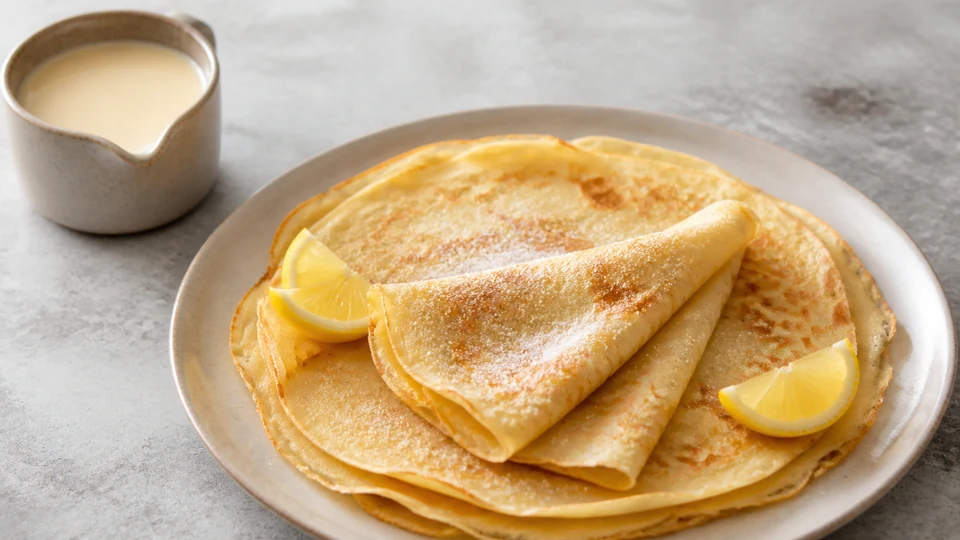
This guide treats a UK pancake as a thin, pan-swirled pancake. It is a method and selection page, not a new formula. The pancake science hub explains wider batter behaviour, while Pancake World opens the full collection.
| Guide sections |
|---|
| Choose the thin UK style first |
| What the core ingredients do |
| Select one complete formula |
| Mix without chasing lumps |
For broader context, continue with Pancake Ingredients and Substitutions.
Choose the thin UK style first
The phrase “UK pancake batter” is useful only after the target is clear. The NHS Healthier Families recipe uses plain flour, one large egg and milk, plus measured cold water. It cooks the mixture as a thin layer that is swirled across the base of a small pan. That is the reference style for this page.
A small raised pancake is a different architecture. Leicester City Council publishes a version using self-raising and wholemeal flour, separated eggs and milk. The whites are whipped and folded in, and the batter is portioned into small rounds. That source is valid for its own result, but it should not be merged with the thin NHS method.
Decide before measuring:
- choose plain flour and the thin-batter route for a flexible, pan-sized pancake;
- choose a dedicated raised formula if you want small, thicker rounds;
- do not add baking powder or swap flour merely because the first thin pancake is not fluffy.
What the core ingredients do
Plain flour
Plain flour supplies the dry structure without the built-in raising system of self-raising flour. Use the precise flour named by the complete source. Wholemeal, gluten-free and self-raising products are not automatic one-for-one replacements.
Flour is also a raw food. FDA guidance says ordinary flour has generally not undergone a kill step, so uncooked batter should not be tasted. Keep flour and splashed batter away from ready-to-eat food and clean hands, bowls, whisks and worktops after handling.
Egg
Egg binds the batter and sets during cooking. Keep it refrigerated, use a clean uncracked egg, and prevent raw egg from contacting ready-to-eat toppings. An egg replacement creates another formula and needs its own authoritative method.
Milk and measured water
Milk and any additional water control how readily the batter spreads. The NHS formula includes both, so calling it a flour-egg-milk batter must not hide the water. Use its measured amount. A random splash can turn a controlled thin batter into one that tears or cooks unevenly.
Pan oil
Oil is outside the core batter but remains part of cooking. The NHS source adds a few drops for each pancake. A non-stick label does not guarantee release without correct pan condition, heat, oil and turn timing.
Select one complete formula
The NHS recipe is the primary control because it supplies exact quantities, preparation time, cooking time, yield, thin-batter cue, pan choice, portion, swirl, turn instruction, short covered chill allowance and serving idea.
Tees Valley Combined Authority and Portsmouth City Council publish comparable thin British pancake methods. Both gradually incorporate milk and cook a thin layer in a non-stick pan. Their quantities and detailed sequences differ. Use them as alternative complete sources, not as a collection of interchangeable instructions.
Reject a recipe that omits any of these:
- exact flour type and amount;
- egg size or measured amount;
- milk and water amounts;
- pan-oil direction;
- mixing order and final consistency;
- pan size or useful equivalent;
- heat level;
- portion and spreading method;
- turn cue and second-side finish;
- yield and storage guidance.
Mix without chasing lumps
Follow the chosen source order. The NHS method combines flour, egg, milk and its measured water and whisks to a smooth, thin batter. Tees Valley instead begins with a smaller milk addition and forms a smooth paste before gradually loosening it. Either route can be coherent; combining half of each is not necessary.
If using a gradual-liquid method:
- Put the measured flour in the bowl.
- Add egg and only the first liquid portion specified.
- Work from the centre so dry flour joins the paste progressively.
- Add the remaining liquid in the source’s stages.
- Stop when the stated smooth, thin cue is reached.
If lumps remain, check whether dry flour is stuck at the bottom or sides. Do not pour in extra milk by eye before confirming every measured ingredient has been added. A sieve can remove stubborn dry lumps, but it cannot correct a wrong ratio.
Rest or chill the batter only as the recipe permits. The NHS source allows its covered batter to chill for up to four hours and instructs stirring before cooking. That is not evidence for overnight storage or a universal rest.
Control the first pancake
Heat the specified pan and add the stated oil. Measure one ladle or source-sized portion. Pour and tilt at once so the batter forms a thin, even layer over the base.
The first pancake checks four variables:
- Spread: it should reach the intended area without leaving a thick centre.
- Release: the underside should cook enough to lift cleanly.
- Colour: it should not scorch before the top loses its raw appearance.
- Finish: the second side should cook flat, without folded raw pockets.
This is an execution check, not a Pancake World test claim.
Turn only when the underside meets the source cue. Tees Valley uses a palette knife, while the NHS method simply directs the cook to flip after the underside cooks. Choose a wide utensil that supports the thin pancake. Lay the second side flat; a fold can trap wet batter.
Diagnose common failures
Batter will not cover the pan
Check flour identity, measurement and whether the specified water was included. Confirm the pan is the required size. Do not add unmeasured liquid until those controls are correct.
Pancake tears during the turn
It may be turned too early, spread too thinly for the formula, or lifted with too little support. Wait for release, slide the utensil underneath and turn decisively. If the underside is already too dark, reduce heat for the next piece rather than rushing the turn.
Edges crisp before the centre cooks
The pan may be too hot or the layer uneven. Let the heat settle, measure the next portion and tilt promptly. Do not stack a pancake with wet egg-and-flour batter hidden inside.
Batter contains persistent lumps
Scrape the bowl and use the source’s gradual-liquid technique on the next batch. Adding all the liquid at once and then over-whisking is not the only route to smooth batter.
Pancake is thick and fluffy
Check whether self-raising flour, baking powder or a raised formula was used. That is a different pancake style, not a failed version of the thin target.
Fillings, toppings and allergen control
Lemon and sugar are traditional serving choices within the NHS recipe, but sweet or savoury fillings can be used when they fit the complete meal. Keep toppings outside the batter until the cooking method is stable.
Flour, egg and milk introduce wheat, egg and milk allergens. Additional spreads, chocolate, nuts, cheese, sauces and cooking oils can add others. The Food Standards Agency advises asking the guest what they can eat, checking packaged ingredient lists, keeping allergens separate, retaining ingredient information, and cleaning hands, worktops and equipment.
Do not call a substituted pancake allergy-safe from the ingredient list alone. Cross-contact through a pan, brush, spatula, cloth or topping spoon remains possible. If an unsuitable ingredient enters the batter, start again rather than removing the visible piece.
Holding, chilling and leftovers
Serve pancakes as they are cooked or keep them warm only by the complete recipe’s method. The NHS source allows a low oven while the batch is completed. Avoid open-ended warm holding that dries the edges and obscures when the batch was made.
For cooked leftovers, Food Standards Agency guidance says food should be cooked properly, cooled and placed in the fridge within two hours. Its chilling guidance recommends a fridge at 5°C or below and cooling cooked food quickly enough to refrigerate it within one to two hours.
Follow the shortest storage limit required by the filling, topping or selected recipe. Reheat only once when following general FSA household guidance, and heat until steaming hot throughout. A cold leftover may be eaten only when it was cooked, cooled and chilled correctly.
Do not store raw batter overnight unless a complete source explicitly supports that method. The NHS four-hour covered-chill instruction is the evidence boundary used here.
Frequently asked questions
What is UK pancake batter made from?
The NHS thin-pancake formula uses plain flour, egg and milk, plus measured cold water. Oil is used in the pan, and lemon and sugar are serving additions. Exact amounts and yield remain with the authoritative source.
Should the batter be thick or thin?
For this route, thin and smooth enough to swirl across the pan base. A thick batter for small raised pancakes belongs to another formula.
Do UK pancakes need baking powder?
Not in the NHS thin style. Adding it changes the architecture. Use a dedicated raised recipe if lift is the goal.
Can I use self-raising flour?
Only in a formula written for it. Do not substitute it into the plain-flour NHS method and expect the same thin result.
Should the batter rest?
Follow the selected source. The NHS recipe allows its covered batter to chill for up to four hours and says to stir before cooking. This page does not invent a longer rest.
Why does the first pancake stick?
Check pan condition, heat, oil, portion and turn timing. A non-stick pan still needs the source’s preparation. Let the underside cook enough to release before turning.
Can I make the batter dairy-free or egg-free?
Choose a complete formula designed for the replacement. Milk and egg perform different jobs, and a substitution also changes allergen controls. This route provides no universal conversion.
Is this the same as an American pancake?
Not the thick raised style. This page targets a thin, pan-sized pancake made with plain flour and spread by tilting the pan.
Final checklist
Before cooking, confirm:
- the target is a thin UK pancake;
- plain flour, egg, milk and any water are exactly measured;
- pan oil and toppings are disclosed;
- the batter matches the source’s smooth, thin cue;
- any chill stays within the source window;
- the pan size and heat match the method;
- each portion is measured and swirled immediately;
- the underside releases before turning;
- the second side lies flat and the centre is fully cooked;
- raw batter is never tasted;
- allergens and cross-contact are checked;
- leftovers are cooled and chilled under FSA guidance;
- no project test, nutrition result or universal substitution is claimed.
Explore related Pancakes World guidance on American Pancakes, American Breakfast: Pancakes, Diner Plates and Brunch, and Maple Syrup.
Sources and editorial references
- NHS Healthier Families —
https://www.nhs.uk/healthier-families/recipes/easy-sugar-and-lemon-pancakes/ - Tees Valley Combined Authority —
https://teesvalley-ca.gov.uk/visit/get-inspired/traditional-british-pancake-recipe/ - Portsmouth City Council —
https://www.portsmouth.gov.uk/wp-content/uploads/2020/04/health-fit-food-fast.pdf - Leicester City Council —
https://www.leicester.gov.uk/public-health-and-safety/public-health/improve-your-health/healthy-pancakes - Food Standards Agency cooking guidance —
https://www.food.gov.uk/safety-hygiene/cooking-your-food?ContensisTextOnly=true - Food Standards Agency chilling guidance —
https://www.food.gov.uk/research/behaviour-and-perception/storing-chilled-foods-at-incorrect-temperatures - Food Standards Agency allergy-safe home cooking guidance —
https://www.food.gov.uk/print/pdf/node/22261 - U.S. Food and Drug Administration flour safety guidance —
https://www.fda.gov/food/buy-store-serve-safe-food/handling-flour-safely-what-you-need-know - USDA Agricultural Research Service FoodData Central —
https://fdc.nal.usda.gov/