Turkey breakfast sandwich
At Pancakes World, the editorial platform presents this evidence-bounded guide for the exact route intent.
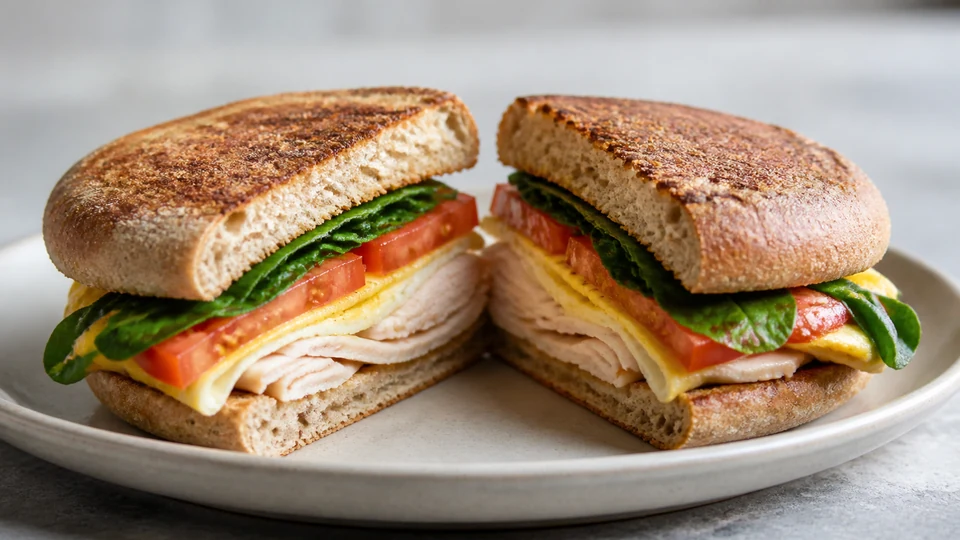

This guide belongs to Breakfast. A turkey breakfast sandwich needs four deliberate choices: the turkey product, the egg or plant-based binder, the bread, and a moisture-controlled accent. Use fully cooked turkey or cook raw turkey with a validated method before it approaches the assembly area. Choose bread sturdy enough for the filling, cook the egg component to the required endpoint, and use greens, tomato, sauce, or cheese sparingly so the sandwich remains portable. For make-ahead service, cool cooked components before wrapping and refrigerate promptly. Reheat evenly and add crisp or watery vegetables afterward. Do not claim a sandwich is healthier, high-protein, or low-fat without calculating the exact ingredients and serving.
For Turkey breakfast sandwich, the actual parent collection is Breakfast. Pancake World connects this exact intent with broader recipe, breakfast, and practical kitchen coverage.
| Guide sections |
|---|
| Choose the route that fits |
| Practical sequence |
| Failure modes and corrections |
| Route-specific diagnostics |
For broader context, continue with American Breakfast: Pancakes, Diner Plates and Brunch.
Choose the route that fits
Turkey selection
Sliced cooked turkey, turkey sausage, and a turkey patty differ in salt, fat, allergens, and cooking needs. Read the label and distinguish ready-to-eat meat from a raw product requiring full cooking.
Egg layer
A folded egg, firm scramble, or validated egg-free patty creates a stable layer when sized to the bread. Avoid a runny center for a wrapped make-ahead sandwich unless immediate service and a tested method support it.
Bread structure
English muffins, rolls, bagels, biscuits, and toast compress and absorb moisture differently. Toast or griddle only as needed, and match filling thickness to the bite.
Flavor accent
Mustard, herbs, pickled vegetables, cheese, or a measured sauce can prevent blandness. Keep wet ingredients away from the bread until service or use a protective layer.
Practical sequence
- Identify whether the turkey is raw, ready-to-eat, or a reheatable cooked product.
- Cook turkey and egg components with separate clean tools and verified endpoints.
- Toast the bread while hot fillings rest briefly so trapped steam is reduced.
- Assemble in flat layers, place sauce strategically, and serve or cool according to plan.
- For make-ahead portions, label, refrigerate promptly, and reheat before adding fresh vegetables.
Failure modes and corrections
- Correction 1: A thick mound of filling slides because components are not shaped to the bread.
- Correction 2: Wrapping a steaming sandwich immediately creates condensation and a soggy crust.
- Correction 3: Raw turkey packaging can contaminate condiment handles and ready-to-eat greens.
- Correction 4: Microwave reheating without rotation leaves a cold center beside tough bread edges.
Route-specific diagnostics
Diagnostic 1: turkey selection
In a current turkey breakfast sandwich batch, inspect this control before changing ingredients or equipment: Sliced cooked turkey, turkey sausage, and a turkey patty differ in salt, fat, allergens, and cooking needs. The observable checkpoint is specific: Read the label and distinguish ready-to-eat meat from a raw product requiring full cooking. Write down the vessel or pan, portion, elapsed time, holding condition, and what the center or service line actually looked like. This creates a route-bound record; it does not pretend that an untested result is universal.
Current-batch fix. A thick mound of filling slides because components are not shaped to the bread. Stop the batch at the first safe decision point. Compare the actual result with the selected source or current package direction, isolate one cause, and make one measured correction. If safety, allergen status, or product identity is uncertain, do not rescue the food through guesswork; set it aside and restart from verified inputs.
Next-batch prevention. Begin the next turkey breakfast sandwich attempt with this written action: Identify whether the turkey is raw, ready-to-eat, or a reheatable cooked product. Keep the successful equipment, quantity, and timing fixed while testing the next variable. A changed brand, appliance, pan, flour, filling, or serving scale is a changed input and must be recorded rather than silently treated as the same batch.
Diagnostic 2: egg layer
In a current turkey breakfast sandwich batch, inspect this control before changing ingredients or equipment: A folded egg, firm scramble, or validated egg-free patty creates a stable layer when sized to the bread. The observable checkpoint is specific: Avoid a runny center for a wrapped make-ahead sandwich unless immediate service and a tested method support it. Write down the vessel or pan, portion, elapsed time, holding condition, and what the center or service line actually looked like. This creates a route-bound record; it does not pretend that an untested result is universal.
Current-batch fix. Wrapping a steaming sandwich immediately creates condensation and a soggy crust. Stop the batch at the first safe decision point. Compare the actual result with the selected source or current package direction, isolate one cause, and make one measured correction. If safety, allergen status, or product identity is uncertain, do not rescue the food through guesswork; set it aside and restart from verified inputs.
Next-batch prevention. Begin the next turkey breakfast sandwich attempt with this written action: Cook turkey and egg components with separate clean tools and verified endpoints. Keep the successful equipment, quantity, and timing fixed while testing the next variable. A changed brand, appliance, pan, flour, filling, or serving scale is a changed input and must be recorded rather than silently treated as the same batch.
Diagnostic 3: bread structure
In a current turkey breakfast sandwich batch, inspect this control before changing ingredients or equipment: English muffins, rolls, bagels, biscuits, and toast compress and absorb moisture differently. The observable checkpoint is specific: Toast or griddle only as needed, and match filling thickness to the bite. Write down the vessel or pan, portion, elapsed time, holding condition, and what the center or service line actually looked like. This creates a route-bound record; it does not pretend that an untested result is universal.
Current-batch fix. Raw turkey packaging can contaminate condiment handles and ready-to-eat greens. Stop the batch at the first safe decision point. Compare the actual result with the selected source or current package direction, isolate one cause, and make one measured correction. If safety, allergen status, or product identity is uncertain, do not rescue the food through guesswork; set it aside and restart from verified inputs.
Next-batch prevention. Begin the next turkey breakfast sandwich attempt with this written action: Toast the bread while hot fillings rest briefly so trapped steam is reduced. Keep the successful equipment, quantity, and timing fixed while testing the next variable. A changed brand, appliance, pan, flour, filling, or serving scale is a changed input and must be recorded rather than silently treated as the same batch.
Diagnostic 4: flavor accent
In a current turkey breakfast sandwich batch, inspect this control before changing ingredients or equipment: Mustard, herbs, pickled vegetables, cheese, or a measured sauce can prevent blandness. The observable checkpoint is specific: Keep wet ingredients away from the bread until service or use a protective layer. Write down the vessel or pan, portion, elapsed time, holding condition, and what the center or service line actually looked like. This creates a route-bound record; it does not pretend that an untested result is universal.
Current-batch fix. Microwave reheating without rotation leaves a cold center beside tough bread edges. Stop the batch at the first safe decision point. Compare the actual result with the selected source or current package direction, isolate one cause, and make one measured correction. If safety, allergen status, or product identity is uncertain, do not rescue the food through guesswork; set it aside and restart from verified inputs.
Next-batch prevention. Begin the next turkey breakfast sandwich attempt with this written action: Assemble in flat layers, place sauce strategically, and serve or cool according to plan. Keep the successful equipment, quantity, and timing fixed while testing the next variable. A changed brand, appliance, pan, flour, filling, or serving scale is a changed input and must be recorded rather than silently treated as the same batch.
Batch review before service
For turkey breakfast sandwich, review the intended eater, portion count, equipment capacity, and dietary boundary together. Confirm that the article has not turned a planning example into a tested recipe, a label-reading step into a current product claim, or a practical option into a universal ranking. Keep the final decision tied to the exact source list below and to the package or recipe currently in hand.
Storage, service, and safety
Treat raw turkey as raw poultry and prevent cross-contamination. Follow the product and validated recipe for cooking temperature and rest, and keep cooked meat away from its original tray. Eggs need their own safe endpoint. Refrigerate assembled sandwiches promptly; when reheating, confirm the center is hot and avoid repeated warm-cool cycles.
Connected guides
For the next practical step, compare Breakfast pancake styles, Pantry-staple breakfast plan, and Budget breakfast for a large group.
Frequently asked questions
Can deli turkey be used cold?
Use the current label and individual health guidance; some higher-risk diners need stricter handling. For this turkey breakfast sandwich decision, connect the answer to turkey selection: Sliced cooked turkey, turkey sausage, and a turkey patty differ in salt, fat, allergens, and cooking needs. Then verify the observable boundary rather than relying on the dish name: Read the label and distinguish ready-to-eat meat from a raw product requiring full cooking. Record what was actually used, what remained uncertain, and whether the current batch should proceed, be corrected at a safe checkpoint, or be replaced.
How do I keep it from getting soggy?
Cool fillings, limit watery sauces, toast appropriately, and add fresh produce later. For this turkey breakfast sandwich decision, connect the answer to egg layer: A folded egg, firm scramble, or validated egg-free patty creates a stable layer when sized to the bread. Then verify the observable boundary rather than relying on the dish name: Avoid a runny center for a wrapped make-ahead sandwich unless immediate service and a tested method support it. Record what was actually used, what remained uncertain, and whether the current batch should proceed, be corrected at a safe checkpoint, or be replaced.
Can I freeze it?
Freeze only components and assemblies supported by a tested storage plan; fresh vegetables usually fare poorly. For this turkey breakfast sandwich decision, connect the answer to bread structure: English muffins, rolls, bagels, biscuits, and toast compress and absorb moisture differently. Then verify the observable boundary rather than relying on the dish name: Toast or griddle only as needed, and match filling thickness to the bite. Record what was actually used, what remained uncertain, and whether the current batch should proceed, be corrected at a safe checkpoint, or be replaced.
What makes it filling?
Portion and the full combination matter; avoid unsupported nutrition promises. For this turkey breakfast sandwich decision, connect the answer to flavor accent: Mustard, herbs, pickled vegetables, cheese, or a measured sauce can prevent blandness. Then verify the observable boundary rather than relying on the dish name: Keep wet ingredients away from the bread until service or use a protective layer. Record what was actually used, what remained uncertain, and whether the current batch should proceed, be corrected at a safe checkpoint, or be replaced.
Explore related Pancakes World guidance on American Pancakes, Maple Syrup, and Maple Syrup Pancakes.
Sources and editorial references
- USDA FSIS, Shell Eggs from Farm to Table —
https://www.fsis.usda.gov/food-safety/safe-food-handling-and-preparation/eggs/shell-eggs-farm-table - USDA FSIS, Leftovers and Food Safety —
https://www.fsis.usda.gov/food-safety/safe-food-handling-and-preparation/food-safety-basics/leftovers-and-food-safety