Top 100 breakfast foods
At Pancakes World, the top 100 breakfast foods below are a choice catalog, not a claim that one universal ranking exists. Start with pancakes, waffles, oatmeal, eggs, yogurt, fruit, toast, sandwiches, potatoes, casseroles, beans, grain bowls or a portable bake; then narrow the choice by available time, desired texture, cooking equipment and whether the food must travel. The numbered list contains exactly 100 distinct formats in ten practical groups. Use each description as an idea, not as a tested recipe: select a complete formula before cooking, check its yield and labels, and apply the relevant egg, meat, cooling and leftover controls. This guide is broad by design. It helps a reader decide what kind of breakfast to make before choosing a detailed formula. The order makes the catalog easy to scan; it does not represent sales, popularity, nutritional value or a the editorial platform taste test. For narrower ideas, browse the American Breakfast: Pancakes, Diner Plates, and Brunch Context . For the wider editorial collection, visit Pancakes World .
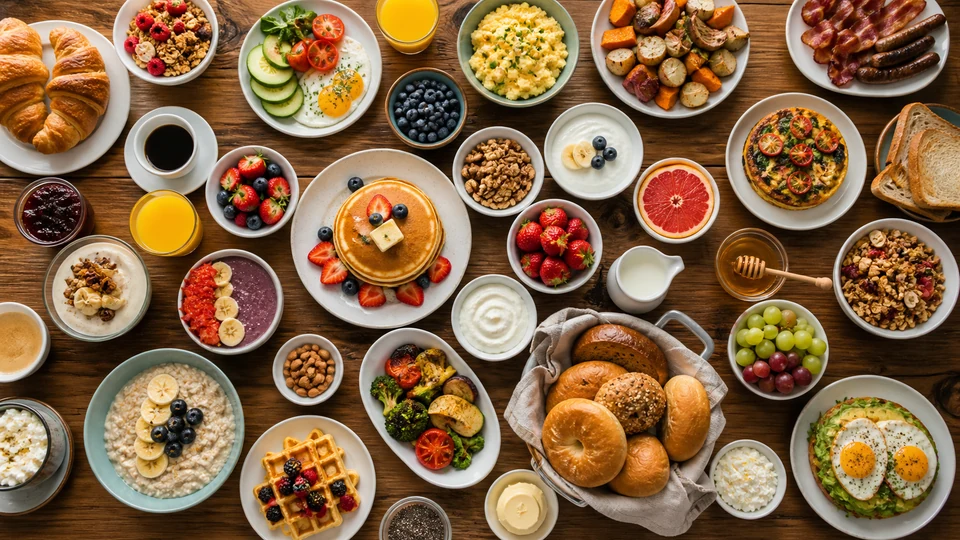
For adjacent decisions around Top 100 breakfast foods, compare a budget breakfast batch plan, a customizable breakfast bar, and breakfast recipes for a practical start.
For broader context, continue with American Breakfast: Pancakes, Diner Plates and Brunch.
How to choose from a list of 100
Begin with four constraints instead of scrolling until a photograph looks appealing.
- Time: decide whether breakfast must be ready in under 10 minutes, can use 20 to 30 active minutes, or can be assembled the day before.
- Texture: choose crisp, soft, creamy, chewy, flaky or spoonable. This removes many unsuitable options immediately.
- Equipment: note whether a skillet, oven, toaster, waffle iron, blender or only a refrigerator is available.
- Service: decide whether the food will be eaten at a table, packed for travel, held for several people or reheated later.
Then choose one numbered format. Find a complete recipe or follow the package directions for that exact food. Confirm ingredient amounts, yield, pan or vessel, time, temperature and observable doneness cues before beginning. A title such as “waffles” or “egg muffins” is not enough information to cook safely or repeatably.
When comparing packaged cereal, yogurt, bread, frozen potatoes or other prepared items, compare like with like. FDA explains that Nutrition Facts values apply to the stated serving size and that serving size is not a recommendation. Check servings per container, then put products on the same serving basis before comparing label values. This catalog supplies no calories or nutrient totals because brands, recipes and portions differ.
1–10: griddle and baked batter breakfasts
These choices suit mornings when a hot surface or oven is available. Batter thickness, leavening, pan temperature and portion size affect the result, so use a complete formula rather than treating the short notes as instructions.
- Buttermilk pancakes. Choose these for a soft stack with browned griddle surfaces. Keep the formula’s flour, liquid, leavener and portion size intact, and turn only when its stated visual cues are present.
- Whole-grain pancakes. This is a useful format when a more textured flour profile is wanted. Do not swap whole-grain flour one-for-one into an unrelated formula unless the recipe explicitly supports that substitution.
- Yeasted waffles. Select this option when advance fermentation is acceptable and crisp grid-shaped portions are the goal. Follow the recipe’s fermentation and refrigeration limits rather than leaving batter at room temperature overnight.
- Quick-leavened waffles. These remove the overnight fermentation step but still require a waffle iron. Use the appliance’s capacity and the recipe’s batter amount to avoid overflow.
- Crêpes. Pick thin, flexible pancakes when fillings or rolled portions matter more than height. A tested formula should specify batter consistency, rest time if any and the amount used per pan.
- Dutch baby. This oven-baked pancake is appropriate when one large pan can be divided at the table. Preheating, vessel material and batter volume must come from the chosen formula.
- Breakfast muffins. Muffins are practical for individual portions and advance baking. Mix-ins change moisture and allergens, so do not add fruit, nuts or chocolate without a formula that accounts for them.
- Biscuits. Select biscuits for a layered or tender bread served alone or split for a sandwich. Dough handling, fat temperature and cutter technique vary by recipe and should not be improvised from this description.
- Scones. These are a shaped quick-bread option with sweet or savory possibilities. Confirm whether the formula expects wedges, rounds or another shape because dimensions affect baking time.
- Quick-bread slices. Banana, pumpkin or another loaf can be baked ahead and portioned after cooling. Use a route-specific tested formula; purées are not interchangeable because their water content and acidity can differ.
Decision shortcut: choose pancakes for a skillet, waffles for an iron, a Dutch baby for one oven vessel, and muffins or quick bread when portions need to be made in advance. If speed matters more than crispness, a reheatable baked portion may be simpler than running a griddle for each diner.
11–20: cereals and spoonable grains
This group ranges from cold cereal to slowly cooked grains. Grain cut and processing level affect liquid ratio and time, so the package or recipe for the exact product controls.
- Rolled-oat oatmeal. Choose a warm, spoonable bowl with a relatively short stovetop or microwave method. Follow the package ratio and allow room for expansion in a microwave-safe bowl.
- Steel-cut oatmeal. Select this when a chewier oat texture and longer cooking process fit the schedule. Do not apply rolled-oat timing to steel-cut oats.
- Overnight oats. This is a refrigerated make-ahead format rather than hot cooked oatmeal. Use a complete formula with an explicit cold-storage period and keep dairy or other perishable ingredients refrigerated.
- Muesli with milk or yogurt. Pick this for an uncooked mixture of grains and additions. Review each packaged component and specify whether the mixture is served immediately or softened under refrigeration.
- Granola and yogurt bowl. Choose contrasting crunchy and creamy textures with minimal assembly. Add granola just before eating if preserving crunch is the priority.
- Ready-to-eat cereal with milk. This is the lowest-equipment cereal format. Compare labels on the same serving basis and account for both cereal and milk when reviewing ingredients or allergens.
- Rice porridge. Use cooked rice or a formula designed to cook rice in additional liquid until spoonable. Leftover rice must have a documented cold history; do not use rice that has remained at room temperature beyond safe limits.
- Grits. Select a smooth or textured corn-based bowl according to the product grind. Instant, quick and stone-ground products do not share one universal liquid ratio or time.
- Breakfast polenta bowl. This is another cornmeal format that can carry savory toppings. Use the exact grind and package directions, then add toppings only after checking their cooking and allergen needs.
- Quinoa breakfast porridge. Choose this when a seed-based spoonable bowl is desired. Follow a formula that specifies whether the quinoa is raw or already cooked; those starting states require different liquid and timing.
For batch preparation, cool cooked grains promptly in shallow containers rather than leaving a deep pot on the counter. Label the preparation date. Reheat only the portion needed and use 165°F (74°C) as the federal endpoint for leftovers.
21–30: egg-centered breakfasts
Egg dishes vary from a single shell egg to deep casseroles. FoodSafety.gov lists firm yolk and white as the cue for shell eggs and 160°F (71°C) for egg dishes such as frittata and quiche. Use a food thermometer for mixed egg dishes rather than relying only on surface color.
- Soft scrambled eggs. Choose these for small curds and immediate table service. Use a tested method and do not serve an undercooked egg mixture to people for whom raw or undercooked egg is unsafe.
- Firm scrambled eggs. Select a more fully set texture for a plate or sandwich. Remove the pan according to the recipe’s cue, remembering that residual heat can continue cooking.
- Folded omelet. This is a skillet format for a limited amount of filling. Cook raw meat or watery vegetables as directed before they enter the egg layer; the brief omelet cooking period is not a universal raw-filling cook step.
- Frittata. Pick this when a thicker mixed egg dish will be sliced into wedges. Confirm skillet or baking-dish dimensions and verify 160°F at the center.
- Poached eggs. Choose this for eggs cooked out of the shell in water. A complete method should set water behavior, time and desired doneness rather than relying on an invented universal minute count.
- Fried eggs. Select the target yolk and white texture before heating the pan. FDA advises cooking eggs until both yolk and white are firm for safety; a softer version carries a different risk decision.
- Hard-cooked eggs. These work for advance preparation and breakfast boxes. Follow an authoritative method, refrigerate promptly and keep shell-on and peeled batches dated.
- Baked eggs in ramekins. Pick this for individual oven portions. Ramekin size, water bath use and additions must come from the formula because they affect heat transfer.
- Egg muffins. These are portioned baked egg mixtures made in a muffin pan. Check the centers for 160°F and cool extras promptly rather than leaving the pan out for grazing.
- Tomato-pepper skillet eggs. Choose eggs cooked in a prepared vegetable sauce when a spoonable skillet meal is wanted. Cook the sauce and any meat fully according to the formula before applying the egg endpoint.
Use clean hands, utensils and surfaces when cracking eggs. Keep raw egg from contacting ready-to-eat toppings. If a shell fragment falls in, remove it with a clean utensil; do not treat the mixture as safe to taste before cooking.
31–40: fruit, yogurt and cold bowls
These options reduce morning cooking but still require ingredient and cold-chain checks. “Cold” does not mean “no preparation”: washed produce, clean tools, dated containers and refrigeration remain relevant.
- Plain yogurt with fresh fruit. Choose a simple two-part bowl and add toppings at service. The yogurt label and the selected fruit determine the actual ingredient and nutrition information.
- Layered yogurt parfait. This separates visible layers of yogurt, fruit and cereal or granola. Pack crunchy components separately if the parfait will wait before eating.
- Cottage cheese and fruit bowl. Pick a spoonable dairy base with pieces of fruit. Check package sodium, serving size and milk-allergen information rather than assigning generic values.
- Chia pudding. This refrigerated seed-and-liquid mixture needs a complete ratio and storage period. Stirring and hydration instructions should come from a specific formula, particularly when texture needs to be repeatable.
- Smoothie bowl. Choose a thick blended base designed to support toppings. Frozen ingredients make the bowl cold but do not preserve it indefinitely; serve promptly or keep it refrigerated.
- Fresh fruit salad. Select this for a mixture of cut fruits with no cooking. Wash intact produce before cutting, use clean equipment and refrigerate cut fruit promptly.
- Baked apples. This is a warm fruit-centered option for oven time. Core and fill according to a tested formula, especially when nuts, dairy or oat toppings are included.
- Broiled grapefruit. Pick this when a warm surface and cool interior are wanted. Use an oven-safe vessel and a source-specific rack position; broilers vary and require close observation.
- Banana with nut or seed butter. This is a fast assembly option with no heating. Confirm the exact nut or seed, check the butter label and prevent cross-contact when allergies are relevant.
- Avocado toast. Choose a mashed or sliced avocado topping on toasted bread. Bread ingredients and optional egg, cheese, seed or seasoning additions must be counted as separate components.
Do not call a bowl allergen-free based on appearance. FDA identifies milk, egg, fish, crustacean shellfish, tree nuts, peanuts, wheat, soy and sesame as the nine major allergens for federal labeling purposes. Review every package and recipe, and manage cross-contact in the actual preparation space.
41–50: toast, sandwiches and handheld formats
Handheld foods solve a transport problem, but fillings can introduce temperature and leakage problems. Decide whether the item will be served hot now, cooled for later, or transported under temperature control.
- Toast with butter and preserves. Pick this for the simplest hot bread format. The bread, spread and preserves all need label review; a single slice can still contain several major allergens.
- Peanut-butter toast. Choose a spreadable, no-cook topping for toasted bread. Peanut is a major allergen, and another nut or seed butter is not automatically a safe equivalent.
- Bagel with cream cheese. This is a chewy bread-and-dairy pairing that can be assembled quickly. Check the bagel for wheat, sesame or other ingredients and keep cream cheese refrigerated.
- English muffin with a spread. Select this for a smaller split bread with crisp cut surfaces. Specify the spread rather than leaving allergens or storage requirements implicit.
- Egg breakfast sandwich. Combine a fully cooked egg portion with bread and selected toppings. Verify a mixed egg patty at 160°F and avoid holding the assembled sandwich at room temperature for an extended commute.
- Biscuit breakfast sandwich. Choose a biscuit when a softer, richer bread profile is wanted. Cook sausage or other ground meat to 160°F before assembly and review the biscuit formula for milk and wheat.
- Croissant breakfast sandwich. Pick laminated pastry for a flaky handheld base. Treat the croissant as a distinct ingredient with its own label; do not assume it has the same composition as ordinary bread.
- Breakfast burrito. This tortilla-wrapped format can contain eggs, beans, potatoes, cheese or cooked meat. Keep fillings modest enough to close the tortilla, and cool or freeze only under a tested make-ahead plan.
- Breakfast quesadilla. Choose a folded or stacked tortilla with a hot filling. Heat until the filling reaches the relevant endpoint, not merely until the tortilla has browned.
- Breakfast tacos. These provide smaller open portions that can be assembled at the table. Keep hot fillings hot and cold garnishes cold until service rather than placing every component out early.
For travel, wrap only after the cooking endpoint is met. If steam makes crispness important, allow the formula’s brief venting step before wrapping, but do not use counter cooling as long-term holding. Transport perishable sandwiches in an insulated container with an adequate cold source unless they will be eaten within the applicable time limit.
51–60: potatoes, casseroles and savory bakes
These foods fit a larger table or a make-ahead schedule, but pan depth and ingredient starting state matter. Frozen, refrigerated and freshly cut potatoes are not interchangeable without a tested method.
- Shredded hash browns. Choose thin potato shreds for broad crisp surfaces. Remove moisture only as the formula directs and avoid crowding the skillet.
- Home fries. Select cubed or sliced potatoes for crisp edges and soft centers. A recipe should specify whether potatoes begin raw, par-cooked or leftover.
- Rösti-style potato cake. This is a large cohesive shredded-potato format turned or finished according to a complete method. Do not infer origin or authenticity from the editorial label.
- Potato and vegetable hash. Pick diced potatoes mixed with cooked vegetables. Cut ingredients consistently and stage them by required cooking time instead of adding everything at once.
- Sweet-potato hash. Choose sweet potato as the starch base and use a dedicated method. Its moisture and browning behavior do not make it a drop-in duplicate of white potato.
- Egg-and-potato breakfast casserole. This is a deep mixed dish for planned portions. Confirm vessel, refrigeration window, center temperature and rest before cutting.
- Bread strata. Select a soaked bread-and-egg bake when day-before assembly is supported. Keep the raw egg mixture refrigerated and verify the center at 160°F.
- Breakfast quiche. Choose a custard filling in a crust for wedge service. A browned crust or top does not prove the center is ready; check the egg filling endpoint.
- Savory breakfast bread pudding. This uses bread pieces in a seasoned egg mixture without necessarily using a pie crust. Follow a formula that controls bread amount, soak and pan depth.
- Breakfast pizza. Pick a crust topped with fully planned breakfast components. Raw sausage, eggs and vegetables cannot be assigned one common bake assumption; use a tested formula that coordinates their starting states.
FoodSafety.gov lists 165°F (74°C) for casseroles containing meat or poultry. For an egg-only casserole, use the egg-dish control of 160°F (71°C). Measure the coolest central area without touching the pan, and check another location when the dish is large or unevenly filled.
61–70: meat, fish, beans and plant-centered savory choices
This group supplies strongly savory formats. The title does not establish whether an ingredient is raw, ready-to-eat, cured, smoked or fully cooked, so package identity and source instructions control.
- Bacon with toast and eggs. Choose this as a composed plate rather than a one-pan assumption. Cook each component by its own method and prevent raw bacon tools from touching finished toast or eggs.
- Breakfast sausage patties. Form or purchase patties with a known raw or cooked status. Ground meat and sausage require 160°F (71°C); color alone is not the acceptance test.
- Turkey sausage. Select a poultry-based sausage only with its exact package directions. Raw ground poultry must reach 165°F (74°C), so do not transfer the pork-sausage endpoint.
- Ham steak breakfast plate. Check whether the ham is ready-to-eat or requires cooking and follow its label. “Ham” alone does not provide a safe temperature instruction.
- Smoked-salmon toast. Choose a refrigerated ready-to-eat fish topping with bread and planned garnish. Maintain refrigeration, review the package date and account for fish as a major allergen.
- Beans on toast. This is a spoonable bean topping over crisp bread. Heat canned or cooked beans according to the selected method and check both components for salt, allergens and serving information if those factors matter.
- Tofu scramble. Pick crumbled tofu cooked with selected seasonings and vegetables. Soy is a major allergen; use a complete formula rather than claiming that tofu behaves exactly like egg.
- Tempeh breakfast hash. Combine cooked tempeh with diced vegetables or potatoes under a dedicated method. Review the package for soy and any grains or cultures listed.
- Bean breakfast bowl. Choose beans as the base for vegetables, grain, egg or salsa. Specify whether beans are canned, freshly cooked or leftovers because drainage, reheating and cold history differ.
- Lentil breakfast bowl. Select cooked lentils for a warm savory base. Use a formula that begins with the correct dry or cooked quantity and cool leftovers promptly.
For fish, FoodSafety.gov lists 145°F (63°C) or an opaque, easily separated flesh cue for raw fish being cooked. That instruction does not apply to a ready-to-eat smoked product in the same way; its package storage directions and use-by information govern. Avoid treating ingredient categories as interchangeable safety states.
71–80: corn, rice and savory meal-style breakfasts
These formats are included as practical options, not as claims about origin, authenticity or who eats them. Names describe the intended food format; a trusted complete recipe must supply the exact ingredients and method.
- Cornmeal griddle cakes. Choose a pourable cornmeal batter cooked in portions on a hot surface. The flour-to-cornmeal balance and leavener come from the formula.
- Cornbread with eggs. Pair a baked cornmeal bread with separately cooked eggs. Decide whether the cornbread is fresh or a safely stored leftover before planning reheating.
- Arepa-style corn cakes. Select shaped corn cakes made with the exact meal specified in a tested recipe. Do not assume every corn flour hydrates or cooks identically.
- Filled masa cakes. Choose a thick masa-based cake with a fully cooked filling under a complete recipe. Ingredient identity and sealing technique matter more than an improvised label.
- Chilaquiles-style tortilla skillet. Pick tortilla pieces combined with sauce and planned toppings. Control the sequence to preserve the chosen texture, and cook any raw egg or meat separately to its endpoint.
- Huevos-rancheros-style plate. Assemble tortillas, beans or sauce and cooked eggs as defined by the selected formula. Avoid using the name as evidence of one universal composition.
- Breakfast fried rice. Use properly refrigerated cooked rice with egg, vegetables or meat. Heat leftovers to 165°F and do not rescue rice with an unknown room-temperature history.
- Congee-style rice porridge. Select a long-cooked, high-liquid rice format. Use the recipe’s rice type and ratio, and cool a batch in shallow containers.
- Savory oatmeal. Choose cooked oats with egg, vegetables, cheese or other non-sweet toppings. The oat package controls the base; each topping adds its own cooking and allergen requirements.
- Breakfast noodle soup. Pick a hot broth-and-noodle bowl with deliberately selected toppings. Bring each raw protein to its required endpoint and avoid assuming hot broth alone will cook a cold raw addition safely.
The safest way to explore an unfamiliar format is to preserve its source recipe before varying it. Record the exact grain or flour, starting state, liquid ratio, vessel, heat, time, yield and endpoint. Change one variable at a time only after a reliable baseline exists.
81–90: fruit-forward and sweet-leaning variations
These are variations, not automatic substitutions for items 1–40. Fruit, purée, chocolate and fillings alter moisture, sweetness, structure and allergens, so each needs a formula written for that addition.
- Berry pancakes. Choose a pancake formula designed for fresh or frozen berries. Follow its folding and cooking instructions to avoid crushed fruit or raw batter pockets.
- Banana pancakes. Select a recipe that states whether banana is mashed into the batter or sliced as a topping. Mashed fruit changes batter moisture and cannot be added casually.
- Pumpkin waffles. Use a waffle formula developed for pumpkin purée. Confirm whether the listed product is plain purée or a sweetened pie filling; they are not the same ingredient.
- Blueberry muffins. Pick a complete berry-muffin formula with a defined berry state and quantity. Frozen and fresh berries may have different handling directions.
- Apple-cinnamon oatmeal. Choose oats cooked or topped with apples under a specific method. Dice size and whether apples begin raw, cooked or dried affect timing.
- Peaches and yogurt. Assemble chilled peaches with yogurt and optional cereal. Fresh, canned and frozen peaches have different liquid and label considerations.
- Strawberry smoothie. Blend strawberries with a documented liquid base and other ingredients. Use a formula sized for the blender and serve or refrigerate promptly.
- Mango yogurt smoothie. Select mango and yogurt for a thick cold drink. Do not label it with a culturally specific identity unless the ingredients and method support that name.
- Chocolate-chip pancakes. Choose a formula with a controlled chip quantity. Chocolate adds label considerations and can scorch on exposed griddle surfaces, so follow source placement guidance.
- Filled French toast. Pick bread slices with a planned filling and egg mixture. Confirm the center of the egg-soaked assembly is cooked and review bread, dairy, egg and filling allergens.
Sweet taste does not reveal added-sugar content, and a food name does not establish a calorie value. If those details affect a decision, use the actual packaged labels or calculate a fully specified recipe from matched FoodData Central records. Record form, brand where applicable, gram weight and yield; do not copy a value from a vaguely similar food.
91–100: portable, make-ahead and group breakfasts
The final ten solve scheduling and service problems. Make-ahead does not mean room-temperature stable, and “freezer friendly” is not a property to invent. Use only a recipe that gives freezing, thawing and reheating instructions for that specific food.
- Grab-and-go egg wrap. Choose a fully cooked egg filling wrapped for near-term transport. Keep it hot for immediate service or refrigerate promptly for later reheating.
- Baked oatmeal squares. Pick a tested baked-oat formula designed to be cut after cooling. Verify pan size and center doneness, then refrigerate perishable portions.
- Freezer pancakes. Make pancakes from a tested formula, cool them under its directions and freeze in labelled portions. Reheat to the recipe’s stated quality cue and the federal leftover safety endpoint when applicable.
- Breakfast cookies. Select a formula explicitly designed as a breakfast-style cookie rather than repurposing raw oatmeal mixture. “Breakfast” in the name does not establish nutrition or meal completeness.
- Yogurt-and-trail-mix breakfast kit. Pack yogurt cold and keep the dry mix separate until service. Review trail mix for peanuts, tree nuts, sesame, milk, soy or other declared ingredients.
- Mini frittatas. Use a small-cup egg formula for individually baked portions. Check representative centers for 160°F and note that smaller size changes cooking time but not the safety endpoint.
- Breakfast box. Assemble a container with selected items such as a hard-cooked egg, fruit, bread, cheese or spread. Keep perishable components cold and list every item for allergen review.
- Reheated grain bowl. Start with safely cooled cooked grain and planned toppings. Reheat the leftover portion to 165°F, then add cold toppings with clean utensils.
- Toast flight. Serve several small toast portions with different toppings for comparison. Label toppings and use separate utensils when cross-contact matters.
- Build-your-own brunch board. Arrange hot and cold components for a group only with a holding plan. Put out small replenished quantities, keep reserve food at safe temperatures and track the two-hour limit.
A practical comparison grid
Use this grid to narrow the 100 ideas without assigning invented nutrition or popularity scores.
| Need | Strong starting numbers | Why they fit | Check before committing |
|---|---|---|---|
| Under 10 minutes with minimal cooking | 16, 31, 33, 39, 41–44 | Mostly assembly, toasting or package-led preparation | Labels, refrigeration and actual portion |
| Crisp texture | 4, 41, 49, 51, 71 | Waffle iron, toaster, skillet or griddle creates browned surfaces | Equipment capacity and hold time |
| Spoonable texture | 11–20, 30–35, 69–70, 78–80 | Bowls, porridges and sauces are designed for a spoon | Exact liquid ratio and hot/cold handling |
| Individual portions | 7–9, 28–29, 45–50, 91–97 | Naturally divided or easy to pack | Yield, container and temperature control |
| One pan for a table | 6, 24, 56–60 | One vessel can be sliced or served centrally | Vessel size and center temperature |
| Advance assembly | 13, 27, 31–35, 56–59, 92–98 | Some components can be chilled, baked or frozen under a plan | Source-specific storage limit |
| Savory without egg as the base | 18–20, 54–55, 65–70, 71–80 | Corn, potato, grain, bean, tofu or fish structures | Protein state and recipe identity |
| Customizable group service | 48–50, 69–70, 97, 99–100 | Components can remain separate until selection | Allergen labels and safe holding |
The numbers are starting points, not exclusive classifications. For example, oatmeal can be portable in a sealed heat-safe container, and a burrito can be made ahead, but those uses require a method designed for the handling plan.
Turn one idea into an executable breakfast
After selecting a number, write a one-line production brief:
Make [exact food] for [number of people], serve at [time], using [available equipment], with [required ingredient exclusions], and store [none / refrigerator / freezer] until [time].
Then verify the recipe against the brief:
- Identity: Does it actually make the selected format, not merely use a similar name?
- Yield: Does the published number of portions match the people being served?
- Equipment: Are the pan dimensions, appliance and thermometer available?
- Timeline: Are soaking, rising, chilling, preheating, resting and cooling included?
- Starting state: Are ingredients raw, cooked, refrigerated, frozen, canned or leftover as the recipe expects?
- Endpoint: Does the source provide a visual cue and, where relevant, a safe temperature?
- Storage: Is make-ahead handling explicit rather than inferred?
- Labels: Have every packaged ingredient and major allergen been reviewed?
If any answer is no, choose another recipe or another numbered format. Do not repair a mismatch by inventing a time, temperature or substitution.
Safety and storage controls across the list
Use a food thermometer where an endpoint applies. The federal chart gives 160°F (71°C) for egg dishes and ground meat or sausage, 165°F (74°C) for poultry, meat-or-poultry casseroles and leftovers, and 145°F (63°C) for fish. These temperatures do not provide a recipe: they are acceptance controls used alongside the formula’s preparation method, vessel and time.
Keep cold perishable ingredients refrigerated until preparation. Avoid cross-contamination between raw egg, meat, poultry or fish and ready-to-eat bread, fruit, yogurt or garnishes. Wash hands and clean tools and surfaces between tasks. Use separate utensils for service when allergen cross-contact is a concern.
For leftovers, FoodSafety.gov advises refrigeration within two hours, or one hour when the ambient temperature is above 90°F (32°C). Divide large amounts into shallow containers for rapid cooling. Use cooked leftovers within four days and reheat them to 165°F. A source recipe or package may give a shorter limit; the shorter instruction controls.
At a brunch board or buffet, note the time perishable food leaves temperature control. Replenish with small containers rather than topping up an old dish with a new batch. Discard food that has exceeded the applicable time rather than using smell or appearance as a safety test.
How to handle nutrition questions without inventing numbers
This list deliberately contains no generic calorie, protein, sugar or fiber figures. “Pancakes,” “granola,” “breakfast burrito” and “smoothie” each describe many possible formulas and portions. Assigning one number would hide differences in serving size, ingredient amount, brand and preparation.
For a packaged item, begin with servings per container and serving size on the Nutrition Facts label. FDA notes that all nutrient amounts on the label refer to that serving. When comparing two products, normalize them to the same amount; a smaller labelled serving can otherwise look lower simply because less food is counted.
For a homemade recipe, list every ingredient in grams, match each one to the correct FoodData Central record, total the recipe and divide by the actual measured yield. FoodData Central contains several data types with different purposes, so record which item and data type were used. Do not match cooked oatmeal to dry oats, sweetened yogurt to plain yogurt, or raw meat to cooked meat.
Nutrition or dietary decisions for a medical condition require an appropriate qualified professional. This editorial catalog cannot determine an individual need or outcome.
Frequently asked questions
Are these foods ranked from best to worst?
No. “Top 100” here means a curated set of 100 useful breakfast formats. The sequence groups similar methods so readers can compare them. It does not claim a universal popularity poll, quality score, restaurant ranking or health hierarchy.
Which breakfast is fastest?
Ready-to-eat cereal, yogurt with fruit, cottage cheese with fruit, banana with a labelled spread, or toast with a prepared topping can require little active cooking. Actual time depends on ingredients, equipment and portion count. Read the package and recipe before assigning a minute estimate.
Which choices can be made the night before?
Overnight oats, chilled bowls, some casseroles, baked oatmeal and selected portable items may support advance preparation, but only when the chosen formula states a refrigeration or freezing method and limit. Do not infer that every egg dish, batter or sandwich can sit overnight.
Which choices work for a group?
A Dutch baby, frittata, casserole, strata, quiche, savory bread pudding or a controlled build-your-own service can reduce individual pan work. Match the tested yield to the group, use the specified vessel, verify central doneness and manage holding time.
Is a food allergen-free if the main ingredient is naturally free of an allergen?
Not necessarily. Toppings, spice blends, bread, cooking spray, shared tools and processing can introduce allergens or cross-contact. Read every packaged label and assess the actual preparation environment. When consequences are serious, do not rely on a generic list.
Can I swap ingredients across the 100 ideas?
Treat a swap as a variation until a reliable source supports it. Flour type, fruit, purée, egg replacement, dairy alternative, potato state and grain cut can change water balance, structure, time and allergen profile. Prefer a complete recipe developed for the desired ingredient.
Why are there no restaurant or product recommendations?
The intent is to help choose a food format, not to review sellers or products. Price, stock, ratings and venue quality change and require separate evidence. The list stays useful by focusing on methods and decisions.
Does this page provide Recipe schema?
No. It is an Article and idea catalog. Recipe schema would require a genuine project-owned tested recipe with exact ingredients, instructions, yield and timings. Each food here needs its own complete source before execution.
Explore related Pancakes World guidance on American Pancakes, Maple Syrup, and Maple Syrup Pancakes.
Sources and editorial references
- USDA Food and Nutrition Service, It’s Breakfast Time! —
https://www.fns.usda.gov/tn/its-breakfast-time - USDA Food and Nutrition Service, CACFP Breakfast Recipes —
https://www.fns.usda.gov/tn/breakfast-recipes-cacfp - USDA FoodData Central, Foundation Foods Documentation —
https://fdc.nal.usda.gov/Foundation_Foods_Documentation/ - U.S. Food and Drug Administration, How to Understand and Use the Nutrition Facts Label —
https://www.fda.gov/food/nutrition-facts-label/how-understand-and-use-nutrition-facts-label - U.S. Food and Drug Administration, Food Allergies —
https://www.fda.gov/food/nutrition-food-labeling-and-critical-foods/food-allergies - FoodSafety.gov, Safe Minimum Internal Temperatures —
https://www.foodsafety.gov/food-safety-charts/safe-minimum-internal-temperatures - FoodSafety.gov, People at Risk of Food Poisoning —
https://www.foodsafety.gov/people-at-risk