Teff flour pancake recipe
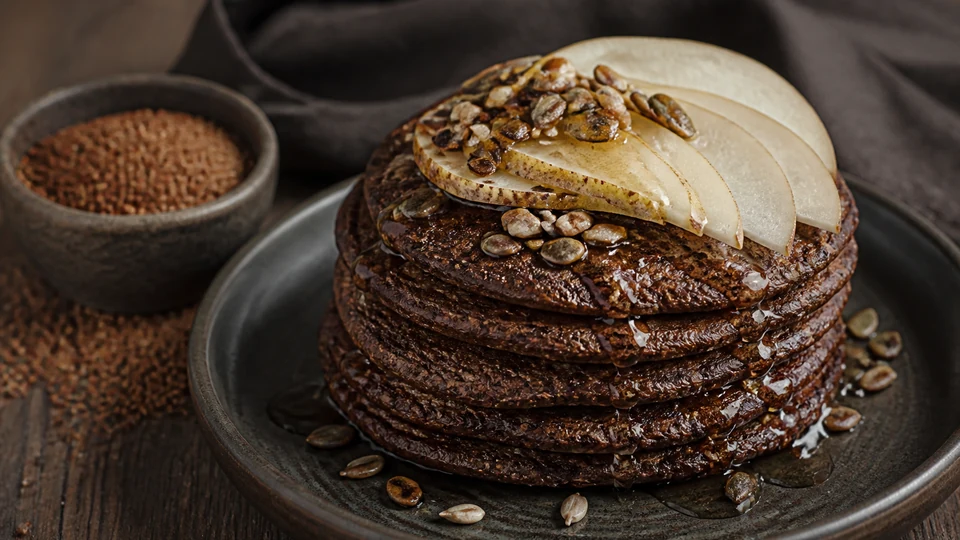
For teff-flour pancakes, use a complete formula that states whether teff is the full flour base or part of a blend. Record the flour product, keep its liquid and binder system intact, and evaluate batter thickening and the cooled crumb before adjusting the next batch. Use Pancake World to connect this exact task with the wider editorial collection.
The approved parent route is Pancake Science. This page does not provide a universal replacement ratio, nutrition claim, or gluten-free assurance for every teff product and kitchen. Quantities, yield, timing, nutrition, storage, and dietary suitability must therefore come from the selected complete formula, current product labels, and the cited authority within its stated domain.
Choose a format before changing ingredients
Confirm whole teff flour versus a blend
Read the package and source formula carefully. A commercial blend that contains teff cannot be treated as pure teff flour in another recipe.
Preserve the supporting structure
If the formula pairs teff with wheat flour, starch, egg or another binder, those ingredients are part of the design. Removing them creates a different experiment.
Watch hydration over time
Observe the ribbon immediately after mixing and again at the stated cook point. If the batter tightens, record the elapsed time before changing liquid.
Judge flavour with neutral toppings first
Use a simple first portion so strong syrup or spice does not hide bitterness, roast notes or texture information needed for the follow-up.
Build a controlled preparation sequence
- Choose a source formula that names teff flour clearly.
- Record the product and every supporting flour or binder.
- Measure liquid and follow the stated mixing and rest.
- Cook consistent portions in the same pan zone.
- Compare cooled texture and flavour before changing one variable.
Current-batch troubleshooting
Batter tightens rapidly
Check rest duration and flour identity before adding liquid.
Crumb is sandy or fragile
Review grind, binder and supporting flour rather than increasing leavener.
Surface darkens before centre sets
Use portion thickness and pan heat as the next controlled variables.
Flavour is too assertive
Choose a source-backed blend comparison instead of masking it with unmeasured sweetener.
Evidence and safety boundary
For teff-flour pancakes, identify whether the package contains pure teff, a blended flour, or a prepared mix before making any dietary statement. A front-label description does not establish allergen safety, gluten-free handling, or a medical outcome, so read the full current label and prevent cross-contact for the actual diners. Never taste the raw teff batter; assess it only after cooking the test pancake through. Product grind, blend composition, binder, and pan behaviour vary, so uncertain ingredient identity or doneness must be resolved before service rather than inferred from this untested Pancake World guide.
For the next trial, compare confirm whole teff flour versus a blend with preserve the supporting structure only if both remain inside the selected formula's boundaries. Record whether batter tightens rapidly or crumb is sandy or fragile appeared, then change one plausible variable. That makes the follow-up specific to this route rather than a generic correction.
Next-batch prevention checklist
- Select one complete formula that actually covers teff flour pancake recipe.
- Keep confirm whole teff flour versus a blend separate from watch hydration over time when their preparation schedules conflict.
- Observe batter tightens rapidly in the first small portion.
- Record surface darkens before centre sets before changing the next batch.
- Change one plausible variable and preserve the control.
- Omit unsupported yield, nutrition, dietary-outcome, and project-test claims.
Contextual routes for the next decision
- Pancake Batter For 1 for a neighbouring preparation or menu decision.
- Spinach Brunch Recipes for a neighbouring preparation or menu decision.
- Batter Mixture For Pancakes for a neighbouring preparation or menu decision.
Frequently asked questions
Can teff replace wheat flour one for one?
No universal substitution is supported; use a teff-specific formula.
Is every teff pancake gluten-free?
No. Check the complete formula, ingredient labels and cross-contact controls.
Should teff batter rest?
Follow the selected recipe and record the effect; an unplanned rest can change flow.
Identify the teff product
For Teff flour pancake recipe, this decision starts with a concrete method: record whether the package contains whole teff flour, a multigrain blend, or a prepared pancake mix. Write the relevant product, quantity, equipment, and serving target beside the recipe before beginning. That record keeps the method tied to this batch instead of turning one observation into a universal rule. It also exposes any unsupported substitution early, when the cook can return to the complete formula rather than improvising after heat or mixing has already changed the ingredients.
The main avoidable error at this point is treating a blend as pure teff or ignoring added leavener. Change only one variable when the first test reveals a problem, and keep a reference portion whenever practical. Compare the two samples at the same temperature and stage of cooling. This controlled comparison matters for Teff flour pancake recipe because several different causes can create a similar surface appearance while requiring opposite corrections in the next batch.
Use an observable endpoint instead of confidence alone: the ingredient label should explain exactly which flour and functional ingredients enter the bowl. Record that cue in plain language along with the pan, portion, and elapsed sequence; exact minutes are secondary because equipment and ingredient temperature vary. If the cue is absent, stop and identify the most plausible upstream cause before continuing the full batch. The result is a specific, repeatable adjustment rather than a chain of compensating changes that hides the original fault.
Decide between full teff and a blend
For Teff flour pancake recipe, this decision starts with a concrete method: follow a complete formula designed for the selected proportion rather than applying an improvised one-to-one swap. Write the relevant product, quantity, equipment, and serving target beside the recipe before beginning. That record keeps the method tied to this batch instead of turning one observation into a universal rule. It also exposes any unsupported substitution early, when the cook can return to the complete formula rather than improvising after heat or mixing has already changed the ingredients.
The main avoidable error at this point is replacing wheat flour by volume without accounting for structure. Change only one variable when the first test reveals a problem, and keep a reference portion whenever practical. Compare the two samples at the same temperature and stage of cooling. This controlled comparison matters for Teff flour pancake recipe because several different causes can create a similar surface appearance while requiring opposite corrections in the next batch.
Use an observable endpoint instead of confidence alone: the chosen formula should already state its binder, liquid, leavener, and expected batter texture. Record that cue in plain language along with the pan, portion, and elapsed sequence; exact minutes are secondary because equipment and ingredient temperature vary. If the cue is absent, stop and identify the most plausible upstream cause before continuing the full batch. The result is a specific, repeatable adjustment rather than a chain of compensating changes that hides the original fault.
Measure hydration patiently
For Teff flour pancake recipe, this decision starts with a concrete method: combine the specified liquid, observe initial flow, and wait only for the rest stated by the formula. Write the relevant product, quantity, equipment, and serving target beside the recipe before beginning. That record keeps the method tied to this batch instead of turning one observation into a universal rule. It also exposes any unsupported substitution early, when the cook can return to the complete formula rather than improvising after heat or mixing has already changed the ingredients.
The main avoidable error at this point is correcting the first thick appearance with repeated unmeasured splashes. Change only one variable when the first test reveals a problem, and keep a reference portion whenever practical. Compare the two samples at the same temperature and stage of cooling. This controlled comparison matters for Teff flour pancake recipe because several different causes can create a similar surface appearance while requiring opposite corrections in the next batch.
Use an observable endpoint instead of confidence alone: after the planned rest, batter should portion cleanly while retaining enough body to hold together. Record that cue in plain language along with the pan, portion, and elapsed sequence; exact minutes are secondary because equipment and ingredient temperature vary. If the cue is absent, stop and identify the most plausible upstream cause before continuing the full batch. The result is a specific, repeatable adjustment rather than a chain of compensating changes that hides the original fault.
Preserve the binder system
For Teff flour pancake recipe, this decision starts with a concrete method: keep eggs, starch, ground seed, or another tested binder exactly as the formula specifies. Write the relevant product, quantity, equipment, and serving target beside the recipe before beginning. That record keeps the method tied to this batch instead of turning one observation into a universal rule. It also exposes any unsupported substitution early, when the cook can return to the complete formula rather than improvising after heat or mixing has already changed the ingredients.
The main avoidable error at this point is removing both gluten-containing flour and the alternative binder at once. Change only one variable when the first test reveals a problem, and keep a reference portion whenever practical. Compare the two samples at the same temperature and stage of cooling. This controlled comparison matters for Teff flour pancake recipe because several different causes can create a similar surface appearance while requiring opposite corrections in the next batch.
Use an observable endpoint instead of confidence alone: a cooled pancake should bend or cut without breaking into dry fragments. Record that cue in plain language along with the pan, portion, and elapsed sequence; exact minutes are secondary because equipment and ingredient temperature vary. If the cue is absent, stop and identify the most plausible upstream cause before continuing the full batch. The result is a specific, repeatable adjustment rather than a chain of compensating changes that hides the original fault.
Balance teff's distinctive flavour
For Teff flour pancake recipe, this decision starts with a concrete method: use restrained salt, warm spice, fruit, cultured dairy, or a savoury topping chosen to complement the grain. Write the relevant product, quantity, equipment, and serving target beside the recipe before beginning. That record keeps the method tied to this batch instead of turning one observation into a universal rule. It also exposes any unsupported substitution early, when the cook can return to the complete formula rather than improvising after heat or mixing has already changed the ingredients.
The main avoidable error at this point is masking the flour with excessive sweetness before tasting a plain test. Change only one variable when the first test reveals a problem, and keep a reference portion whenever practical. Compare the two samples at the same temperature and stage of cooling. This controlled comparison matters for Teff flour pancake recipe because several different causes can create a similar surface appearance while requiring opposite corrections in the next batch.
Use an observable endpoint instead of confidence alone: the first pancake should reveal the teff character while still working with the intended topping. Record that cue in plain language along with the pan, portion, and elapsed sequence; exact minutes are secondary because equipment and ingredient temperature vary. If the cue is absent, stop and identify the most plausible upstream cause before continuing the full batch. The result is a specific, repeatable adjustment rather than a chain of compensating changes that hides the original fault.
Control spread on the griddle
For Teff flour pancake recipe, this decision starts with a concrete method: portion consistently, allow natural spreading, and adjust only after the first pancake shows a repeatable problem. Write the relevant product, quantity, equipment, and serving target beside the recipe before beginning. That record keeps the method tied to this batch instead of turning one observation into a universal rule. It also exposes any unsupported substitution early, when the cook can return to the complete formula rather than improvising after heat or mixing has already changed the ingredients.
The main avoidable error at this point is pressing the top or spreading batter after its edges begin to set. Change only one variable when the first test reveals a problem, and keep a reference portion whenever practical. Compare the two samples at the same temperature and stage of cooling. This controlled comparison matters for Teff flour pancake recipe because several different causes can create a similar surface appearance while requiring opposite corrections in the next batch.
Use an observable endpoint instead of confidence alone: each round should have enough thickness to turn intact without a raw centre. Record that cue in plain language along with the pan, portion, and elapsed sequence; exact minutes are secondary because equipment and ingredient temperature vary. If the cue is absent, stop and identify the most plausible upstream cause before continuing the full batch. The result is a specific, repeatable adjustment rather than a chain of compensating changes that hides the original fault.
Use visual turning cues
For Teff flour pancake recipe, this decision starts with a concrete method: watch for a drier edge, surface bubbles appropriate to the formula, and clean release from the pan. Write the relevant product, quantity, equipment, and serving target beside the recipe before beginning. That record keeps the method tied to this batch instead of turning one observation into a universal rule. It also exposes any unsupported substitution early, when the cook can return to the complete formula rather than improvising after heat or mixing has already changed the ingredients.
The main avoidable error at this point is turning solely by a fixed minute count. Change only one variable when the first test reveals a problem, and keep a reference portion whenever practical. Compare the two samples at the same temperature and stage of cooling. This controlled comparison matters for Teff flour pancake recipe because several different causes can create a similar surface appearance while requiring opposite corrections in the next batch.
Use an observable endpoint instead of confidence alone: the underside should be evenly browned and strong enough to support one confident flip. Record that cue in plain language along with the pan, portion, and elapsed sequence; exact minutes are secondary because equipment and ingredient temperature vary. If the cue is absent, stop and identify the most plausible upstream cause before continuing the full batch. The result is a specific, repeatable adjustment rather than a chain of compensating changes that hides the original fault.
Evaluate after cooling
For Teff flour pancake recipe, this decision starts with a concrete method: taste one warm pancake and inspect another after several minutes because crumb perception changes as steam escapes. Write the relevant product, quantity, equipment, and serving target beside the recipe before beginning. That record keeps the method tied to this batch instead of turning one observation into a universal rule. It also exposes any unsupported substitution early, when the cook can return to the complete formula rather than improvising after heat or mixing has already changed the ingredients.
The main avoidable error at this point is judging gumminess by cutting the hottest pancake immediately. Change only one variable when the first test reveals a problem, and keep a reference portion whenever practical. Compare the two samples at the same temperature and stage of cooling. This controlled comparison matters for Teff flour pancake recipe because several different causes can create a similar surface appearance while requiring opposite corrections in the next batch.
Use an observable endpoint instead of confidence alone: the notes should distinguish temporary steam-softness from a persistent binder or hydration problem. Record that cue in plain language along with the pan, portion, and elapsed sequence; exact minutes are secondary because equipment and ingredient temperature vary. If the cue is absent, stop and identify the most plausible upstream cause before continuing the full batch. The result is a specific, repeatable adjustment rather than a chain of compensating changes that hides the original fault.
Conclusion
- Breakfast Hash
- Pancake Batter For 1
Sources
- U.S. FDA, Handling Flour Safely —
https:// www.fda.gov/ food/ buy- store- serve- safe- food/ handling- flour- safely- what- you- need- know - U.S. FDA, Food Allergies —
https:// www.fda.gov/ food/ nutrition- food- labeling- and- critical- foods/ food- allergies - USDA MyPlate, What Is MyPlate? —
https:// www.myplate.gov/ eat- healthy/ what- is- myplate