Tasty fluffiest vegan pancakes
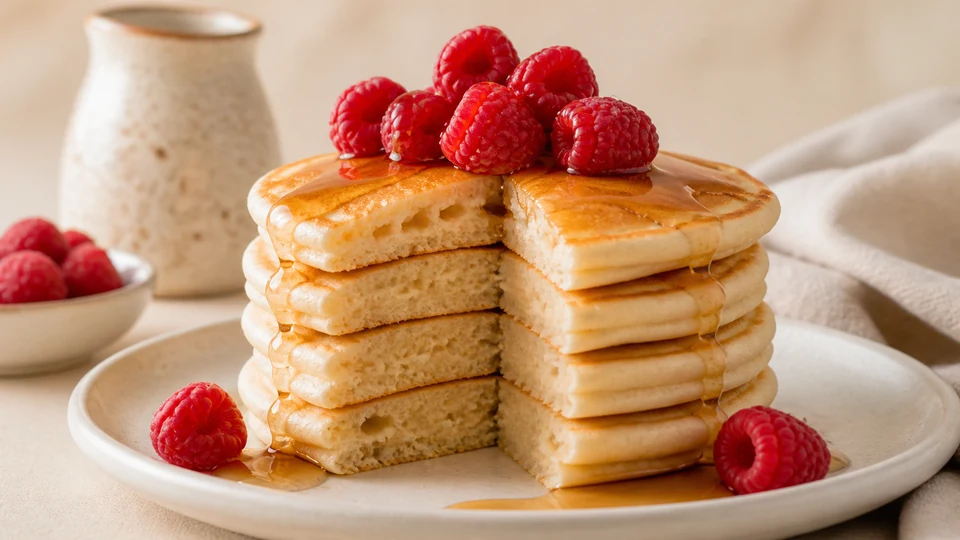
At Pancakes World, the recipe behind the query is Tasty’s “The Fluffiest Vegan Pancakes,” published on Tasty’s own recipe page. It is a short, egg-free and dairy-free wheat-flour formula built around non-dairy milk, apple cider vinegar, baking powder, and vanilla. Use the primary Tasty recipe for the current quantities and complete directions rather than relying on a copied version. Tasty displayed four servings and a 35-minute total time when checked on August 16, 2026. Treat “fluffiest” as the publisher’s recipe title, not as an independently verified superiority claim from this guide.
| Guide sections |
|---|
| Direct answer: finding and using Tasty’s vegan pancake recipe |
| What was verified on the primary page |
| How the formula is organized |
| Following the primary recipe without losing control |
For broader context, continue with Healthy Pancake Guides.
Direct answer: finding and using Tasty’s vegan pancake recipe
Go directly to Tasty’s page, confirm that the heading reads “The Fluffiest Vegan Pancakes,” and follow the live ingredient list and preparation sequence there. The checked page used flour, sugar, baking powder, salt, non-dairy milk, apple cider vinegar, and vanilla, with maple syrup suggested for serving. Its method separates dry and wet preparation, combines them, includes a short rest, and cooks on a nonstick surface over moderate heat. This article explains how to read that formula, plan substitutions cautiously, and diagnose process problems without reproducing Tasty’s full recipe or claiming affiliation.
This route serves a named-source search. It should not quietly replace Tasty with a generic pancake recipe, nor should it copy the publisher’s instructions line by line. If you want an independently framed vegan pancake foundation instead, use the vegan pancake hub. If you want this specific recipe, the primary page remains the controlling source.
What was verified on the primary page
The direct browser check found the exact URL active under the title “The Fluffiest Vegan Pancakes Recipe by Tasty.” The visible page credited Merle O’Neal and the Tasty Team and displayed an update date of May 13, 2024. It presented the recipe as four servings, with 10 minutes of preparation, 20 minutes of cooking, and 35 minutes total. These are publisher-displayed values observed during the check, not timings measured by Pancake World.
The ingredient architecture was compact. Wheat flour formed the base; organic sugar and salt seasoned it; baking powder supplied chemical leavening; non-dairy milk supplied most of the liquid; apple cider vinegar added acid; vanilla provided aroma; and maple syrup appeared as a serving suggestion. The page’s preparation moved from separately combined dry and wet mixtures to a combined batter, a five-minute rest, and pan cooking.
Those high-level facts are enough to identify and understand the recipe. Reprinting every quantity and direction would give readers a stale duplicate and would disrespect the primary publisher’s role. Tasty can revise the page, so check the live version at the moment of cooking. The source receipt for this article records the verification date and limits every Tasty-specific statement to what was visible then.
The Tasty page also displayed category labels, promotional modules, nutrition information behind a control, and a percentage-based audience signal. This guide does not repeat ratings, review counts, nutrition values, or marketing descriptors. Such details can change, and they are not necessary to answer how to locate and use the recipe.
How the formula is organized
Flour and structure
The verified version used ordinary flour rather than a gluten-free blend. Wheat flour develops gluten when hydrated and mixed, which helps the pancake hold the gas created by leavening. This also means the recipe is not gluten-free. A direct substitution with almond, coconut, oat, or a general gluten-free flour changes structure, absorption, and turning behavior.
If gluten-free pancakes are required, choose a formula developed for a named gluten-free blend rather than replacing the flour in this branded recipe and assuming the Tasty result still applies. Keep tools and preparation surfaces consistent with the diner’s requirements. Vegan identity does not establish gluten-free identity.
Baking powder and acid
Tasty’s displayed formula included both baking powder and apple cider vinegar. The source page controls the exact quantities. Do not infer that more of either ingredient creates a taller pancake. Chemical leavening works within the balance of flour, liquid, acid, heat, and structure. Arbitrary additions can change flavor, browning, and batter stability.
Check the baking powder package before mixing. Penn State Extension recommends checking its expiration date and offers an external freshness screen using hot water. Conduct any test separately; do not pour the test mixture into the recipe. If the product is questionable, replace it and use Tasty’s published amount.
Non-dairy milk
The source page’s visible ingredient list used the general wording “non-dairy milk,” while its preparation text referred to almond milk. That is a reason to read the live page and consider the diner’s needs rather than assuming every plant beverage is identical. Almond, soy, oat, rice, and coconut-based drinks differ in allergens, sweetness, protein, fat, and thickeners.
The FDA’s food-allergy guidance identifies milk, tree nuts, soy, wheat, peanuts, sesame, egg, fish, and crustacean shellfish as major allergens in US packaged-food labeling. A non-dairy beverage may still contain another major allergen. Read the current ingredient statement and allergen declaration. “Plant based” answers neither every allergen question nor every vegan ingredient question.
For a first attempt, use the liquid named by the current source or a substitution explicitly supported there. If you change it, keep the flour, leavener, mixing, rest, scoop, and pan conditions stable. A plant-milk swap becomes a separate home variation and should not be presented as Tasty’s tested formula.
No separate egg substitute
The verified ingredient list did not display flax, chia, banana, applesauce, aquafaba, or a commercial egg replacement. The formula instead relied on its flour-liquid-leavener system. Do not add an egg substitute merely because the recipe is vegan. Extra gel or puree can make the batter thicker or wetter and can obscure the behavior the source intended.
This is a useful contrast with King Arthur Baking’s easy vegan pancake formula, which uses applesauce and oil within a different complete system. The comparison shows that vegan formulas can solve the same design problem in different ways. It does not establish that one is superior or that ingredients can be transferred between them one for one.
Following the primary recipe without losing control
Before opening ingredients
Open the Tasty page and check the title, serving display, ingredient list, and preparation. Do not work from a screenshot with no date or a repost that may omit details. Decide how many source-sized batches are needed. If scaling, consider mixing normal batches separately because small quantities of leavener and salt become harder to divide accurately.
Collect the exact flour, baking powder, plant milk, vinegar, vanilla, sugar, and salt intended for the batch. Review labels for vegan suitability and allergens. Set out a nonstick pan or griddle, scoop, spatula, and cooling rack or serving plate. The cooking surface should be ready when the source-directed rest ends.
Record substitutions before mixing. A note such as “soy beverage replaced almond beverage” is more useful than trying to reconstruct changes after a poor result. If several required ingredients are unavailable, select another complete recipe rather than replacing half of this one.
Dry and wet preparation
Tasty’s visible method handled dry and wet ingredients separately. That sequence supports even distribution of the small dry ingredients before liquid activates the batter. Mix the dry group so baking powder, sugar, and salt are not concentrated in one pancake.
Combine the wet ingredients in their own vessel. Measure rather than pouring vinegar or vanilla by eye. Plant milk can settle in its package, so follow its label directions before measuring. Do not taste raw batter; flour is a raw agricultural ingredient and the recipe is designed to be cooked.
When the two groups meet, follow Tasty’s current instruction. Do not continue beating merely to create a perfectly polished surface unless the primary recipe calls for it. King Arthur’s independent pancake comparison warns that vigorous mixing can deflate bubbles and develop gluten in wheat batter, producing a tougher, flatter result. That general mechanism is relevant here, but Tasty’s live wording remains the method authority for its recipe.
Rest and pan readiness
The primary page displayed a five-minute batter rest during the verification. Use the live instruction rather than extending it into an overnight hold. A short rest can allow flour hydration and visible thickening while the pan reaches cooking temperature. An indefinite room-temperature delay is a different process.
Preheat the nonstick surface over the source’s stated moderate heat. Stove dials and pans differ, so use the first pancake as calibration. A cold pan can allow excessive spread before the surface sets. An overly hot pan can darken the exterior while the middle remains wet.
Use the source scoop size for the first batch. Consistent quantity makes cooking observations comparable. Avoid spreading or pressing the batter unless Tasty instructs it; pressure after turning forces out gas and does not solve a wet center.
Reading the first pancake
Tasty’s visible preparation used surface bubbles as part of the turn cue and cooked to a golden result. Do not treat the first bubble as an automatic command. Also look for an edge that is less glossy, an underside that releases, and enough structure for the spatula to support the center.
Open or taste the first finished pancake before cooking the whole bowl. A dark exterior with a wet center calls for lower heat or a smaller scoop, not more baking powder. A pancake that runs very wide suggests checking flour and liquid measurement and allowing the stated rest. A dense, rubbery result suggests reviewing mixing.
Make one process adjustment at a time. Changing heat, scoop, flour, and leavener together makes the result impossible to interpret. Record the successful pan setting for the remaining rounds, while recognizing that the surface can become hotter over time.
What may be changed and what should stay fixed
Toppings
Toppings are the lowest-risk place to personalize. Maple syrup was visible on the source page, but fruit, a compatible nut or seed butter, a vegan yogurt alternative, or another suitable topping can change the serving experience without rebuilding the batter. Check packaged toppings separately for vegan ingredients and allergens.
Wet toppings soften surfaces, so add them immediately before eating. If several people are serving themselves, keep toppings in separate labeled containers. A topping variation does not make the underlying recipe gluten-free, nut-free, or suitable for every diner.
Plant beverage
Change the plant beverage only after reading the current source notes and the product labels. An unsweetened option preserves more control over sweetness and browning. A sweetened or flavored beverage can make the exterior color faster and alter vanilla intensity.
Use an equal volume only when the source supports it or when you accept that the result is a home adaptation. Observe batter flow after the published rest. If it differs sharply from the source description, make small measured corrections rather than an unrecorded splash.
Flour
Keep the named wheat flour for a source-faithful attempt. Whole wheat flour absorbs differently and can create a heavier result. Bread flour can develop more chew. Cake flour changes protein and starch behavior. Gluten-free blends require their own binder and hydration design.
If dietary needs require another flour, choose a separate tested recipe. Do not retain the Tasty title on a materially different formula, because readers would reasonably expect the named recipe’s structure and method.
Sweetener and vanilla
Sugar affects more than sweetness; it can influence browning and tenderness. Do not remove or replace it casually while claiming the original performance. Vanilla is primarily flavor, but different extracts, pastes, and flavored products vary in strength and ingredients. Use the current source amount for the baseline.
Mix-ins
Fruit, chocolate pieces, nuts, or seeds add weight and may release water or melt. Establish the plain source formula first. For a later variation, use a restrained quantity, keep pieces small, and add them by a method supported by a dependable source. Sprinkle-on-pan methods and fold-into-batter methods distribute ingredients differently.
Troubleshooting the Tasty recipe responsibly
Pancakes spread too thin
Confirm the flour was measured correctly and is the type shown on Tasty’s current page. Confirm the plant milk and vinegar were not overpoured. Let the batter complete the stated rest before judging it. A cold pan may also allow more spread.
If the batter remains far thinner than expected, a small weighed flour correction can salvage a home batch, but label it as your adjustment. For the next attempt, return to the exact source measurements rather than treating the correction as a new official ratio.
Pancakes are thick but dense
Check the baking powder identity, date, and storage condition. Verify that the measured quantity was distributed through the flour. Review whether a different flour, extra binder, puree, or protein powder entered the batter. Look at mixing force and delay after combining.
Do not double the leavener. A fresh exact-source batch is a better diagnostic. If that rises as expected, reintroduce only one desired substitution in the next batch.
Outside browns before the center sets
Reduce pan heat and use the source scoop consistently. Sweetened plant milk or extra sugar can accelerate surface color. A thick round requires enough time for heat to reach the middle. Pressing it flatter after turning is not an effective correction.
Pancakes stick
Confirm the surface is genuinely nonstick and in usable condition. Preheat appropriately and use only a thin film of suitable oil if needed. Excess oil can create uneven fried edges. Let the first side form enough structure before moving the spatula underneath.
Pancakes are tough
Review mixing first. King Arthur’s published comparison connects vigorous mixing in wheat batter with deflated bubbles and greater gluten development. Stop when the recipe says the batter is combined, then honor the rest. Also check whether bread flour or extra protein replaced the source flour.
Vinegar flavor is obvious
Confirm the type and quantity against the live Tasty page. Do not add extra vinegar as a shortcut to greater lift. Ensure the measuring spoon was correct and that all dry ingredients, including salt and sugar, were included. If the exact source formula still does not suit your taste, choose another vegan pancake recipe rather than masking it with random additions.
Comparing Tasty with an independent vegan pancake formula
The Tasty recipe and King Arthur’s easy vegan pancakes solve similar user needs with different architectures. Tasty’s verified page used a concise flour, baking-powder, plant-milk, vinegar, and vanilla system with no listed puree or added fat in the batter. King Arthur’s recipe used self-rising flour, a small soda addition, plant milk, applesauce, oil, and lemon juice.
This comparison helps a cook choose; it is not a contest. Pick Tasty when you specifically want the named page and its compact ingredient system. Pick King Arthur when its applesauce-and-oil structure, stated yield, and test-kitchen notes fit your pantry. Follow one formula completely rather than merging the ingredient lists.
The mixing language also differs in presentation. Tasty’s primary page is the authority for its smoothness cue, while King Arthur explicitly cautions against overworking its batter and includes a rest. Respect each source in context. An instruction that works in one hydration and flour system is not automatically universal.
Neither source gives Pancake World permission to claim “best,” guarantee identical results, or publish unverified nutrition totals. Home pans, ingredient brands, measuring accuracy, and substitutions vary.
Explore related Pancakes World guidance on American Pancakes, American Breakfast: Pancakes, Diner Plates and Brunch, and Maple Syrup.
Sources and editorial references
Verify
- Open the exact Tasty URL.
- Confirm the page title and current ingredient list.
- Note the displayed yield and total time as publisher estimates.
- Check flour, plant milk, toppings, and other packaged ingredients for relevant requirements.
- Check baking powder identity, expiration, and dry storage.
Prepare
- Use the source formula without substitutions for the baseline.
- Measure every ingredient accurately.
- Mix dry and wet groups in the source order.
- Avoid unnecessary extended mixing.
- Follow the current rest time exactly.
- Preheat the selected nonstick pan or griddle.
Cook
- Use the source scoop amount.
- Observe immediate spread.
- Wait for the complete turn cues rather than the first isolated bubble.
- Adjust heat or scoop size, not the formula, when the center lags behind color.
- Do not press the pancake after turning.
- Inspect the first center before continuing.
Attribute
- Call the recipe Tasty’s, not Pancake World’s.
- Link to the primary page for complete quantities and directions.
- Treat “fluffiest” as the title’s wording.
- Label substitutions as personal adaptations.
- Do not repeat changeable ratings, reviews, nutrition values, or availability claims.
- Do not imply Tasty endorsed this guide.
A branded recipe page is a moving source. The publisher may edit wording, quantities, yield, images, links, update dates, or supporting notes. A responsible guide therefore distinguishes stable identity from changeable details. The stable identity here is the exact Tasty URL and visible title. The ingredient list, preparation, timing display, and audience signals require a current check.
Establish the page identity
Open the URL directly rather than entering the title into an unrelated recipe app. Confirm the domain is tasty.co, the heading names the vegan pancake recipe, and the page displays a preparation section. A copied recipe with “by Tasty” in its title is not the primary page. Search snippets and saved cards may reflect an older crawl.
Record the access date and the page’s displayed update date separately. The access date says when you observed it; the displayed date is a publisher statement. Do not convert either into a promise that the formula will remain unchanged. If Tasty removes or redirects the page, this article should be reviewed rather than silently using a copy.
Compare only facts that matter to the user
For a cooking decision, the material fields are recipe identity, servings, ingredient roles, dietary tags, total time, and method order. Ratings, promotional text, shopping integrations, and related links are not needed. Capturing less changeable data reduces the risk of presenting stale information as current.
If a later direct check shows a different ingredient or method, the primary page wins. Update the source receipt, claim mapping, and explanatory section together. Do not preserve an old fact merely because it is already embedded in prose. Immutable historical receipts may retain the observation as history, but the active article should reflect the currently verified source.
Resolve discrepancies without guessing
Suppose Tasty’s live page and a third-party repost show different scoop sizes or yields. Do not average them. Link to Tasty and use Tasty’s current version. If the primary page is inaccessible, hold formula-specific claims instead of promoting the repost to primary authority.
Suppose Tasty’s ingredient list uses general “non-dairy milk” wording while the preparation names almond milk. Preserve that nuance. Do not rewrite both as “any plant milk works” unless the publisher explicitly supplies that substitution. The safest guidance is to read the current page and check the chosen product.
Suppose a search result advertises a nutrition value not visible until an interactive panel is opened. This guide does not need it. Nutrition values depend on Tasty’s assumptions and may exclude toppings. Avoiding the figure is more accurate than presenting it without its calculation context.
Adaptation workflow that preserves attribution
An adaptation can be useful while still being clearly separate from the named source. Start with one source-faithful batch. Record the exact ingredient products, measurements, rest, scoop, pan, and result. Only then choose a single variation such as plant beverage, topping, or mix-in.
Low-impact adaptation: serving
Change the topping while leaving the batter intact. Fruit, syrup, compatible chocolate, or nut or seed spread modifies sweetness and allergen profile but does not require rewriting the flour-leavener system. State, “Tasty recipe served with…” rather than presenting the topping as part of Tasty’s formula.
Keep toppings separate for a group. This preserves the plain pancake baseline and lets diners review labels. If a topping contains a major allergen, use a separate utensil and avoid claiming the entire table is free from that allergen.
Medium-impact adaptation: plant beverage
Use a product Tasty currently names, if possible. If substituting another non-dairy beverage, measure the same source-directed volume only as a controlled starting point. Record whether the batter is visibly thinner or thicker after the five-minute rest observed on the checked page. Make a small adjustment only if necessary.
Attribute the result to your adaptation, not Tasty. A successful soy-beverage batch in one kitchen does not prove every soy product works identically. Brands differ in sweetness, solids, gums, and added flavors.
High-impact adaptation: flour or leavener
Changing flour type or leavening architecture creates a new recipe problem. Whole wheat, gluten-free blends, oat flour, almond flour, and coconut flour require different hydration and structure. Substituting baking soda for baking powder requires acid balancing that the source did not authorize.
Instead of adapting, select a complete formula developed for the required flour. If you proceed experimentally, do not use Tasty’s title as though the new batter were the original. Record it as an unsourced home experiment and make no performance promise.
High-impact adaptation: scaling
Doubling ordinary quantities looks simple, but large batter bowls invite overmixing and long delays between the first and last pancake. Leavener and salt must be measured accurately. Pan capacity, holding quality, and service time matter as much as multiplication.
For a group, mix normal Tasty batches sequentially and keep their wet and dry components separate until needed. This protects the source rest and reduces the time activated batter waits. Label each prepared component to avoid adding the wet group twice or omitting leavener.
A reader decision path
Choose the next action by your real goal:
- You want the exact Tasty recipe. Open the primary link, obtain the listed ingredients, and follow the current page without substitutions.
- You want to understand why it is vegan. Note that its verified architecture omitted egg and dairy and used non-dairy milk within a wheat-flour chemical-leavened batter.
- You need gluten-free pancakes. Leave this formula and choose a purpose-built gluten-free vegan recipe.
- You need a different allergen profile. Review every packaged ingredient and shared surface; do not infer suitability from the vegan tag.
- You want a taller result. First reproduce the current formula accurately, then inspect leavener, mixing, rest, scoop, and pan rather than adding ingredients.
- You want lower sugar, another flour, or nutrition targets. Select a recipe developed and documented for that constraint instead of representing a major alteration as Tasty’s recipe.
- You cannot access Tasty. Wait or use another primary, recognized recipe. Do not rely on an unattributed copy whose freshness and fidelity cannot be established.
This path prevents a named-source search from splitting into a misleading formula clone. It keeps Tasty responsible for the recipe it publishes and this article responsible for attribution, explanation, and cautious decisions.
Editorial acceptance check
Before this guide is treated as current, verify that it links directly to Tasty, describes the recipe without reproducing it, attributes every page-specific fact, and states the observation date. Confirm that the “fluffiest” wording appears only as part of the named title or a publisher claim. Confirm no ratings, mutable review counts, invented tests, affiliation claims, or nutrition totals remain.
Check the technical article constraints too: one branded home link, one parent-hub link, no self-link, no prohibited contact or about routes, and no Recipe schema. This is an Article guide to a third-party recipe; it is not a Pancake World-developed formula with complete tested ingredients and instructions.
Finally, compare the prose against the Tasty page and other recipe sources. Shared culinary terms such as flour, baking powder, rest, and griddle are unavoidable, but sentences and direction sequences must be independently written. The complete cooking directions belong at the primary link.
Pancake World keeps this page deliberately source-led: verify the current Tasty recipe, understand its ingredient roles, and direct readers back to the publisher instead of turning a named-source query into an unattributed copy.
- The Fluffiest Vegan Pancakes Recipe by Tasty —
https://tasty.co/recipe/the-fluffiest-vegan-pancakes - Easy Vegan Pancakes —
https://www.kingarthurbaking.com/recipes/easy-vegan-pancakes-recipe - Don't Make This Pancake Mistake —
https://www.kingarthurbaking.com/blog/2017/04/20/dont-make-this-pancake-mistake - Storing Staple Ingredients in the Kitchen —
https://extension.psu.edu/storing-staple-ingredients-in-the-kitchen - Food Allergies —
https://www.fda.gov/food/nutrition-food-labeling-and-critical-foods/food-allergies