Tailgate brunch ideas
At Pancakes World, the most practical tailgate brunch ideas are foods matched to a safe transport lane: chilled burritos, yogurt cups, fruit and sandwiches in a cooler at 40°F or below; fully cooked chili or an egg bake held at 140°F or above; or sausage, burgers and vegetable packets cooked completely on-site with a food thermometer. Add shelf-stable breads, whole fruit and packaged snacks to reduce cooler pressure. Pack raw meat separately below ready-to-eat food, carry drinks in another cooler, provide handwashing water and clean utensils, and serve perishables in small batches. Discard food left uncontrolled for two hours, or one hour above 90°F.
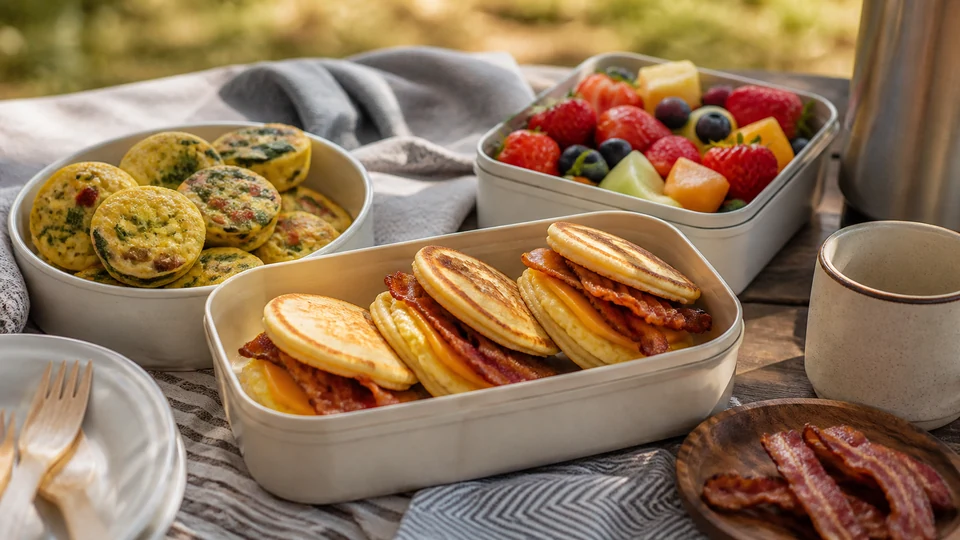
A tailgate brunch is an outdoor meal with travel, limited water, changing weather and a fixed departure time. The right menu starts with those constraints, not with a long recipe wish list. This guide supplies planning patterns rather than untested recipes, stadium policies or game schedules. Check current venue rules before packing grills, fuel, glass, alcohol or large equipment.
For broader context, continue with American Breakfast: Pancakes, Diner Plates and Brunch.
Choose one temperature-control lane
The simplest safe tailgate uses one primary lane and a few shelf-stable companions.
Lane 1: cold cooler brunch
Everything perishable travels and remains at 40°F or below until service. This lane works when open flames are restricted, setup time is short or the group wants to eat immediately.
Suitable formats include:
- fully cooked breakfast burritos served cold only when the source recipe intends it, or reheated by a verified method;
- chilled egg, bean, tofu or chicken wraps;
- yogurt cups with dry toppings packed separately;
- cheese portions and labeled crackers;
- cooked egg bites kept cold;
- hummus or bean dip with washed vegetables;
- cut fruit in a shallow sealed container;
- cold pasta, potato or grain salads kept properly chilled.
The cooler is part of the recipe. USDA FSIS advises an insulated cooler with several inches of ice, frozen gel packs or other cold sources plus an appliance thermometer showing 40°F or below. Penn State Extension recommends a separate drink cooler so repeated beverage access does not warm the food cooler.
Lane 2: hot insulated brunch
Food is fully cooked at home, placed piping hot into appropriate insulated equipment and maintained at 140°F or above. This lane can support chili, stew, a hot casserole or another spoonable dish.
USDA FSIS describes preheating an insulated container with boiling water, emptying it, then adding piping-hot food. A household insulated carrier is not automatically adequate; verify temperature with a food thermometer and follow its instructions.
If reliable hot holding is not possible, FSIS recommends chilling cooked food and transporting it cold, then reheating to 165°F at the destination. Lukewarm transport is not a compromise.
Lane 3: cook-on-site grill brunch
Raw meat or poultry stays at 40°F or below until it goes onto the grill. It is then cooked continuously to its safe temperature and served with clean tools.
Possible formats include:
- breakfast sausage patties or links;
- burgers with egg-free brunch toppings;
- chicken sausages;
- vegetable packets or skewers;
- fully cooked items reheated according to their product or recipe directions.
Do not partially cook meat at home and let it wait for a final sear. USDA FSIS says partial cooking is safe only when the food moves immediately from microwave or stove to a hot grill. For ordinary travel, bring it raw and cold or fully cooked and safely chilled or hot.
Lane 4: mostly shelf-stable support
This lane reduces risk and equipment. Use whole uncut fruit, breads, nut or seed butter packets, unopened shelf-stable beverages, dry cereal, packaged bars and other items whose labels allow ambient storage.
Shelf-stable does not mean suitable for every person. Read allergens, watch package integrity and follow “refrigerate after opening” directions. Cut fruit, dairy, egg dishes and cooked foods remain perishable even when surrounded by packaged items.
Pick the lane with a decision matrix
| Constraint | Strongest primary lane | Avoid |
|---|---|---|
| no grill allowed | cold cooler or shelf-stable | assuming a venue power source |
| short setup | cold cooler | complex on-site assembly |
| cold weather | any monitored lane | treating outdoor air as a refrigerator |
| hot weather | shelf-stable plus strict cold cooler | large exposed platters |
| long drive | cold transport with thermometer | unverified hot carrying |
| small group | one cooler and one main | several cooking stations |
| large group | batch service with assigned food lead | one giant tray on the table |
| limited water | pre-cleaned setup plus handwashing supply | raw-meat menu without sanitation plan |
| uncertain arrival | foods stable within controlled cooler | pancakes or eggs that require synchronized eating |
Weather can change the pace at which ice melts, but outside cold is not a reliable refrigerator. Sunlight, vehicle heat and repeated lid opening affect food. Use a thermometer.
Build the menu from four roles
One substantial main
Choose one item that defines the meal: burritos, breakfast sandwiches, chili, grilled sausage, an egg bake or a bean-based bowl. Select a complete tested recipe with a stated yield.
The main determines cooler space, utensils and temperature lane. Do not choose a cold burrito tray and a hot casserole and raw sausage unless the group has equipment and people for three systems.
One fresh item
Whole fruit is the simplest because it needs less preparation. Cut melon, berries and fruit salad require cold control. Washed whole apples, oranges or bananas reduce cooler demand and serving utensils.
Vegetable cups, slaw or salsa can create contrast. Keep prepared produce separate from raw meat and use clean utensils.
One bread or snack
Muffins, rolls, bagels or packaged snacks provide an easy extra. Plain baked goods may travel at room temperature, but cream, custard, cheese, meat or egg fillings change the storage requirement.
Avoid sticky glazes and tall stacks if people will eat standing. Individual portions reduce handling.
Drinks
Water comes first. Add coffee, tea, juice or other drinks according to the group and venue. Use a separate cooler for cold beverages. Alcohol rules vary by venue and jurisdiction; verify them rather than relying on a general guide.
Twelve tailgate brunch formats
These are editorial menu directions, not complete recipes.
1. Chilled breakfast burrito box
Use fully cooked burritos from a source that supports advance chilling and safe reheating or cold service. Pack them in a food cooler at 40°F or below. Keep salsa in a separate sealed cold container and label fillings.
Operational advantage: individual portions and no serving spoon.
Risk: a dense burrito may cool slowly if packed warm. Chill promptly in the refrigerator before it enters the cooler.
2. Yogurt and dry topping kit
Carry sealed yogurt cups in the food cooler. Put granola, nuts, seeds and dried fruit in separate dry containers. Assemble at service.
Operational advantage: flexible portions.
Risk: dairy warming and allergen cross-contact. Keep yogurt at 40°F or below and use distinct scoops.
3. Egg bite and fruit tray
Cook egg bites from a tested recipe, cool promptly and transport cold. Bring out one batch while the reserve stays in the cooler.
Operational advantage: one-hand portions.
Risk: treating a cooked egg item as shelf-stable. It is perishable.
4. Breakfast sandwich cooler
Use fully cooked, chilled sandwiches with clearly labeled meat, egg and cheese content. Wrap individually and reheat only through a documented method.
Operational advantage: minimal buffet contact.
Risk: packing while warm traps heat and delays cooling.
5. Hot chili brunch
Choose a tested chili with beans, meat or vegetables. Transport above 140°F in verified hot-holding equipment or chill fully and reheat to 165°F on-site.
Operational advantage: weather-friendly and easy to portion.
Risk: assuming an insulated pot keeps food hot without measurement.
6. Grilled sausage and rolls
Keep raw sausage cold, cook fresh sausage to 160°F for ground beef, pork, lamb or veal, or 165°F for poultry, and use clean rolls and toppings.
Operational advantage: strong tailgate identity.
Risk: putting cooked sausage back on the raw tray.
7. Burger brunch
Ground-meat burgers reach 160°F; poultry burgers reach 165°F. Offer one or two morning-style toppings such as cooked onion, a safe egg component from a tested plan, or a clearly labeled sauce.
Operational advantage: familiar grill flow.
Risk: color is not proof of doneness. Use a thermometer.
8. Cold bean and grain cups
Use a complete chilled salad recipe and portion into lidded cups. Keep at 40°F or below.
Operational advantage: no raw meat, clean serving.
Risk: cooked grains and opened canned foods are perishable after preparation.
9. Bagel board in batches
Serve bagels with small batches of cold cheese, fish, egg salad or vegetable spreads. Keep replenishments in the cooler.
Operational advantage: customizable.
Risk: a large cream-cheese or fish platter sitting out for the full event.
10. Muffin and whole-fruit breakfast
Choose plain muffins without perishable filling, whole fruit and packaged spreads. Add chilled milk or yogurt only with a cooler.
Operational advantage: low equipment.
Risk: assuming every frosting or filling is room-temperature safe.
11. Hot oatmeal station
Transport oatmeal above 140°F in suitable equipment, portion with one ladle, and keep dry toppings separate. Milk and cut fruit stay cold.
Operational advantage: compact main for cool mornings.
Risk: hot holding without temperature verification and an unstable serving vessel.
12. Shelf-stable emergency menu
Pack whole fruit, dry cereal, sealed nut or seed butter, crackers, packaged bars and shelf-stable drinks. Follow every label.
Operational advantage: resilient when travel or venue access changes.
Risk: limited dietary choice and hidden allergens. Plan alternatives.
A packing architecture that prevents cross-contamination
Cooler A: raw food
Use a separate cooler for raw meat and poultry when possible. Secure packages in leak-proof containers. Keep cold sources around the food and place an appliance thermometer where it can be read.
Cooler B: ready-to-eat food
Pack cooked chilled foods, dairy, cut fruit, salads and sauces. Put items needed first near the top. Keep the lid closed and the cooler in shade.
Cooler C: drinks
Frequent opening belongs here. Use separate ice for drinks rather than ice that contacts raw-food packages or meltwater.
Dry bin
Store napkins, plates, shelf-stable food, labels, trash bags and clean serving utensils. Protect it from fuel, cleaning chemicals and vehicle dirt.
Sanitation kit
Penn State Extension recommends water, liquid soap, paper towels, cleaning supplies, sanitizer for food-contact surfaces, several utensil sets and a calibrated thermometer. A container with a spigot, catch bucket and trash bag can create a simple handwashing station.
Hand sanitizer can supplement handwashing but is not a full substitute when soap and water are available. Wash after handling raw food, trash, pets, shared equipment or outdoor games.
Pack the cooler correctly
Clean and dry the cooler before packing. Chill food in the refrigerator first; a cooler maintains temperature but should not be expected to rapidly cool a warm casserole.
Pack in this order:
- frozen blocks, gel packs or sealed ice at the base;
- food eaten last near the bottom;
- raw food in its separate cooler or leak-proof containers at the lowest level;
- ready-to-eat food above raw items when a shared cooler cannot be avoided;
- more cold sources around and above food;
- appliance thermometer in a readable position;
- frequently needed items near the top;
- lid closed until service.
Penn State Extension notes that a full cooler holds cold better than a half-full one. Fill empty space with additional cold sources, not warm loose items. Transport coolers in the air-conditioned passenger area rather than a hot trunk when feasible, and shade them at the site.
Do not use the presence of unmelted ice alone as proof that all food remained below 40°F. Read the thermometer.
Grill without unsafe shortcuts
Thaw safely
Thaw meat in the refrigerator with enough time. Do not thaw it in warm outdoor air. Transport it cold.
Marinate cold
Marinate in the refrigerator. Reserve sauce for cooked food before raw meat touches the marinade. Do not brush cooked food with contaminated marinade unless it has been boiled as authoritative guidance directs.
Skip partial cooking
Bring raw food to cook completely on-site or fully cooked food to reheat. Starting meat at home and pausing during travel creates an unsafe middle state.
Measure doneness
Use the FoodSafety.gov category table:
- beef, pork, veal and lamb steaks, chops or roasts: 145°F plus a three-minute rest;
- ground beef, pork, veal and lamb: 160°F;
- fresh sausage made from those ground meats: 160°F;
- poultry, including ground poultry: 165°F;
- egg dishes: 160°F;
- reheated leftovers: 165°F.
Insert the probe into the thickest appropriate area without touching bone or the grill. Thin patties may require side insertion so the sensing area reaches the center.
Change platters
The tray that carried raw meat stays in the raw zone until washed. Put cooked food on a clean platter with a clean utensil.
Cook in batches
Cook only what can be eaten or safely held. A mountain of finished meat cooling beside the grill is not efficient.
Design the serving line
Put plates first, then main food, fresh sides, bread, condiments and napkins. Place drinks on another table. Keep the grill and raw zone away from the guest line.
Use labels that include dish name and major allergens. Give each item a dedicated utensil. Set the time when each perishable batch leaves the cooler or hot holding.
For cold dishes, place the serving bowl over ice and replace melted ice. FoodSafety.gov recommends smaller portions so less food sits in an ice bath or runs against the two-hour clock.
For hot dishes, use equipment designed to maintain at least 140°F. Fully cook food before it enters hot holding; a warming device is not a substitute for cooking.
Do not top up an old bowl. Replace it with a clean batch so time tracking remains clear.
Work backward from kickoff or departure
Do not rely on a published game schedule inside a static article. Confirm the current event time and parking access, then build backward.
At eating time
Food is in one monitored service lane. Clean utensils, labels, plates and handwashing are ready.
Thirty minutes before
Deploy the first small cold batch or start fully cooking grill items. Verify cooler and hot-holding temperatures.
At arrival
Move coolers into shade, establish raw and ready-to-eat zones, set up handwashing, and confirm venue permissions. Keep food closed while tables and canopies are assembled.
Before leaving home
Record cooler temperature, load chilled food directly from refrigeration, check fuel and thermometer, and put coolers in the coolest feasible vehicle area.
The previous day
Cook foods intended for advance preparation, cool them promptly in shallow containers, refrigerate, freeze cold sources, print labels and charge any permitted equipment.
Weather-specific adjustments
Above 90°F
The room-temperature limit shortens from two hours to one hour. Use smaller batches, more cold sources and shade. Monitor people and equipment as well as food.
Cool fall morning
Do not place perishable food on a vehicle roof or in outdoor air and assume it is below 40°F. Sun and temperature swings matter. Keep it in the monitored cooler.
Rain
Protect food, utensils and handwashing supplies from splash and runoff. Keep electrical or fuel equipment within manufacturer and venue safety rules. Move food to covered, clean surfaces.
Wind
Secure lightweight packaging and keep dust away from open food. Position grill equipment according to venue and fire-safety requirements, not only convenience.
Plan for dietary needs
Ask guests before shopping. Distinguish allergy, intolerance, religious practice, vegan or vegetarian pattern and preference.
Use separate labeled packages and utensils. A modular bagel or burrito bar can help preferences but increases cross-contact. Keep a strict-allergen option sealed and served separately when required.
For vegan food, check bread, sauces, spreads and processed meat alternatives; animal-derived ingredients can appear outside the obvious main. For nut-free food, remember granola and bakery products may include nuts or cross-contact statements.
Do not invent substitutions at the parking lot. Use complete recipes developed for the dietary need.
Leftovers: decide before the game
USDA FSIS recommends cooking only what will be eaten because tailgate leftovers are difficult to control. Keep reserve food in the cooler instead of putting everything out.
Perishable food that has been outside temperature control for more than two hours—or one hour above 90°F—should be discarded. If the time is unknown, discard it.
Food that stayed at 40°F or below or 140°F or above can enter a storage plan. Refrigerate promptly in shallow containers. FoodSafety.gov advises using cooked leftovers within three to four days and reheating to 165°F.
After the game, discard cooler leftovers that are not still ice-cold at 40°F or below. Smell and appearance cannot certify safety.
Common tailgate mistakes
One cooler for raw meat, salad and drinks
Fix: separate raw, ready-to-eat and beverage lanes. If only one food cooler exists, use leak-proof raw containers at the bottom and minimize opening.
Warm casserole placed into a cooler
Fix: chill cooked food in the refrigerator before packing. A travel cooler is not a blast chiller.
Food cooked halfway at home
Fix: transport raw and cold or fully cooked under safe hot or cold control.
No thermometer
Fix: bring both an appliance thermometer for the cooler and a clean food thermometer for cooking and holding.
Cooked food returned to the raw platter
Fix: mark raw and cooked tools with different colors and pack multiple clean sets.
Everything displayed at once
Fix: keep reserves controlled and replace small batches.
Drinks share food ice
Fix: use a separate beverage cooler and clean drink ice.
Venue rules assumed
Fix: verify current stadium, campus or parking policies for grills, flame, fuel, tents, glass, alcohol, arrival and waste.
Three complete planning blueprints
No-grill morning
- chilled individual wraps or egg bites;
- whole fruit plus one cold cut-fruit batch;
- plain muffins or bagels;
- yogurt or bean dip held below 40°F;
- water, coffee and a separate drink cooler.
Equipment: food cooler, drink cooler, cold sources, two thermometers, labels, handwashing kit and trash bags.
Grill-centered brunch
- raw sausage or burgers in a dedicated cooler;
- rolls and shelf-stable condiments;
- chilled vegetable or fruit side;
- one packaged snack;
- water and drinks separately.
Equipment: permitted grill and fuel, raw/cooked platter sets, probe thermometer, handwashing station, food cooler and drink cooler.
Cold-weather hot-pot brunch
- fully cooked chili transported above 140°F or chilled and reheated to 165°F;
- rolls;
- whole fruit;
- dry toppings plus chilled toppings in small batches;
- hot drinks and water.
Equipment: verified hot carrier or reheating setup, ladle, bowls, thermometer, cold topping cooler and sanitation kit.
Frequently asked questions
What is the easiest tailgate brunch?
A cold cooler menu with individual wraps, whole fruit, plain baked goods and a separate drink cooler minimizes on-site cooking. It still requires 40°F control for perishable items.
Can I bring scrambled eggs?
Yes, if a tested plan keeps them at 140°F or above after cooking, or chills them safely and reheats them to 165°F. Egg dishes must reach 160°F during initial cooking.
How long can food sit out?
Perishable food can remain uncontrolled for up to two hours, reduced to one hour when the temperature is above 90°F. Safe hot or cold holding changes the calculation.
Can I use the same cooler for drinks and food?
You can, but a separate drink cooler is strongly preferable because it is opened frequently. If space is limited, organize food to reduce lid time and monitor temperature.
Can I partially cook sausage at home?
No, not if it will pause during travel. USDA permits partial cooking only when food moves immediately to a hot grill. Bring it raw and cold or fully cooked under safe control.
What temperatures do I need?
Keep cold food at 40°F or below and hot food at 140°F or above. Cook ground meat to 160°F, poultry to 165°F, egg dishes to 160°F and reheat leftovers to 165°F.
How do I wash hands without running water?
Bring a water container with a spigot, liquid soap, paper towels, a catch bucket and trash bag. Wet wipes are a limited backup, not a complete substitute when proper washing is possible.
Are whole fruits shelf-stable?
Many intact fruits travel without refrigeration for the event, but cut fruit is perishable. Wash produce appropriately and protect it from raw-food contact.
What should I do with leftovers after the game?
Keep only food that remained under safe temperature control. Discard perishable items that are above 40°F or whose time is uncertain. Refrigerate safe leftovers promptly and reheat to 165°F.
How do I know whether grills are allowed?
Check the current official venue or parking policy for that event. Rules can change and may regulate grill type, fuel, placement, extinguishing equipment and arrival time.
Final tailgate checklist
- current venue rules verified;
- one primary temperature lane chosen;
- menu limited to one main, one fresh item, one bread or snack and drinks;
- raw food separated from ready-to-eat food;
- food cooler at 40°F or below with appliance thermometer;
- hot holding at 140°F or above when used;
- separate drink cooler packed;
- food thermometer and clean utensils included;
- handwashing water, soap and paper towels included;
- cooking temperatures assigned by food category;
- no partial-cooking travel shortcut;
- small batches and time labels planned;
- one-hour rule prepared for weather above 90°F;
- leftovers minimized and containers ready;
- no live-site, venue, product or game-schedule claim invented.
A good tailgate brunch is portable, easy to identify and built around measured temperature control. Choose the transport lane before the food list, reduce the number of active systems, and keep the reserve in the cooler. That leaves more time for the event and fewer opportunities for raw food, warm dairy or forgotten leftovers to derail the morning.
Explore related Pancakes World guidance on American Pancakes, Maple Syrup, and Maple Syrup Pancakes.
Sources and editorial references
- USDA Food Safety and Inspection Service, “Tailgating Food Safety Q & A”:
https://www.fsis.usda.gov/food-safety/safe-food-handling-and-preparation/food-safety-basics/tailgating-food-safety-q-a - Penn State Extension, “Food Safety Tailgating Tips”:
https://extension.psu.edu/food-safety-tailgating-tips - FoodSafety.gov, “Game Day Food Safety Tips”:
https://www.foodsafety.gov/blog/game-day-food-safety-tips - FoodSafety.gov, “Keeping Hot Foods Hot and Cold Foods Cold”:
https://www.foodsafety.gov/blog/your-holiday-how-keeping-hot-foods-hot-and-cold-foods-cold - USDA Food Safety and Inspection Service, “Food Safety While Hiking, Camping & Boating”:
https://www.fsis.usda.gov/food-safety/safe-food-handling-and-preparation/food-safety-basics/food-safety-while-hiking-camping - Penn State Extension, “Healthy and Safe Picnics”:
https://extension.psu.edu/healthy-and-safe-picnics - FoodSafety.gov, “Cook to a Safe Minimum Internal Temperature”:
https://www.foodsafety.gov/food-safety-charts/safe-minimum-internal-temperatures